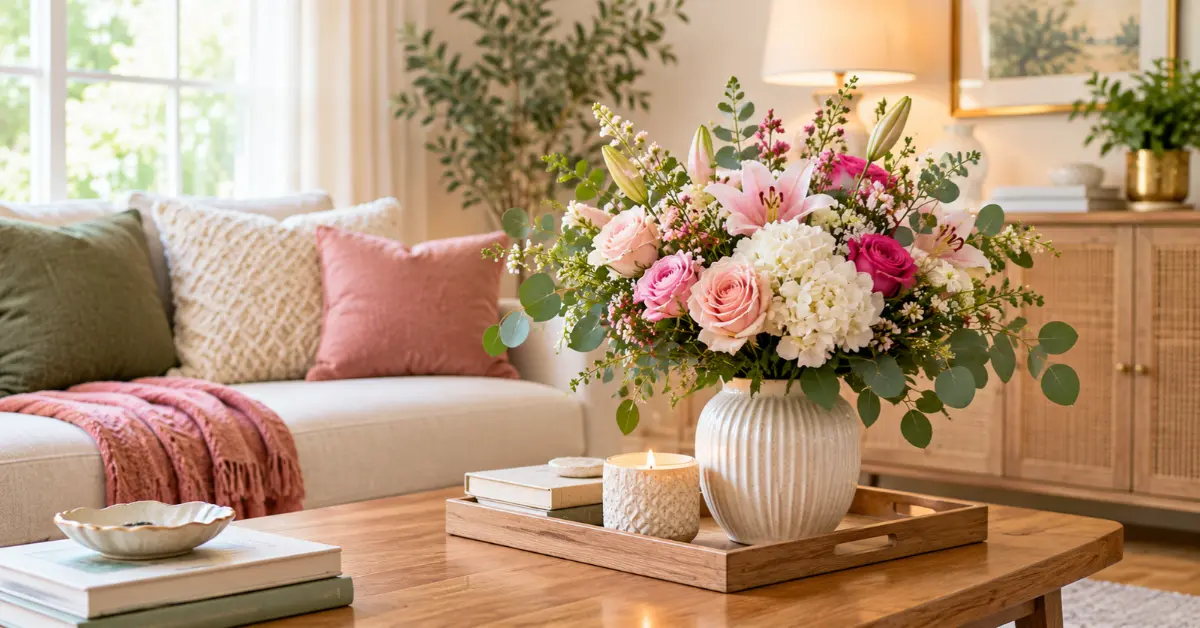
Expert Insight: Fresh blooms and structured floral displays do far more than add color to a room—they alter how light interacts with living space, soften harsh architectural angles, and introduce organic texture. When applied intentionally, simple floral styling elevates room proportions and establishes an inviting, sophisticated atmosphere without requiring expensive interior renovations.
Yes, flower decoration ideas for home dramatically improve room aesthetics by introducing natural texture, vibrant color balance, and dynamic height variance. Fresh or high-quality faux florals draw the eye toward key architectural focal points, break up monochromatic decor schemes, and create an atmosphere of refined elegance. Beyond visual balance, fresh flowers release subtle fragrances and improve perceived indoor air freshness, making rooms feel immediate, lived-in, and thoughtfully curated.
What is the 3:5:8 Rule for Flowers?
Achieving professional balance in home arrangements does not require formal floristry training, but it does rely on basic proportional rules. The 3:5:8 rule for flowers is a foundational guideline derived from the classic Golden Ratio (Fibonacci sequence). It ensures visual harmony, proper distribution of mass, and structural stability across stems and containers.
- Height Ratio (3:5): The height of your floral stems above the vase rim should equal approximately 1.5 times the height of the vase. If your vase stands 6 inches tall (3 units), your flowers should extend 9 inches above the rim (5 units), making the total height 15 inches (8 units).
- Stem Quantity Ratio (3:5:8): Build structural depth by combining 3 bold focal blooms (such as garden roses, peonies, or dahlias), 5 supporting filler stems (like spray carnations, lisianthus, or snapdragons), and 8 structural greens or airy accent branches (such as eucalyptus, olive branches, or ruscus).
Simple Flower Arrangements for Beginners
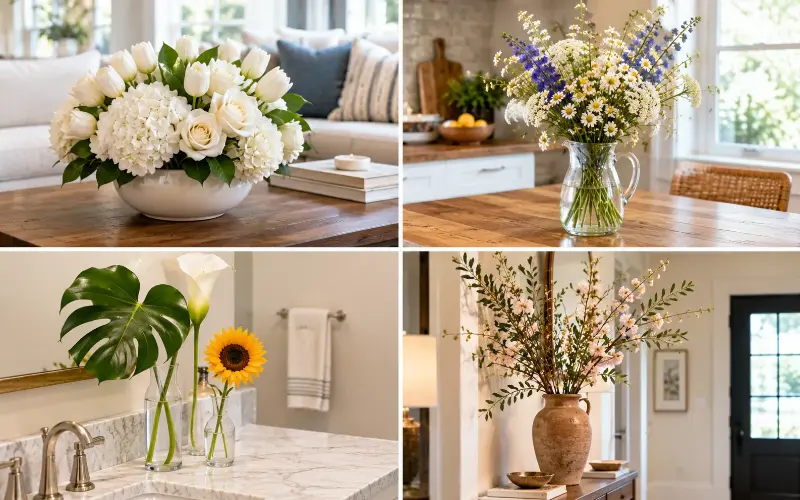
If you are wondering how to decorate your house with flowers without spending hours on complex assembly, starting small yields the most consistent results. Simple flower arrangements for beginners rely on clean stem cuts, single-color palettes, and basic household vessels.
| Arrangement Style | Recommended Flowers | Ideal Vase Type | Best Room Placement |
| Monochromatic Cluster | White Tulips, Hydrangeas, or Cream Roses | Low Ceramic Bowl or Wide Cylinder | Coffee Table, Dining Room Table |
| Rustic Wildflower Bundle | Chamomile, Delphiniums, Queen Anne’s Lace | Vintage Glass Jug or Mason Jar | Kitchen Island, Breakfast Nook |
| Minimalist Single-Stem | Monstera Leaf, Callas, or Sunflowers | Bud Vases or Tall Narrow Flasks | Bathroom Vanity, Bedside Table |
| Sculptural Branch Display | Cherry Blossom, Olive Branches, Forsythia | Heavy Stone or Terracotta Urn | Home Entrance Console, Foyer |
Step-by-Step DIY Assembly Process
- Prepare the Stem Base: Strip all leaves below the waterline to prevent bacterial growth and cloudy water. Cut stem bottoms at a 45-degree angle under cold running water using sharp floral shears.
- Build a Greenery Grid: Criss-cross 4 to 6 sturdy stems of greenery across the rim of your vase. This natural grid supports softer flower stems without using plastic floral foam.
- Anchor Focal Blooms: Place your 3 largest, most prominent flowers at slight angles within the greenery grid, keeping them slightly lower toward the rim to anchor the visual weight.
- Insert Secondary Fillers: Weave 5 secondary stems around your main flowers, varying the height slightly to create organic depth and prevent a flat look.
- Add Air and Height: Finish by inserting 2 to 3 taller, airy stems or bud branches through the top center, allowing them to extend upward for natural vertical flow.
Styling Tip: To instantly complement handcrafted or rustic arrangements, consider how your furniture materials interact with your floral display. Pair organic ceramic vessels with natural wood elements—such as a warmhandmade wood home decor accent tray—to highlight natural grain and physical depth.
Creative Floral Decoration Ideas for Every Room
Bringing flowers into your home works best when each room gets a style tailored to its daily use, traffic flow, and lighting conditions.
1. Flower Decoration for Home Entrance
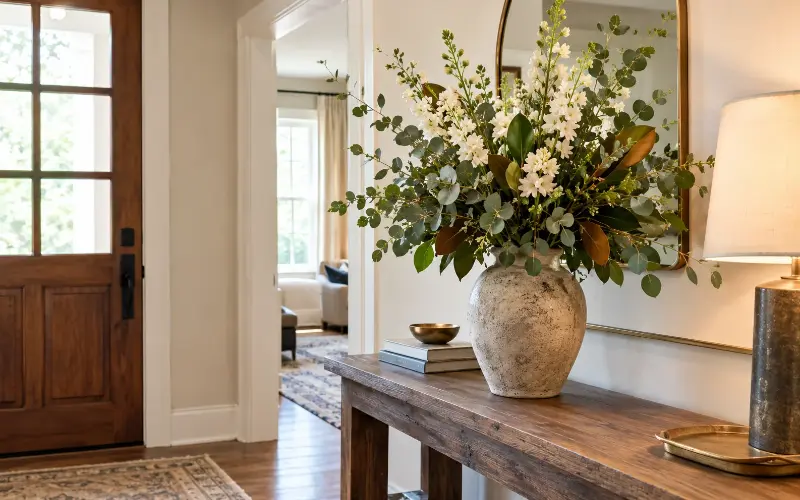
Your entryway sets the tone for your entire interior design. Position a sturdy console table directly across from or beside the front door. Use tall structural stems like eucalyptus, magnolia branches, or larkspur inside a weighty ceramic or cast-iron vase. Because entryways experience frequent drafts, choose long-lasting flowers that hold their structure well over time.
2. Indoor Flower Decoration Ideas for the Living Room
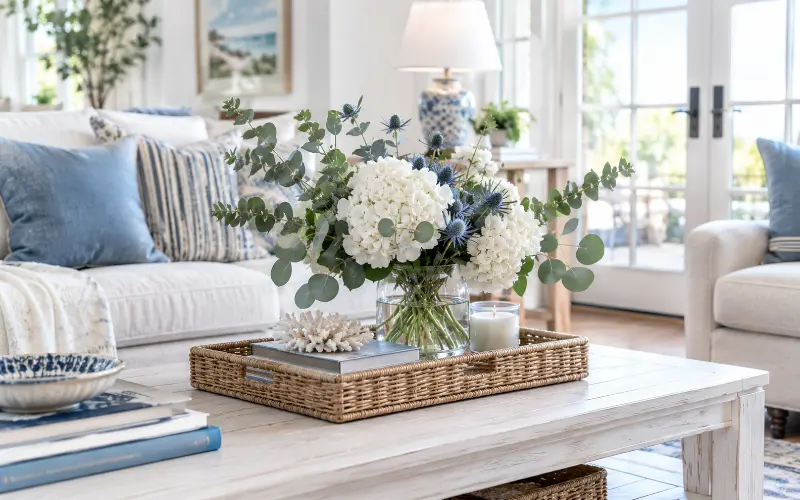
Living rooms offer broad flexibility for floral accents. Place low-profile centerpieces on your central coffee table so sightlines across seated guests remain open. If your living space features coastal or casual architectural accents—such as airy Hamptons style coffee tables —opt for clear glass vessels filled with white hydrangeas, blue thistle, or fresh eucalyptus to complement soft blue and neutral room palettes.
3. Flower Decoration Ideas for Walls
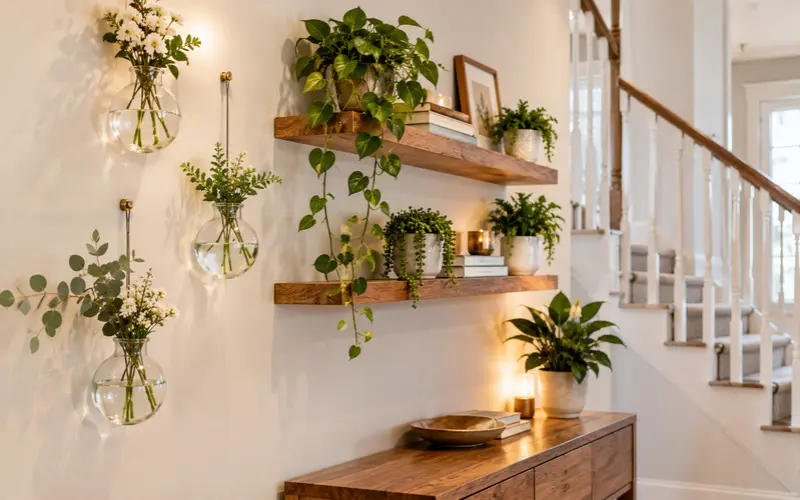
When counter and table space is limited, wall-mounted displays offer an space-saving alternative. Mount pocket-planters, floating wooden ledges, or clear glass wall tubes to introduce fresh greens into narrow hallways, stairwells, or small living rooms. Grouping hanging glass bulbs filled with small stem cuttings creates a striking visual feature on plain accent walls.
What is Trending in Flower Arrangements?
Recent shifts in modern interior styling show a distinct move away from stiff, symmetrical florist designs in favor of loose, organic compositions that look naturally gathered.
- Ikebana & Asymmetrical Framing: Modern design heavily emphasizes Japanese Ikebana concepts, prioritizing negative space, curved stems, and individual stem shapes over dense flower clusters.
- Textural Dried Botanicals: Preserved elements—including dried palm spears, bleached ruscus, seed pods, and bunny tails—are increasingly blended into fresh arrangements to add lasting texture and reduce replacement costs.
- Monofloral Impact: Arranging 10 to 15 stems of a single flower type (such as all-pink tulips or all-white ranunculus) inside a simple vase creates a clean, intentional look that fits modern, Japandi, and minimalist spaces.
How to Flower Decoration Ideas for Home in Simple Ways (Beyond Flowers)
While fresh floral displays instantly elevate indoor spaces, combining them with broader home styling principles creates a cohesive, well-designed layout. If you are exploring how to make your house look classy using simple techniques, try these core home styling practices:
- Focus on Scale and Proportions: Select decor accents that match your room dimensions. Avoid placing tiny vases on large dining tables or oversized urns on slim side tables.
- Leverage Natural and Layered Lighting: Position floral displays near soft natural window light or under warm wall sconces to highlight their natural colors without scorching delicate petals.
- Reduce Visual Clutter: Clear away loose items from flat surfaces before placing your floral arrangements. A single vase on a clear tabletop creates far more impact than a vase surrounded by everyday items.
- Incorporate Vertical Wall Art: Pair living arrangements with structural wall accents. Combining leafy greenery displays with warm wooden accents or textured japandi wall decor establishes visual balance across neutral walls.
Post-Event Upcycling: What to Do with Casket Sprays or Event Flowers
A common practical challenge after formal events, weddings, or memorial services is managing large, formal floral sprays. Knowing what to do with casket spray after a funeral or wedding allows you to honor these memorial flowers while extending their usefulness at home.
Expert Insight: Large formal sprays are typically built using individual stems inserted into wet florist foam cages. Rather than keeping the bulky structure intact, carefully remove healthy stems within 24 to 48 hours to preserve their quality.
- Dismantle and Sort: Remove individual stems from the foam base. Sort the flowers into three groups: fully open blooms, firm tight buds, and structural greenery.
- Trim and Recut Stems: Cut 1 to 2 inches off each stem at a 45-degree angle under cold water to reopen blocked water channels.
- Repurpose into Small Home Vases: Divide the large arrangement into 3 to 5 smaller bud vases or jar displays. Place these smaller arrangements in quiet areas around your home, such as bedside tables, reading nooks, or bathroom counters.
- Preserve through Air Drying: Hang sturdy flowers like roses, hydrangeas, baby’s breath, and statice upside down in a dark, dry, well-ventilated space for two weeks. Dried stems can be used in permanent vase displays or memorial keepsake boxes.
- Compost Organically: Recycle faded stems and leaves in outdoor garden compost beds, returning organic nutrients to your yard soil.
Frequently Asked Questions
Everything you need to know about styling fresh and faux blooms at home.