Your wardrobe does more than store clothes. It shapes how your bedroom feels every morning — whether you open it to a cluttered mess or a calm, organised space. With so many wardrobe designs available today, making the right choice comes down to understanding your room, your lifestyle, and your budget.
This guide covers everything you need to know: the main wardrobe types, how to choose between them, what to look for inside the wardrobe, common mistakes to avoid, and a rough idea of what things cost.
The Main Types of Wardrobe Designs
1. Built-In Wardrobes
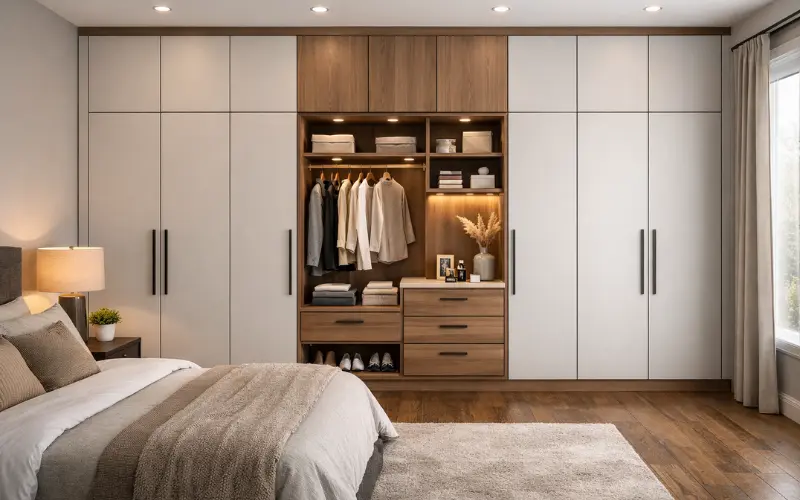
Built-in wardrobes are custom-fitted to your wall or alcove. They go floor to ceiling and edge to edge, which means zero wasted space. Because they’re designed specifically for your room, they feel like part of the architecture rather than furniture that was just placed there.
They work especially well in bedrooms where you want a seamless, high-end look. The trade-off is cost — built-ins are generally the most expensive option — and you can’t take them with you if you move.
Best for: Homeowners, master bedrooms, awkward spaces or alcoves.
2. Freestanding Wardrobes
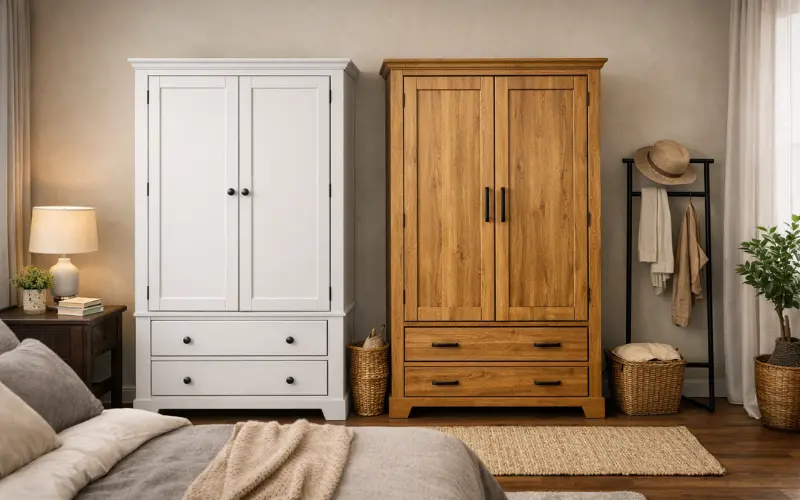
Freestanding Wardrobe Designs are standalone furniture pieces. They’re easy to move, require no installation, and come in a wide range of styles and price points. If you’re renting or don’t want to commit to permanent changes, these are your best bet.
The downside is that they rarely use the full height of a room, and the interior layout is often fixed. You also lose a little floor space on each side.
Best for: Renters, temporary setups, budget-conscious buyers.
3. Sliding Door Wardrobes
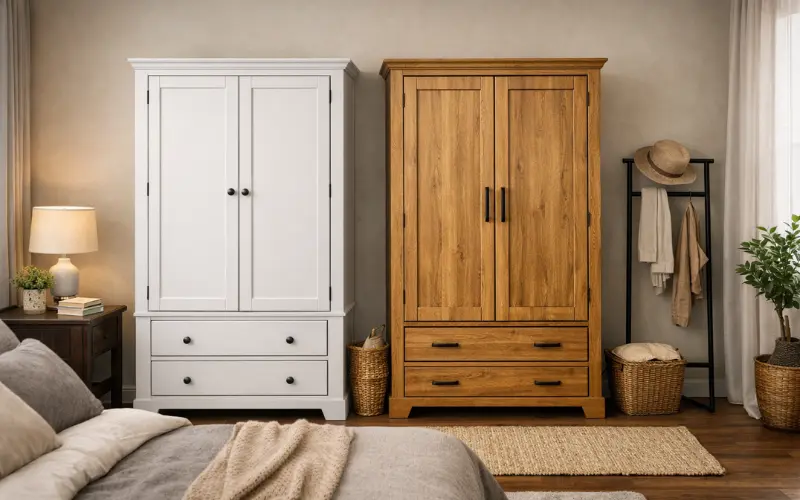
Sliding Wardrobe Designs use doors that glide along a track rather than swinging open. This is a major advantage in smaller bedrooms where a hinged door would eat into the available space.
They look clean and modern, and are widely available as both built-in and freestanding versions. One thing to note: you can only ever access half the Wardrobe Designs at a time, which some people find frustrating.
Best for: Small to medium bedrooms, modern interiors.
4. Hinged Door Wardrobes
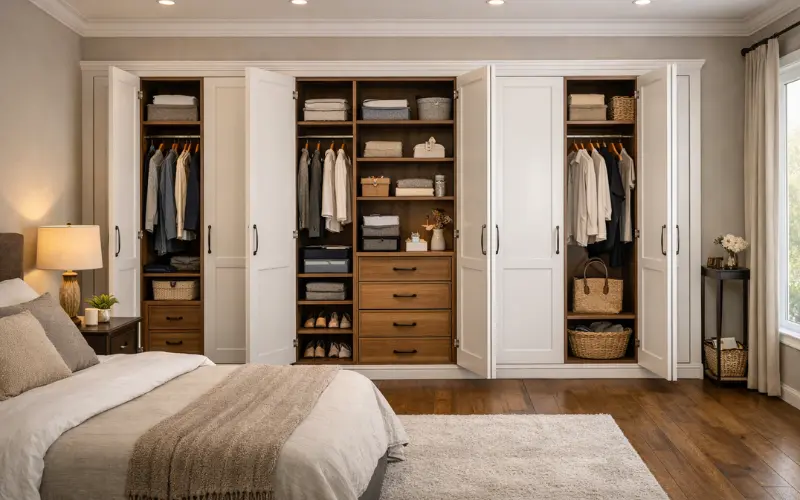
The traditional option. Hinged Wardrobe Designs give you full access to the entire interior at once, which makes getting dressed and organising much easier. They tend to suit classic or transitional interior styles.
The main limitation is clearance — you need enough floor space in front for the door to swing open fully. As a rule of thumb, allow at least 60cm of clear space in front.
Best for: Larger bedrooms, traditional or classic interiors.
5. Walk-In Wardrobes
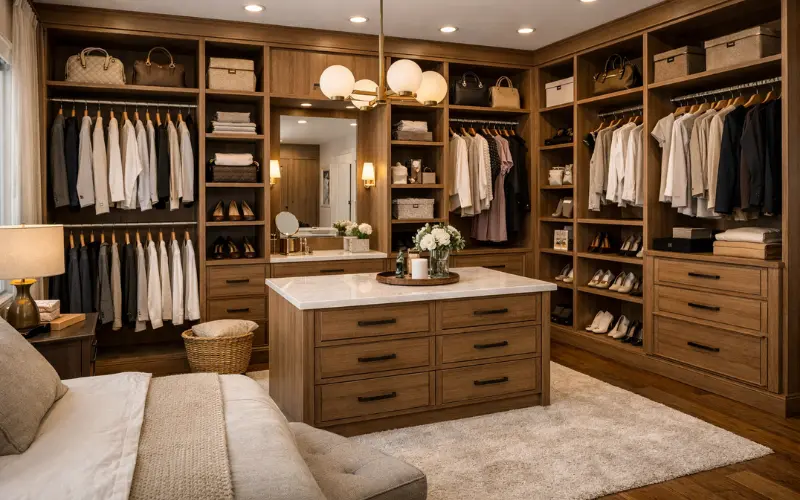
A walk-in Wardrobe Designs is a dedicated room or large alcove for clothing storage. It offers the most storage of any option and allows you to organise everything visually — shoes on display, bags on hooks, folded items in open cubbies.
Walk-ins require a minimum of about 1.8 metres of depth to be functional, with at least 90cm of clear walking space in the centre. If you don’t have a spare room, a large corner or L-shaped layout can work surprisingly well.
Best for: Master bedrooms with space to spare, serious wardrobers.
6. Mirrored Wardrobes
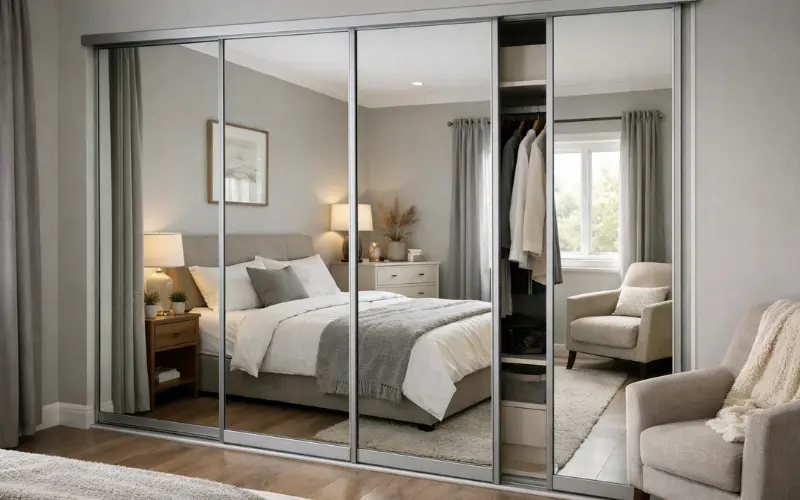
Mirrored wardrobes serve double duty — they store your clothes and reflect light back into the room, making it feel significantly larger and brighter. This makes them particularly useful in smaller bedrooms or rooms with limited natural light.
Full-length mirrors on sliding doors are the most common format, but mirrored panels can also be added to hinged wardrobes.
Best for: Small bedrooms, dark rooms, anyone who checks the mirror often.
7. Corner Wardrobes
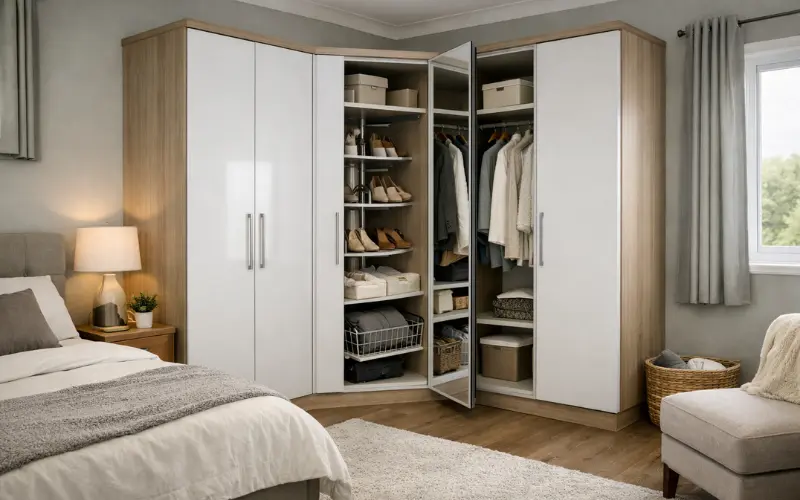
Corner wardrobes are L-shaped units designed to fit into a corner of the room. They make excellent use of space that would otherwise be wasted and can provide a large amount of storage without taking over the room visually.
The interior requires some thought — deep corner sections can be hard to access without pull-out shelving or rotating carousels.
Best for: Rooms with corner space, maximising storage.
Sliding vs. Hinged Doors: How to Decide
This is one of the most common decisions people get stuck on. Here’s a simple way to think about it:
Choose sliding doors if:
- Your bedroom is under 10 square metres
- You don’t have 60cm of clear space in front of the Wardrobe Designs
- You prefer a clean, minimalist look
Choose hinged doors if:
- You want full access to everything at once
- Your bedroom is large enough to comfortably accommodate the swing
- You prefer a more traditional or classic style
What to Think About Inside the Wardrobe
The exterior gets all the attention, but the interior is where you live every day. Here’s what to prioritise:
- Hanging rails: Plan for two zones — long hang (dresses, coats, suits) and double hang (shirts, jackets, folded trousers). Double hanging roughly doubles your hanging capacity.
- Drawers: Drawers are better than shelves for folded items like t-shirts and underwear. Things on open shelves tend to topple. Soft-close drawers are worth the small extra cost.
- Shoe storage: Angled shoe shelves take up less vertical space than flat shelves. For larger collections, pull-out racks are easier to use than deep shelves where shoes get buried.
- Top shelf: Use the top shelf for seasonal items, luggage, and things you rarely need. Opaque boxes help keep it tidy and dust-free.
- Lighting: This is one of the most overlooked elements. LED strip lights along the top rail or motion-sensor puck lights make a noticeable difference — especially in dark bedrooms or deep wardrobes.
Materials: What to Look For
Most Wardrobe Designs are built from one of these materials:
- MDF (Medium Density Fibreboard): Smooth, paintable, takes a finish well. Good for painted wardrobes. Not ideal in high-humidity rooms as it can swell.
- Plywood: Stronger and more moisture-resistant than MDF. A good choice for built-ins in humid climates.
- Solid wood: Beautiful and durable, but expensive and can warp in humidity. Usually reserved for high-end custom wardrobes.
- Laminates and melamine board: Budget-friendly and easy to clean. Widely used in flat-pack and modular systems. Decent durability for everyday use.
Common Mistakes to Avoid
Even well-planned Wardrobe Designs can fall short if you overlook these:
- Not measuring door clearance. Hinged doors need room to open. Measure before you buy — it sounds obvious but it’s one of the most common installation surprises.
- Ignoring ventilation. Clothes need air circulation. A fully sealed wardrobe with no ventilation can lead to musty smells. Leave a small gap at the base or choose louvred doors.
- Buying before finalising the layout. Know exactly how much hanging space, how many drawers, and how many shelves you need before purchasing. Many people buy based on how a wardrobe looks, then discover it doesn’t suit how they actually dress.
- Underestimating lighting needs. If your bedroom light is behind you when you open the wardrobe, everything inside will be in shadow. Plan interior lighting from the start.
- Overloading rails. Clothes rails can bow or pull from walls if overloaded. For long built-in runs, add a centre support bracket every 90–100cm.
Rough Cost Guide
Prices vary significantly by region, material, and whether you go custom or flat-pack. Here’s a general ballpark:
- Freestanding wardrobe: $200–$1,000+
- Flat-pack built-in (DIY systems like PAX): $500–$2,500
- Semi-custom sliding door wardrobe (installed): $1,500–$5,000
- Fully custom built-in wardrobe: $3,000–$12,000+
- Walk-in wardrobe fit-out: $5,000–$20,000+
The biggest cost drivers are custom sizing, soft-close mechanisms, lighting, and mirror panels.
FAQs
What is the most popular wardrobe design?
Built-in sliding door Wardrobe Designs are currently the most popular for modern homes — they save floor space and create a seamless, wall-to-wall look.
How deep should a wardrobe be?
A minimum of 55–60cm depth is needed for standard clothing to hang without touching the back wall. Walk-in wardrobes need at least 1.8m of total depth.
What is the best wardrobe material?
For most homes, plywood or high-quality MDF with a laminate finish offers the best balance of cost, durability, and finish quality.
Can I build a walk-in wardrobe in a small room?
Yes. A narrow L-shaped or corridor-style walk-in can work in as little as 2m x 1.8m, especially if you use the full height and keep the centre clear.
Are sliding doors or hinged doors better?
It depends on room size. Sliding doors are better for tight spaces; hinged doors give better access to the full interior at once.
What should I put in a wardrobe top shelf?
Seasonal clothing, luggage, extra bedding, and rarely used items stored in labelled boxes.
How do I keep a wardrobe smelling fresh?
Use cedar blocks or lavender sachets, ensure some air circulation, and avoid storing damp clothing. Wipe the interior down every few months.
How long does a built-in wardrobe last?
A quality built-in wardrobe, properly installed, should last 15–30 years with minimal maintenance.
What is a modular wardrobe?
A modular wardrobe is made from standardised components (rails, shelves, drawers) that can be mixed and matched to create a custom layout — without the full price of a bespoke build.
Should I add a mirror to my wardrobe?
Yes, especially in smaller rooms. Full-length mirrored doors visually double the space and eliminate the need for a separate mirror.
Final Thoughts
The best wardrobe design is the one that fits your room, suits how you actually use your clothes, and stays within your budget. Start with your space constraints, then decide on the door type, then plan the interior carefully. Getting those three things right in order will save you from the most common regret: a beautiful wardrobe that doesn’t actually work for daily life.