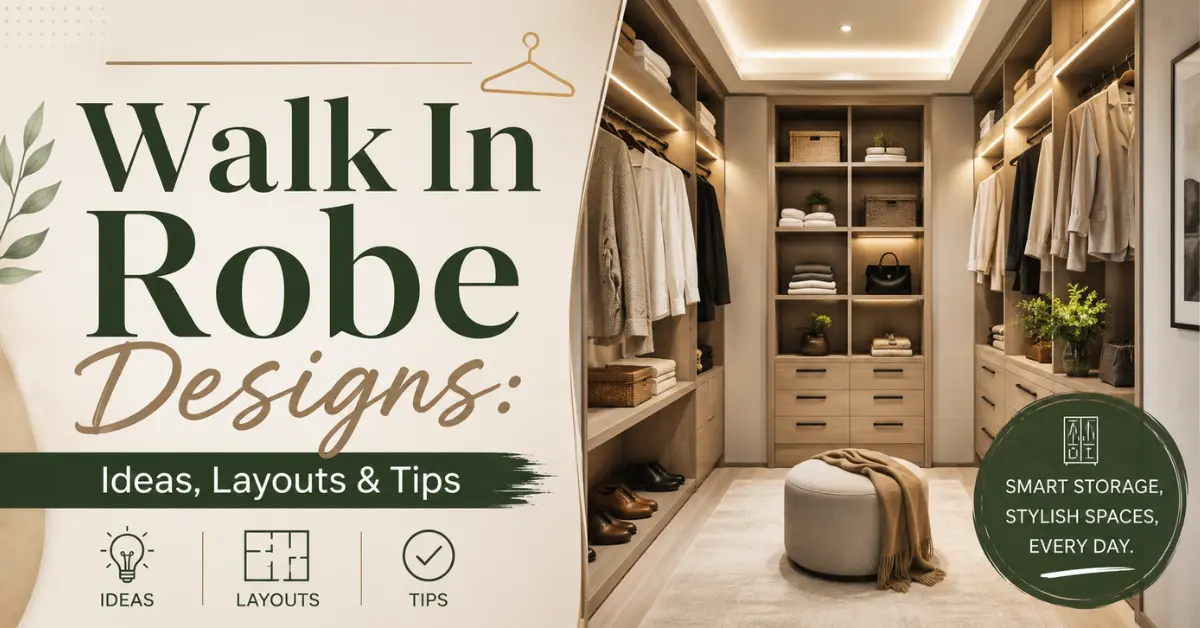
A walk in robe is one of the most requested features in new homes and renovations right now — and for good reason. Done well, it turns the chaos of getting dressed into a calm, organised five minutes. Done badly, it becomes an expensive cupboard full of wasted space. After working through dozens of builds and renovations, we’ve put together this guide to help you avoid the second outcome and land firmly in the first.
This isn’t another list of pretty photos. We’ll walk you through the practical decisions — layout, storage ratios, materials, lighting, and budget — that actually determine whether your walk in robe works for your life, plus the design ideas that make it feel like a genuine luxury rather than just a bigger cupboard.
What Makes a Great Walk In Robe Design?
Before you fall in love with a Pinterest photo, it helps to understand what separates a functional walk in robe from one that looks good in photos but frustrates you daily. The best Walk In Robe Designs balance three things: storage capacity, accessibility, and atmosphere.
Storage capacity is about having enough hanging rail, shelving, and drawer space for what you actually own — not what a showroom display suggests you should own. Accessibility means everyday items sit within easy reach, while seasonal or occasional items go higher or further away. Atmosphere is the finishing touch: lighting, mirrors, flooring, and colour that make the space feel considered rather than purely functional.
Get those three elements right and almost any layout — from a 1.5-square-metre nook to a sprawling dressing room — will feel like a success.
Planning Your Layout: The First Decision That Matters Most
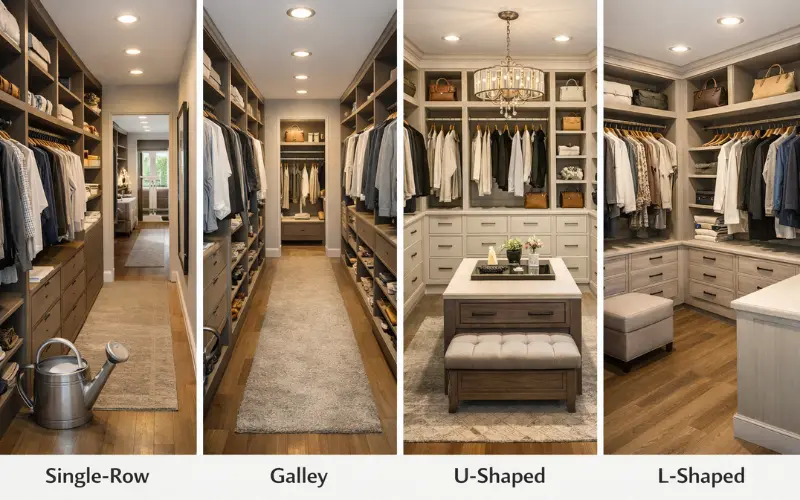
Before choosing finishes or scrolling through inspiration galleries, work out which layout suits your room’s shape and your storage needs.
Single-row (walk-through) layout — A run of shelving and rails along one wall, with a walkway down the middle. This suits narrow rooms and works well as a transition space between a bedroom and ensuite.
Galley (double-sided) layout — Storage on both walls with an aisle between them. This is the most space-efficient configuration for rectangular rooms and gives you roughly double the storage of a single-row design in a similar footprint.
U-shaped or wraparound layout — Storage on three walls, ideal for square or larger rooms. This layout among walk in robe designs offers the most storage volume and often includes space for an island or seating in the centre.
L-shaped layout — A good middle ground for irregularly shaped rooms, combining two walls of storage with a more open feel than a full U-shape.
A simple rule of thumb we always come back to: measure what you currently own (rail length for hanging items, shelf depth for folded items, floor space for shoes) before committing to a layout. Most people underestimate hanging space and overestimate how much they’ll use open shelving.
Getting the Storage Ratio Right
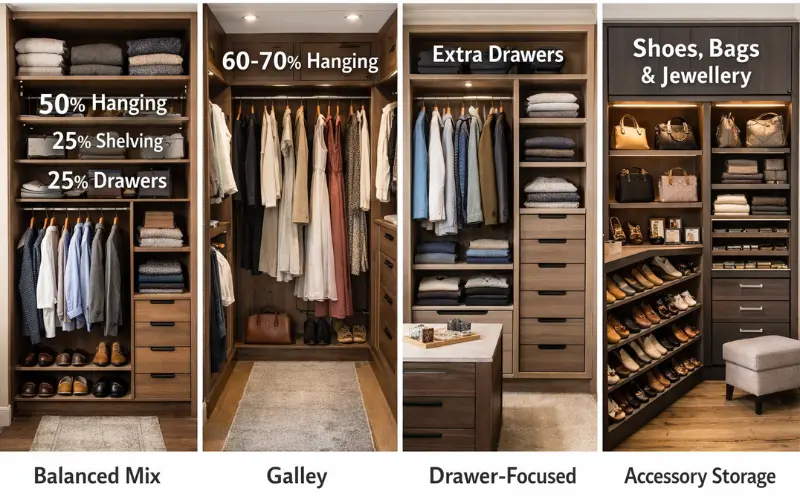
This is the part most articles skip, and it’s arguably the most important. Not all walk in robe designs need the same mix of hanging rail, shelving, and drawers — it depends entirely on what you wear.
As a starting benchmark:
- 50% hanging space, 25% shelving, 25% drawers suits a fairly typical wardrobe of mixed clothing.
- 60–70% hanging space suits anyone with a lot of dresses, suits, or coats that crease if folded.
- More drawer space suits people who wear a lot of knitwear, activewear, or folded basics.
Within your hanging space, plan for both single-hang (for dresses, coats, and long items) and double-hang rails stacked one above the other (for shirts, skirts, and folded trousers). Double-hang rails roughly double your hanging capacity in the same wall length, which is one of the simplest ways to get more out of a small footprint.
Don’t forget the items people consistently forget to plan for: shoes, bags, belts, jewellery, and out-of-season clothing. A dedicated shoe shelf with a slight incline, slim pull-out drawers for accessories, and a high shelf or overhead cupboard for off-season storage will keep your everyday space clutter-free.
Materials and Finishes Worth the Investment
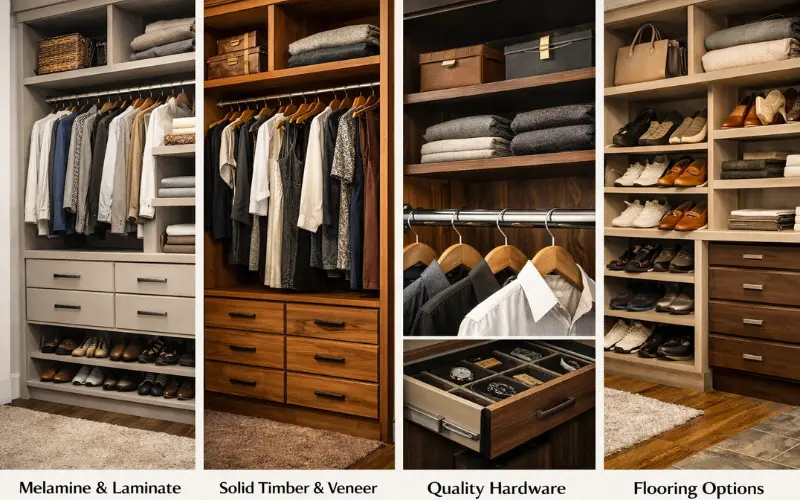
The shelving and cabinetry you choose affects both how the space looks and how long it lasts. Melamine or laminate boards in wood-look or matte neutral finishes are durable, affordable, and easy to wipe clean — a sensible choice for most walk in robe designs. Solid timber or veneer adds warmth and a more boutique feel but comes at a higher price point and needs more careful maintenance.
For hanging rails and drawer runners, spend a little more if your budget allows. Soft-close drawers and solid metal rails (rather than thin tubing) make a noticeable difference to how the space feels day to day, and they hold up far better under the weight of a full wardrobe.
Flooring is another detail worth getting right. Carpet feels soft underfoot and absorbs noise, while timber-look flooring or tiles are easier to keep dust-free — a good option if you’re prone to allergies or live somewhere humid.
Lighting: The Detail That Changes Everything
Good lighting is what separates a serviceable cupboard from a beautifully styled space, and it’s one of the cheapest upgrades for the impact it delivers. Aim for layered lighting rather than a single central downlight:
- Task lighting — LED strip lighting under shelves or above hanging rails so you can actually see what you’re choosing between.
- Ambient lighting — A pendant, flush-mount fixture, or soft wall light for general illumination and atmosphere.
- Mirror lighting — Backlit or surround-lit mirrors make getting dressed and applying makeup far easier, and instantly elevate the space.
If your robe doesn’t get natural light — which is common, since these rooms are often internal — lean toward warm white LEDs (around 3000K) rather than cool white, as they’re more flattering for skin tones and clothing colours alike.
Small Space Walk In Robe Designs
You don’t need a large room to get the benefits of a walk in robe. For compact spaces, prioritise vertical storage: floor-to-ceiling shelving, double-hang rails, and slim pull-out units make the most of every centimetre. Mirrored doors or a full-length mirror visually expand a small room, and a single well-placed pendant light keeps the ceiling from feeling low. Skip bulky furniture like ottomans or islands in tight spaces — a slim bench seat that tucks against a wall is usually a better fit.
Adding Luxury Touches
Once the functional layout is sorted, a few extra details turn a walk in robe into a genuine retreat:
- A central island or bench with drawers, useful for folding and as a display surface for accessories
- An upholstered stool or ottoman, ideally with hidden storage underneath
- A full-length mirror and a smaller vanity mirror near a power point for hair and makeup tools
- A statement rug to soften the floor and add colour
- Glass-front cabinetry to display shoes or bags as a feature rather than hiding them away
Common Mistakes to Avoid
Even well-intentioned walk in robe designs can fall short if a few key details are overlooked.
- Underestimating storage needs. Plan for your wardrobe in five years’ time, not just today, and always include a little spare capacity.
- Skipping ventilation. Walk in robes are often internal rooms with little airflow, which can lead to musty smells and dampness over time. A small vent, exhaust fan, or even a dehumidifier can solve this cheaply.
- Treating lighting as an afterthought. A poorly lit robe makes choosing outfits harder and the whole space feel like storage rather than a room.
- Ignoring ergonomics. Keep daily-use items at eye level and within easy reach; reserve high or low shelves for things you access only occasionally.
- Choosing trend-led finishes over timeless ones. Bold colours and patterns date faster than neutral cabinetry with character added through soft furnishings, which are far cheaper to update later.
Budget Considerations
Costs for Walk In Robe Designs vary enormously depending on size, materials, and whether you’re building new or retrofitting an existing room. Flat-pack or laminate shelving systems are the most affordable entry point and suit most budgets well. Custom joinery with soft-close drawers, feature lighting, and higher-end finishes sits at the premium end but adds noticeable resale value, particularly in the master suite. If you’re working to a fixed budget, prioritise spending on hanging rail hardware and lighting first — these affect daily usability the most — and treat decorative extras like islands or feature walls as upgrades to add later.
FAQs
1. What is the ideal size for a walk in robe?
Most walk in robes work comfortably from around 4–6 square metres, with at least 900mm of walkway space between storage units so doors and drawers can open freely.
2. How much hanging space do I actually need?
A general guide is around 1.2 to 1.8 metres of hanging rail per person for an average wardrobe, though this increases significantly for anyone with a lot of dresses, coats, or formalwear.
3. Should I choose sliding or hinged doors for my Walk In Robe Designs?
Sliding or cavity doors save floor space and work well in smaller rooms or where the robe connects to an ensuite, while hinged doors give full access to storage at once and suit larger rooms.
4. What’s the best flooring for a Walk In Robe Designs?
Timber-look flooring or tiles are easy to clean and resist dust, while carpet adds warmth and comfort underfoot — the right choice depends on your climate and personal preference.
5. Do I need a window or natural light in a Walk In Robe Designs?
No — most walk in robes are internal rooms. Good layered LED lighting, particularly around 3000K warm white, fully compensates for the lack of natural light.
6. How do I stop my walk in robe from feeling cluttered?
Zone the space by category (hanging, folded, shoes, accessories), keep only in-season items at eye level, and store off-season clothing in a separate high shelf or cupboard.
7. Is a walk in robe worth adding when renovating?
Yes — alongside the everyday convenience, a well-designed walk in robe is consistently one of the features buyers look for in a master suite, which can support resale value.
8. What’s the difference between a walk in robe and a walk in closet?
The terms are largely interchangeable; “walk in robe” is the more common term in Australia and the UK, while “walk in closet” is used more in the US.
Final Thoughts
The best Walk In Robe Designs aren’t necessarily the biggest or the most expensive — they’re the ones built around how you actually get dressed each day. Start with an honest look at what you own, choose a layout that suits your room, get the storage ratio right, and invest in lighting before decoration. Everything else — the rug, the mirror, the statement pendant — is the finishing touch on a space that was already working hard for you. Whether you’re planning a compact robe in a renovation or a sprawling dressing room in a new build, thoughtful planning now will save you years of frustration with a wardrobe that simply doesn’t fit your life.