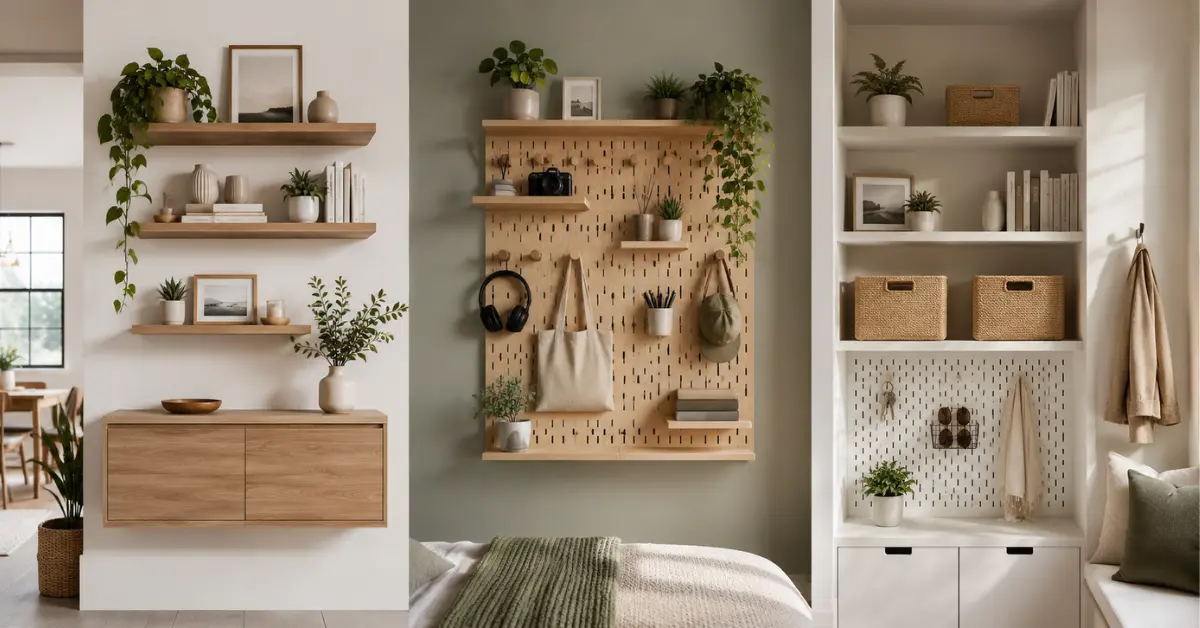
If your countertops are buried, your floor space feels cramped, or your closet door barely closes, the problem usually isn’t a lack of square footage. It’s that you’re only using the floor. Wall storage solves that by turning empty vertical space into usable, functional area, and it works in homes of every size.
This guide goes beyond the usual list of floating shelves and pegboards. You’ll find real installation advice, weight-bearing guidance, and room-specific ideas that most articles on this topic leave out entirely.
Why Wall Storage Works Better Than You Think
Every home has more vertical space than horizontal space. A typical room offers eight feet of wall height but only a few feet of usable floor before furniture gets in the way. Smart wall storage takes advantage of that gap.
Beyond saving space, wall storage offers a few benefits that often get overlooked:
- It keeps frequently used items visible and within reach, so you spend less time searching.
- It reduces clutter on counters and floors, which makes small rooms feel larger.
- It can double as decor, turning a practical need into a design feature.
- It’s easier to clean around than floor-based furniture, since you can sweep or mop underneath.
For renters, apartment dwellers, and homeowners with small footprints, wall storage is often the single highest-impact change you can make to a room.
Know Your Wall Before You Start
Before you buy a single shelf, take ten minutes to understand what you’re working with. This is the step most guides skip, and it’s the reason so many DIY wall storage projects end in a wall full of holes and a shelf in the return pile.
- Find the studs. Studs are the vertical wood or metal framing pieces behind your drywall, usually spaced 16 or 24 inches apart. A stud finder costs under $20 and will save you from relying on drywall anchors alone for anything heavy.
- Check the weight rating. Drywall anchors typically hold 25 to 50 pounds when installed correctly, but that’s spread across multiple anchors, not one. If you’re hanging anything heavier, such as a stocked bookshelf or a TV mount, anchor directly into studs.
- Consider the wall type. Plaster walls, brick walls, and concrete walls each need different hardware. Plaster cracks easily with standard anchors, so a smaller masonry bit and the right screw type matter.
- Think about sightlines. Wall storage that sits at eye level draws attention, while storage near the ceiling or behind doors stays out of sight. Decide whether you want the storage to be a feature or to disappear.
Wall Storage Ideas by Room
Kitchen
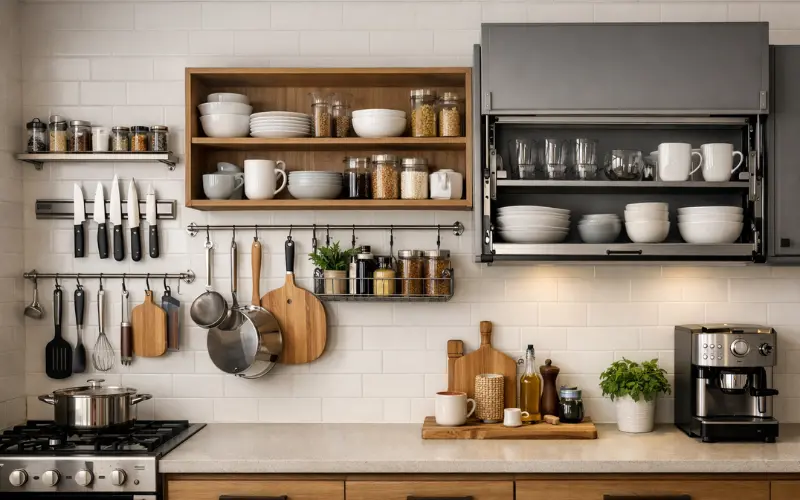
Kitchens benefit more from wall storage than almost any other room, since counter space is always at a premium.
- Magnetic knife strips free up a drawer and keep blades sharper since they aren’t knocking against other utensils.
- Rail systems with S-hooks let you hang pots, utensils, and even small baskets, and they’re fully adjustable as your needs change.
- Open shelving for everyday dishes cuts down on cabinet digging and adds warmth to the room.
- Pull-down shelving above counters works well in small kitchens where every inch of counter matters.
Bathroom
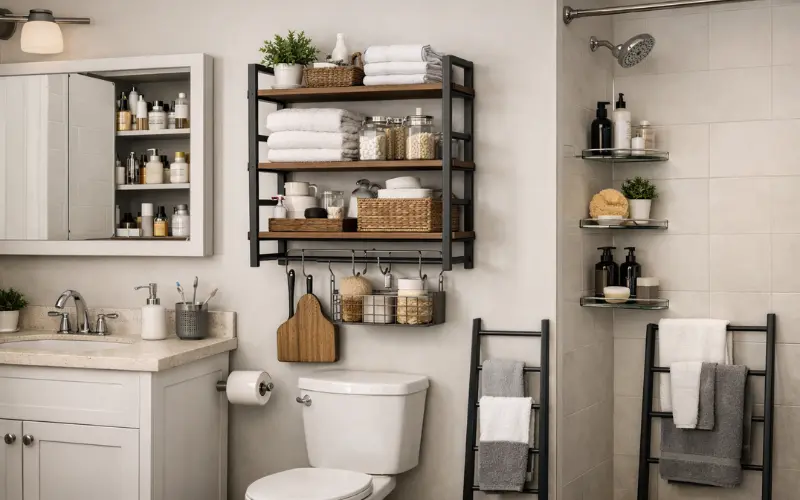
Bathrooms are usually the smallest room in the house, which makes wall storage almost essential.
- Recessed medicine cabinets sit flush with the wall instead of jutting out, which matters in tight bathrooms.
- Over-toilet shelving units use the most commonly wasted space in any bathroom.
- Corner shelves tuck into unused corners near the shower or sink.
- Towel ladders mounted to the wall hold more towels than a single bar without eating into floor space.
Living Room
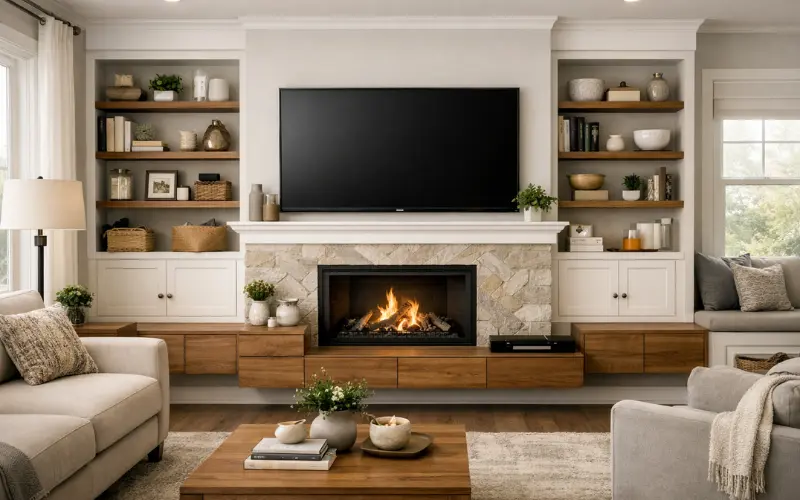
- Floating media consoles keep the TV area clean and make vacuuming easier underneath.
- Built-in style shelving around a fireplace or window adds storage that looks intentional rather than added on.
- Wall-mounted cable organizers hide cords behind furniture or inside the wall itself.
Bedroom
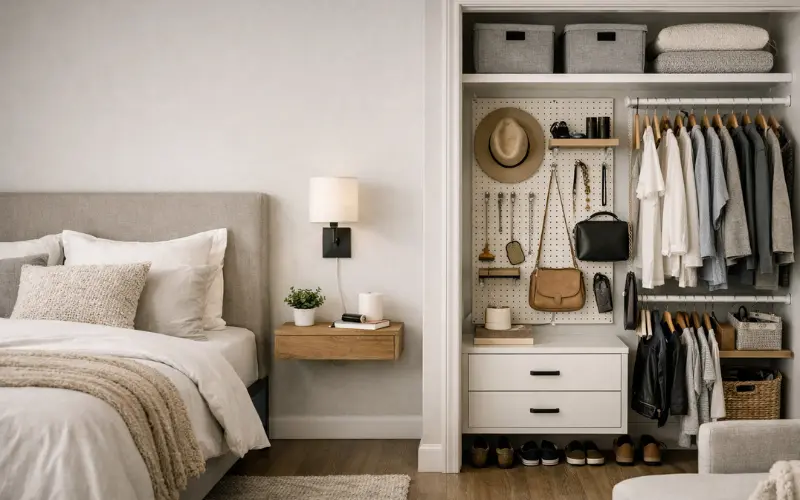
- Wall-mounted nightstands are ideal for small bedrooms where a full nightstand would block walking space.
- Pegboard organizers in a closet can hold accessories, bags, or jewelry in clear view.
- High shelving for off-season items keeps rarely used bins or boxes accessible but out of the way.
Home Office or Craft Room
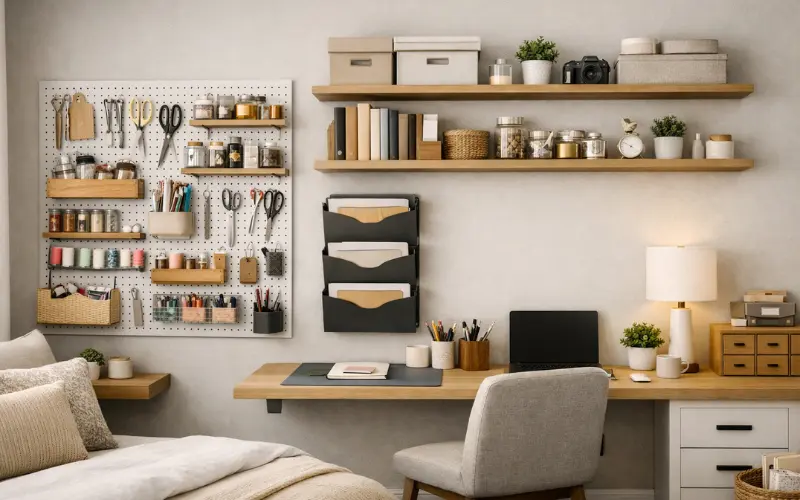
- Pegboards are endlessly customizable for tools, supplies, or office items, and they cost very little to set up.
- Wall-mounted file organizers keep paperwork sorted without taking up desk space.
- Slim shelving units above a desk add storage without crowding the workspace below.
The Hidden Storage Option Most Articles Miss
Here’s something most wall storage guides never mention: the wall cavity itself, the space between the studs, can become storage. In a standard wall, the gap between two studs is typically about 14.5 inches wide and 3.5 inches deep, just enough for a recessed shelf or cabinet.
This works especially well for:
- A recessed spice rack built directly into a kitchen wall.
- A shallow medicine cabinet that sits flush instead of protruding.
- A mail and key drop zone near the entryway.
- A built-in ironing board cabinet in a laundry room.
This kind of wall storage takes more effort than hanging a shelf, since it usually requires cutting into the drywall and adding trim. But it’s one of the most space-efficient solutions available because it adds zero depth to the room. If you’re renovating or already have an open wall, it’s worth considering before you close it back up.
Materials That Affect How Long Your Wall Storage Lasts
Not all wall storage is built the same, and material choice affects both durability and weight capacity.
- Solid wood holds up well and supports more weight, but costs more and weighs more during installation.
- MDF or particleboard is budget-friendly and fine for lightweight items like books or decor, but it can sag over time under heavy loads.
- Metal brackets and shelving offer the best strength-to-weight ratio and work well in kitchens or garages where load capacity matters most.
- Floating shelf hardware varies widely in quality, so check the weight rating before buying, not just the shelf’s appearance.
Common Wall Storage Mistakes to Avoid
A few mistakes show up again and again in wall storage projects:
- Skipping the stud finder. Anchors alone often fail under real-world weight, especially over time as wood and drywall shift slightly.
- Overloading a single point. Distribute weight across the full shelf rather than stacking everything in the center.
- Ignoring wall material. Plaster, brick, and drywall all need different hardware, and using the wrong type leads to cracks or failed installs.
- Mounting too high or too low. Storage that’s hard to reach gets used less, which defeats the purpose.
- Mixing too many styles. A wall with five different shelf styles can look cluttered even when it’s organized.
How to Plan a Wall Storage Layout That Actually Gets Used
Storage only helps if it fits how you actually live. Before installing anything, walk through your daily routine and note where clutter tends to build up. That’s usually the best spot for new wall storage, not the spot that looks nicest in a photo.
A simple rule: items you use daily belong at arm’s reach, items you use weekly belong slightly higher or lower, and items you use rarely can go near the ceiling or in a less convenient spot. This keeps your most-used storage functional instead of just decorative.
Frequently Asked Questions
What is the best wall storage for a small apartment?
Floating shelves and pegboards are usually the best choice for apartments since they’re lightweight, renter-friendly, and don’t require major wall modifications. Many can be installed with removable hardware that won’t damage the wall.
How much weight can wall storage hold?
It depends entirely on the hardware. Shelves anchored into studs can typically hold 50 pounds or more per bracket, while drywall anchors alone usually max out around 25 to 50 pounds total, depending on the anchor type.
Do I need to find a stud to install wall storage?
For lightweight items like art or small decor, anchors are usually fine. For anything heavier, such as a stocked bookshelf or a TV mount, anchoring into a stud is strongly recommended for safety and longevity.
Is wall storage cheaper than buying furniture?
In most cases, yes. A set of floating shelves or a pegboard system typically costs far less than a comparable cabinet or freestanding storage unit, and it takes up no floor space at all.
Can renters install wall storage without damaging walls?
Yes. Command strips, tension rods, and over-the-door organizers are all renter-friendly options that avoid drilling. Just check the weight limit on the packaging before loading items on.
What’s the difference between floating shelves and bracket shelves?
Floating shelves use hidden hardware for a clean look but generally hold less weight. Bracket shelves are visible but support more weight, making them better for heavier items like books or kitchen supplies.
How do I stop a wall storage shelf from sagging?
Use a thicker shelf material, add a center support bracket, and avoid overloading the middle of long shelves. Wood shelves over three feet long benefit from a support every 24 to 32 inches.
Where should I avoid installing wall storage?
Avoid load-bearing areas near electrical panels, plumbing lines, or HVAC ducts unless you’ve confirmed their location first. A stud finder with wire detection can help identify these before you drill.
Final Thoughts
Wall storage is one of the smartest and most practical upgrades for any home, no matter the size or budget.
Using vertical space intentionally with shelves, cabinets, or recessed storage helps keep homes organized and functional.
The best storage solutions come from understanding your space, choosing proper hardware, and installing securely for long-term use.
Start with one cluttered area, and once you see the difference, every empty wall will feel full of potential.