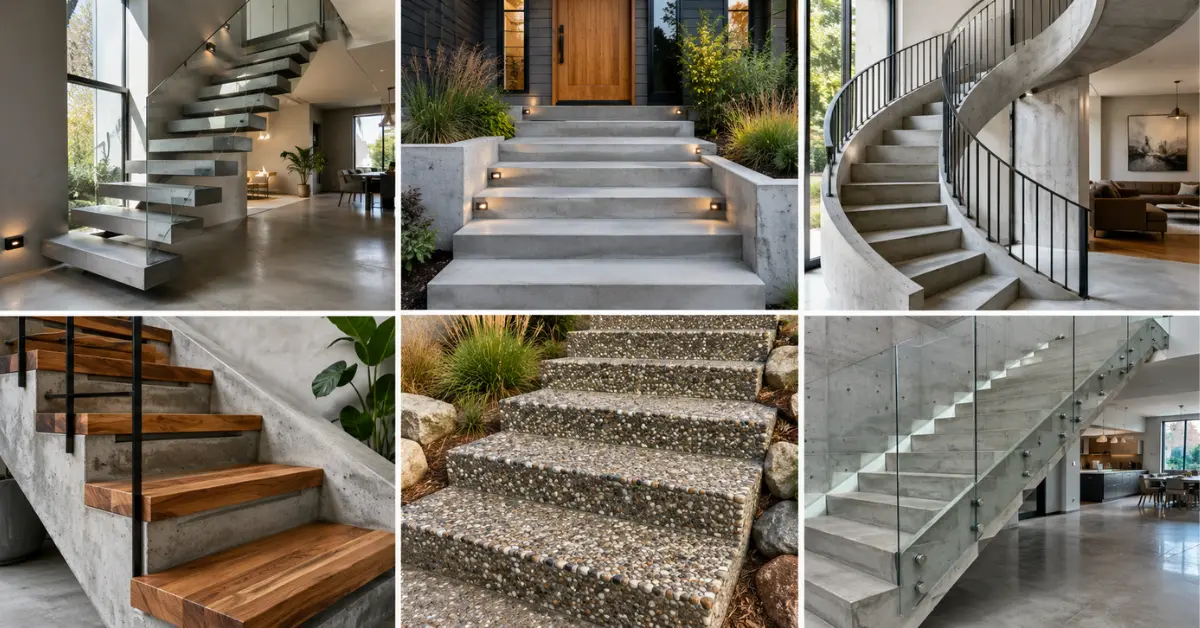
A concrete staircase is one of the most enduring investments you can make in any home or commercial building. Strong, versatile, and beautiful when designed well, it outlasts wood, resists moisture better than metal, and adapts to almost any architectural vision. Whether you are building from scratch, renovating a front entrance, or comparing materials, this guide covers everything you need to know, including what most competitors rarely discuss: mix strength, building codes, drainage, costs, and long-term maintenance.
Why a Concrete Staircase Stands Above the Rest
Homeowners and architects keep choosing concrete for one simple reason: it simply works. Here is what makes it such a reliable option:
- Exceptional durability. Concrete resists fire, pests, and moisture. Unlike wood, it will not rot, warp, or corrode.
- Design flexibility. You can mold concrete into straight, curved, spiral, or floating forms to match any aesthetic.
- Low maintenance. A sealed concrete surface needs little more than occasional cleaning and resealing every few years.
- Long-term cost-effectiveness. The upfront investment is higher than wood, but the lifespan is far longer, making it cheaper per year of use.
- High load capacity. Concrete handles heavy loads that lightweight materials simply cannot support safely.
Popular Design Styles
The design possibilities are broader than most people expect. Here are the most sought-after styles and where each one works best.
1. Floating Design
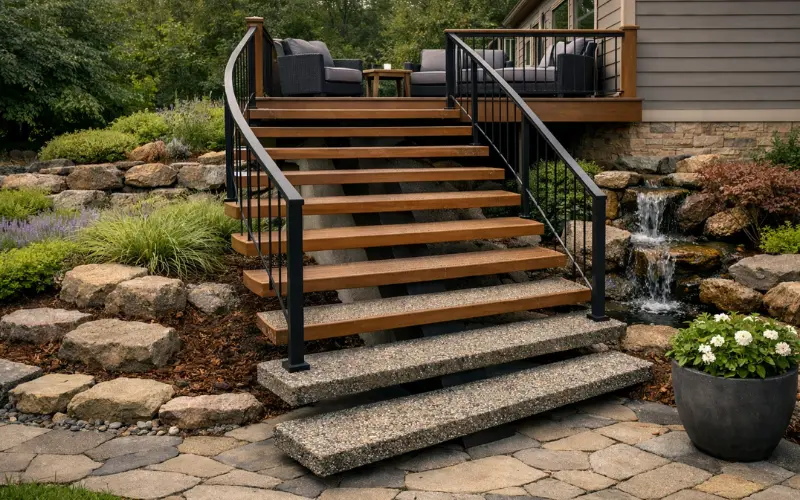
Floating stairs appear to hover without visible supports. Each tread is cantilevered from a central spine or wall, creating a dramatic open look that suits modern interiors with high ceilings and open floor plans.
2. Straight Layout
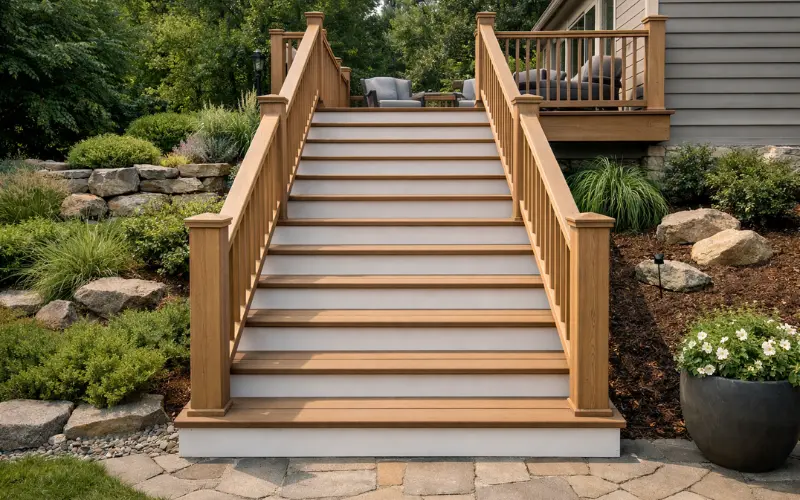
The most common and cost-effective option. A straight layout is easy to build, code-compliant in nearly every jurisdiction, and works equally well indoors and outdoors.
3. Curved or Spiral Form
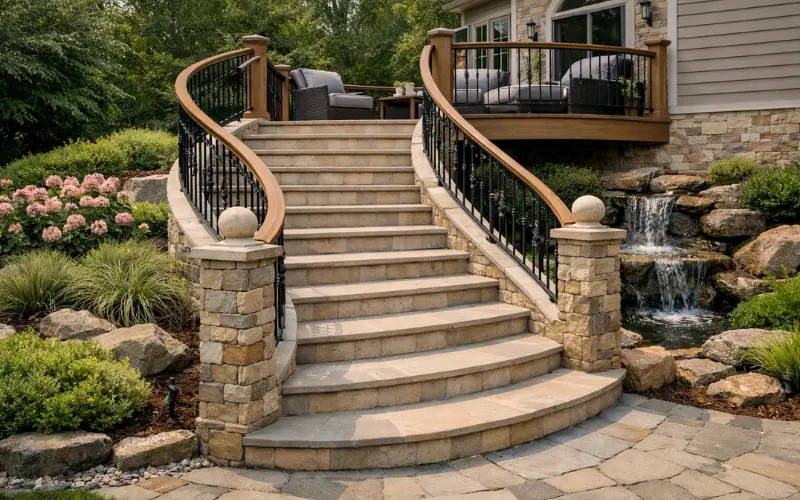
A curved or spiral form makes a bold architectural statement. It requires more formwork and skilled labor, so the budget is higher, but the visual payoff is substantial in grand entryways and foyers.
4. Concrete with Wooden Treads
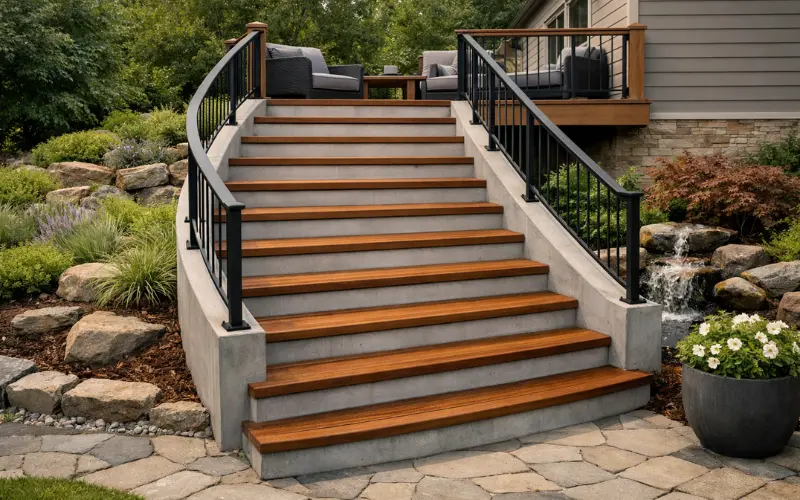
Pairing a concrete structure with hardwood or engineered wood treads adds warmth and texture. The structure provides strength while the wood surface creates a natural, inviting feel underfoot.
5. Exposed Aggregate Finish
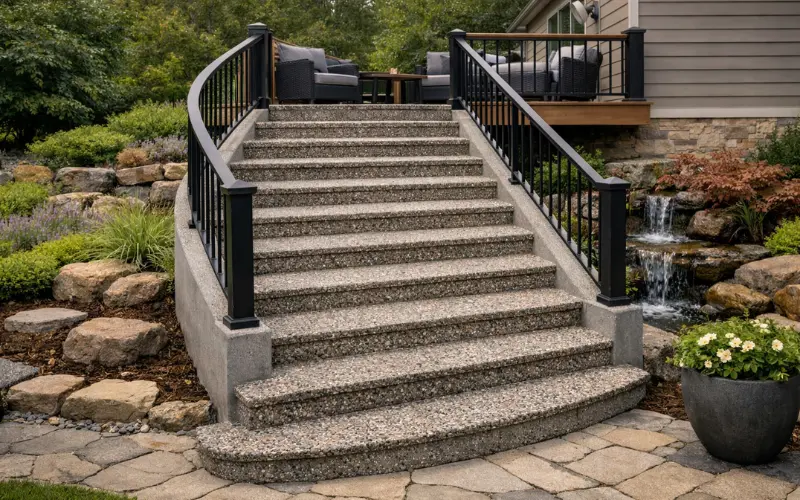
Grinding the surface to reveal the stones within the mix creates a textured, slip-resistant appearance. This works especially well outdoors where safety and weather resistance are priorities.
Key Decisions Before You Build
Most articles show you photos. Few walk you through the practical decisions that determine whether your project succeeds. Here is what you must address before a single bag of cement is mixed.
Mix Strength
For residential use, a mix rated at 3,000 to 4,000 PSI (pounds per square inch) is standard. For commercial buildings or areas with heavy traffic such as garage steps, go higher, typically 4,500 to 5,000 PSI. Always ask your contractor about the specific mix design, not just the brand.
Rebar Reinforcement
Concrete is strong under compression but weak under tension. Steel rebar or mesh inside the pour prevents cracking as the structure flexes under load. Skipping reinforcement is the single most common reason stairs crack within a few years of installation.
Drainage for Outdoor Steps
Outdoor steps must slope slightly away from the building, usually about 1/8 inch per foot, to shed rainwater. Without proper drainage, water pools on the surface, seeps into micro-cracks, and expands when it freezes, breaking the structure apart from within.
Building Codes and Safety Standards
In the United States, the International Residential Code (IRC) sets minimum requirements: stair width of at least 36 inches, maximum riser height of 7.75 inches, and minimum tread depth of 10 inches. Always check local authority regulations because codes vary by municipality. For commercial properties, ADA accessibility standards also apply, requiring handrails, specific riser heights, and level landings.
Formwork and Curing Time
Concrete is poured into temporary wooden or steel molds called formwork. The mix needs at least 28 days to reach full strength, though it becomes walkable after 24 to 48 hours. Rushing this process causes surface defects and structural weakness.
Cost Breakdown
Budget is usually the first question, and the answer depends on several variables.
| Project Type | Typical Range (USD) |
| Basic outdoor steps (4 to 6 risers) | $800 to $2,000 |
| Interior straight flight | $2,000 to $5,000 |
| Floating or curved design | $8,000 to $20,000+ |
| Polished or decorative finish | Add $3 to $10 per sq ft |
| Glass or steel railings | Add $100 to $300 per linear foot |
Prices vary by region, contractor, and project complexity. Always request at least three quotes.
Key cost drivers include:
- Labor. Forming, pouring, and finishing complex shapes requires experienced hands.
- Finish choice. A raw broom finish costs far less than a polished or acid-stained surface.
- Railing material. Simple metal pipe rails cost far less than frameless glass panels.
- Site access. Difficult access to a basement or tight urban lot adds significant labor time.
How Long Does a Concrete Staircase Last?
A properly built and maintained concrete staircase lasts 50 to 100 years. That lifespan depends on three things: quality construction, the right finish, and routine sealing.
Concrete is naturally porous. Without a penetrating sealer applied every two to three years, water and chemicals soak into the surface and cause spalling (surface flaking) and cracking over time. In cold climates, deicing salts are especially damaging and should never be used on unsealed steps. Use sand for traction instead.
Maintenance Tips That Extend the Life of Your Concrete Staircase
Caring for your concrete staircase is straightforward when you follow a simple routine.
- Clean regularly. Sweep debris weekly and wash with mild detergent monthly. Avoid harsh acid cleaners that strip the surface.
- Seal every two to three years. Use a penetrating silane or siloxane sealer for outdoor steps. A topical epoxy or polyurethane sealer works well indoors.
- Repair cracks early. Fill small cracks with a concrete patching compound before they widen and allow water infiltration.
- Check drainage. Confirm that water still runs away from the structure after landscaping changes or soil settling.
- Inspect railing anchors annually. Loose posts are a safety hazard even if the surface is in perfect condition. Re-grout or tighten them as needed.
Concrete vs. Other Staircase Materials
| Material | Lifespan | Maintenance | Best For |
| Concrete | 50 to 100 years | Low | Indoor and outdoor, all climates |
| Wood | 20 to 40 years | Medium to high | Interior residential use |
| Steel | 30 to 50 years | Medium | Industrial and modern interiors |
| Brick or Stone | 40 to 80 years | Low to medium | Exterior, traditional homes |
A concrete staircase wins on longevity and outdoor performance. Wood wins on warmth for interior use, which is exactly why the concrete-plus-wood-tread combination has become so popular with designers.
Environmental Considerations
Cement production does release carbon dioxide. However, a concrete staircase that lasts a century requires no replacement over that period, meaning fewer materials consumed overall. You can also choose mixes with supplementary cementitious materials such as fly ash or ground blast-furnace slag, which reduce the carbon footprint by up to 40 percent while maintaining full strength.
Locally sourced aggregates further reduce transportation emissions. If sustainability is a priority, ask your contractor specifically about low-carbon mix designs for your concrete staircase.
Frequently Asked Questions
1. How thick should the slab be for a concrete staircase?
The structural slab is typically 4 to 6 inches thick at the base, with treads at least 3.5 inches thick at the nosing. A structural engineer should confirm the exact thickness based on your span and load requirements.
2. Can I build one myself?
Small outdoor steps with three to four risers are within reach for a confident DIYer with the right tools. A full interior flight requires formwork, rebar work, and finishing skills that most homeowners do not have. Hiring a professional saves costly and difficult-to-reverse mistakes.
3. How do I make outdoor steps slip-resistant?
Use a broom finish, an exposed aggregate surface, or add an anti-slip additive to your sealer. Non-slip nosing strips are also an affordable and effective option for existing steps.
4. Is some cracking normal?
Yes. Minor surface cracking is common as concrete cures and the building settles. Properly reinforced concrete with control joints placed strategically keeps cracks small and cosmetic. Wide, deep, or actively moving cracks need professional assessment.
5. How long does construction take?
For a basic outdoor set of steps, formwork, pouring, and finishing take one to two days. Full curing takes 28 days, but you can use the stairs carefully after 48 hours. Complex interior flights can take one to two weeks of active work.
6. What is the best indoor finish?
Polished concrete, acid-stained concrete, and micro-topping overlays are the top choices indoors. Always pair any smooth finish with nosing strips or a textured edge to maintain safe grip.
7. How much does crack repair cost?
Minor crack filling costs $100 to $300 as a DIY project using patching compound. Professional repair of significant structural damage ranges from $500 to $2,500 depending on the extent of the problem.
8. Is concrete good for cold climates?
Yes, when properly sealed and built with air-entrained concrete, which handles freeze-thaw cycles far better than standard mixes. Avoid deicing salts and reseal every two years in harsh climates.
9. Can I tile over an existing concrete staircase?
Yes. Porcelain or ceramic tiles bond well to a clean, structurally sound surface using the right adhesive. Make sure each tile is rated for stair use and includes a slip-resistant surface or edge nosing.
10. What railing options work best?
Glass panels, stainless steel cable, wrought iron, and wood-capped steel all pair beautifully with concrete. For outdoor settings, powder-coated steel or stainless steel handles weather better than bare iron or raw wood. The right choice depends on your design style and budget.
Final Thoughts
More than a way to move between floors, a concrete staircase is a structural backbone, a design statement, and a long-term investment that pays off over many decades. The key is careful planning: choosing the right mix, reinforcing correctly, designing for drainage, and committing to basic maintenance.
Whether you want a sleek floating design for a contemporary home or a simple, durable set of front steps, concrete gives you the strength and flexibility to do it right. Work with a qualified contractor, take your time during the design phase, and your concrete staircase will still look great long after other materials have been replaced twice over.