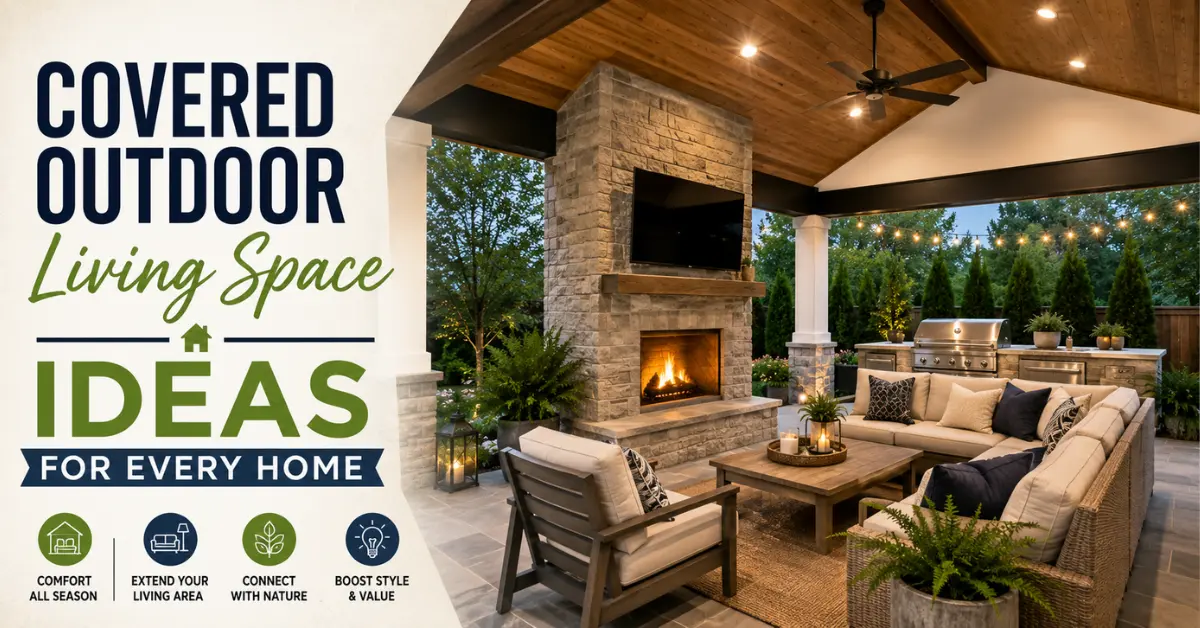
If your backyard sits unused for most of the year because of glaring sun, unexpected rain, or chilly evenings, a covered outdoor living space is the single best investment you can make. The right overhead structure turns a flat slab or bare lawn into a true extension of your home — a place where you can eat, relax, entertain, and unwind on your terms, regardless of the weather.
A covered outdoor living space does more than just block the elements. It creates a defined room. It signals that your backyard is meant to be lived in, not just looked at. And done well, it adds real value to your property. This guide walks you through the most practical and stylish Covered Outdoor Living Space Ideas available today, covering structure types, layout strategies, must-have features, and the design details that separate a good space from a great one.
Why a Covered Outdoor Living Space Changes Everything
Most people underestimate how much a roof or overhead structure changes the way they use their outdoor area. Without cover, a patio sits empty on rainy days, gets baking hot by midday in summer, and feels uncomfortably cold once the sun drops in autumn. Add a solid or semi-solid cover, and suddenly you have a usable space across three or even four seasons.
A well-designed covered outdoor living space also encourages you to furnish it properly — with rugs, lighting, soft seating, and decorative pieces you’d normally reserve for indoors. That layering is what transforms a basic covered patio into something that genuinely feels like a room.
The Main Types of Covered Outdoor Living Space Structures
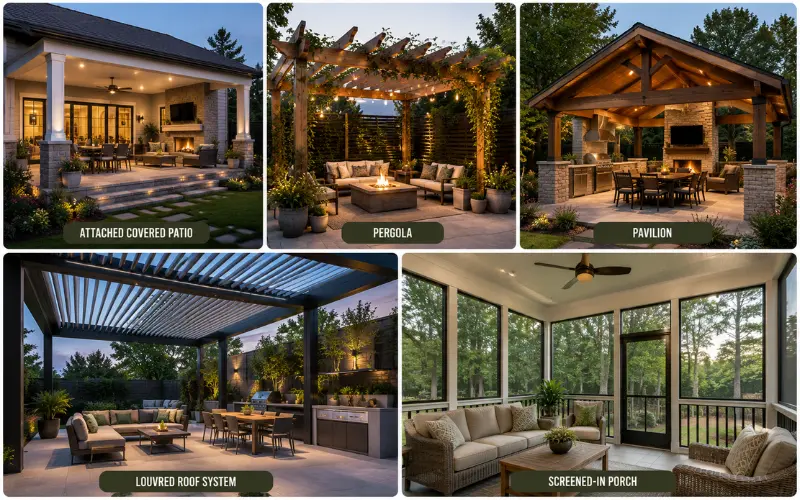
Before choosing finishes or furniture, you need to pick your structure. Each type has different strengths depending on your climate, budget, and how you intend to use the space.
Attached Covered Patio
This is the most popular covered outdoor living space option for residential homes. Built directly against the house, an attached patio cover uses the existing roofline as one side of the structure, which reduces building costs and creates a seamless indoor-outdoor flow. Ideal for outdoor dining, lounging, or a simple sitting area right outside a kitchen or living room door.
Pergola
A pergola uses open rafters or lattice on top rather than a solid roof. It provides partial shade and a beautiful architectural framework, and works brilliantly when draped with climbing plants, outdoor curtains, or shade sails. A pergola is the right choice if you want ambience and structure without feeling too enclosed. For more substantial weather protection, you can add a polycarbonate roof panel or retractable canopy.
Pavilion
A freestanding pavilion is essentially a fully roofed outdoor room that sits separately from the main house. Pavilions work especially well when you want a dedicated entertainment zone or pool-side lounge area. They feel more private than an attached patio cover and can be finished to a very high standard with timber beams, stone columns, or even a full outdoor kitchen built in.
Louvred Roof System
One of the best innovations in recent years for the covered outdoor living space category is the motorised louvred roof. Aluminium slats can be tilted to control sunlight, fully closed during rain, or opened completely on a clear evening. Some systems integrate with home automation, adjusting automatically based on weather sensors. This is the most flexible covered outdoor living space solution available today, and it justifies the higher price point for homeowners who want year-round usability.
Screened-in Porch
If your climate brings insects or you simply want a more enclosed feeling, a screened-in porch delivers a comfortable covered outdoor living space that keeps the outdoors in while keeping pests out. These work particularly well in humid, warmer climates.
Layout Ideas for Your Covered Outdoor Living Space
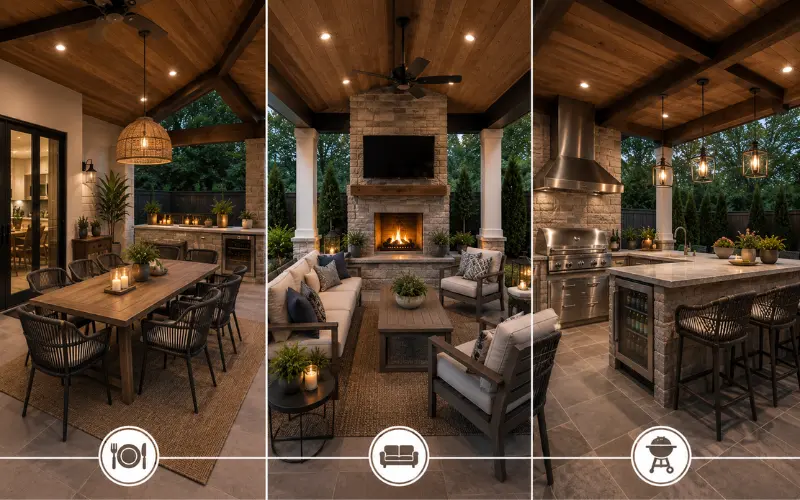
Getting the layout right is more important than any single furniture piece or finish material. Think of your Covered Outdoor Living Space Ideas in zones, just like an interior room.
The Dining Zone
A Covered Outdoor Living Space Ideas dining area anchored by a large table and six to eight chairs is often the most-used zone in any outdoor space. Position it close to a door that connects to your indoor kitchen, and consider adding a serving bench or outdoor bar cart nearby. Overhead pendant lighting directly above the table makes the space feel intentional and warm after dark.
The Lounge Zone
Separate from dining, a lounge zone within your covered outdoor living space gives people somewhere to sit back, have a drink, and have a longer conversation. Deep-seated sofas or armchairs with UV-resistant fabric, a coffee table, and an outdoor rug define this area. A fireplace or fire pit nearby extends the season significantly — few things encourage people to linger in a covered outdoor living space more than an open flame.
The Outdoor Kitchen Zone
Outdoor kitchens have moved from a luxury to a mainstream feature in high-performing covered outdoor living spaces. A built-in grill, bench space, a bar fridge, and a sink are the essentials. More ambitious setups add pizza ovens, smokers, or a dedicated bar with seating. The covered outdoor living space structure keeps cooking equipment out of direct rain and makes year-round use practical.
Features That Elevate a Covered Outdoor Living Space
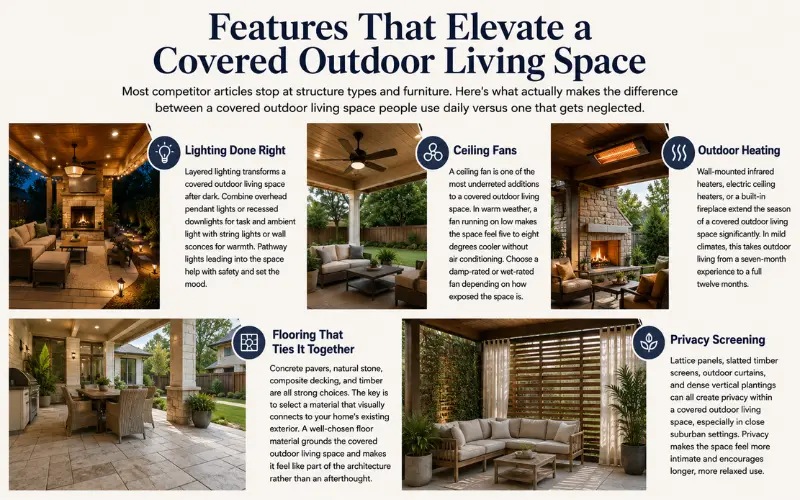
Most competitor articles stop at structure types and furniture. Here’s what actually makes the difference between a Covered Outdoor Living Space Ideas people use daily versus one that gets neglected.
Lighting Done Right
Layered lighting transforms a Covered Outdoor Living Space Ideas after dark. Combine overhead pendant lights or recessed downlights for task and ambient light with string lights or wall sconces for warmth. Pathway lights leading into the space help with safety and set the mood.
Ceiling Fans
A ceiling fan is one of the most underrated additions to a Covered Outdoor Living Space Ideas. In warm weather, a fan running on low makes the space feel five to eight degrees cooler without air conditioning. Choose a damp-rated or wet-rated fan depending on how exposed the space is.
Outdoor Heating
Wall-mounted infrared heaters, electric ceiling heaters, or a built-in fireplace extend the season of a covered outdoor living space significantly. In mild climates, this takes outdoor living from a seven-month experience to a full twelve months.
Flooring That Ties It Together
Concrete pavers, natural stone, composite decking, and timber are all strong choices. The key is to select a material that visually connects to your home’s existing exterior. A well-chosen floor material grounds the Covered Outdoor Living Space Ideas and makes it feel like part of the architecture rather than an afterthought.
Privacy Screening
Lattice panels, slatted timber screens, outdoor curtains, and dense vertical plantings can all create privacy within a Covered Outdoor Living Space Ideas, especially in close suburban settings. Privacy makes the space feel more intimate and encourages longer, more relaxed use.
Budget Ranges to Expect
A basic attached patio cover with a corrugated roof and simple posts starts from around $3,000–$6,000 for a modest size. A mid-range pergola with a solid or polycarbonate roof and some outdoor furniture runs $8,000–$20,000. A premium pavilion with an outdoor kitchen, fireplace, ceiling fans, and quality finishes can reach $40,000–$80,000 or more. A motorised louvred roof system sits in the $15,000–$35,000 range for most standard installations.
Design Styles for a Covered Outdoor Living Space
- Modern/Contemporary: Clean lines, concrete or large-format stone pavers, matte black hardware, and minimal ornamentation. A louvred roof system suits this style well.
- Farmhouse: Exposed timber beams, whitewashed or natural wood tones, Edison bulb string lights, and simple furniture in neutral tones.
- Mediterranean/Tuscan: Stone columns, terracotta tile, ornate ironwork, and climbing vines framing a pergola create that villa feel.
- Coastal/Hamptons: White or light timber, relaxed rattan and linen furniture, potted palms, and navy accents. A slatted timber pergola suits this style perfectly.
Frequently Asked Questions
1. What is the most affordable Covered Outdoor Living Space Ideas option?
An attached patio cover with a corrugated or polycarbonate roof is typically the most cost-effective entry point. It uses your existing home wall as one support and requires minimal footings.
2. Do I need a permit to build a Covered Outdoor Living Space Ideas?
In most jurisdictions, yes — especially for attached or roofed structures. Requirements vary by council or local authority, so always check before you build.
3. What is the difference between a pergola and a pavilion?
A pergola has an open or latticed roof that provides partial shade. A pavilion has a fully enclosed solid roof and typically feels more like an outdoor room.
4. How do I make my covered outdoor living space usable in winter?
Add infrared wall heaters or a ceiling-mounted electric heater, use an outdoor fireplace or fire pit, and choose weather-resistant furniture with warm cushion covers you can swap seasonally.
5. Can I add an outdoor kitchen under a covered patio?
Yes, and it’s one of the best uses of the space. Ensure proper ventilation above the grill area and use non-combustible materials near any cooking appliances.
6. What flooring is best for a Covered Outdoor Living Space Ideas?
Concrete pavers and natural stone are the most durable and low-maintenance options. Composite decking is a good choice where timber aesthetics are desired without high upkeep.
7. How long does it take to build a Covered Outdoor Living Space Ideas?
A simple pergola or patio cover can be completed in one to three weeks. A full pavilion with kitchen and electrical work may take four to eight weeks depending on trades availability and materials.
8. What type of roof gives the most protection in a covered outdoor living space?
A solid roof — whether tiled, Colorbond, or polycarbonate — gives the most weather protection. A motorised louvred roof system offers the best combination of protection and flexibility.
9. How do I choose the right size for my covered outdoor living space?
A good rule of thumb: allow at least 3m x 4m for a small dining area, 4m x 6m for a combined dining and lounge zone, and 6m x 8m or more if you’re adding an outdoor kitchen.
10. Does a covered outdoor living space add value to a home?
Yes. A well-built covered outdoor living space consistently ranks among the highest-ROI outdoor home improvements, particularly in climates where outdoor use is seasonal.
Final Thoughts
A covered outdoor living space is one of the most rewarding investments you can make in your home. It changes how you use your property, how long you stay outside, and how often you invite people over. The key is starting with the right structure for your climate and lifestyle, then building out the zones, lighting, and features that match how you actually live. Whether you go with a simple attached patio cover, a louvred roof pavilion, or a full outdoor kitchen underneath a timber pergola, the result is the same: more life lived outside.