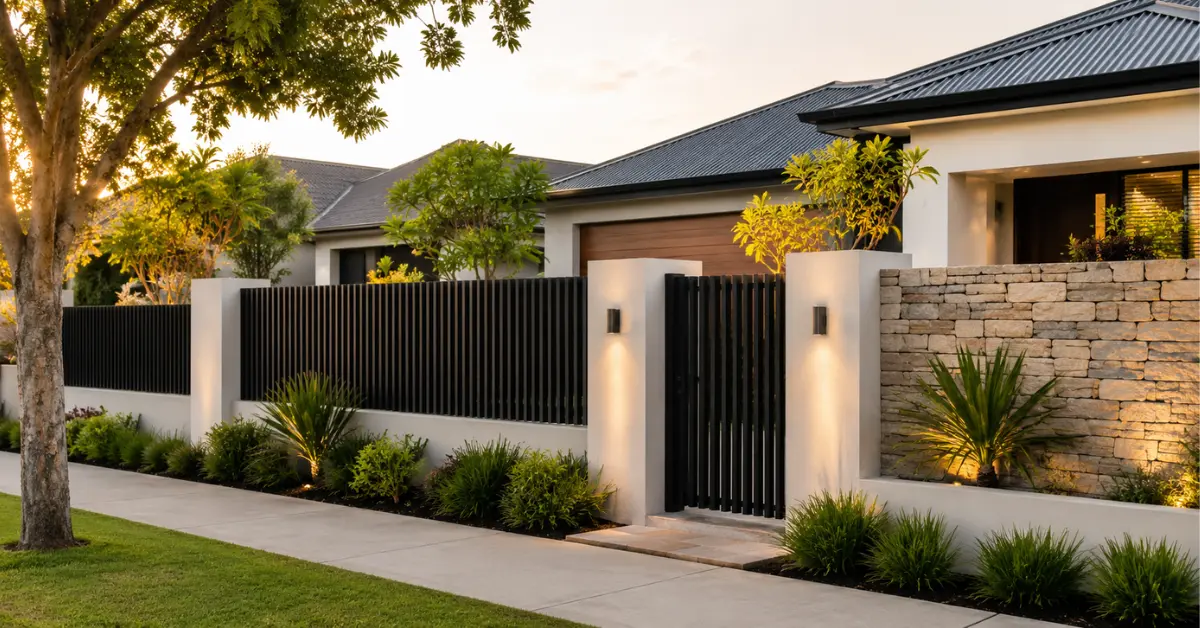
Your front fence is the first thing anyone notices about your home, long before they reach the door. It sets the tone for your property, adds privacy and security, and can lift your kerb appeal in an instant. With so many front fence ideas Australia homeowners can choose from, picking the right one can feel overwhelming.
This guide walks you through the most popular front fence ideas Australia has to offer, what each style costs, how to pick a material suited to your climate, and the council rules most people forget to check before they start digging post holes. Unlike most guides on this topic, we also cover the practical details competitors skip: exact height limits by state, real installation costs, and how to future-proof your fence against Australia’s harsh weather.
Why Your Front Fence Matters More Than You Think
A front fence does three jobs at once. It marks your boundary, protects your family and pets, and shapes how your home is perceived from the street. Kerb appeal can influence a buyer’s first impression within seconds, and the front fence is a huge part of that.
Beyond looks, a well-built fence also:
- Keeps children and pets safely contained
- Reduces noise from busy roads
- Adds a layer of security against unwanted visitors
- Increases privacy without shutting your home off from the street
- Can genuinely add resale value when done well
Popular Front Fence Ideas Australia Homeowners Are Choosing in 2026
1. Timber Picket Fencing
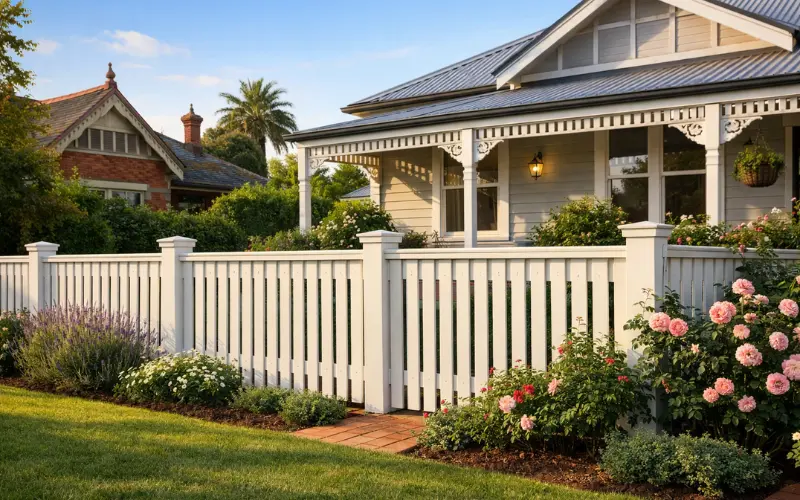
The picket fence remains one of the most loved front fence ideas Australia has ever produced. It suits Federation, Victorian, weatherboard and Hamptons-style homes particularly well. A capped picket, with a horizontal rail running along the top, gives a slightly more formal and polished finish than a traditional pointed picket.
Timber needs periodic staining or painting to stay looking sharp, but the classic charm makes it worth the upkeep for many homeowners.
2. Timber Batten and Slat Fencing (a Standout Among Front Fence Ideas Australia Renovators Request)
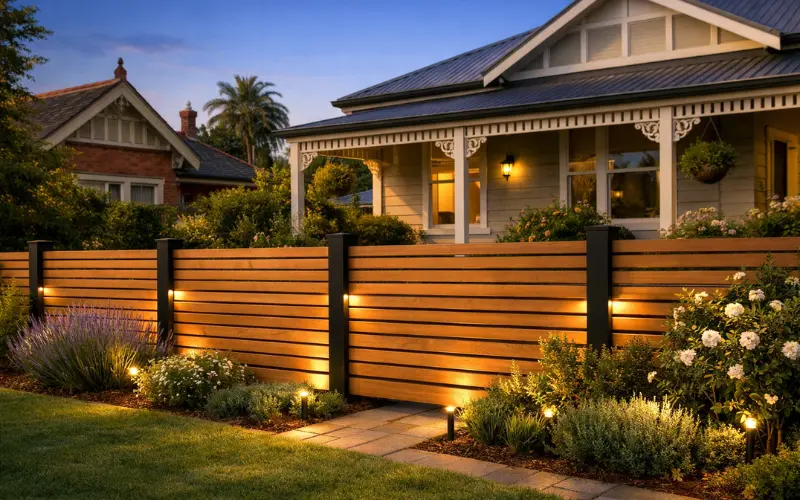
Vertical or horizontal battens create a clean, architectural look that suits both modern and heritage homes. Battens are spaced apart, which allows airflow and light through while still offering a strong visual barrier from the street. This style works beautifully with landscape lighting tucked between the slats for a striking evening glow.
3. Rendered Masonry-Look Walls
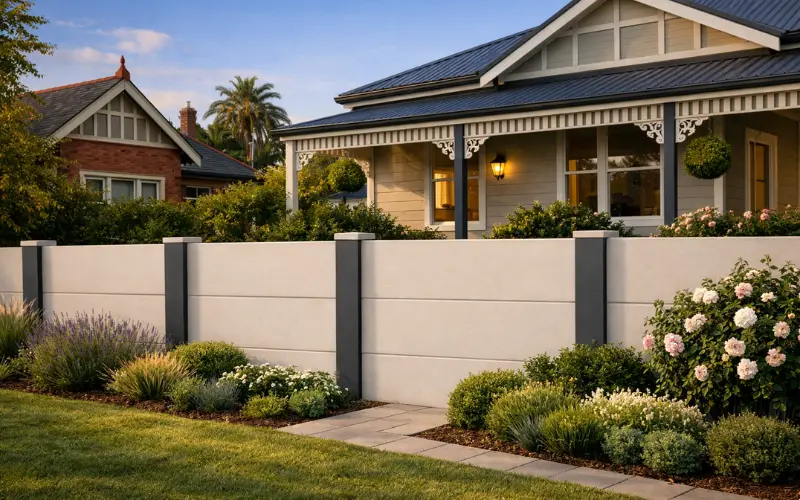
If you love the look of a solid rendered brick or concrete wall but not the price tag or the months-long build time, lightweight modular wall systems replicate the same smooth, high-end finish. These panels slot between steel posts and can be painted or texture-coated to match your home’s exterior, and they’re a much faster install than traditional masonry.
4. Aluminium Slat and Tubular Fencing
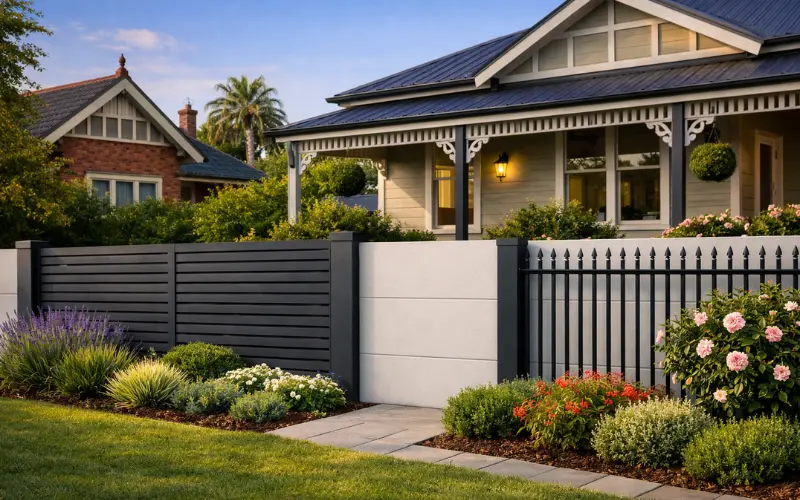
Aluminium is tough, lightweight and low maintenance. It won’t rust, rot or attract termites, making it an excellent choice for coastal properties exposed to salt air. Powder-coated finishes come in dozens of colours, suiting everything from a minimalist façade to a traditional brick home.
5. PVC Fencing
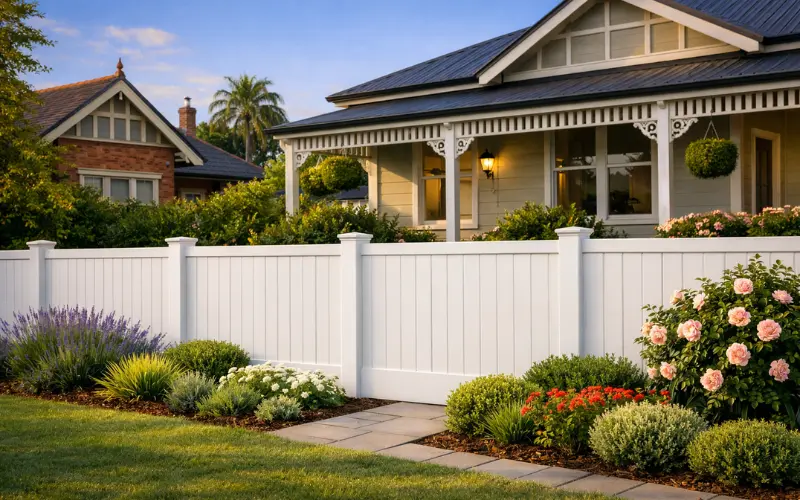
PVC replicates the look of painted timber without the ongoing repainting. It resists moisture, salt and UV fading, so it holds its colour for years with almost no upkeep. This is one of the more overlooked front fence ideas Australia coastal homeowners should seriously consider.
6. Brick and Timber Combination Fences
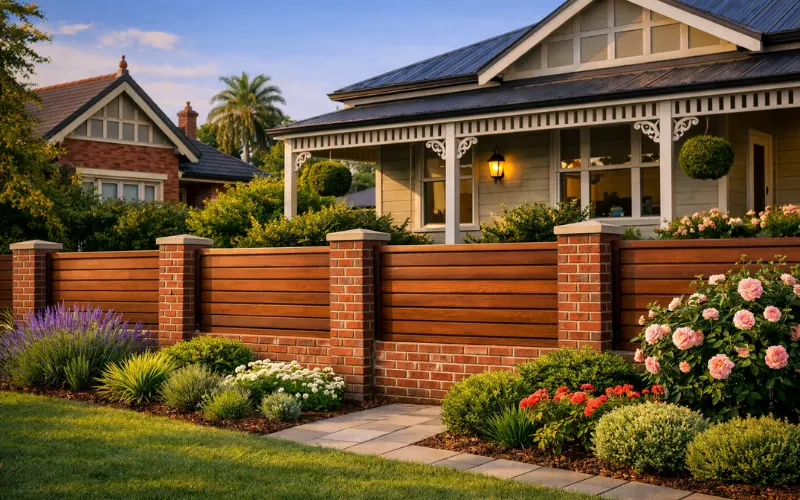
Brick pillars paired with timber infill panels give a classic, sturdy look that suits older homes or larger blocks. The brick adds permanence and structure, while the timber softens the overall appearance.
7. Low Boundary Walls
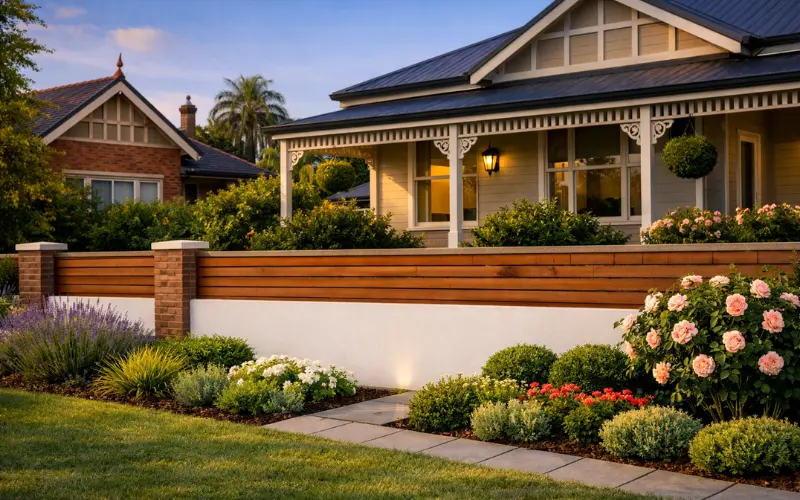
Not every home needs a tall, solid fence. A low wall, sometimes only knee height, defines the boundary and adds a decorative touch such as planter boxes or feature lighting, while keeping the home visible from the street. This suits architectural or display homes where the façade is part of the appeal.
8. Acoustic Fencing for Busy Roads
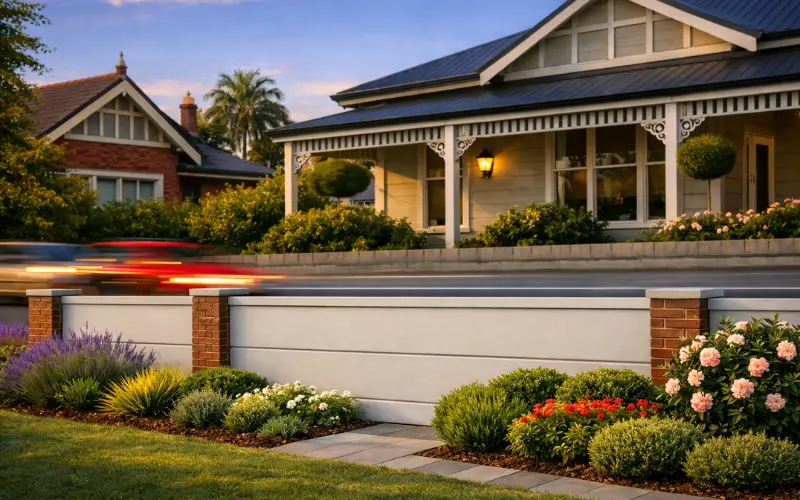
If your home sits on a main road, a school street or a corner block, an acoustic-rated fence can noticeably cut traffic noise. These are usually built from dense composite or modular wall panels engineered for sound reduction, rather than standard timber paling.
9. Hedge and Green Fencing
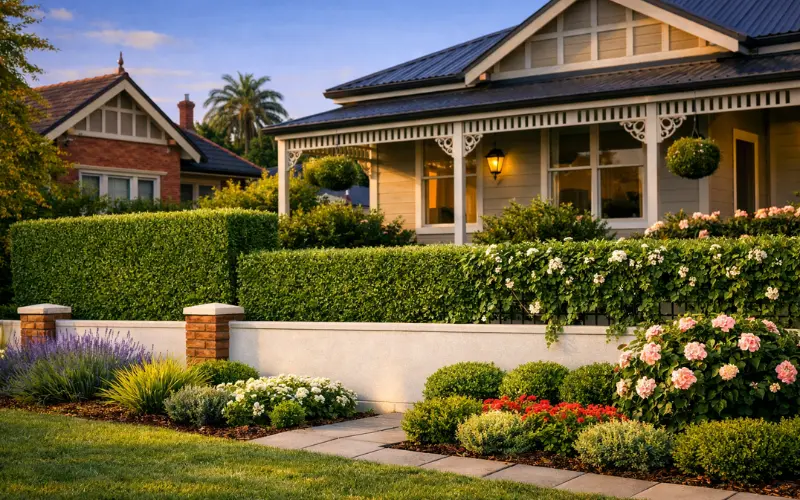
A living fence made from a manicured hedge, or a fast-growing climber trained over an existing structure, is one of the most natural front fence ideas Australia gardeners recommend. It softens hard architectural lines, adds greenery to the street, and can be combined with a low retaining wall for extra structure.
10. Concrete and Stone Fencing
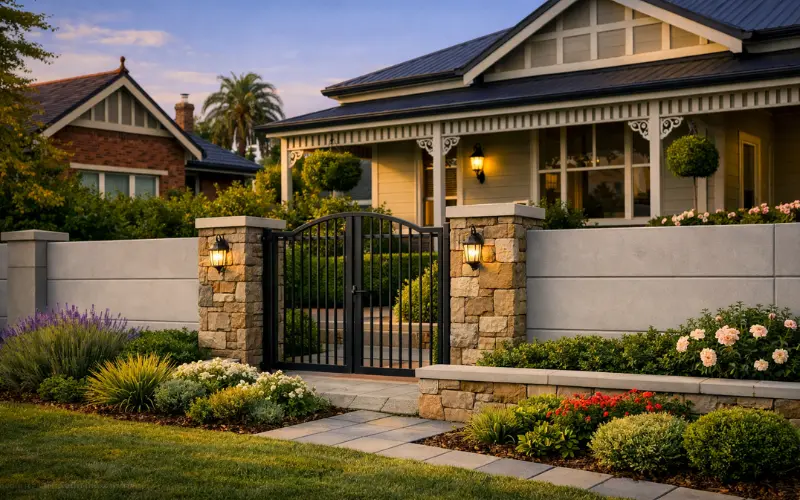
Concrete offers superior privacy and doubles as a sound barrier, which makes it ideal for busy streets. Precast panels have made this option far more affordable than a poured concrete wall, and they can be customised with cut-outs or curves. Stone detailing around a gate or pillar adds warmth to what can otherwise feel like a cold material.
Choosing the Right Material for Your Home and Climate
The best front fence ideas Australia wide still need to suit your local conditions. Here’s a quick comparison to help you decide:
| Material | Best For | Maintenance | Approx. Cost (per linear metre) |
|---|---|---|---|
| Timber picket | Heritage, coastal, Hamptons homes | Repaint or stain every 2 to 4 years | $150 to $300 |
| Aluminium | Coastal areas, modern homes | Occasional hose down | $200 to $400 |
| PVC | Coastal, low-maintenance seekers | Minimal, occasional wash | $180 to $350 |
| Modular masonry-look panels | Modern and architectural homes | Very low | $300 to $600 |
| Brick | Traditional and period homes | Very low, but repointing eventually needed | $400 to $700 |
| Composite | Wood-look with less upkeep | Low, occasional clean | $250 to $450 |
Prices vary depending on fence height, gate hardware, site access and whether posts need engineering for sloped or sandy sites, so always get a written quote before committing to a supplier.
Council Rules and Permits: What Most Guides Leave Out
This is the part many articles about front fence ideas Australia homeowners search for tend to gloss over, and it’s often the most important part.
- Height limits: Most Australian councils cap front fences at around 1.2 metres if it is a solid, sight-blocking design, though this varies by state and by whether your home sits on a corner block. Fences behind the front building line often allow greater height, sometimes up to 1.8 metres or more.
- Corner blocks: Councils frequently apply stricter height and visibility rules on corner blocks to protect sightlines for traffic and pedestrians.
- Heritage overlays: If your home is in a heritage-listed area, your council may require a specific style, material or colour to preserve the streetscape.
- Owner-builder work: In several states, any fencing work above a set dollar value requires a licensed builder or at least an owner-builder permit, even for a front fence.
- Neighbour disputes: Boundary fencing shared with a neighbour is often governed by separate dividing fence legislation, which is different from the rules for a standalone front fence facing the street.
Always check with your local council before finalising your design. A quick phone call can save you from having to modify or remove a fence after it’s built.
Budgeting for Your Front Fence
Budgeting for front fence ideas Australia wide depends on length, height, material and gate features. As a general guide:
- A basic timber picket fence for an average 20-metre frontage typically starts around $3,000 to $6,000 installed
- Aluminium and PVC options usually sit in a similar range, sometimes slightly higher for premium colours or slat patterns
- Rendered masonry-look or brick fences tend to start from $6,000 and can climb well past $15,000 depending on length, pillars and integrated features
- Automated gates, intercoms and lighting add anywhere from $1,000 to $5,000 depending on the system
Getting three quotes from local fencing contractors is the simplest way to gauge fair pricing in your specific area, since labour and material costs vary significantly between capital cities and regional towns.
Matching Fence Style to Architecture
- Federation and Victorian homes: timber picket, capped picket, or wrought iron style fencing
- Hamptons and coastal homes: crisp white picket, battened panels, or PVC in soft coastal tones
- Modern and minimalist homes: aluminium slats, rendered masonry-look panels, or low boundary walls
- Farmhouse and acreage properties: three-rail post fencing or open timber rail designs
- Period cottages: brick pillars with timber or wrought iron infill
Practical Tips Before You Build
- Check underground services before digging post holes, since fence lines often run near stormwater, gas or NBN cabling
- Consider sloped sites carefully, as stepped or raked fence panels may be needed and can add to installation cost
- Choose finishes rated for UV and salt exposure if you live within a few kilometres of the coast
- Ask your fencing contractor about warranty terms, particularly for powder-coated aluminium and composite products
- Think about long-term maintenance, not just the upfront look, since a cheaper fence that needs repainting every year can cost more over a decade than a slightly pricier low-maintenance option
Frequently Asked Questions About Front Fence Ideas Australia
What is the most popular front fence style in Australia right now?
Timber picket and battened designs remain the most requested, though rendered masonry-look panels have grown in popularity for modern homes wanting a premium finish without a full masonry build.
Do I need council approval for a front fence in Australia?
In most cases, yes, particularly if the fence is solid and above your council’s height limit or sits on a corner block. Rules vary by state and local government area, so check with your council before building.
What is the maximum height for a front fence in Australia?
Most councils allow around 1.2 metres for a solid front fence facing the street, though fences set behind the building line, or those with openwork sections above solid panels, can often go higher. Always confirm the exact limit with your local council.
What is the cheapest front fence option in Australia?
Basic timber paling or picket fencing is generally the most affordable upfront option, though PVC and aluminium can work out cheaper over time thanks to lower maintenance costs.
Which front fence material is best for coastal homes?
Aluminium and PVC handle salt air and moisture the best, since they resist rust, rot and fading. Treated timber can also work well if it’s maintained regularly.
Can I install a front fence myself?
Simple timber paling fences are sometimes suitable for a confident DIYer, but rendered panels, masonry, and anything requiring engineering for sloped or sandy soil is best left to a licensed professional.
How long does a front fence typically last?
Aluminium and PVC fences often last 20 years or more with minimal care. Timber fences typically last 10 to 20 years depending on the wood type and how well it’s maintained.
Should my front fence match my neighbours’ fences?
It doesn’t have to match exactly, but choosing a similar height and general style helps your street feel cohesive and can avoid friction over sightlines and shared boundaries.
Final Thoughts
There’s no single right answer when it comes to front fence ideas Australia homeowners can choose from. The best fence for your home depends on your architectural style, your climate, your council’s rules, and how much ongoing maintenance you’re willing to take on. Timber picket fencing still wins on charm, aluminium and PVC win on low maintenance, and rendered masonry-look panels win on that premium, high-end finish without the traditional brick price tag.
Take the time to check your local council requirements before you commit to a design, get multiple quotes, and choose a material that will genuinely suit your local weather conditions. A well-chosen front fence will keep working for your home’s kerb appeal for decades to come.