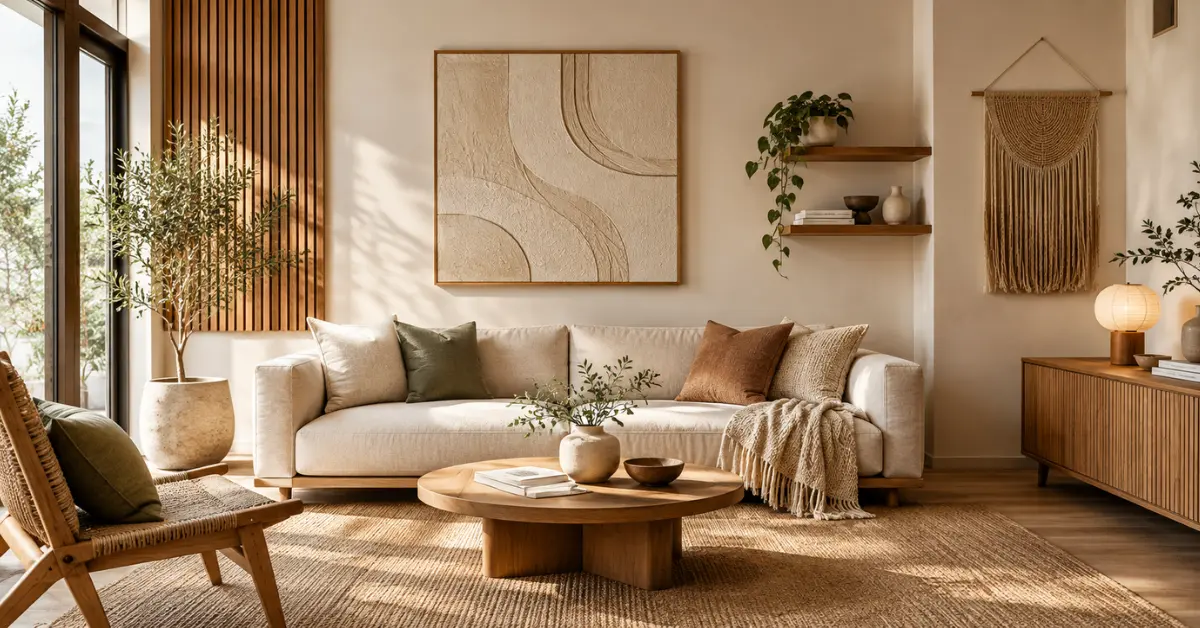
Japandi wall decor is far from cold or sterile; it combines the functional simplicity of Japanese design with the cozy warmth of Scandinavian hygge. By prioritizing tactile organic textures—such as raw timber, woven canvas, and earthy ceramics—Japandi wall pieces add quiet elegance without cluttering a space. When proportioned correctly and paired with soft, warm undertones, this style creates an inviting, deeply relaxing home environment.
Why Japandi Wall Decor Art Often Feels Cold (And How to Fix It)
A frequent issue homeowners run into when decorating with Japandi wall art is an accidental drop in visual temperature. The clean lines and muted palettes can easily lean sterile if you rely too heavily on flat paper prints or stark black frames. In traditional Japanese interiors (Wabi-Sabi), warmth stems from natural imperfection and material honesty, whereas Scandinavian design relies on rich texture to fight off harsh winter light.
When wall decor lacks physical dimension, a room loses its soul. To fix this, swap mass-produced, flat geometric prints for pieces featuring relief, grain, and physical depth. Think raised plaster, woven fiber hangings, or carved wooden elements.
Expert Insight:
“When sourcing wall art for Australian interiors, pay close attention to local light. Down under, our bright sunlight can wash out subtle pastel artwork. Choosing deeper timber accents and textured, light-absorbing fabrics prevents Japandi walls from looking faded or washed out.” — Eleanor Vance
Tactile Materials That Bring Instant Warmth
To make a minimal wall feel cozy, tactile materials do the heavy lifting. Instead of filling your walls with multiple framed pictures, select one or two high-impact focal points that invite touch.
Raw Timber and Carved Wood
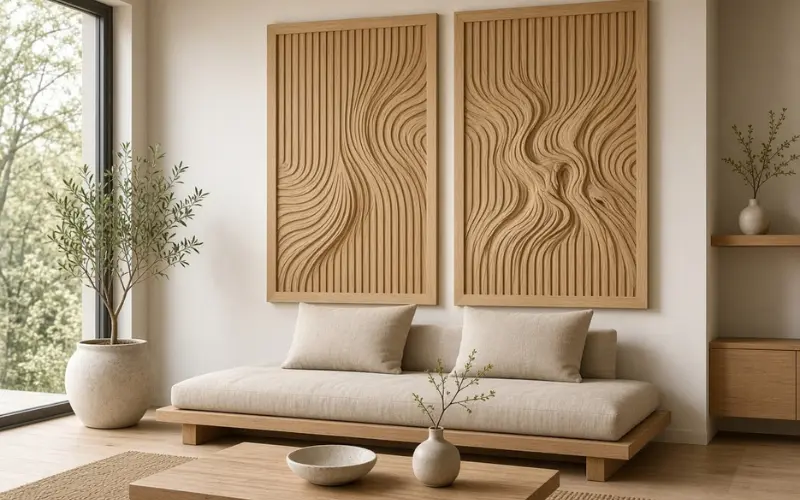
Wood is the ultimate bridge between Japanese and Nordic styles. A carved wooden wall feature or a pair of slatted panels grounds a room instantly. Look for native or sustainably sourced timber like light oak, ash, or Tasmanian oak. Incorporating bespoke timber art
brings subtle organic patterns into your space without cluttering the visual field.
Woven Fibers and Fabric Hangings
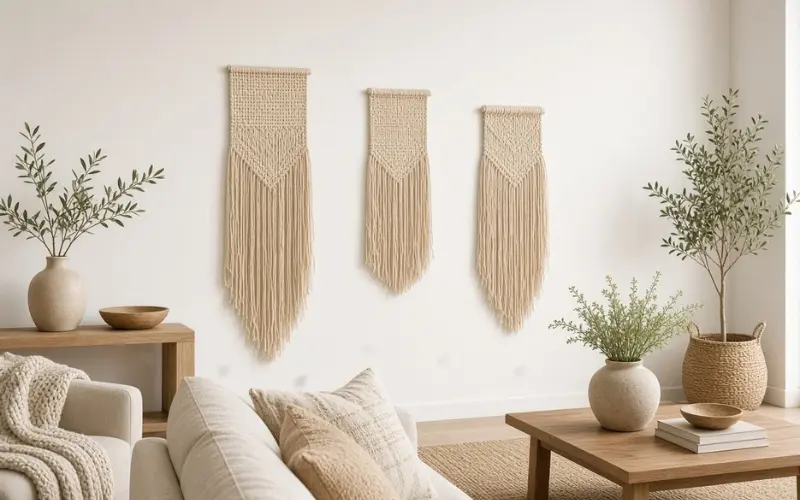
Softening a large, blank wall doesn’t always require paint or wallpaper. Woven wall hangings made from unbleached cotton, jute, or linen introduce immediate warmth. If you appreciate hand-crafted details, integrating macrame wall decor
featuring simple, knotless fringe designs offers a subtle, bohemian-influenced take on Nordic hygge.
Textured Plaster and Canvas
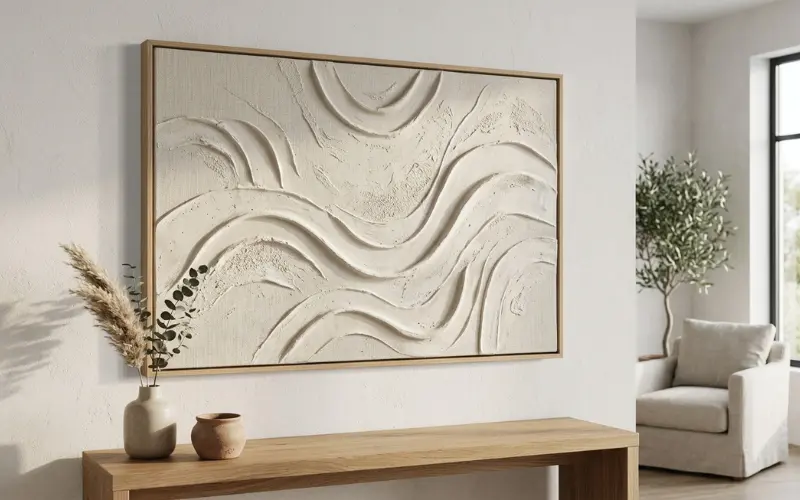
Bas-relief art—created using joint compound, plaster, or heavy acrylic paste on stretched canvas—adds physical shadow lines that change throughout the day as natural light moves through the room. Abstract wave patterns, gentle arcs, and subtle topography fit the Japandi ethos perfectly.
Sizing and Placement Rules for Australian Homes
Australian architectural styles often feature open-plan layouts, high ceilings, or floor-to-ceiling glass doors. Placing tiny, delicate art pieces on large open walls creates visual imbalance and makes a room feel empty rather than intentionally minimal.
- Apply the 60% Scale Rule: Your artwork or wall installation should cover roughly 60% to 75% of the available wall width above major furniture pieces, like a sofa or sideboard.
- Negative Space is Intentional: Leave at least 20–30 cm of breathing room around your art piece. The goal is to allow the eye to rest, not to fill every gap.
- Eye-Level Alignment: Hang the midpoint of your central wall feature approximately 145 cm to 155 cm from the floor to align naturally with standing sightlines.
- Consider Architectural Features: In rooms with grand structural elements, such as a tall brick fireplace, keep wall decor minimal and offset to highlight the masonry texture rather than competing with it.
Choosing Wall Colors with Warm Undertones
Stark white paint is the enemy of a warm Japandi space. To build a cozy sanctuary, choose paint colors with creamy, earthy, or yellow undertones that react softly to interior lighting.
- Creamy Off-Whites: Avoid pure blue-based whites. Opt for warm whites that feel soft in morning light.
- Muted Sage and Olive: Green brings nature indoors, mirroring the peaceful atmosphere of traditional Japanese gardens.
- Warm Sand and Oatmeal: These shades build a soothing background for darker wooden furniture or black metal accents.
- Soft Terracotta and Clay: Subtle clay tones add warmth to cooler rooms without overwhelming the minimal aesthetic.
If painting an entire room feels like too much work, adding wall decor wallpaper
with grasscloth or linen-texture effects creates an inviting accent wall in a single afternoon.
Step-by-Step: Styling a Warm Japandi Wall Decor
Follow this practical process to style an inviting wall feature without over-decorating:
- Clear the Canvas: Remove all existing items from the target wall. Take a step back and note where natural light hits the surface during peak daylight hours.
- Select One Hero Piece: Choose one large-scale piece—such as a large slatted wood installation, a textured plaster canvas, or an oversized woven hanging.
- Layer Supporting Elements: Position a low-profile sideboard, bench, or console table beneath the artwork.
- Add Organic Life: Place a single ceramic vase with dried pampas grass, eucalyptus branches, or a potted indoor plant on the bench offset from the center.
- Incorporate Warm Lighting: Install a soft-diffused wall sconce or place a warm-temp floor lamp (2700K color temperature) nearby to cast a gentle glow across the wall’s texture at night.
Field-Tested Tip:
Avoid symmetrical arrangements. Japandi design relies on Asymmetry (Fukinsei)—placing your vase or secondary object slightly off-center creates a dynamic, lived-in feel that feels intentional rather than staged.
Common Japandi Decor Mistakes to Avoid
Even with the best intentions, it’s easy to miss the mark. Keep these frequent missteps on your radar:
- Overusing Plastic and Synthetic Frames: Cheap synthetic materials destroy the organic, nature-focused essence of Japandi design. Stick to real timber, matte ceramic, or metal.
- Ignoring Functional Storage: Clutter on tables or floors ruins the calming effect of Japandi wall art. Incorporate hidden built-ins or subtle wall storage to keep surfaces clean.
- Mixing Too Many Wood Tones: While mixing wood is fine, using more than two distinct timber stains in one view creates visual noise. Stick to light oak paired with dark walnut accents.
- Relying Solely on Black and White: While black accents provide grounding contrast, relying entirely on monochrome tones turns a Japandi space into a cold, clinical environment.
Frequently Asked Questions
What is Japandi style decorating?
Japandi style decorating is an interior design fusion that blends Japanese minimalism with Scandinavian functionality. It focuses on clean lines, natural materials, warm neutral palettes, and intentional craftsmanship to create calm, uncluttered spaces.
Is Japandi still in style?
Yes, Japandi remains popular because it focuses on timeless principles—sustainability, natural materials, and functional simplicity—rather than fast-fading trends. Its emphasis on comfortable minimalism makes it a lasting choice for modern homes.
What are good wall colors for a Japandi style home?
Warm off-whites, creamy oats, soft beige, muted sage green, and light terracotta make excellent Japandi wall colors. These shades provide an earthy backdrop that highlights natural wood and woven textures.
What are common Japandi Wall Decor mistakes?
Common mistakes include using stark white paints, relying on cheap synthetic materials, over-decorating with clutter, and using flat prints without any physical texture or warmth.
Can I mix Japandi decor with other design styles?
Yes, Japandi blends well with styles that share its appreciation for natural materials and clean forms, such as organic modern, Wabi-Sabi, and mid-century modern design.
How do I make my minimal Japandi Wall Decor feel warmer in winter?
Incorporate ambient lighting with warm-toned bulbs (2700K), hang textured textile or timber art, and place warm-toned wooden furniture beneath your wall displays to create an inviting atmosphere.