By WAJAHAT | Notes from comparing railing systems, code summaries and installer feedback
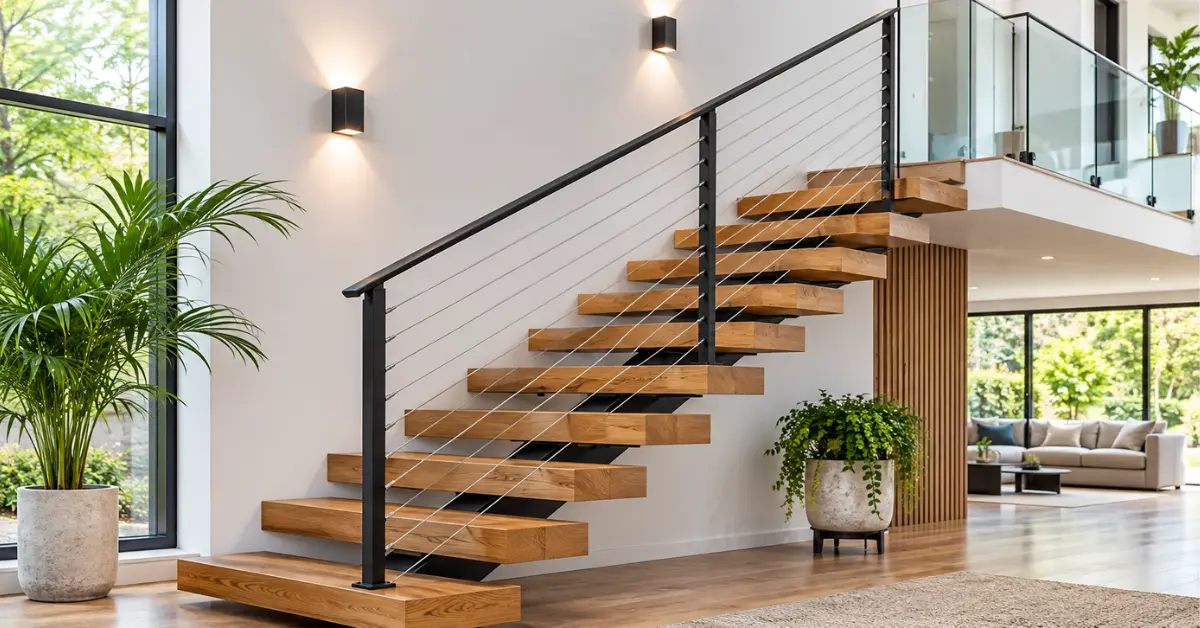
The most common Floating Stair Railing are cable, glass and flat bar. Cable and flat bar suit most budgets, while glass gives the most open look at about $200 to $500 per linear foot installed. On floating stairs, the mounting method matters more than the infill, because there is no solid riser or wall to hold posts.
Floating Stair Railing Types Compared
| Railing type | Look | Cost per linear foot (estimate) | Maintenance | Best for |
|---|---|---|---|---|
| Cable | Slim horizontal lines | $100 to $300 | Retension yearly | Modern, budget-friendly |
| Glass | Almost invisible | $200 to $500 | Frequent wiping | Open plan, premium |
| Flat bar or pickets | Quiet, linear | $120 to $350 | Low | Custom steel looks |
| Wood balusters | Traditional | $60 to $200 | Low | Transitional homes |
| Wall handrail only | Minimal | $30 to $120 | Very low | Stairs with a full wall side |
Basic kits for cable or glass often start around $500 and scale with length. Installed cost depends on corners, posts and labor.
Where Railing Mounts on Floating Stairs
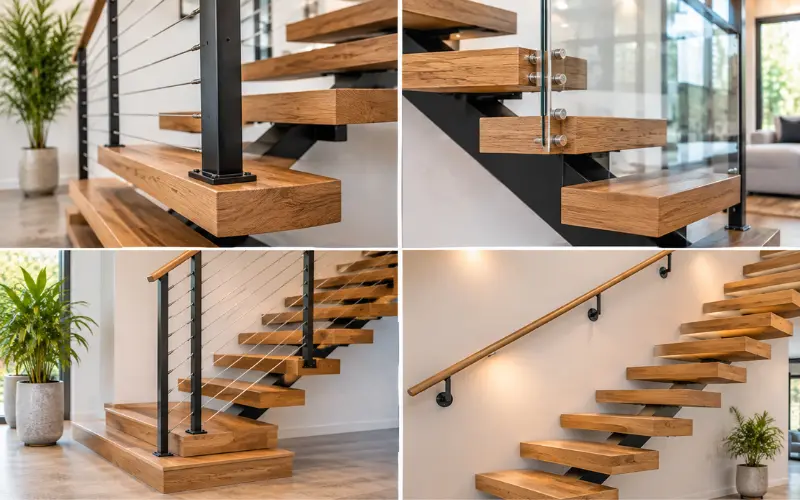
This is the question most guides skip. Pick the mounting method before the railing style.
| Mount location | How it works | Pros | Watch out |
|---|---|---|---|
| On top of the tread | Post bolted through the tread | Simple, strong with reinforcement | Can crack unreinforced wood |
| Side of the tread or stringer | Plate or standoff on the edge | Clean top surface | Needs a strong edge or beam |
| Floor or landing base | Posts at ends only | Fewer fixings | Limited to short runs |
| Wall | Handrail brackets only | Cheapest | Needs studs or blocking |
If your stair uses a central beam, tread-mounted posts need reinforced treads. Our mono stringer floating stairs guide explains why.
Code Numbers Every Railing Plan Needs
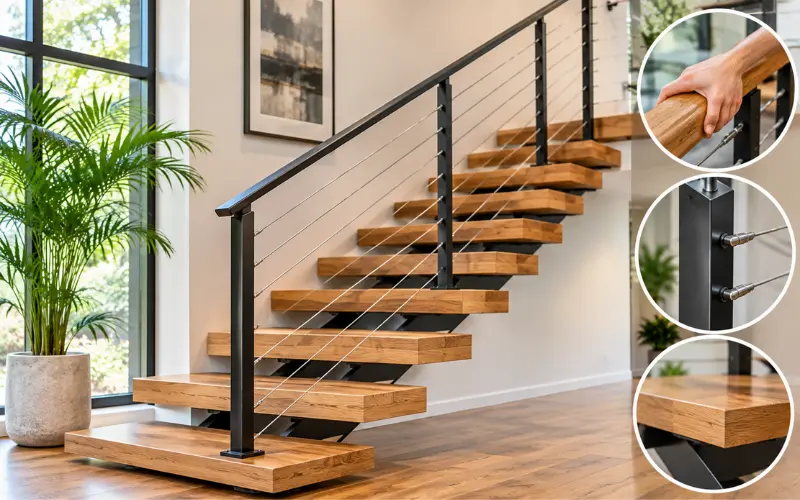
Local rules vary, so confirm with your building department. These values are commonly based on the IRC.
| Item | Typical requirement |
|---|---|
| Handrail height | 34 to 38 inches above tread nosing |
| Handrail grip (round) | About 1 1/4 to 2 inches in diameter |
| Wall clearance | About 1 1/2 inches |
| Guard at landings and floor edges | Commonly 36 inches or more |
| Opening limit | Must stop a 4 inch sphere |
| Guard load | Often designed for a 200 lb load at the top rail |
A handrail is typically required on flights with four or more risers, even where glass or cable acts as the guard.
Expert note: Ask for the railing load rating in writing. A beautiful system that only works with your structure’s weak spot is a risk, not a feature.
Cable Railing on Stairs: Details That Matter
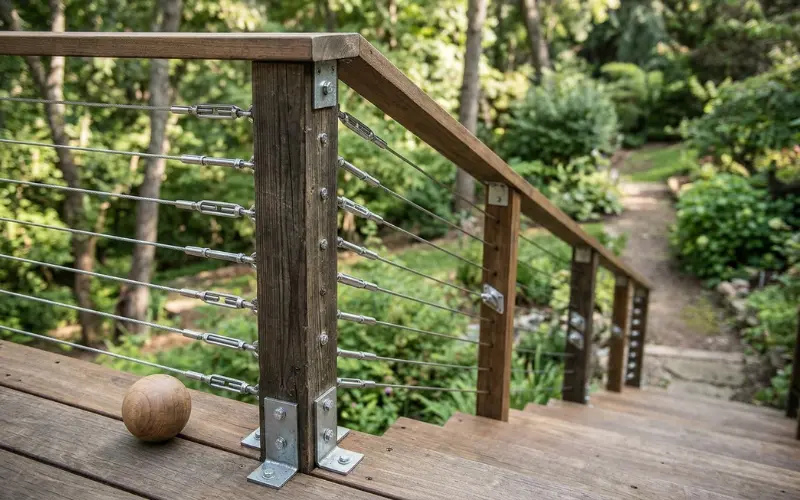
Cable looks simple, but stairs add complications.
- Spacing: Cables are often placed about 3 inches apart so the 4 inch sphere cannot pass, even if they flex.
- Post strength: Cable tension pushes posts inward. End posts need to be rigid and well anchored.
- Sloped runs: Cables must follow the stair slope, which requires angled fittings.
- Tension checks: Cables loosen over time. Plan an annual check.
- Outdoor use: Use stainless steel suited to the environment. Coastal sites often need marine-grade stainless.
Glass Floating Stair Railing
Glass gives the cleanest look but needs a strong base. Our glass floating stairs guide covers glass types, mounts and lead times in detail. If you only need one open side, our one side open staircase article shows typical railing lengths and costs.
8 Open Stair Railing Ideas That Work
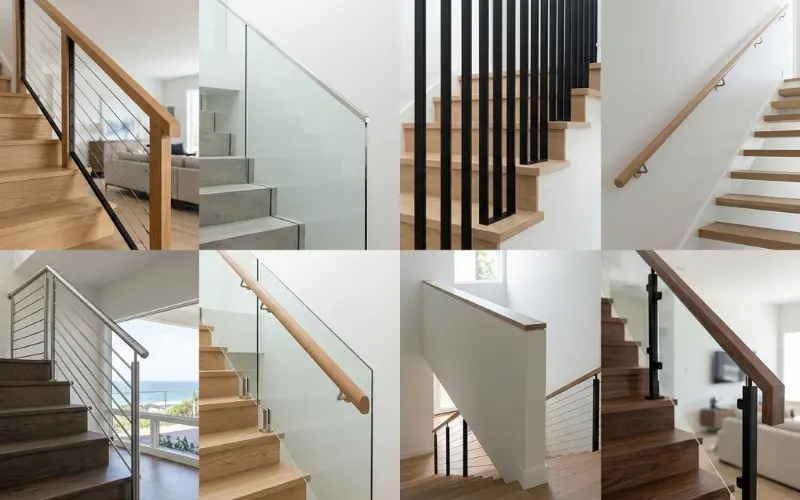
- Black cable with oak handrail: Warm top, slim infill.
- Frameless glass with a thin steel cap: Maximum light.
- Flat bar balusters in matte black: Clean vertical rhythm.
- Wall-mounted round handrail only: Quiet and low cost.
- Stainless rod railing: Lower upkeep than cable, good near coasts.
- Wood handrail on glass panels: Adds warmth to a cold look.
- Half wall with a slim rail: Keeps privacy on one side.
- Matching railing and tread tone: Walnut with walnut, black with black.
Railing Costs for a Typical Stair
A straight stair with 14 to 15 risers usually has about 12 to 16 feet of open side, plus any landing edge.
| Railing | Estimated cost for 12 to 16 feet |
|---|---|
| Cable | $1,200 to $4,800 |
| Flat bar | $1,440 to $5,600 |
| Glass | $2,400 to $8,000 |
| Wall handrail | $360 to $1,920 |
See our floating stairs cost breakdown for a full project budget.
Outdoor Railing Notes
Weather changes material choices. Use galvanized or stainless fixings, avoid soft woods and check drainage around posts. Our outdoor floating stairs guide lists materials that hold up.
Choosing the Right Railing in 5 Steps
- Set your structure. Beam, side stringers or wall.
- Pick the mount. Tread, side, floor or wall.
- Check code gaps. Use the 4 inch sphere.
- Match the style. Cable for light, glass for openness, flat bar for quiet lines.
- Confirm the rating. Ask for load documentation.
For open riser gaps, see our open riser staircase guide.
Frequently Asked Questions
What is the best railing for floating stairs?
Cable suits most budgets, glass is the most open, and flat bar gives a clean custom look.
Do floating stairs need a handrail?
Usually yes on flights with four or more risers, even if glass or cable is used as the guard.
How much does floating stair railing cost?
Typically $100 to $500 per linear foot installed, depending on type.
Can I put railing posts on floating stair treads?
Yes, with reinforced treads and proper fasteners. Unreinforced treads can crack.
Is cable railing safe for kids?
It can pass code with close spacing, but some children can climb horizontal cables. Add a barrier if needed.
Can I use railing only on one side?
Often yes. Many stairs use railing on the open side and a wall handrail on the other.
Does glass railing need a top rail?
Not always, but laminated glass is the safer choice when there is no cap. Confirm with local code.
How often does cable railing need maintenance?
Check tension yearly and clean stainless surfaces, especially outdoors.