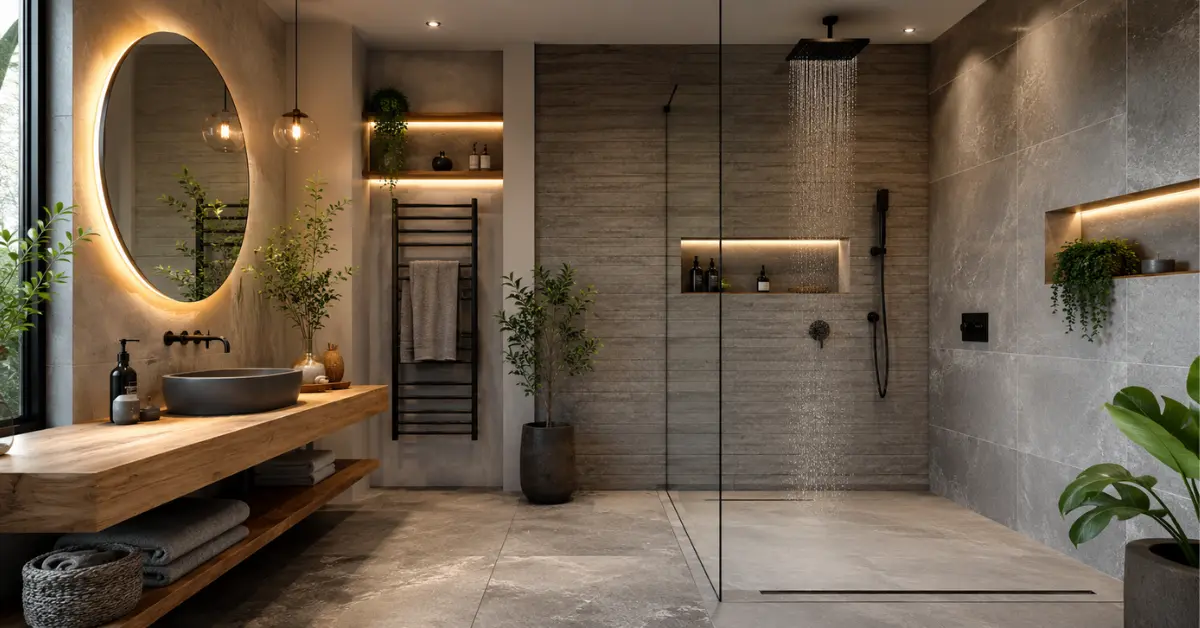
If you have ever stepped into a bathroom where the shower flows seamlessly into the rest of the space, with sleek tiles from floor to ceiling and no awkward barriers in sight, you have experienced a modern wet room bathroom. This style has moved well beyond hotel lobbies and luxury resorts. Today, homeowners across the world are choosing the modern wet room bathroom as their go-to renovation for good reason.
This guide covers everything: what a wet room actually is, how to design one that works for your space, the costs involved, and the things most articles forget to mention.
What Is a Modern Wet Room Bathroom?
A modern wet room bathroom is a fully waterproofed space where water can reach any surface without causing damage. Unlike a traditional bathroom where only the shower area is waterproof, every wall, floor, and fitting in a wet room is sealed and water-resistant.
The result is an open, uncluttered space with a flush-to-floor drain, no shower tray, and usually no bulky shower door. Some wet rooms include a freestanding bathtub within the shower zone, combining the bathing and showering experience into one continuous area.
Why the Modern Wet Room Bathroom Is Booming
The modern wet room bathroom has grown in popularity for several overlapping reasons.
- Wellness culture is a big driver. People want their bathrooms to feel like a personal spa, a place to decompress after long days. The open-plan layout, rainfall showers, and steam-compatible designs feed that desire perfectly.
- Minimalism in interior design has also pushed wet rooms to the front. Clean lines, uninterrupted tile runs, and the removal of visual clutter align with how many people want their homes to feel.
- Aging-in-place planning is the angle competitors rarely discuss in depth. The curbless entry in a modern wet room bathroom makes it far easier for older adults and people with limited mobility to bathe safely. No step to navigate, no shower door to wrestle with. For families thinking about long-term livability, this is a serious practical advantage.
Finally, the increase in remote working has changed how people use and value their homes. Spending more time at home naturally raises the standard people expect from every room, including the bathroom.
7 Modern Wet Room Bathroom Design Ideas Worth Trying
1. The Full Tile Sanctuary
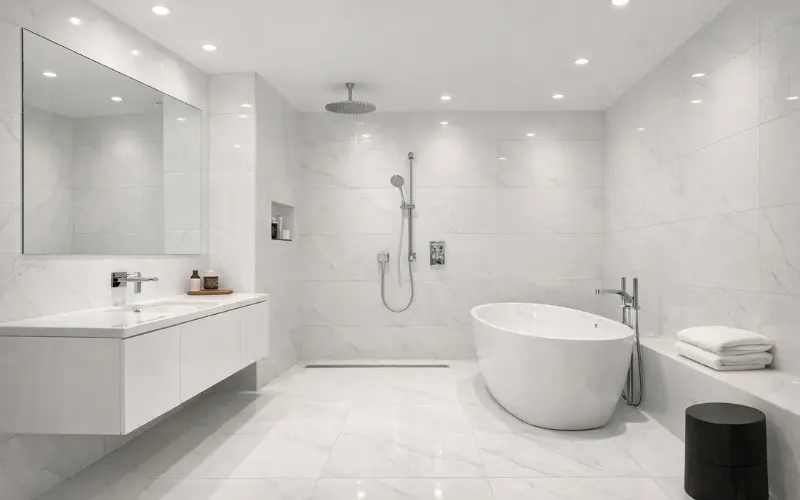
Cover every surface, floor to ceiling, in large-format porcelain tiles. Keep the grout lines thin and consistent for a seamless look. Darker tiles in charcoal or slate create a dramatic, cocoon-like feel. Lighter tones in white or bone keep things airy and open. This is the most popular approach in a modern wet room bathroom because it is clean, durable, and genuinely striking.
2. The Freestanding Tub Setup
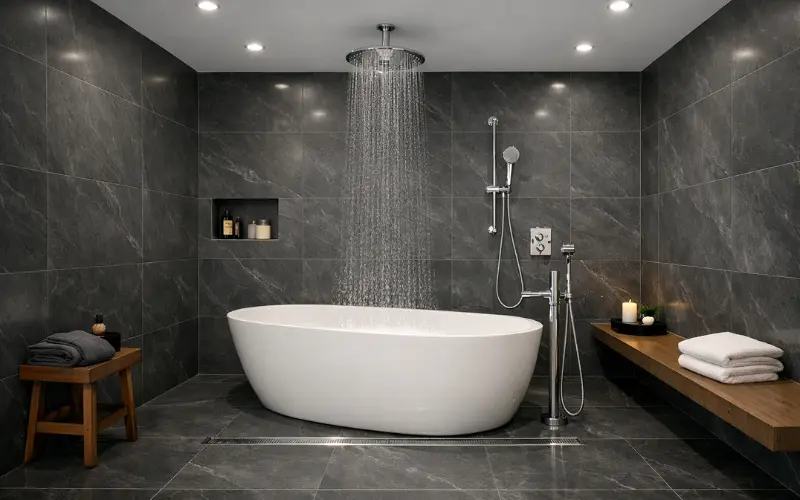
Place a freestanding bathtub inside the shower zone. Pair it with an overhead rainfall head and a handheld fitting. This arrangement is what most people picture when they think of hotel-level luxury. It works best in larger bathrooms but can be adapted for mid-sized spaces with careful planning.
3. The Dry Zone and Wet Zone Split
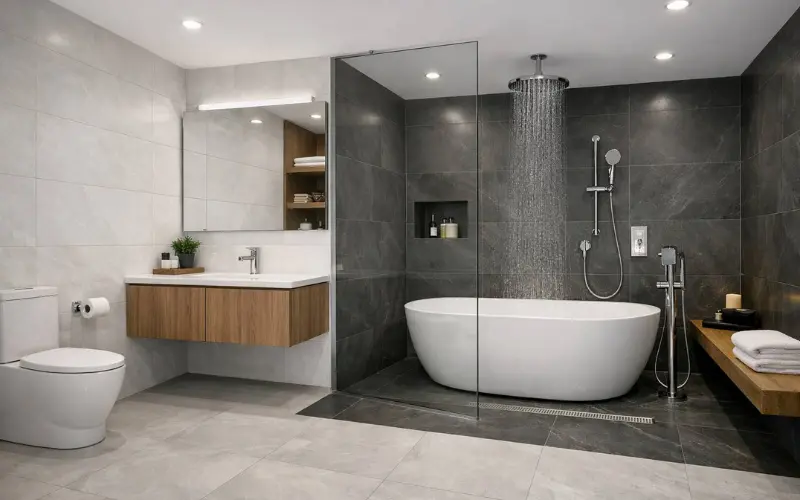
Use a single glass panel, rather than a full enclosure, to separate the showering area from the rest of the bathroom. This protects your toilet, mirror, and storage from splash while keeping the open feel intact. It also makes the modern wet room bathroom more practical for everyday use. You can get dressed on the dry side without worrying about a damp floor underfoot.
4. The Steam Room Upgrade
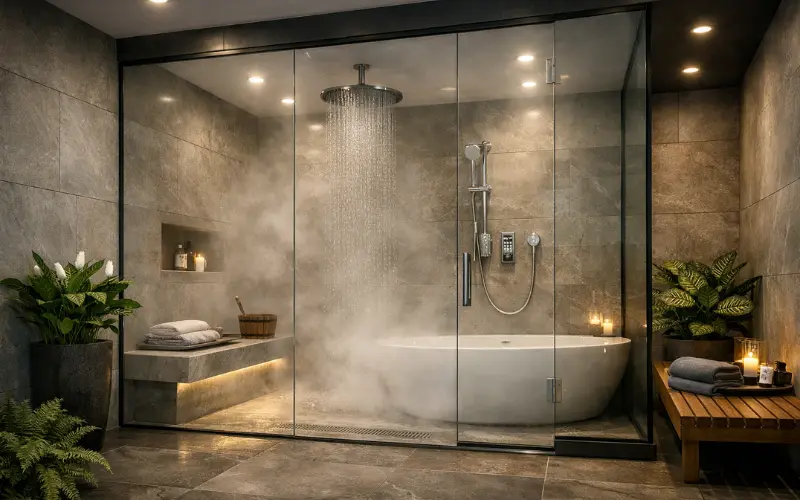
Modern wet rooms pair brilliantly with steam shower systems. Seal the space, add a steam generator, and you have a home sauna experience built into your daily routine. This upgrade does require proper ventilation planning, but for those who want the full wellness experience at home, it is worth the investment.
5. Biophilic Design Elements
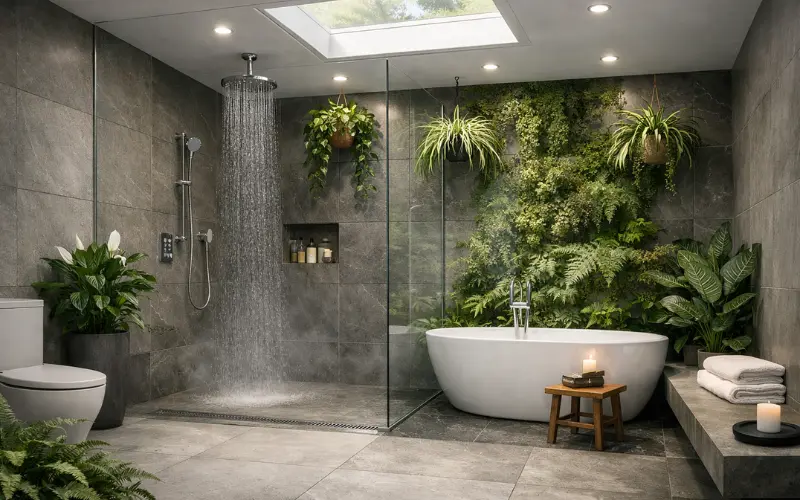
Competitors rarely mention plants in the context of a modern wet room bathroom. Certain plants thrive in high-humidity environments, including peace lilies, heartleaf philodendrons, spider plants, and calatheas. Hanging them near natural light sources or installing a small skylight above the shower zone transforms the space into something genuinely restorative.
6. Contrast Materials for Visual Depth
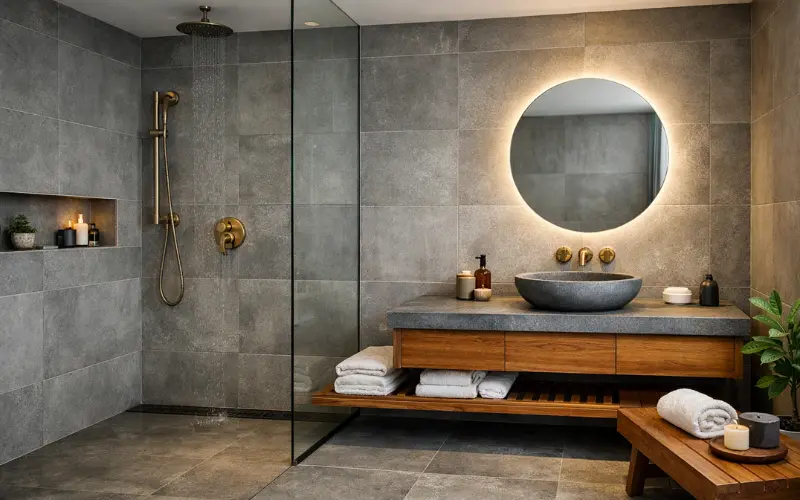
Pair matte concrete-effect tiles with warm timber accents on a floating vanity or bench. Mix brushed brass fixtures with cool grey stone. The modern wet room bathroom does not need to be a single-material space. Contrast adds personality and stops the room from feeling clinical.
7. Linear Drainage for a Polished Finish
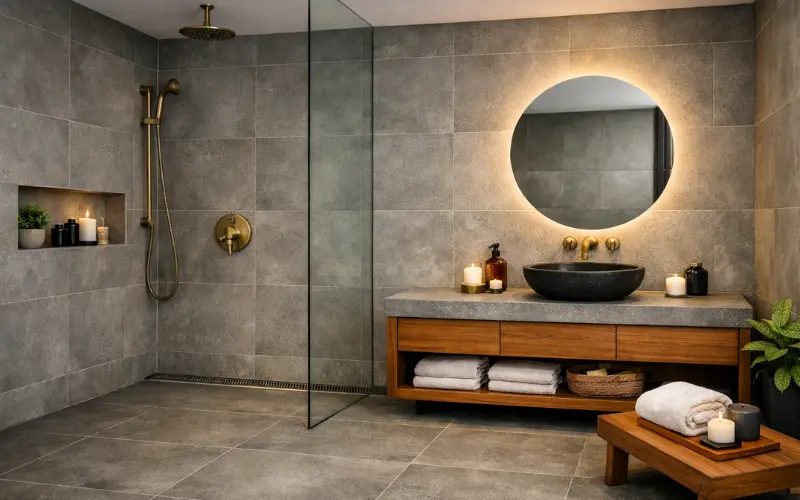
The drain placement in a wet room matters more than people expect. A central circular drain is functional. A linear drain running along one wall is architectural. It creates a strong visual line, allows large-format tiles to remain uncut, and adds a premium feel to the space without a huge cost increase.
How Much Does a Modern Wet Room Bathroom Cost?
Costs vary depending on the size of the bathroom, the materials chosen, and whether existing plumbing needs to be moved. As a general guide:
- Basic conversion of a small bathroom: $4,000 to $7,000
- Mid-range wet room with quality tiling and glass panel: $7,000 to $12,000
- Luxury wet room bathroom with freestanding tub, steam system, and premium finishes: $15,000 to $30,000 or more
The biggest cost drivers are tile coverage (floor to ceiling costs more than partial tiling), the drainage system, and whether a steam or sauna component is included. A dry zone glass panel adds relatively modest cost and is worth including for practical reasons.
Is a Modern Wet Room Bathroom Right for You?
A modern wet room bathroom suits you if:
- You want a low-maintenance, easy-to-clean bathroom
- You are planning long-term and want accessible bathing as you age
- You have children or pets and want a space that handles splashing without fuss
- You are renovating with resale value in mind (wet rooms consistently attract buyer interest in higher-end property markets)
It may not suit you if your only bathroom is very small and lacks adequate ventilation, or if you rely on having a bathtub and do not have space to include one within the wet zone.
Frequently Asked Questions
1. What is the difference between a modern wet room bathroom and a walk-in shower?
A walk-in shower has a raised tray and is contained within a defined area of the bathroom. A modern wet room bathroom waterproofs the entire room so any surface can get wet, with a floor-level drain and no tray.
2. Can I convert a small bathroom into a wet room?
Yes. Even a compact bathroom can become a wet room. The key requirements are proper waterproofing, adequate drainage, and good ventilation. A simple glass panel can separate the shower zone from the toilet area without taking up significant space.
3. Do wet rooms add value to a home?
Wet rooms consistently appeal to buyers in the mid-to-luxury market. While they may not increase formal appraisal values directly, they act as a standout feature that speeds up sales and attracts higher offers.
4. How do I keep a modern wet room bathroom from feeling damp?
Install a high-quality extractor fan rated for your room size. Consider a heated towel rail and underfloor heating to reduce lingering moisture. A dry zone with a glass panel also helps by limiting how far steam and water spread.
5. What tiles work best in a wet room?
Porcelain tiles with a slip resistance rating of R10 or above are the most practical choice. Smaller-format tiles and mosaic options provide more surface texture and grip. Large-format tiles look luxurious but require a textured finish or anti-slip coating when used on floors.
6. Do wet rooms need planning permission?
In most cases, no. A wet room conversion is treated as a standard bathroom remodel. However, if your renovation involves moving walls, changing plumbing routes significantly, or working on a listed building, you should check local regulations.
7. How long does a wet room installation take?
A straightforward wet room conversion typically takes between five and ten working days, depending on the size of the bathroom and the scope of the work. More complex projects involving structural changes or bespoke features can take two to three weeks.
8. Can a wet room include a bathtub?
Absolutely. A freestanding bathtub placed within the shower zone of a modern wet room bathroom is one of the most popular design choices today. It creates a spa-like focal point and combines two bathing methods in one fluid space.
9. What plants can I put in a wet room bathroom?
High-humidity plants work best. Good options include peace lilies, spider plants, heartleaf philodendrons, and calatheas. Avoid succulents and cacti, which prefer dry conditions.
10. Is underfloor heating worth it in a wet room?
Yes, strongly. Cold tile floors in a wet room are uncomfortable and can encourage people to use bath mats, which become a slip hazard. Underfloor heating is most cost-effective when installed during the renovation and adds meaningful comfort year-round.
Final Thoughts
The modern wet room bathroom is not just a trend that will fade. It sits at the intersection of wellness, accessibility, minimalist design, and practical home improvement. Whether you want a calm daily ritual, a family-friendly splash zone, or a space that works for you as you age, the wet room delivers. The key is planning carefully before a single tile goes down. Get the waterproofing, drainage slope, ventilation, and non-slip surfaces right from the start, and the result will serve you well for decades.