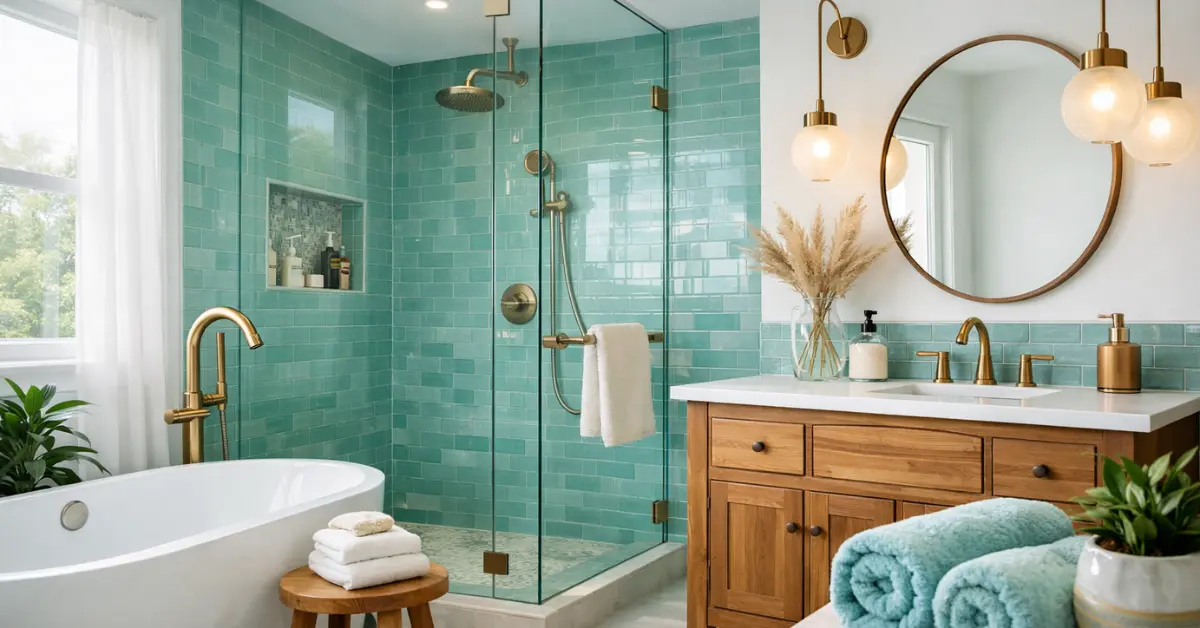
If you’ve ever stepped into a bathroom painted in soft seafoam or seen a wall of glossy turquoise tile and felt your shoulders drop an inch, you already understand the appeal of an aqua bathroom. It’s one of the few color choices that looks polished in photos and actually changes how a room feels to be in. That’s not a coincidence — aqua sits right between blue and green on the color wheel, borrowing the calm of the ocean and the freshness of new growth, which is why designers keep returning to it for spaces meant for relaxing, not rushing.
This guide covers everything you need to plan an aqua bathroom that looks intentional rather than dated, including color pairings, tile choices, and small-space tricks most design articles skip entirely.
Why Aqua Works So Well in a Bathroom
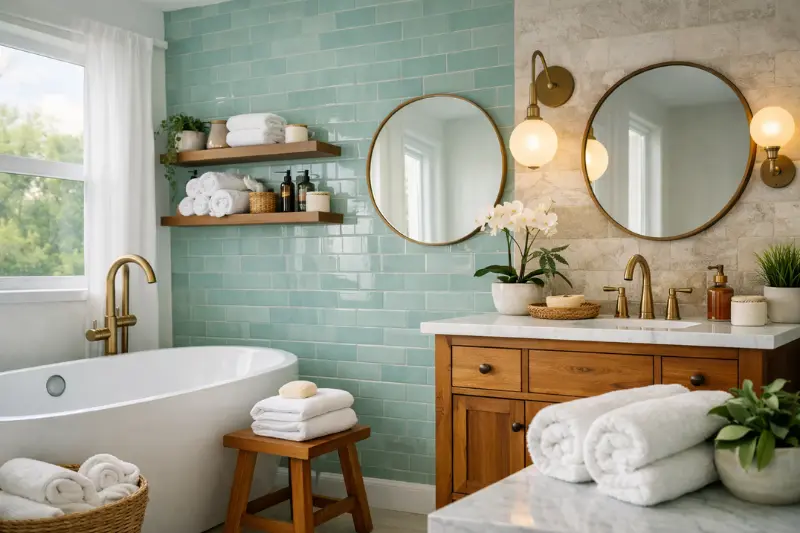
Bathrooms are one of the only rooms where color choice ties directly to daily mood — it’s the first room you see in the morning and often the last before bed. Aqua reads as clean without feeling cold, giving an aqua bathroom enough depth to avoid the sterile, clinical look that all-white bathrooms have been moving away from in recent years.
It also pairs naturally with materials already common in bathrooms. White tile, brushed nickel, natural stone, and warm wood tones all sit comfortably next to it, so an aqua bathroom can lean coastal, modern and minimal, or warm and eclectic depending on what you pair it with.
Choosing the Right Shade
Not all aqua is created equal, and this is where bathroom projects often go sideways. The color spans a wide range, from pale seafoam that’s nearly white to saturated teal bordering on deep blue-green. Before committing to paint or tile, consider three things:
- Room size and light. Small or windowless bathrooms generally read better with lighter, softer aqua tones, since deep saturated color in a tight space can feel like it’s closing in. North-facing rooms with cooler light often look best with a slightly warmer shade.
- Fixture color. If your tub or sink are white, almost any aqua will work. Warm-toned fixtures or wood vanities pair best with tones that lean a bit more green than blue.
- Permanence. Paint is reversible; tile is not. If you’re not fully sold on a bold look, test a large paint swatch first before committing to anything permanent.
Color Pairings That Actually Work
Most roundups skip why pairings work, not just that they look nice in a photo:
- With white: The classic combination — white keeps the room from feeling heavy and never goes out of style.
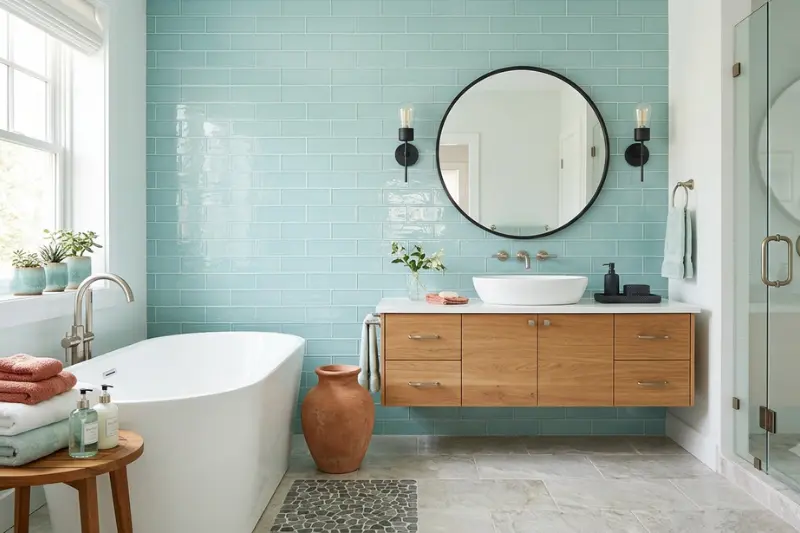
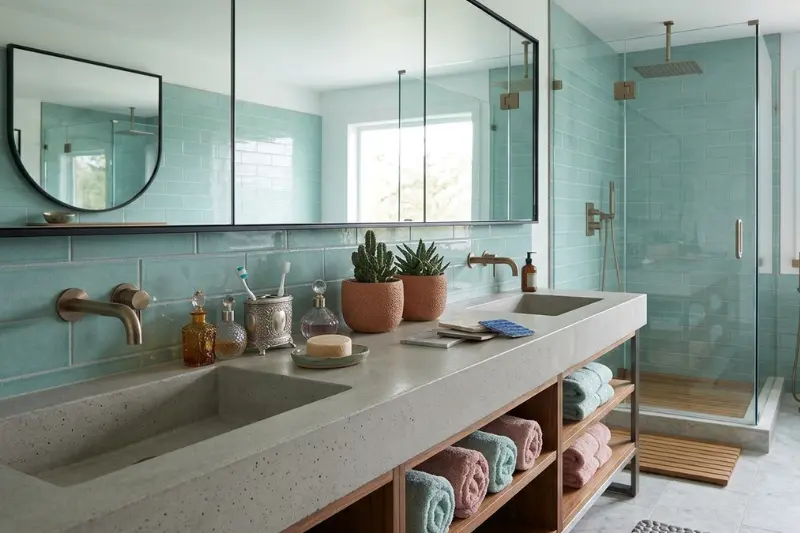
- With natural wood: A warm wood vanity softens the color and pulls the room toward a spa-like feel, which lines up with where bathroom design is heading in 2026 as natural-material spaces gain ground over the all-white, clinical look.
- With brass or gold: Increasingly popular as warm-toned fixtures replace the chrome-everything era, creating a vintage, jewel-toned look without feeling themed.
- With terracotta or coral: A bolder choice that’s been showing up more as designers move away from cool, monochrome palettes.
- With charcoal or black: Matte black fixtures and dark grout create contrast without losing the calming effect.
Tile Choices
Tile is usually the biggest decision in this kind of project, since it’s the most expensive and permanent element.
- Glass tile has the most visual depth because it reflects and refracts light, which is why it’s such a popular choice for showers — it genuinely looks like water. It also shows water spots and soap scum more visibly than ceramic, so it needs more frequent wiping.
- Ceramic and porcelain subway tile is the lower-maintenance option and ages better in busy family bathrooms. Replacement pieces are also easier to source years down the line if one cracks.
- Mosaic and penny tile work well as an accent — a shower niche or single feature wall — without committing the whole room to one intense color.
- Grout color matters more than people expect. Bright white grout creates high contrast, while grout closer to the tile’s tone creates a blended, calming effect that fits where most 2026 bathroom designs are heading, with grout lines intentionally minimized rather than left as stark contrast.
Small Aqua Bathroom Ideas
A small footprint doesn’t mean the room has to feel dark. A few approaches that work in tight spaces:
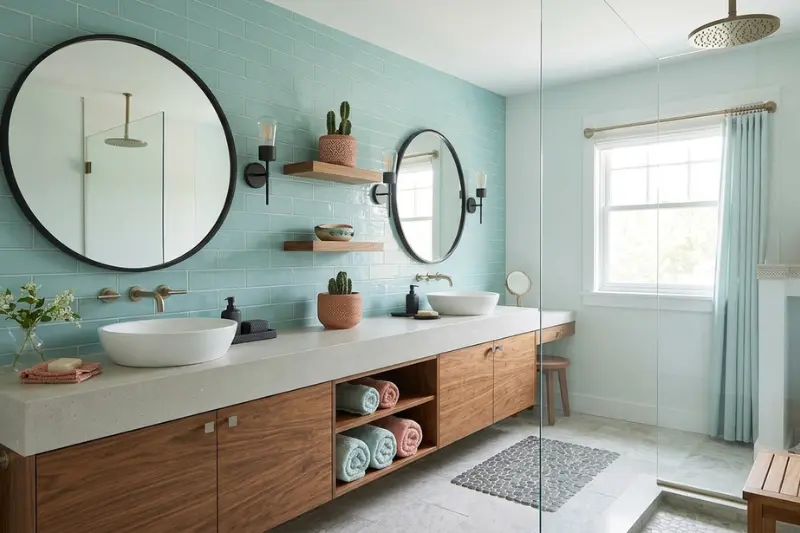
- Use aqua only on the lower half of the wall (wainscoting height) with white above it to keep the ceiling line feeling tall.
- Choose a glossy finish rather than matte — gloss bounces light around far more effectively.
- Stick to one statement wall, often behind the vanity or inside the shower, so the color reads as a deliberate accent.
- Add a large mirror across from the tiled wall to double the visual depth of the room.
Accessories and Decor
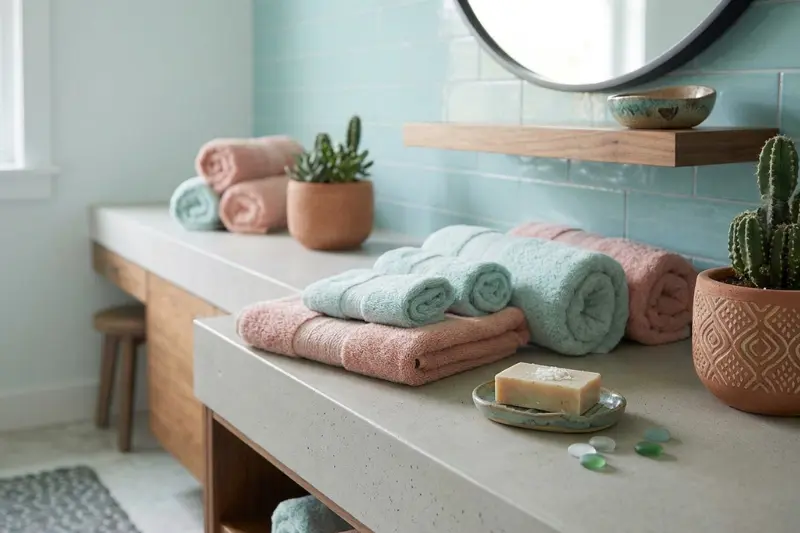
Not every project needs full tile or paint. If you’re renting or just testing the look, accessories are a low-risk entry point:
- Bath towels and a matching mat in a soft seafoam tone
- A glass soap dispenser or tumbler
- A shower curtain in a coastal or ombre pattern
- Glazed ceramic planters for a small plant near the window
- A framed piece of art with ocean or coastal tones
These small additions are useful for seasonal refreshes since you can swap them out without touching anything permanent — a practical option a lot of design content overlooks in favor of full renovations.
Common Mistakes to Avoid
A few issues come up again and again in projects like this:
- Going too saturated in low light. A deep teal that looks rich in a showroom can feel dark and moody with one small window.
- Mixing too many cool tones. Blue, teal, and silver together can feel sterile — balance with one warm material like wood or brass.
- Ignoring ventilation. Glossy tile and painted walls show moisture and mildew faster without proper exhaust fans.
- Skipping the in-room test. Samples look different under showroom lighting than under your own bathroom’s bulbs, so always test before ordering in bulk.
Frequently Asked Questions
Is aqua still in style for bathrooms in 2026?
Yes. While bathroom trends have shifted toward warmer, earthy palettes, an aqua bathroom has stayed relevant because it pairs naturally with wood, brass, and natural materials rather than clashing with them.
What colors go best with an aqua bathroom?
White, natural wood, brass or gold fixtures, and warm neutrals like cream or terracotta. Avoid pairing with too many other cool tones, since that combination can read as sterile rather than relaxing.
Is aqua tile hard to maintain?
Glossy glass tile shows water spots and soap scum more easily and needs frequent wiping. Matte ceramic or porcelain is lower-maintenance and better for busy, high-traffic bathrooms.
Will an aqua bathroom make a small space feel smaller?
Not if you choose the right shade and finish. A lighter, glossier tone reflects light and can open up a small room, especially paired with a large mirror and kept to one accent wall.
Should I paint or tile my aqua bathroom?
Paint is lower-commitment and easy to change later. Tile is more durable and water-resistant, making it the better choice for shower walls, but it’s a more permanent decision.
What’s the most popular aqua bathroom shade right now?
Soft, slightly muted tones — sometimes called seafoam or sea glass — are currently most popular, reading as calming and spa-like without feeling as bold as brighter turquoise shades from past decades.
Can I use aqua in a bathroom with warm-toned fixtures?
Yes. Choose a shade with a bit more green in its undertone rather than pure blue, which sits more comfortably next to warm wood vanities or brass hardware.
Do I need a designer to plan an aqua bathroom?
Many homeowners successfully DIY an aqua bathroom using paint, accessories, and a single accent wall. Full shower tile renovations are where it’s worth consulting a professional, since waterproofing mistakes are costly to fix later.
Final Thoughts
An aqua bathroom manages to feel both classic and current at the same time. It’s been a go-to look for coastal and spa-style spaces for decades, and it’s holding up well even as broader trends shift toward warmer, more natural palettes, simply because it pairs so easily with wood, brass, and white. The key to getting an aqua bathroom right isn’t picking the prettiest swatch online — it’s matching the shade and material to your room’s actual light, size, and fixtures, and being honest about how much maintenance you’re willing to take on. Start small if you’re unsure, whether that’s a sample board, an accent wall, or a few towels, and build from there. Done thoughtfully, an aqua bathroom isn’t a trend you’ll want to redo in five years — it’s a calming space you’ll look forward to walking into every day.