
Yes, afrocentric home decor is still modern, and honestly it’s having one of its strongest moments in years. What’s changed is how people use it. Instead of filling a whole room with tribal print, homeowners are pulling one or two strong pieces, like a mudcloth throw or a carved stool, into an otherwise clean, contemporary space. That restraint is exactly what makes it read as current instead of dated.
I’ve styled rooms for clients who worried this look would feel like a costume rather than a home. It doesn’t, once you understand the difference between decorating with African-inspired pieces and decorating with a theme.
Why the “Is It Outdated” Question Even Comes Up
Search around and you’ll mostly find product roundups: pillow #6, mask #7, tablecloth #12. Nobody’s answering the actual question people are typing into Google, which is whether this style still fits a 2026 home or whether it belongs to an early-2000s decorating era.
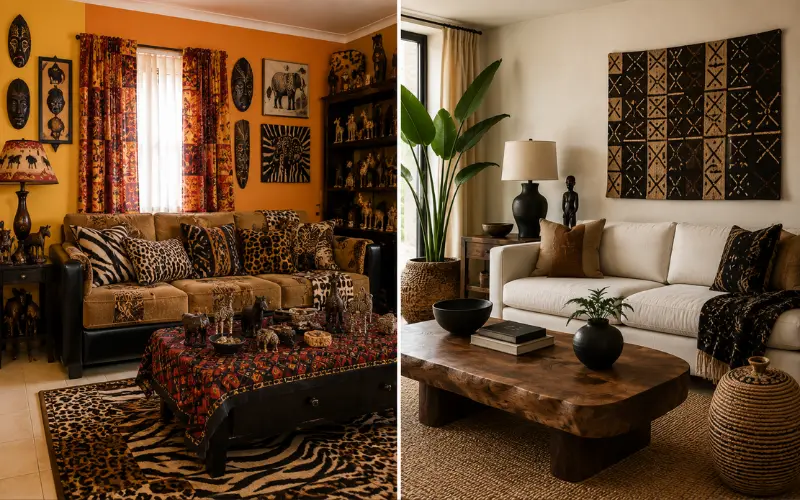
The honest answer is that the maximalist version, wall-to-wall tribal masks, matching print curtains and bedspreads, does look dated now. The curated version, where African textiles and craft pieces sit inside a neutral, modern base, is one of the strongest interior trends right now. Design coverage this year has repeatedly flagged mudcloth, raffia, and hand-carved wood as returning staples in warm-minimalist and “quiet luxury” rooms, not as a separate category anymore.
The Real Difference Between Dated and Current
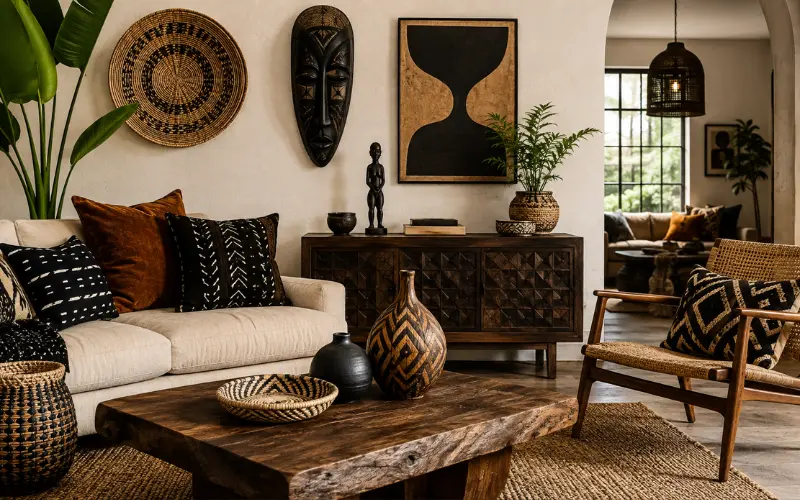
Three things separate a room that feels current from one that feels stuck in 2008:
- Density. Dated rooms stack pattern on pattern. Current rooms use one or two statement textiles against solid walls and neutral furniture.
- Material honesty. Hand-carved wood, woven raffia, and genuine mudcloth read as intentional. Mass-produced plastic “tribal mask” decor from a big-box aisle reads as costume.
- Sourcing. Buying directly from African or diaspora artisans changes the story of the piece completely, and it’s increasingly part of how people talk about the style, not an afterthought.
If you want a companion style that leans more geometric and tiled rather than textile-heavy, our Moroccan home decor guide covers that closely related aesthetic.
Room-by-Room: Where It Actually Works
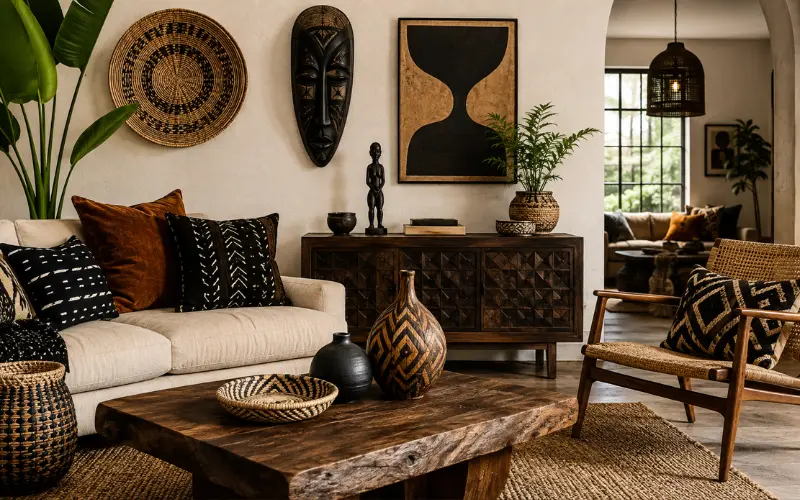
Living room. One large-scale piece does more work than five small ones. A single oversized mudcloth-pattern throw over a plain sofa, paired with a carved wood coffee table, gives you the look without visual noise.
Bedroom. Skip the matching bedspread-and-curtain set. Use a neutral duvet, then add one African-print accent pillow and a woven wall hanging above the headboard.
Entryway. This is the most underused spot for the style. A single carved stool by the door, or a woven basket for shoes, introduces the theme before a guest even sees the rest of the house.
Dining room. A woven table runner (not a printed tablecloth covering the whole surface) plus simple black ceramic dinnerware reads far more current than a full patterned set. <blockquote> <strong>Practitioner note:</strong> The single biggest mistake I see is people trying to “complete” the look in one shopping trip. The rooms that photograph best were built over months, one intentional piece at a time, not bought as a matching set. </blockquote>
Old Approach vs. Current Approach
| Element | Dated (2000s-era) Afrocentric Decor | Current Afrocentric Decor |
|---|---|---|
| Pattern use | Matching print on walls, bedding, curtains | One or two statement textile pieces |
| Materials | Painted plastic figurines, printed polyester | Hand-carved wood, raffia, genuine mudcloth |
| Color palette | Bright, saturated, high-contrast | Earth tones with one accent color |
| Sourcing | Mass-retail imports | Black-owned and African artisan makers |
| Placement | Whole-room theme | Anchor pieces in an otherwise neutral room |
Mixing It With Other Styles
Afrocentric decor blends well with a few specific styles rather than all of them. It pairs naturally with warm minimalism, mid-century wood furniture, and boho, because all three already favor natural materials and negative space. It clashes more with anything already busy, like maximalist floral prints or heavy Victorian detailing, since you end up competing patterns rather than one clear focal point.
If your base style leans more ornate and gilded, our Egyptian home decor piece explores a related but distinct direction that leans into pattern rather than restraint.
Buying It the Right Way
Amazon and big-box retailers carry a lot of decor labeled “tribal” or “afrocentric” that’s mass-produced overseas with no connection to African craft traditions. There’s nothing wrong with using it as a budget entry point, but if authenticity matters to you, look specifically for:
- Listings that name the country or artisan group (Senegal, Rwanda, Ghana, etc.)
- Materials described as hand-carved, hand-woven, or hand-dyed rather than “faux” or “inspired”
- Small shops and Black-owned retailers rather than unbranded marketplace listings
Our guide to Black-owned home decor breaks down where to find pieces that support the communities the style comes from, and our handcrafted home decor piece has more on spotting genuinely artisan-made pieces versus mass imports.
Small Space and Renter-Friendly Version
You don’t need a full room to make this work. A single wall-hung woven piece, a mirror with a carved or beaded frame, and one throw pillow can carry the whole aesthetic in a studio apartment or a shared room. For renters, none of this requires paint or permanent changes, which is part of why it’s held up as a style even as trends around it shift.
Our mirror home decor guide has more ideas on statement mirrors if that’s the anchor piece you want to start with.
FAQ
Is afrocentric home decor still trending in 2026?
Yes. The curated, one-or-two-piece version is trending strongly, while the matching-set, wall-to-wall pattern version from the early 2000s has fallen out of favor.
What’s the difference between African home decor and afrocentric home decor?
African home decor usually refers to pieces sourced from or inspired by specific African regions and craft traditions. Afrocentric decor is broader and includes any decor style centered on African and Black cultural motifs, including diaspora interpretations.
How do I decorate Afrocentric Home Decor without it looking like a costume theme?
Limit yourself to one or two statement pieces per room, keep the rest of the palette neutral, and prioritize hand-crafted materials over printed plastic or polyester versions.
Where can I buy authentic afrocentric home decor near me?
Search for Black-owned home goods stores in your city, or check Etsy and specialty retailers that name the specific artisan or region a piece comes from rather than listing it as generic “tribal print.”
Can Afrocentric Home Decor work in a small apartment?
Yes. A single woven wall hanging, a carved-frame mirror, or one patterned throw pillow can carry the look without needing to redecorate a whole room.
What colors work best for a modern Afrocentric Home Decor living room?
Earth tones like terracotta, ochre, and deep brown as a base, with one bolder accent color such as burnt orange or indigo, tend to read as current rather than dated.
Is it cultural appropriation to buy Afrocentric Home Decor if I’m not Black?
Buying and appreciating the craft isn’t inherently appropriative, especially when you buy directly from African or Black artisans and understand the cultural context of the pieces. It becomes a concern mainly with mass-produced knockoffs that strip out that context entirely.
What materials are typically used in African-inspired home decor?
Common materials include mudcloth cotton, raffia, carved wood (often mahogany or ebony), woven grasses like seagrass, and cast resin or bronze for figurines and mirrors.

