By WAJAHAT | Notes from comparing stair spec sheets and installer guides
Mono stringer floating stairs use one central steel beam to carry every tread. They work best on straight stairs about 36 to 48 inches wide, often cost $6,000 to $10,000 for the steel structure of a 14-riser stair, and need engineer review once treads get wider or railings get heavier.
How a Mono Stringer Floating Stairs Works
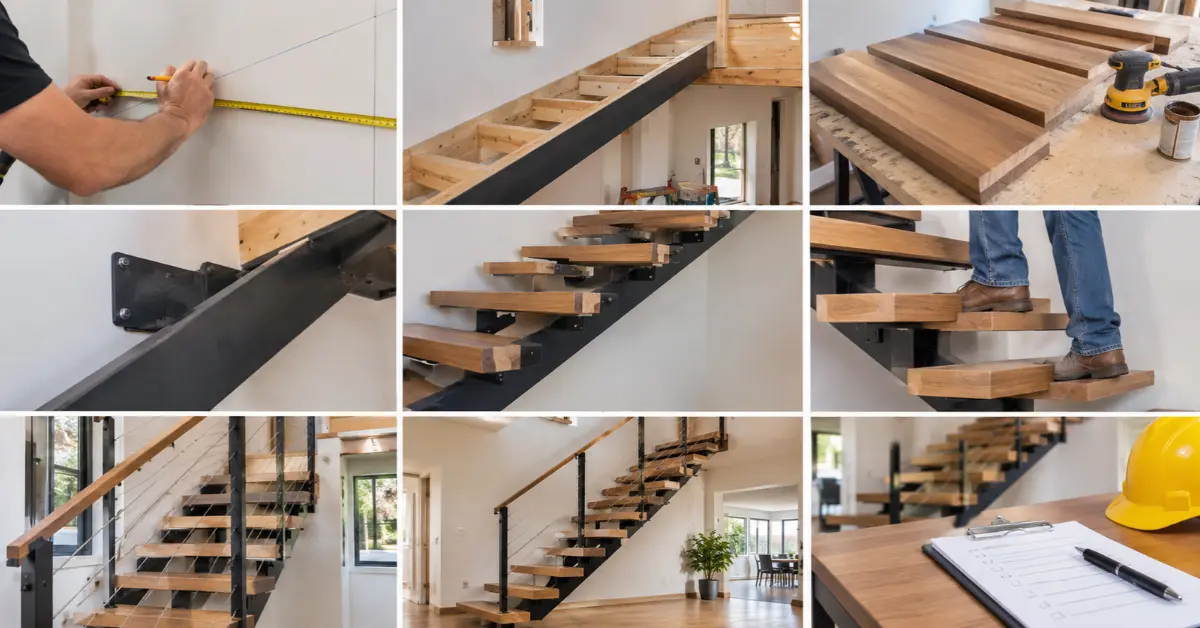
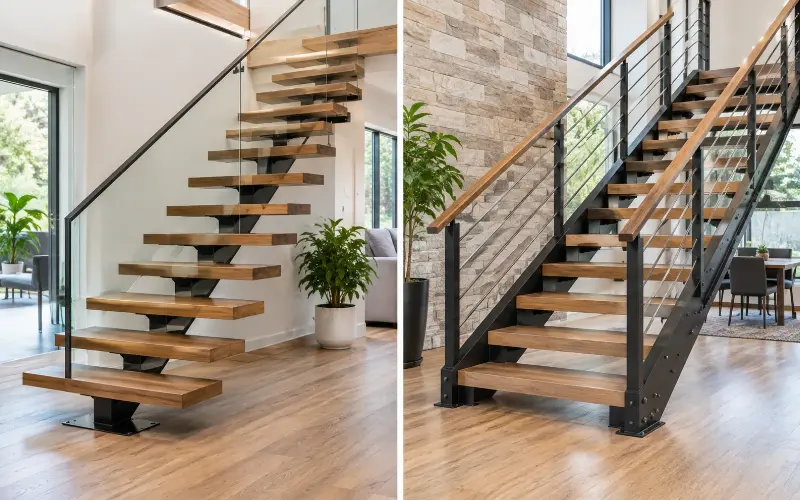
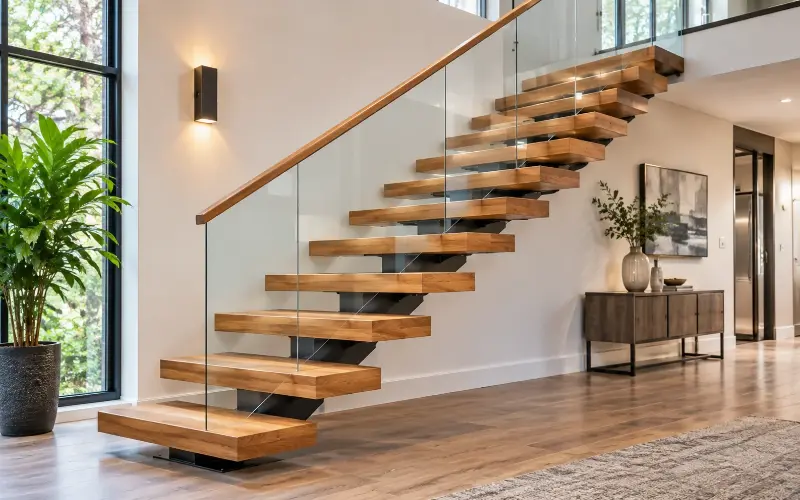
A mono stringer, also called a single stringer stair, places one steel beam along the stair’s centerline. Tread brackets are welded or bolted to that beam, and each wood tread sits on a bracket. The top of the beam bolts into a header or floor joist. The bottom anchors into a slab or a framed base.
Every footstep travels into the beam, then into the building structure. This is why the beam size and the connections matter more than the treads themselves. For the basics of stringer types, see our guide on what a stair stringer is.
Mono Stringer vs Double Stringer Staircase
| Factor | Mono stringer | Double stringer staircase |
|---|---|---|
| Support position | One central beam | Two beams near tread ends |
| Comfortable tread width | About 36 to 48 inches | 48 inches and wider |
| Visual weight | Light, sculptural | Heavier, more structural |
| Railing attachment | Needs reinforced treads or a side plate | Posts can mount to the beams |
| Tread bounce risk | Higher on wide treads | Lower |
| Steel cost | Usually lower | Often 10 to 25% higher (estimate) |
If your stair is under 48 inches wide and the railing is light, a mono stringer is usually the better value. If the stair is wide, heavily used or carries a glass railing, a double stringer is the safer structural choice.
Width Is the Deciding Factor
Treads on a mono stringer overhang on both sides of the beam. On a 40 inch tread, that is roughly 15 to 18 inches of unsupported wood on each side. The longer that overhang, the more the tread flexes.
Manufacturers handle this in three ways: thicker treads (often 2 inches or more), hidden steel plates or rods inside the tread, or a wider beam with stronger brackets. If a quote shows a wide tread with a plain 1 1/2 inch board, ask how they control deflection.
Mono Stringer Floating Stairs Cost
| Option | Estimated cost (US) | Notes |
|---|---|---|
| Kit-based mono stringer, supply only | $2,500 to $8,000 | Straight runs, limited width options |
| Custom steel mono stringer structure | $6,000 to $10,000 | 14 risers, before treads and railing |
| Custom mono stringer stair, fully installed | $15,000 to $35,000 | With oak treads and cable railing |
| Double stringer equivalent | Often 10 to 25% more steel | Depends on span and finish |
These are planning ranges. For a full line-by-line budget, read our floating stairs cost breakdown.
Railing on a Mono Stringer Stair
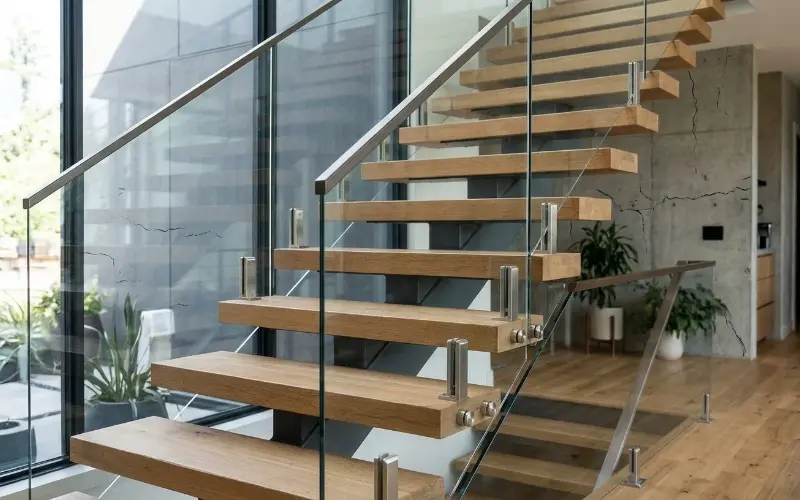
This is the detail that causes the most redesigns. Because the beam sits in the middle, nothing sits at the tread edges to hold a post. You have three options:
- Tread-mounted posts: The treads must be reinforced to resist side loads.
- Side-mounted rail on a wall: Simple and strong, but only works where there is a wall.
- Steel side plate or floor-mounted posts: Adds fabrication but gives the safest connection.
Cable and slim metal rails are easier on a mono stringer. Heavy glass railing usually pushes the design toward double stringers.
Expert note: I would never approve a mono stringer design until the railing method is on the drawings. A quote that lists the beam and treads but leaves the railing “to be determined” often hides a structural redesign.
Installation and Finish Details That Matter
- Top connection: The beam should land on a header or joist, not just drywall or a loose plate.
- Bottom anchoring: Concrete slabs typically use mechanical or epoxy anchors. Wood floors need blocking below.
- Plumb and level: A beam that is slightly off shows up as uneven tread gaps.
- Finish: Powder coat suits interior stairs. Exterior use usually needs galvanizing or a marine-grade finish.
- Bracket choice: The tread connection controls feel underfoot. See how floating stair brackets affect stability before ordering treads.
If you plan to install it yourself, read our DIY floating stairs guide first, because anchoring is the step that most often needs professional review.
Common Mono Stringer Mistakes
- Choosing tread thickness before confirming tread width.
- Ignoring finished floor height when setting the bottom connection.
- Picking glass railing after the beam is already designed.
- Assuming any wall can take a side-mounted handrail.
For layout inspiration that matches this style, browse our floating stairs ideas.
Frequently Asked Questions
Are mono stringer stairs strong enough for a family home?
Yes, when the beam, brackets and anchors are engineered for the stair’s width and expected loads.
What is the maximum tread width for a mono stringer?
Many systems stay around 36 to 48 inches. Beyond that, reinforced treads or a double stringer are common.
Can a mono stringer stair have a landing?
Yes, but it needs an additional support structure, which raises cost and engineering needs.
Do mono stringer stairs bounce?
They can on wide, thin treads. Thicker treads, steel reinforcement and good brackets reduce bounce.
Can I use a mono stringer outdoors?
Yes, with galvanized or marine-grade finishes and treads rated for weather exposure.
Is a single stringer stair the same as a mono stringer?
Yes. Both terms describe one central support beam.
Does a mono stringer stair need a permit?
In most US jurisdictions, yes, because stairs are a safety element.