
If your walls feel a little flat, botanical wall decor might be exactly what your home needs. It is one of the easiest ways to add warmth, color, and life to any room without touching a single houseplant. Whether you love delicate line drawings of ferns or bold tropical leaf prints, this style gives you a low maintenance way to enjoy the beauty of nature every single day.
In this guide, you will learn what this style of decor actually includes, how to choose the right style for your home, and a few tricks the design blogs rarely mention, like how to hang your pieces at the correct height and how to keep prints from fading in sunlight. By the end, you will have everything you need to plan a wall that looks like it belongs in a magazine.
What Is Botanical Wall Decor?
Botanical wall decor covers any wall art inspired by plants, flowers, leaves, or trees. That includes framed prints, wallpaper, tapestries, pressed flower art, wood cutouts, and even three dimensional pieces made from dried stems or preserved moss. The style borrows from old scientific plant illustrations, but today it also includes photography, watercolor paintings, and modern digital art.
Unlike live plants, botanical wall art never needs watering, never dies, and works in rooms with little natural light. That makes it a favorite for renters, busy households, and anyone who wants the look of a lush indoor garden without the upkeep.
Why Botanical Wall Decor Is So Popular Right Now
People are spending more time at home, and that has sparked a real appetite for calming, nature inspired interiors. It answers that need directly. It softens sharp modern lines, adds texture to plain walls, and brings a sense of the outdoors into apartments and houses that may not have much of a garden.
There is also a practical side to its popularity. A single framed botanical print costs far less than a large piece of original art, yet it can transform a room just as dramatically. It fits nearly every design style too, from farmhouse to mid-century modern to minimalist, which is part of why it keeps showing up in home tours and design magazines.
Types of Botanical Wall Decor to Consider
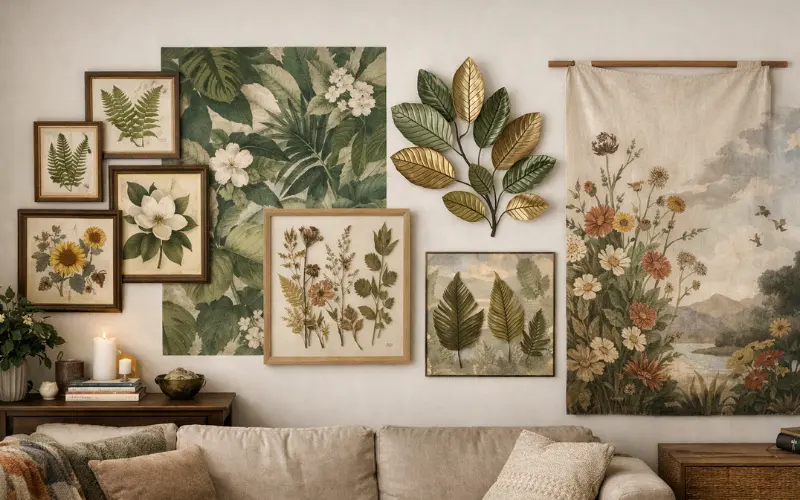
Not all botanical prints and pieces look the same, and knowing your options helps you avoid a mismatched wall.
- Framed botanical prints: Classic illustrations or modern art in simple or ornate frames. These work well alone or grouped into a gallery wall.
- Botanical wallpaper: A bold choice for an accent wall, featuring oversized leaves, vines, or florals.
- Pressed and dried botanicals: Real flowers or leaves preserved between glass, which add texture and a handmade feel.
- Tapestries and fabric hangings: Soft, large scale pieces that add warmth to bedrooms and living rooms.
- Wood or metal leaf cutouts: Sculptural pieces that add dimension without needing glass or frames.
- Botanical murals: A dramatic, wall sized option for anyone who wants to make a serious statement.
Mixing two or three of these types on one wall, rather than sticking to just one, is what gives the display real depth. A row of framed prints next to a single pressed flower piece, for example, avoids the flat, one note look that many gallery walls fall into.
How to Choose the Right Style for Your Room
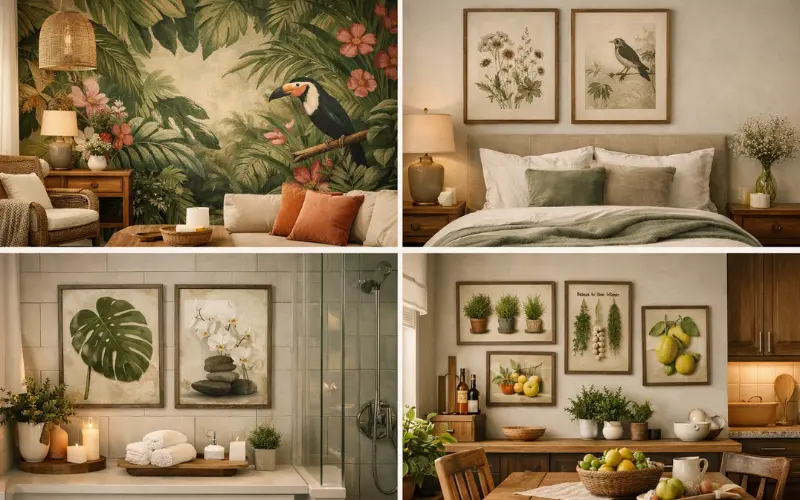
Before you buy anything, think about the mood you want each room to have.
- Living rooms handle bold, large scale pieces well, since there is usually enough wall space for a statement piece.
- Bedrooms tend to suit softer, more muted botanical prints that support rest rather than energy.
- Bathrooms are a great spot for humidity friendly options like acrylic prints or sealed frames, since paper can warp near steam.
- Kitchens and dining rooms look great with herb or fruit themed prints, which ties naturally into the room’s purpose.
Color matters just as much as subject matter. If your room already has a lot of pattern or color, choose pieces with a simpler, more restrained palette. If your walls are neutral, this is your chance to bring in richer greens, warm terracottas, or deep florals.
Gallery Walls: The Details Most Guides Skip
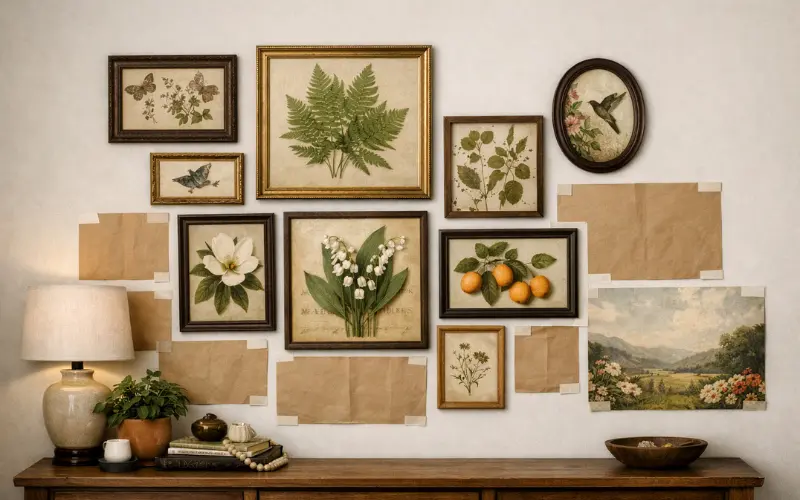
A gallery wall is one of the most popular ways to display botanical prints, but the difference between a good one and a great one comes down to a few details that are easy to overlook.
- Hang at eye level. Interior designers often use 57 inches from the floor to the center of the artwork as a standard. This is the average eye height for most adults, and it keeps a single piece looking balanced in a hallway or above a console table.
- Leave 2 to 3 inches between frames. Too much space makes a gallery wall look disconnected. Too little makes it feel cluttered. That small gap is the sweet spot that most guides never mention.
- Plan on paper first. Trace each frame onto craft paper, cut out the shapes, and tape them to the wall before you commit to a single nail hole. This single step saves the most time and the most wall damage.
- Balance visual weight, not just size. A large, dark frame can visually outweigh three smaller light ones. Step back and squint at your layout. If one spot pulls your eye more than the rest, shift pieces around until the wall feels even.
DIY vs. Buying Ready-Made Botanical Wall Decor
If you enjoy crafting, a DIY approach is a rewarding weekend project. Pressing flowers between glass, framing free printable botanical illustrations, or painting your own leaf study are all budget friendly ways to fill a wall. Thrifted frames, old windows, and clipboards also make charming, low cost backdrops for prints.
If you would rather skip the project and go straight to styling, ready-made pieces from print shops, home decor stores, or independent artists on marketplaces like Etsy gives you polished results fast. Look for high resolution files or archival quality prints so your art holds up over the years rather than looking pixelated or faded within a season.
Either path works. The right choice really comes down to how much time you want to spend and how custom you want the final look to feel.
How to Keep Botanical Wall Decor Looking Its Best
This part rarely gets covered, but it matters if you want your investment to last.
- Avoid direct sunlight. UV rays fade paper and fabric quickly. If a wall gets strong afternoon sun, choose prints with UV protective glass or acrylic.
- Watch humidity. Bathrooms and kitchens can warp paper over time. Sealed frames or acrylic prints hold up far better in these spaces.
- Dust gently. A soft, dry cloth or a feather duster once a month keeps frames and glass looking crisp.
- Rotate pieces seasonally. Swapping a few prints for autumn leaves or winter greenery keeps the display feeling fresh without buying an entirely new collection.
Budget-Friendly Botanical Wall Decor Ideas
You do not need a big budget to pull this look together. A few smart moves stretch every dollar:
- Buy one large statement piece and pair it with smaller, less expensive prints around it.
- Frame free or low cost printable botanical art from online libraries.
- Shop secondhand stores for frames, then repaint or reface them to match your style.
- Press your own flowers from a garden, a bouquet, or even a neighborhood walk.
Room-by-Room Botanical Decor Inspiration
- Entryway: A single oversized botanical print sets the tone the moment guests walk in.
- Home office: Calming greenery on the wall behind your desk can make long work sessions feel less draining.
- Nursery: Soft, whimsical leaf or floral prints add charm without overwhelming a small space.
- Staircase wall: A running gallery wall of botanical prints turns an often ignored space into a real feature.
Frequently Asked Questions
What is the best height to hang botanical wall decor?
Center your artwork around 57 inches from the floor, which is the average eye level for most adults. This keeps a single piece or a gallery wall looking balanced in any room.
Does botanical wall decor work in small apartments?
Yes. This decor style is actually ideal for small spaces because it adds the feeling of greenery without taking up any floor space, unlike real plants.
How do I stop my botanical prints from fading?
Keep them out of direct sunlight, or choose frames with UV protective glass or acrylic. This is especially important for south facing rooms with strong afternoon light.
Can I mix different styles of botanical decor together?
Absolutely. Mixing framed prints with pressed flowers, wallpaper accents, or wood cutouts adds depth and keeps a wall from looking one dimensional.
Is DIY botanical decor cheaper than buying it ready-made?
Usually, yes. Printing free botanical illustrations, thrifting frames, and pressing your own flowers can cost a fraction of ready-made art, though it does take more time and effort.
What rooms suit this decor style the most?
Living rooms, bedrooms, bathrooms, and entryways all work well. Choose bolder pieces for living areas and softer, muted prints for bedrooms and nurseries.
How often should I update my botanical prints?
There is no set schedule, but many people rotate a few pieces seasonally to keep the display feeling current without replacing the entire collection.
Is botanical wall decor humidity safe for bathrooms?
Standard paper prints can warp in humid bathrooms over time. Choose sealed frames or acrylic prints if you want botanical art in a steamy space.
Final Thoughts
Botanical wall decor is one of the simplest ways to bring warmth, texture, and a sense of the outdoors into your home. Whether you frame a single striking print, build out a full gallery wall, or commit to a bold wallpapered accent wall, the goal is the same: a space that feels alive, calm, and personal. Start small if you need to. Even one well chosen piece can change how a whole room feels.

