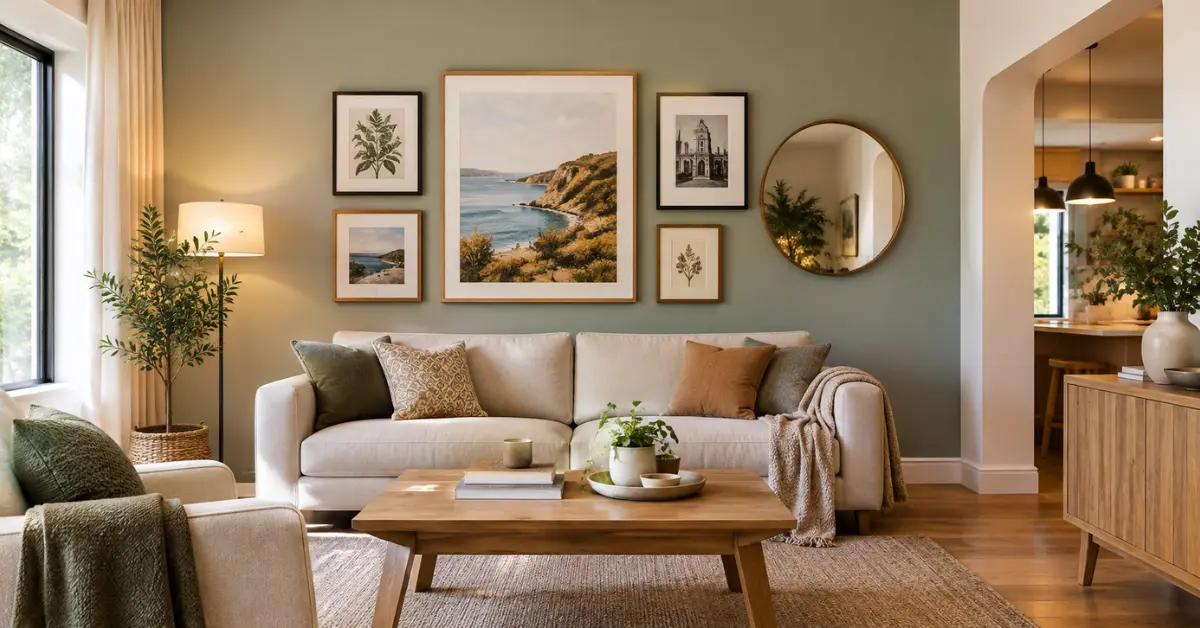
The best wall decor ideas start with the wall, not the art. Match the size of the piece to the space, hang it at eye level (about 57 inches or 145 cm to its center), and fix it with hardware rated for its weight. Get those three things right and almost any style looks intentional.
Most guides Wall Decor Ideas show you pretty rooms and stop there. They skip what happens next: the mirror that sags, the gallery wall that looks crowded, the frames that fade within a year. This guide covers the ideas, but also the small decisions that decide whether they last.
Read the Wall Decor Ideas Before You Decorate It
Spend ten minutes with the Wall Decor Ideas before buying anything. It saves money.
- Light: Stand where you sit most. Where does the sun hit between noon and 4 pm? Direct sun fades prints and warps cheap wood frames.
- Sightline: Decor is seen from the sofa, the bed or the doorway, not from the middle of the room. Judge it from there.
- Fixtures: Switches, vents, thermostats and outlets all compete with your layout. Work around them instead of pretending they are not there.
- Material: Plasterboard, plaster, brick and concrete each need different fixings. Tap the wall. A hollow sound means you need anchors or a stud.
My take: The most common mistake I see is buying art first and hunting for a wall afterward. Cut paper templates, tape them up and live with them for two days. If you still like the arrangement on day three, drill.
Ideas for Big Blank Walls
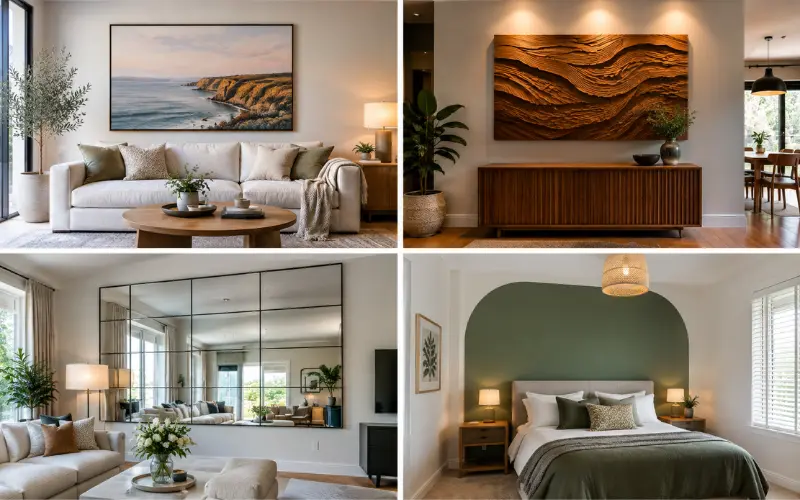
A large empty Wall Decor Ideas feels intimidating because people try to fill it all. Don’t. Leave breathing room and use scale.
- One oversized piece. A single large canvas, tapestry or mirror beats ten small items scattered around. Aim for roughly two thirds the width of the furniture below it.
- Timber as a statement. Carved or layered wood adds texture that flat prints cannot. If you like that look, browse these timber art ideas for pieces that suit modern and rustic rooms.
- A mirror wall with purpose. Place a large mirror opposite a window, not beside it. It doubles daylight, which helps dark rooms more than any paint color.
- Paint as decor. An arch, a half-wall color block or a deep shade up to the picture rail can replace art entirely. It costs little and suits renters who have permission to paint.
Ideas for Walls Behind Furniture
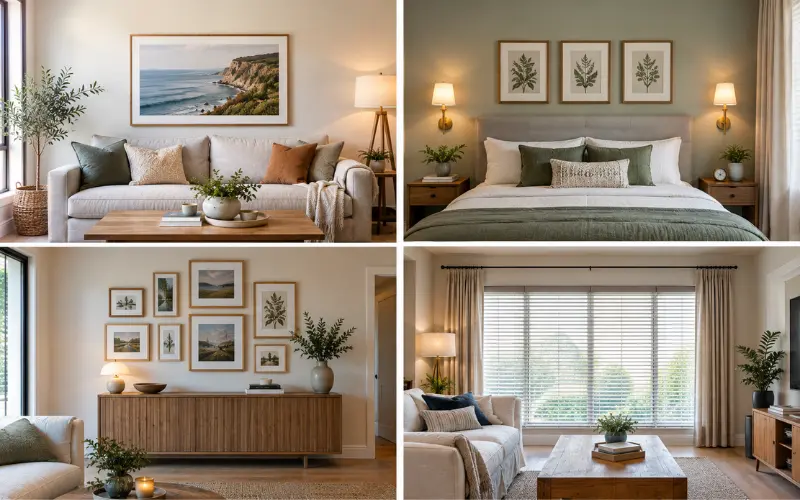
The wall above a sofa, bed or console is where most mistakes happen. The usual error is hanging things too high.
- Keep art 6 to 8 inches (15 to 20 cm) above a sofa or console.
- Over a bed, leave 8 to 10 inches (20 to 25 cm) above the headboard.
- Use a 2 to 3 inch (5 to 8 cm) gap between frames in a group.
- Keep the whole arrangement narrower than the furniture beneath it.
- Gallery walls that do not look messy. Pick one thing that stays consistent: frame color, mat width or a limited palette. Then vary everything else. Lay the layout on the floor first and trace each frame on kraft paper.
- Soft light on the wall. In a bedroom, a wall lamp frees up bedside space and adds warmth. This guide to the best wall lamp for bedroom walks through sizes and styles. Mount the sconce roughly 50 to 60 inches from the floor so the bulb sits below eye level when you read in bed.
- Window walls count too. Treatments are part of your wall design. The right blinds for a living room can frame art instead of fighting it.
Ideas That Use the Wall’s Own Architecture
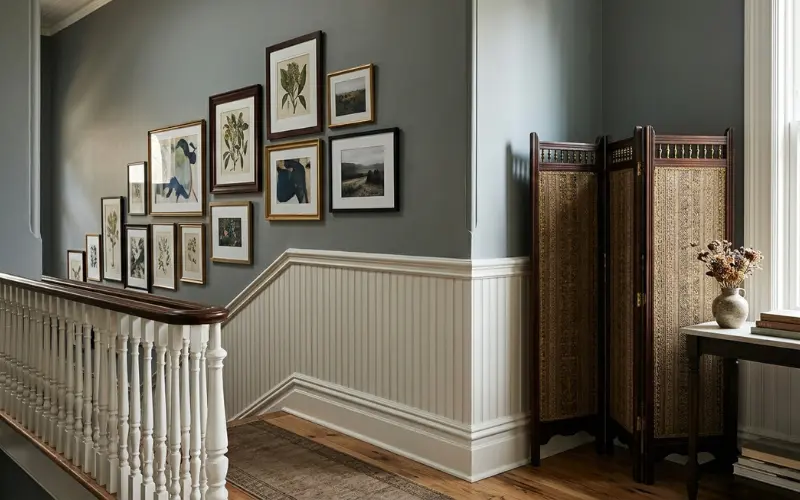
Sometimes the best decor is the structure itself. Trim, rails and panels give a room depth before a single frame goes up.
- Lower wall detail. Taller baseboards make ceilings feel higher and protect walls from scuffs. If you want to understand what a skirting wall treatment does for a room, start there, then compare profiles in this guide to decorative skirting boards.
- Stair walls. Staircases are often the longest wall in a house and the most ignored. A Hampton style balustrade paired with a run of framed pieces turns a hallway into a feature.
- Screens as movable walls. If you cannot build or paint, a decorating screen hides clutter, splits an open plan and doubles as art. It also works in rentals.
Ideas for Kitchens and Bathrooms
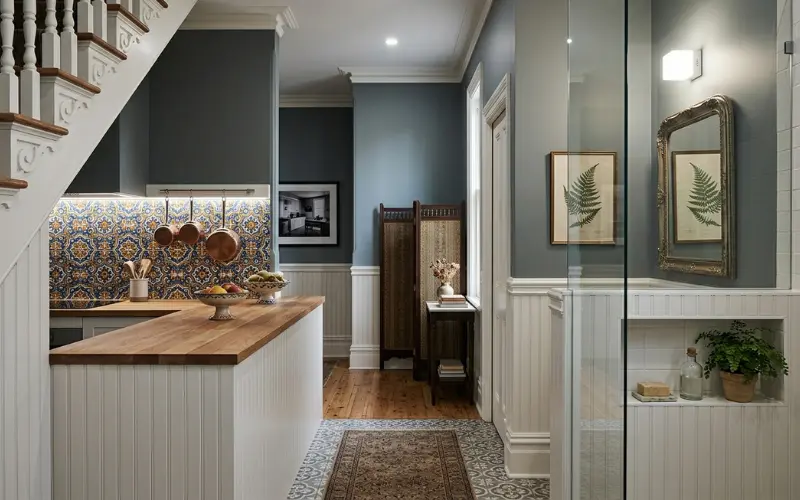
Wet rooms need decor that survives steam, splashes and grease. Fabric, raw wood and unsealed paper do not last here.
- Kitchens. Tile is the wall decor. A bold patterned splashback can carry the whole room, so keep everything else quiet. For a warmer, lived-in look, see these farmhouse style kitchens in Melbourne for layout and finish ideas you can adapt anywhere.
- Bathrooms. Choose sealed ceramics, framed prints under glass or moisture-safe plants. A recessed or built-in ledge in the shower is practical decor, because it replaces cluttered caddies and gives you a clean line.
Safety note from experience: Never hang an electric wall lamp or mirror light inside a bathroom wet zone unless it is rated for that area and installed by a licensed electrician. Water and wiring is the one place where a DIY shortcut is not worth it.
Ideas for Living Walls and Outdoor Walls
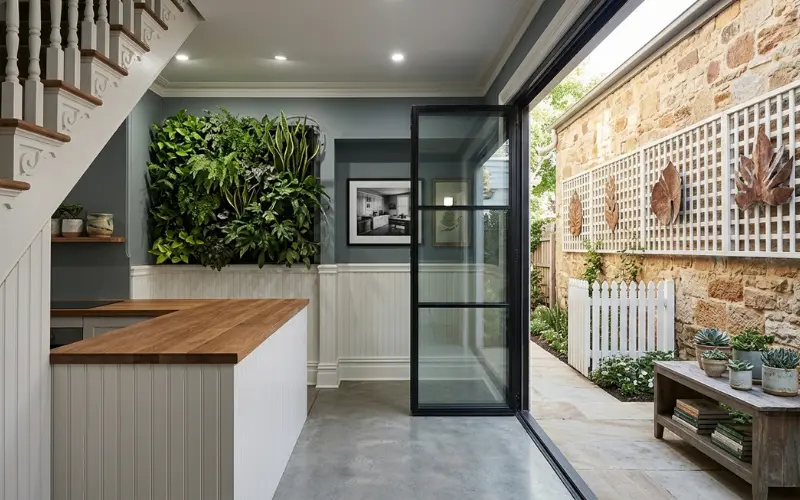
- Plants on the wall. A vertical planter softens hard surfaces and improves the feel of a room. Before you start, read about wall garden plants and which species cope with low light. Always put a waterproof backing behind the planter, because slow drips rot plasterboard long before you notice.
- Fences and garden walls. Exterior surfaces take decor too. A white picket fence gives a front yard instant structure, and the same idea can be repeated with painted trellis or mounted outdoor art along a patio wall.
- Collected pieces. If you want ready-to-hang items without hunting for one-offs, this look at assemble homewares in Australia shows how to source a consistent set.
What Competitors Rarely Tell You: Fixings and Weight
Hanging mistakes cause more damage than bad taste. A falling mirror hurts people and floors. Use this as a quick check before you drill.
| Item weight | Typical examples | Safer fixing approach |
|---|---|---|
| Under 5 lb (2 kg) | Small frames, plates | Picture hook or nail rated above the weight |
| 5 to 20 lb (2 to 9 kg) | Medium frames, small mirrors | Two hooks, or a screw into a stud |
| 20 to 50 lb (9 to 23 kg) | Large mirrors, loaded shelves | Stud screws, toggle bolts or a French cleat |
| Over 50 lb (23 kg) | Heavy mirrors, timber panels | Studs or masonry anchors only, ask a pro if unsure |
A few extra field rules:
- Ratings assume a solid wall. A chalky or cracked wall holds far less than the package says.
- Check for hidden pipes and cables with a detector before drilling near switches or above outlets.
- Kids’ rooms: Use acrylic instead of glass, and keep heavy frames away from beds and cribs.
- Renters: Strong adhesive strips handle light frames. Leaning large pieces on a shelf or console also works with no holes.
Quick Comparison: Which Idea Fits Your Situation?
| Idea | Cost | Effort | Rental friendly |
|---|---|---|---|
| Oversized art or mirror | Medium | Low | Yes, if leaned |
| Gallery wall | Low to medium | Medium | Partly |
| Paint or color block | Low | Medium | Only with permission |
| Skirting or trim upgrade | Medium | High | Rarely |
| Screen or divider | Medium | Low | Yes |
| Wall garden | Medium | Medium | Partly |
Mistakes That Make Wall Decor Ideas Look Cheap
- Hanging too high. Art floats away from the furniture and looks disconnected.
- Matching everything. A full set of identical frames feels like a showroom. Mix finishes slightly.
- Ignoring light. A beautiful print in direct sun can fade within a couple of seasons. Use UV-protective glass or move it.
- Too many small items. Clusters need a clear anchor piece or they read as clutter.
- Forgetting the lower wall. Bare wall below a window or above a skirting line often needs one low piece to finish the room.
A Simple Order of Work
Do it in this sequence and you avoid repainting or re-drilling later:
- Fix or paint the wall surface.
- Install trim, lights or built-ins.
- Hang the largest piece first.
- Build outward with smaller items.
- Step back after a week and remove one thing.
That last step matters. Most walls look better with one item fewer than you first planned.
Frequently Asked Questions About Wall Decor
Short, practical answers to the questions readers ask most.
How many pieces should a gallery wall have?
Five to nine works for most living room walls. Fewer than five can look sparse. More than nine needs a strict color or frame rule.
Should wall decor match my furniture?
It should relate, not match. Echo one color or material from the room, then let the art bring a contrasting texture or tone.
What can I do about nail holes after taking things down?
Fill small holes with lightweight spackle, sand lightly and touch up with matching paint. For rentals, keep a small paint sample for this exact job.
What wall decor makes a small room feel larger?
Vertical pieces draw the eye upward, and mirrors reflect light. Keep the palette tight and avoid crowding the wall at eye level.
Does wall decor help with echo in empty rooms?
Yes. Fabric, woven pieces, cork and thick canvas absorb sound better than glass or bare plaster.
How often should I change my wall decor?
Swap seasonally if you like variety, but keep one anchor piece for several years. Constant full changes make a room feel unsettled.
Can I mix metal, wood and glass frames?
Yes, if one element repeats. Two wood tones and one black metal frame usually works better than five different finishes.
What is the safest way to hang something over a bed?
Fix it into a stud or use rated toggle anchors, and keep glass to a minimum. Lighter canvas or wood pieces are safer choices over sleeping areas.