
Choosing new cabinets is one of the biggest decisions in any kitchen remodel. Modern kitchen cabinets can completely change how a room looks and how it works day to day. This guide walks through the styles, materials, colors, and storage features shaping kitchens right now, plus a few details most articles skip entirely: real cost ranges, certification labels worth checking, and the small planning mistakes that end up costing homeowners the most.
Whether you are gutting a kitchen or swapping out old cabinet boxes, this guide will help you shop smarter.
What Makes a Kitchen Cabinet “Modern”?
The word modern gets used loosely in design, so let’s define it. True modern kitchen cabinets share a few traits:
- Flat, unfussy door fronts with little to no ornamentation
- Clean horizontal or vertical lines instead of curves
- Hardware that is minimal, recessed, or absent altogether
- A focus on function: smart storage, integrated appliances, and uncluttered counters
This is different from “contemporary,” which borrows from whatever is currently trending, or “transitional,” which blends modern lines with traditional detailing. If your goal is a sleek, streamlined kitchen, this is the category to shop for.
Popular Styles of Modern Kitchen Cabinets
Not all modern cabinets look the same. Here are the three styles you will see most often in showrooms and online.
Slab-Front Cabinets
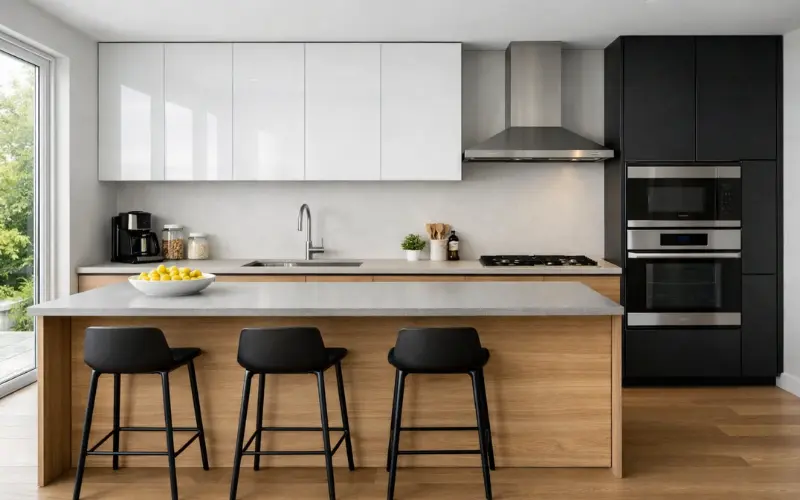
Slab doors are a single flat panel with no frame, no groove, and no raised center. They are the most recognizable style of modern kitchen cabinets because the surface is completely smooth from edge to edge. Slab fronts work in high-gloss lacquer, matte laminate, or natural wood veneer.
Flat-Panel Shaker
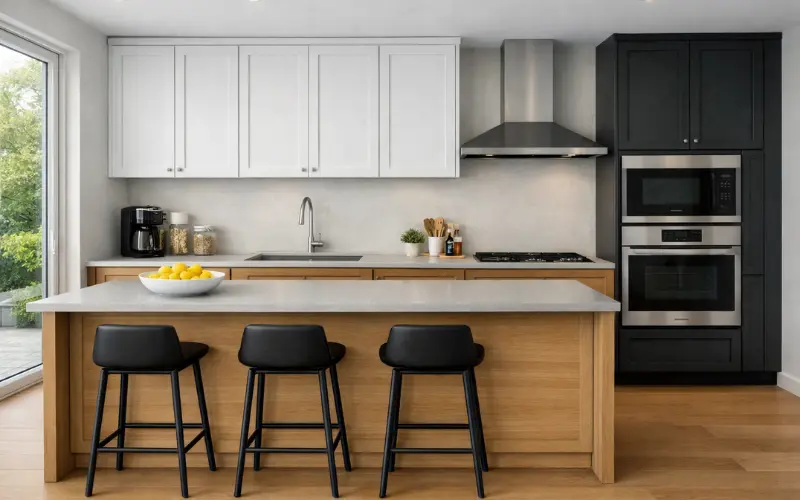
A slightly softened take on the slab look, flat-panel shaker doors have a thin recessed edge around a flat center panel. This style bridges modern and classic Shaker design, which makes it a safer long-term choice if you plan to sell your home in the next several years.
Handleless and Push-to-Open Designs
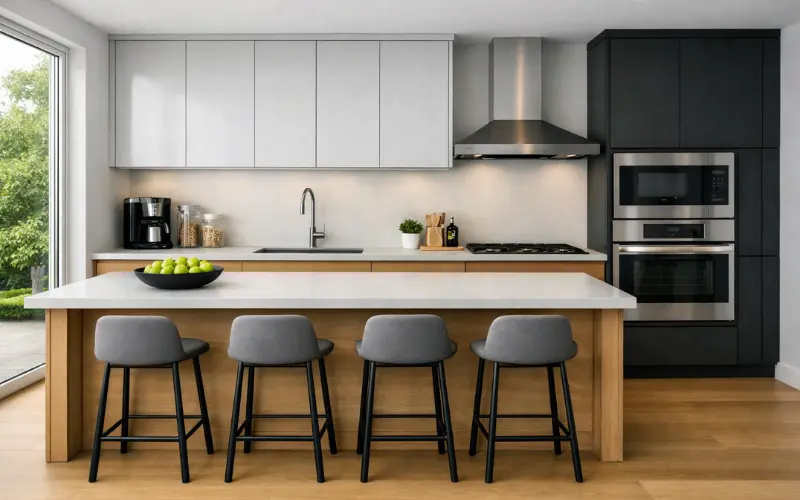
Instead of visible knobs or pulls, many kitchens now use a J-channel groove, an angled edge, or push-to-open hinges. Pressing lightly on the door releases a spring-loaded catch. This keeps sightlines clean, though it is worth testing in person, since push-to-open mechanisms need a firmer touch than a standard pull.
Materials: What Your Cabinets Are Actually Made Of
Most competitor guides mention “wood” and “laminate” and stop there. The material choice affects durability, price, and even indoor air quality, so it deserves a closer look.
- Thermofoil: A vinyl layer heat-sealed over an MDF core. Budget-friendly and seamless, but it can peel near heat sources like ranges and dishwashers over time.
- Laminate (HPL): A hard, scratch-resistant surface bonded to particleboard or MDF. This is the standard material for most modern kitchen cabinets sold online, including flat-pack European brands.
- Wood veneer: A thin slice of real wood over an engineered core. Gives an authentic grain look at a lower cost and with less warping risk than solid wood.
- Lacquered MDF: Sprayed and baked for a glass-like finish. Beautiful for slab doors, but fingerprints and scratches show more easily on darker, glossier colors.
- Solid wood: The most expensive option and least common in true modern designs, since it moves with humidity and doesn’t always suit ultra-flat slab styles.
One detail almost nobody mentions: check for a CARB Phase 2 or TSCA Title VI compliance label, or a European E1/E0 emissions rating, on any engineered wood cabinet. These standards limit formaldehyde off-gassing, which matters for indoor air quality, especially in smaller or newer, tightly sealed homes.
Color Trends for Modern Kitchen Cabinets in 2026
Color choice is where most homeowners spend the most time deciding, and for good reason. It sets the tone for the entire room.
- Warm neutrals: Greige, taupe, and soft oat tones are replacing stark white as the default cabinet color.
- Deep, moody hues: Charcoal, forest green, and navy are common on lower cabinets or kitchen islands.
- Two-tone kitchens: Pairing a light upper cabinet with a darker lower cabinet remains one of the most requested combinations.
- Warm wood tones: Walnut and rift-cut white oak are showing up even in otherwise minimalist, all-white kitchens as an accent.
A tip most articles leave out: pay attention to the Light Reflectance Value (LRV) of your chosen color, not just the swatch name. A cabinet with an LRV below 20 will read almost black under warm LED lighting, while anything above 70 can look washed out under cool daylight bulbs. Ask your showroom for the LRV number, and test a sample panel in your actual kitchen lighting before committing to a full order.
Storage Features Worth Paying For
Good cabinets should work as hard as they look good. A few upgrades genuinely change daily use:
- Soft-close hinges and drawer glides: Look for a weight rating, not just the soft-close label. Many budget glides are rated under 75 pounds, which is too light for a stacked pot drawer.
- Deep drawers instead of lower cabinets: Drawers give full visibility and access to everything inside, unlike a cabinet where items get pushed to the back.
- Corner solutions: A rotating carousel or pull-out diagonal unit recovers space that a standard corner cabinet wastes.
- Vertical tray dividers: Built-in slots for sheet pans and cutting boards keep awkward items from tipping over.
- Charging and outlet integration: Some newer cabinet lines route an outlet or USB port inside a drawer for small appliance charging, which keeps counters clear.
How Much Do Modern Kitchen Cabinets Cost?
Pricing varies widely, and most sites avoid giving real numbers. Here is a general range based on cabinet type, priced per linear foot, installation not included:
- Ready-to-assemble (RTA): $60 to $150 per linear foot
- Semi-custom, flat-pack European style: $150 to $350 per linear foot
- Fully custom cabinetry: $400 to $1,200 or more per linear foot
A full kitchen typically needs 20 to 30 linear feet of cabinets, so budgeting in that range early will save time when comparing quotes. Installation, hardware, and any panel or trim upgrades usually add another 20 to 30 percent on top of the cabinet price itself.
How to Choose the Right Modern Kitchen Cabinets for Your Space
Use this short checklist before you order modern kitchen cabinets for your home:
- Measure your space accurately, including ceiling height for upper cabinets.
- Decide on door style first, since it affects everything else, including hardware.
- Order a physical sample panel in your top two color choices.
- Confirm the box material and check for an emissions certification.
- Ask about drawer glide weight ratings if you plan to store heavy cookware.
- Get a written lead time, since many cabinet lines are made to order and can take 6 to 16 weeks.
Common Mistakes to Avoid
- Choosing color from a small swatch: Small samples look different under real kitchen lighting. Order a large sample or a full door if possible.
- Skipping the toe kick and filler pieces: These small components finish the installation and are easy to underbudget for.
- Ignoring ventilation: A modern hood or downdraft vent should be planned alongside cabinets, not added as an afterthought.
- Forgetting about resale: Extremely trendy colors or ultra-minimal handleless designs can be harder to sell to the next buyer than a timeless neutral.
Frequently Asked Questions
What is the difference between modern and contemporary kitchen cabinets?
Modern refers to a specific design era with clean lines and minimal ornamentation. Contemporary simply means whatever is currently popular, so it can shift over time and borrow from several styles at once.
Are modern kitchen cabinets more expensive than traditional ones?
Not necessarily. Slab and flat-panel styles can be less expensive to manufacture than heavily detailed traditional doors, though high-end lacquer or solid wood finishes can push costs up significantly.
What color are modern kitchen cabinets in 2026?
Warm neutrals, deep greens, and two-tone combinations are leading the year, along with natural wood accents mixed into otherwise minimal kitchens.
How long do modern kitchen cabinets last?
With quality materials and proper care, well-made cabinets typically last 20 to 30 years. Thermofoil finishes tend to have a shorter lifespan near heat sources than laminate or wood veneer.
Do handleless cabinets cost more?
Usually yes. Push-to-open hinges and integrated grooves require more precise manufacturing than a standard door with drilled holes for pulls.
What is the most durable material for these cabinets?
High-pressure laminate over a plywood or MDF core tends to hold up best against scratches, moisture, and daily wear compared to thermofoil or lacquer.
Can I install these cabinets myself?
Base cabinets are manageable for an experienced DIYer, but upper cabinets require precise leveling and secure wall anchoring. Many flat-pack brands offer detailed assembly guides for this reason.
How do I know if a cabinet color will look right in my kitchen?
Check the Light Reflectance Value of the color and test a physical sample under your kitchen’s actual lighting, both daytime and evening, before ordering.
What size kitchen works best with modern cabinets?
Modern styles suit almost any size kitchen since flat doors and minimal hardware tend to make small spaces feel less cluttered while still looking cohesive in larger, open-plan layouts.
Are two-tone kitchens still trending?
Yes. Pairing a lighter upper cabinet with a darker lower cabinet or island remains one of the most popular choices among homeowners planning a modern kitchen cabinets update this year.
Final Thoughts
Modern kitchen cabinets are as much about function as they are about looks. The cleanest slab door in the world will not feel worth it if a drawer glide fails within a year or the finish peels near the stove. Take the time to check materials, ask for real numbers on cost, and test colors under your own lighting before you order. A little research now means a kitchen that still looks and works great a decade from now.

