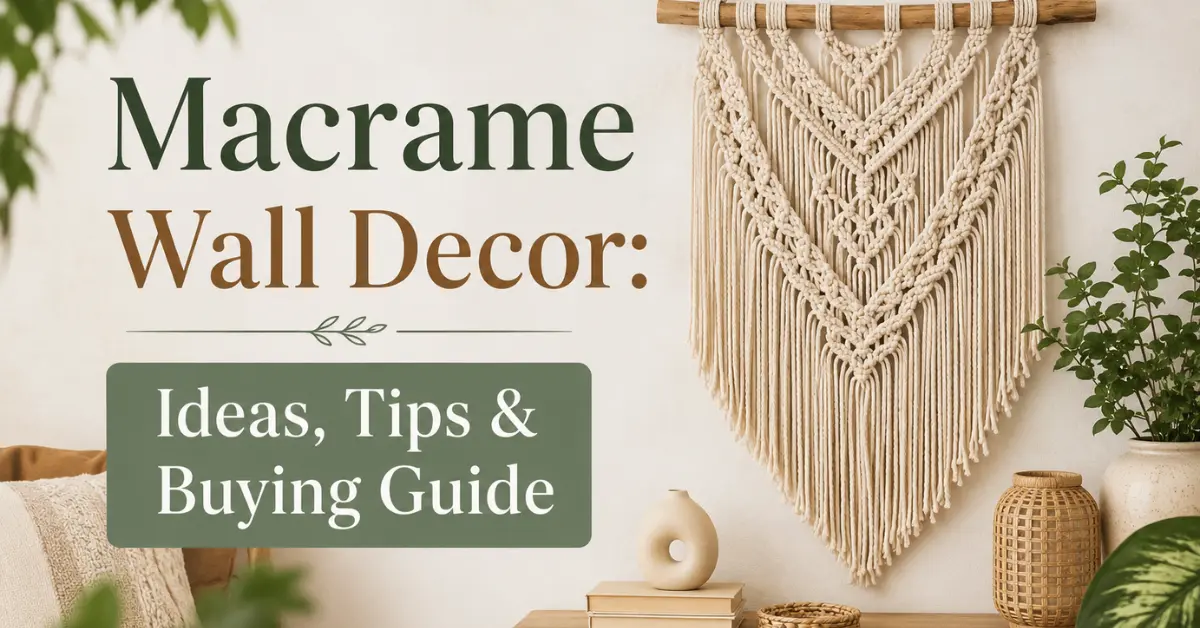
If you’ve been scrolling through home decor inspiration lately, macrame wall decor keeps showing up — and for good reason. Macrame wall hangings bring warmth, texture, and a handcrafted feel that no printed canvas or framed photo can replicate. Whether you’re decorating a living room, bedroom, nursery, or even a home office, macrame wall decor fits naturally into almost any space.
This guide covers everything: how to choose the right macrame wall decor, where to hang it, how to style it, how to care for it, and what your competitors and most décor blogs won’t tell you. Let’s dive in.
What Is Macrame Wall Decor?
Macrame wall decor refers to decorative wall pieces made by knotting cords or ropes — typically cotton, jute, hemp, or linen — into intricate patterns. The craft dates back centuries, gained massive popularity in the 1970s, and has experienced a strong revival over the past decade as people seek natural, artisan-made alternatives to mass-produced wall art.
Modern macrame wall decor goes far beyond the classic fringe wall hanging. Today you’ll find macrame wall art in the form of large statement pieces, minimalist geometric designs, macrame mirrors, macrame shelving, and even macrame wall panels used as room dividers or bed headboards.
Common types of macrame wall decor include:
- Classic macrame wall hangings with fringe
- Macrame mirror frames
- Macrame wall shelves
- Macrame curtain panels used as wall features
- Macrame hoops and dream catcher-style wall art
- 3D sculptural macrame wall pieces
Why Macrame Wall Decor Works in Almost Every Room
One of the strongest reasons macrame wall decor has stayed popular — unlike many fleeting trends — is its versatility. A macrame wall hanging adds something that paint, wallpaper, and even most artwork cannot: tactile texture.
When light hits a macrame wall hanging, the knots and fringe create shadows and dimension that shift through the day. This makes macrame wall decor feel alive in a way that flat art simply doesn’t. It adds depth to empty walls without feeling heavy or visually cluttered.
Macrame wall decor also works across multiple interior styles:
- Bohemian and boho-chic — the most natural fit, pairing macrame with rattan, plants, and warm earth tones
- Scandinavian minimalist — a single oversized macrame wall hanging in white or natural cotton works beautifully against clean white walls
- Modern farmhouse — macrame’s wall decor in neutral tones complements shiplap, wood accents, and linen textiles perfectly
- Contemporary and eclectic — macrame wall hangings in dyed colors (terracotta, sage, charcoal, dusty pink) work as bold art statements
- Coastal and natural — jute or hemp macrame wall decor fits right into a relaxed, ocean-inspired aesthetic
How to Choose the Right Macrame Wall Decor for Your Space
This is where most guides fall short. Choosing macrame wall decor isn’t just about picking something that looks pretty on a product page — it has to work in your actual room. Here’s how to get it right every time.
1. Match the Size to Your Wall

Size is the number one mistake people make with macrame wall decor. A small macrame wall hanging on a large wall looks lost and underwhelming. As a general rule:
- Above a sofa or bed: choose macrame wall decor that spans at least two-thirds the width of the furniture beneath it
- Entryway or narrow wall: a tall, vertical macrame wall hanging with long fringe creates an elegant statement
- Gallery wall: mix several smaller macrame wall art pieces with other framed items for a layered, collected look
- Focal wall: go large — an oversized macrame wall hanging 36 inches wide or more becomes the room’s anchor point
2. Choose the Right Material for Your Style
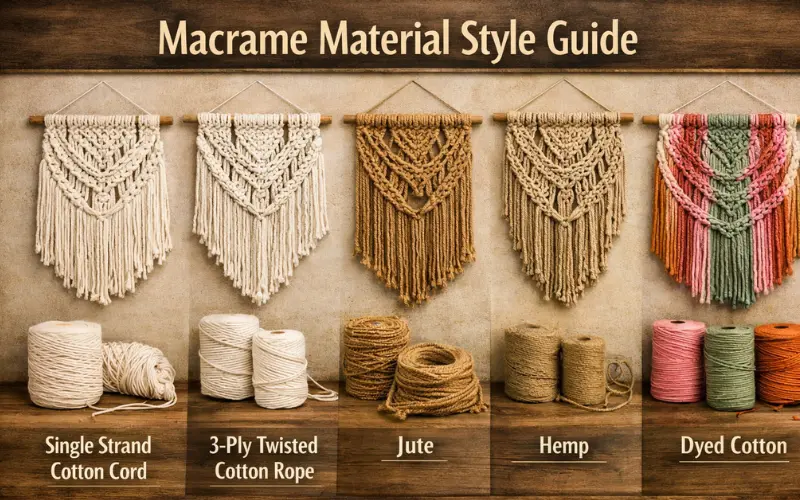
The cord material affects how macrame wall decor looks, feels, and ages:
- Single-strand cotton cord — soft, fluffy fringe, brushes out beautifully; best for classic boho macrame wall hangings
- 3-ply twisted cotton rope — more structured, defined knots with a slightly rustic look; great for modern macrame wall decor
- Jute — natural golden-brown color, slightly rougher texture; ideal for farmhouse or coastal macrame wall decor
- Hemp — similar to jute but finer; works well for intricate pattern macrame wall hangings
- Dyed cotton — available in hundreds of colors; the best choice if you want macrame’s wall decor that makes a color statement rather than a neutral one
3. Consider the Knot Style and Visual Weight
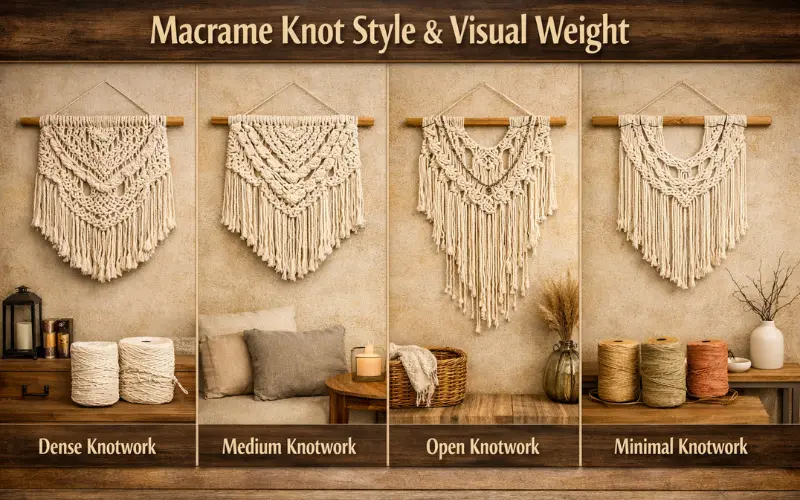
Dense knotwork creates heavier, more dramatic macrame wall decor. Open, airy knotwork with long fringe feels lighter and more casual. Think about what your room already has: if your space is busy with patterns and furniture, a simpler macrame wall hanging will feel more intentional. If your walls are bare and minimal, a complex knotwork macrame piece becomes a true focal point.
4. Pick the Right Color
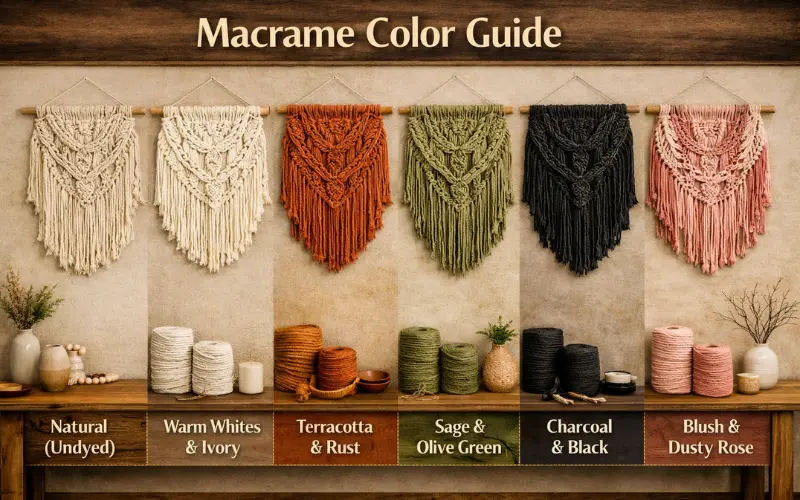
Natural (undyed) macrame’s wall decor is the most popular choice because it goes with almost everything. But don’t overlook:
- Warm whites and ivory — brighter than natural, works well in modern interiors
- Terracotta and rust — trending macrame wall decor color that pairs beautifully with warm wood tones
- Sage and olive green — fresh, organic macrame wall decor color that connects indoor spaces to nature
- Charcoal and black — bold macrame wall decor choice that reads more like contemporary art
- Blush pink and dusty rose — popular for nurseries and bedroom macrame wall decor
Where to Hang Macrame Wall Decor: Room-by-Room Guide
Living Room
The living room is the most popular place for macrame wall decor, and the area above the sofa is the classic placement. Hang your macrame wall hanging so the bottom of the piece sits roughly 6–8 inches above the sofa back. For high ceilings, use a longer macrame wall hanging to fill vertical space.
Grouping three macrame wall hangings of varying sizes creates a gallery effect that’s more dynamic than a single piece. Pair macrame wall decor with warm lighting — a nearby floor lamp or wall sconce will cast beautiful shadows across the knotwork.
Bedroom
Macrame’s wall decor makes a stunning headboard alternative or headboard accent. Position a wide macrame wall hanging centered above your bed, stretching close to the width of the mattress. This creates an intimate, cocooning feel that’s hard to achieve with traditional headboards.
For a bedroom macrame wall hanging, consider pieces with longer fringe — the cascading texture adds a softness that’s perfect for sleep spaces.
Nursery
Macrame wall decor is one of the best choices for nurseries. It’s non-toxic (especially undyed cotton), adds gentle visual texture, and creates a calm, organic atmosphere. Circular macrame wall hangings, dream catcher styles, and small macrame hoops work especially well in nurseries.
Avoid very large or heavy macrame’s wall decor over cribs — lightweight, well-secured pieces hung away from the sleep area are the safest choice.
Entryway
A macrame wall hanging in your entryway sets the tone for your whole home. The best macrame wall decor for entryways is mid-sized, vertical, and slightly textural — something that creates a warm impression without overwhelming a typically smaller space. Macrame wall shelves with a built-in wooden shelf are particularly practical here for keys and small items.
Home Office
Macrame’s wall decor is increasingly popular in home offices because it softens the hard edges of a desk setup without the corporate feel of framed motivational prints. A single macrame wall hanging behind or beside your desk adds character and makes video call backgrounds significantly more interesting.
Macrame Wall Decor Styling Tips the Pros Use
Layer with plants. A macrame wall hanging positioned near trailing plants — pothos, string of pearls, or a hanging fern — creates a cohesive organic vignette. The greenery and the knotted fiber feel like natural partners.
Combine macrame wall decor with fairy lights. Weaving a strand of warm white LED fairy lights through the upper section of a macrame wall hanging creates a magical effect in the evening. This works especially well in bedrooms and living rooms.
Mix textures, not just styles. The reason macrame,s wall decor looks so good in layered interiors is that knotted fiber plays beautifully against smooth plaster, rough wood, woven baskets, and soft linen. Don’t think of macrame as a style — think of it as a texture that enriches other textures around it.
Create a macrame wall gallery. Instead of one large macrame wall hanging, try a gallery arrangement: two or three macrame wall hangings of different sizes, paired with a round macrame mirror and a small macrame shelf. This approach works especially well on large, empty living room walls.
How to Care for Macrame Wall Decor (What Most Guides Skip)
This is something almost nobody talks about — and it matters if you want your macrame wall decor to look good for years.
Dusting: Cotton macrame wall hangings attract dust. Use a hair dryer on cool setting to blow dust off gently, or use a soft-bristle brush. Never scrub macrame — the fibers will fray.
Spot cleaning: For small stains on macrame’s wall decor, dab (never rub) with a damp cloth and a tiny amount of mild soap. Let it air dry completely before rehaning.
Fringe care: If your macrame wall hanging fringe becomes tangled or matted, use a wide-tooth comb or a pet slicker brush to gently separate the fibers. This restores that full, fluffy fringe look.
Sunlight: Direct, prolonged sunlight will yellow and weaken natural cotton macrame wall decor over time. If your macrame wall hanging is in a sunny spot, consider rotating it periodically or choosing UV-treated cord.
Storage: If you ever store macrame wall decor, roll it loosely — never fold it. Folding creates permanent creases in the cord that are difficult to remove.
How to Hang Macrame Wall Decor Properly
Most macrame wall hangings come with a wooden dowel, metal rod, or driftwood branch already attached. For hanging:
- Lightweight pieces (under 2 lbs): a standard picture hook or adhesive hook works fine
- Medium pieces: use a wall anchor and screw for secure hanging — find a stud if possible
- Heavy or large macrame wall decor: always anchor into a stud or use toggle anchors rated for the weight
For the cleanest look, hang macrame’s wall decor so it sits flat against the wall rather than angling forward. If the dowel bows in the middle, add a second hook at the center point to distribute the weight.
FAQs
Q1: What is macrame wall decor?
Macrame wall decor is decorative wall art made by knotting cords or ropes — usually cotton, jute, or hemp — into patterns and designs. It ranges from simple fringe wall hangings to complex sculptural pieces, mirrors, and shelving.
Q2: What size macrame wall hanging should I get?
For above a sofa or bed, choose a macrame wall hanging that spans at least two-thirds the width of the furniture below it. For a large focal wall, go 36 inches wide or more. When in doubt, size up — most people regret buying too small.
Q3: How do I hang macrame wall decor without damaging my wall?
Lightweight macrame wall hangings (under 2 lbs) hang safely on adhesive hooks. Medium-weight pieces need a wall anchor and screw. Large or heavy macrame wall decor should always be anchored into a wall stud for safety.
Q4: How do I clean and maintain macrame wall decor?
Use a cool hair dryer or soft brush to remove dust. For small stains, dab gently with a damp cloth and mild soap — never rub. Comb out tangled fringe with a wide-tooth comb. Avoid prolonged direct sunlight, which yellows and weakens natural cotton fibers over time.
Q5: What interior styles work with macrame wall decor?
Macrame wall decor suits bohemian, Scandinavian minimalist, modern farmhouse, coastal, and contemporary eclectic styles. In neutral or natural tones it blends easily; in dyed colors like terracotta, sage, or charcoal it works as a bold art statement.
Q6: What is the best material for macrame wall decor?
Single-strand cotton cord is the most popular — it’s soft, fluffy, and brushes out beautifully. Jute and hemp give a more rustic, natural look. Dyed cotton is ideal if you want macrame wall decor in a specific color to match your room palette.
Q7: Can I use macrame wall decor in a nursery?
Yes. Undyed cotton macrame wall decor is non-toxic and one of the safest choices for nurseries. Opt for lightweight pieces and hang them away from the crib area. Circular hoops and soft fringe styles work especially well in nursery settings.
Q8: How do I style macrame wall decor with other room elements?
Pair macrame wall hangings with trailing plants, warm fairy lights, rattan furniture, and linen textiles for a layered, organic look. For gallery walls, combine macrame wall hangings of different sizes with a round macrame mirror and a small macrame shelf.
Final Thoughts
Macrame wall decor is one of the most rewarding ways to transform a room. It adds warmth that paint can’t provide, texture that prints can’t achieve, and a handcrafted quality that mass-produced wall art simply lacks. Whether you choose a large statement macrame wall hanging above your sofa, a cluster of small macrame pieces in a gallery arrangement, or a delicate macrame mirror frame in your bedroom — the key is choosing pieces that fit your wall size, match your room’s color story, and are made from quality materials that will last.
Take your time, trust your instincts about scale, and don’t be afraid to go bigger than you think you need to. The most common regret with macrame wall decor? Buying something too small.