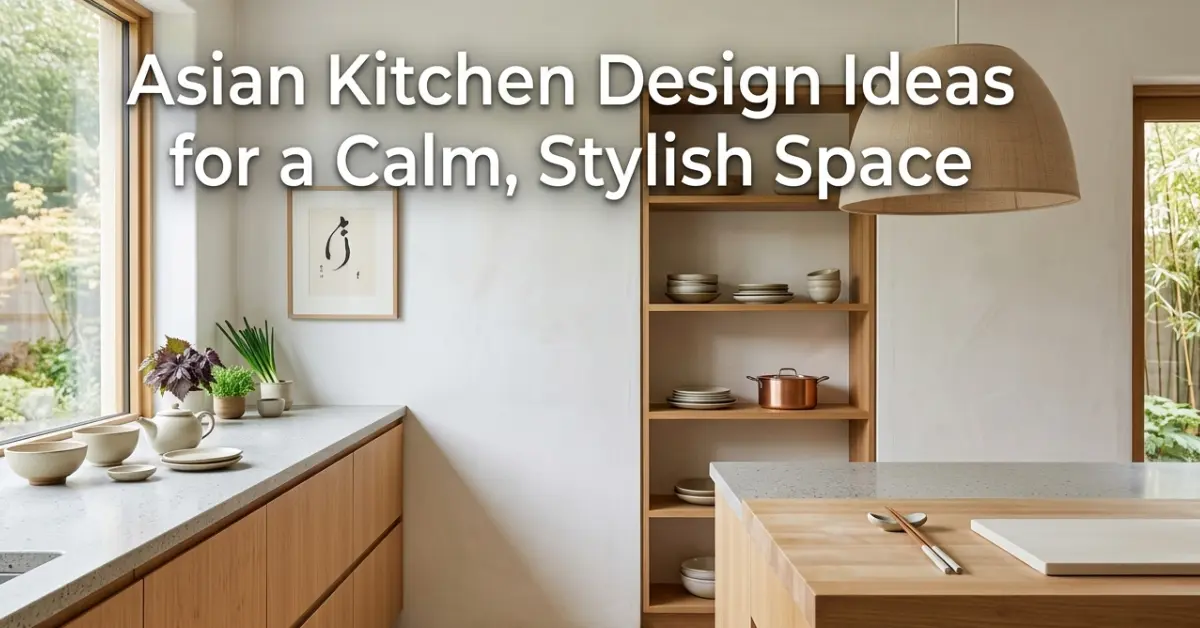
Have you ever walked into a kitchen and instantly felt calm? That is the magic of an asian kitchen. Rooted in centuries of cultural philosophy, asian kitchen design blends beauty, function, and harmony into one of the most inviting spaces in any home.
Whether you love the minimalist elegance of Japanese design, the warm tones of a Chinese-inspired kitchen, or the vibrant earthiness of Balinese style, there is an asian kitchen aesthetic that fits your personality and space.
In this guide, you will learn everything you need to know — from core design principles and materials to colors, storage ideas, and regional styles that most articles miss.
What Is an Asian Kitchen?
An asian kitchen is a cooking space inspired by the interior design traditions of East, Southeast, and South Asia. It draws from Japanese, Chinese, Korean, Thai, Balinese, and Indian design philosophies.
The common thread across all of them is balance. An asian kitchen avoids excess, celebrates natural materials, and creates a sense of peace and order. It is not just a kitchen — it is a mindful living space.
Core Principles of Asian Kitchen Design
Before you pick a color or cabinet style, understand the values that drive asian kitchen design:
- Wabi-Sabi (Japanese): Embracing imperfection and simplicity. Slightly rough textures, handmade ceramics, and natural grain patterns all reflect this beautiful philosophy.
- Feng Shui (Chinese): The flow of energy through space. In a feng shui asian kitchen, the stove, sink, and refrigerator follow the “kitchen triangle” principle to ensure smooth energy and efficient workflow.
- Ma (Japanese): The concept of negative space. An asian kitchen never feels cluttered. Empty space is treated as a design element, not something to fill.
- Wabi (Korean/Japanese): Quiet beauty in everyday objects. Functional tools are also beautiful — bamboo utensil holders, stone mortar sets, and handwoven baskets all serve double duty.
These principles explain why asian kitchens feel so different from typical Western designs. They are intentional spaces, not just functional rooms.
Asian Kitchen Design Styles by Region
One thing most competitors overlook is that “asian kitchen” is not one single style. Here is a breakdown of the most popular regional approaches:
Japanese Kitchen Design
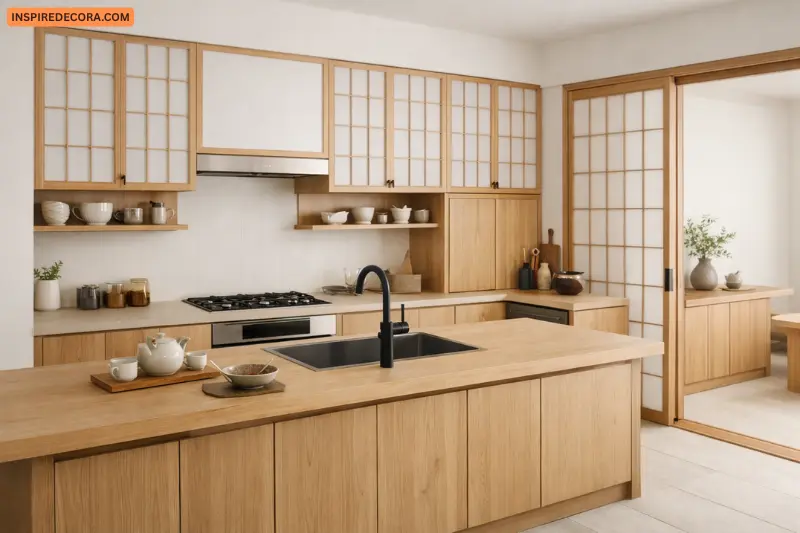
A Japanese-inspired asian kitchen focuses on extreme minimalism, low-profile cabinetry, and a muted color palette. Think white walls, light wood grain, and hidden storage. Open shelving is common but always organized. Under-counter appliances keep countertops clean and serene.
Key elements include:
- Shoji screen panels as cabinet doors or room dividers
- Walnut or hinoki cypress wood accents
- Deep, single-basin sinks
- Integrated appliances for a seamless look
Chinese Kitchen Design
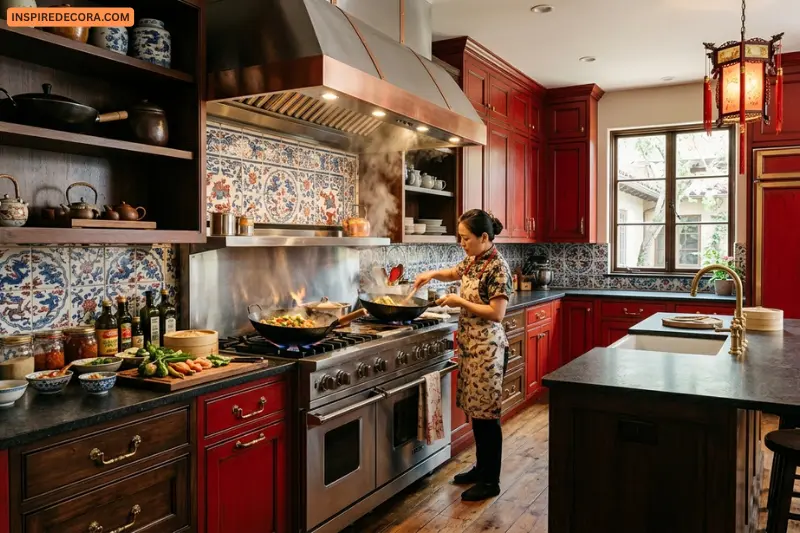
A Chinese-inspired asian’s kitchen is warmer and richer. Red lacquered cabinets, dark wood, and gold or brass hardware define this style. The layout prioritizes a large cooking area because Chinese cooking involves high-heat woks, multiple burners, and bold aromatics.
Key elements include:
- Red, black, or deep brown lacquered cabinetry
- Brass or antique copper fixtures
- Large, powerful range hoods
- Decorative porcelain or ceramic tile backsplashes
Korean Kitchen Design
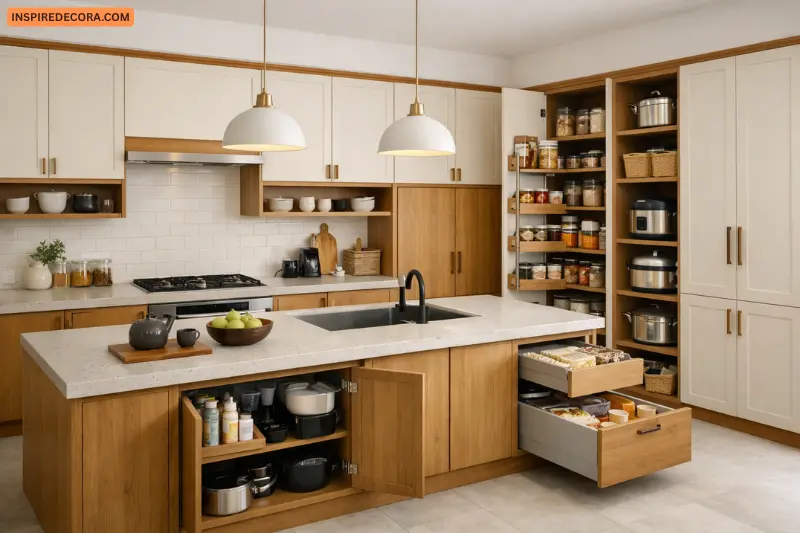
Korean kitchen design sits between Japanese minimalism and Chinese warmth. Clean lines, white subway tiles, and natural stone countertops are paired with wood tones and subtle earth colors. Storage is heavily prioritized — Korean kitchens include deep pantry-style cabinets to store fermented foods, dry goods, and cookware.
Key elements include:
- White or cream cabinetry with wood trim
- Stone or quartz countertops
- Under-sink and pull-out pantry storage
- Simple pendant lighting over the island
Balinese and Southeast Asian Kitchen Design
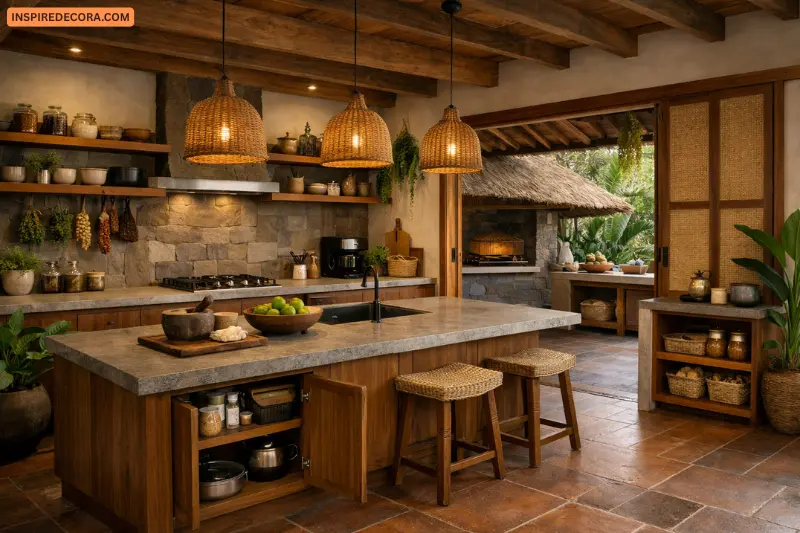
Balinese and Thai-inspired asian kitchens bring the outdoors in. They feature open layouts, teak or reclaimed wood beams, stone countertops, and woven rattan accents. These kitchens often connect directly to an outdoor cooking area or garden.
Key elements include:
- Teak wood cabinetry and floating shelves
- Terracotta or slate tile flooring
- Stone or concrete countertops
- Indoor plants and hanging herbs
- Warm amber lighting
Best Colors for an Asian Kitchen
Color sets the emotional tone of your asian kitchen. Here are the most effective palettes:
- White and Natural Wood: The most classic asian kitchen combination. Clean, airy, and timeless.
- Charcoal and Bamboo: A modern asian’s kitchen look that feels sophisticated and earthy.
- Warm Cream and Walnut: Adds warmth without being heavy. Works beautifully in smaller kitchens.
- Deep Red and Black: Bold and dramatic, inspired by Chinese lacquerware. Best suited for large spaces.
- Sage Green and Stone: A calming palette that connects to nature — ideal for Balinese or Japanese styles.
- Off-White and Terracotta: A Southeast Asian look that feels organic and welcoming.
Avoid bright, unnatural colors in an asian’s kitchen. Neon accents, stark white under harsh lighting, or clashing color combinations all work against the philosophy of harmony.
Materials That Define an Asian Kitchen
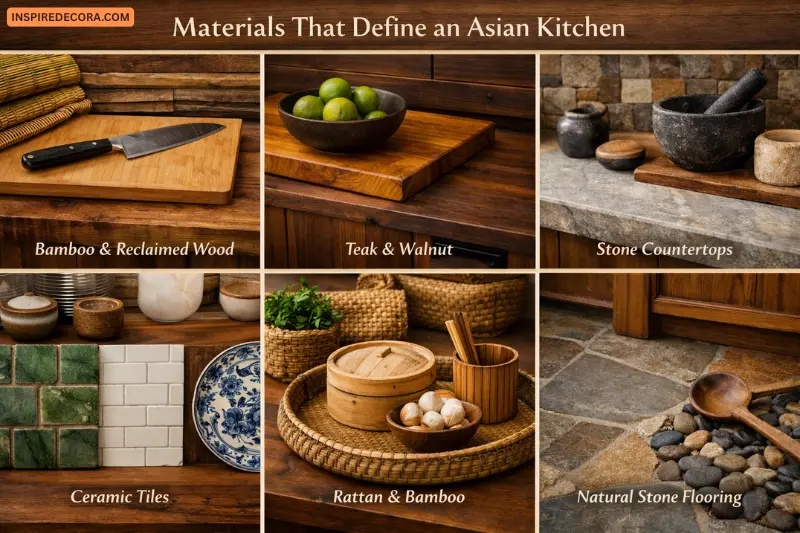
The right materials are non-negotiable in asian kitchen design. Every surface should feel intentional and natural.
Wood
Wood is the heart of any asian’s kitchen. Popular choices include:
- Bamboo: Fast-growing, eco-friendly, and incredibly durable. Used for flooring, cabinetry, and cutting boards.
- Teak: Rich, dense, and moisture-resistant. Perfect for kitchen islands and countertops.
- Walnut: Dark, elegant, and smooth. Adds depth to Japanese-style asian’s kitchens.
- Reclaimed Wood: Adds texture and a sense of history — key to wabi-sabi philosophy.
Stone
Stone grounds an asian’s kitchen in nature. Use it for:
- Countertops (granite, slate, or honed marble)
- Backsplashes (natural stone mosaic or stacked slate)
- Flooring (stone tile or polished concrete)
Ceramic and Porcelain
Handmade ceramic tiles add authenticity to an asian kitchen. Look for irregular shapes, matte glazes, and earthy tones. Japanese subway tiles, Chinese blue-and-white porcelain accents, and Korean celadon-inspired finishes all work well.
Bamboo and Rattan
These natural fibers appear in asian kitchens as pendant light shades, cabinet door inserts, open shelf bins, and decorative woven baskets. They add texture without visual weight.
Asian Kitchen Cabinetry: What to Look For
Cabinetry is the biggest visual element in any asian’s kitchen. Here is what to prioritize:
- Flat-panel doors over raised-panel styles. Clean lines are essential.
- Handle-free designs (push-to-open or integrated finger pulls) for a sleek, uninterrupted surface.
- Natural wood grain finishes instead of high-gloss synthetic laminates.
- Dark stains or lacquer if you prefer a more dramatic Chinese-inspired look.
- Glass inserts with simple grid patterns to echo shoji screen aesthetics.
Avoid ornate carvings, decorative molding, or overly rustic finishes — these belong to European farmhouse or traditional American kitchens, not an asian kitchen.
Lighting in an Asian Kitchen
Lighting is one of the most overlooked elements of asian kitchen design. Get it wrong and the whole mood falls apart.
- Warm white bulbs (2700K–3000K) create the amber glow associated with asian kitchens. Avoid cool white or daylight bulbs.
- Paper lantern pendants are an iconic asian’s kitchen fixture. They diffuse light softly and add texture overhead.
- Recessed lighting paired with under-cabinet LEDs gives functional task lighting without visual clutter.
- Bamboo or rattan pendant shades over an island add natural warmth.
- Indirect lighting behind open shelves or inside glass cabinets highlights displayed ceramics beautifully.
Smart Storage Ideas for an Asian Kitchen
A cluttered kitchen is the opposite of asian design philosophy. Here are smart storage strategies that keep your asian kitchen serene:
- Use deep drawer organizers to store spices, oils, and utensils out of sight.
- Install pull-out pantry cabinets for dry goods and fermented condiments common in Asian cooking.
- Hang a magnetic knife strip made from bamboo or dark wood — functional and beautiful.
- Use uniform glass jars on open shelves to store dry ingredients. Visual consistency creates calm.
- Add a built-in spice wall inside a pantry cabinet door — a practical nod to Asian cooking traditions.
- Keep countertops clear. Only display items you use every single day.
How to Bring Nature Into Your Asian Kitchen
Connecting to nature is central to asian kitchen design. Here are easy ways to do it:
- Place a small bonsai tree or bamboo plant on the windowsill.
- Hang fresh herbs like shiso, Thai basil, or lemongrass in small wall-mounted planters.
- Use natural stone or river pebble trivets as resting spots for hot pots.
- Install a window garden shelf to grow culinary herbs in ceramic pots.
- Choose a stone or concrete sink to bring raw natural texture to the workspace.
Asian Kitchen Flooring Ideas
The floor anchors the entire aesthetic of your asian kitchen. Great options include:
- Bamboo flooring: Warm, eco-friendly, and durable. The most popular choice for an authentic asian kitchen.
- Slate tile: Dark, natural, and striking. Excellent for Japanese or Balinese styles.
- Polished concrete: Minimalist and industrial, works beautifully in modern asian’s kitchens.
- Terracotta tile: Warm and earthy, perfect for Southeast Asian or Indian-inspired designs.
- Light oak hardwood: Clean and simple — ideal for Korean or Japanese aesthetics.
Asian Kitchen on a Budget: Where to Start
You do not need a full renovation to create an asian kitchen feel. Start with these impactful changes:
- Replace cabinet hardware with brushed brass or matte black pulls.
- Paint your walls in warm white, soft cream, or sage green.
- Add bamboo or rattan pendant lights over your island or dining area.
- Declutter completely — remove everything from countertops except a single plant and one functional item.
- Replace your dish rack and utensil holders with natural bamboo or ceramic versions.
- Add a stone or wood cutting board as a permanent counter accent.
- Hang a simple shoji-style blind on your kitchen window.
Even small changes move your kitchen toward the calm, grounded beauty of an asian kitchen.
Common Mistakes to Avoid in Asian Kitchen Design
Most people make these errors when designing an asian kitchen:
- Overdoing the “Asian decor” theme with lanterns, dragons, and characters. Authentic asian kitchen design is subtle and philosophical, not decorative tourism.
- Using too many materials at once. Pick two or three and repeat them throughout.
- Ignoring lighting. Harsh fluorescent lighting destroys the atmosphere immediately.
- Skipping storage planning. A beautiful asian’s kitchen only works when clutter has somewhere to go.
- Choosing the wrong countertop color. Ultra-white quartz with sharp sparkle clashes with the organic tone of asian design. Opt for honed, matte, or textured surfaces instead.
Frequently Asked Questions About Asian Kitchens
1. What makes a kitchen “Asian style”?
An asian’s kitchen is defined by its philosophy, not a single visual style. It prioritizes balance, natural materials, minimal clutter, and a deep connection to nature. Clean lines, warm earth tones, and intentional simplicity are the hallmarks.
2. Can I create an asian kitchen in a small space?
Yes — in fact, small kitchens often benefit most from asian design principles. The focus on eliminating excess and maximizing every inch of storage means an asian’s kitchen philosophy naturally works in compact layouts.
3. What wood is best for an asian kitchen?
Bamboo is the most iconic choice, but walnut, teak, and reclaimed wood all work beautifully. The key is choosing wood with visible natural grain and avoiding overly polished or artificially colored finishes.
4. What appliances work best in an asian’s kitchen?
Integrated, paneled appliances that blend into the cabinetry are ideal. For cooking, a high-BTU gas range or wok burner is a practical addition for Asian-style cooking. A built-in steam oven is also popular in Japanese and Korean-inspired kitchens.
5. How do I incorporate Feng Shui into my asian’s kitchen?
Place your stove so you face outward when cooking (not toward a wall). Keep the sink and stove separated — water and fire elements create conflict when placed directly next to each other. Keep the kitchen clean, bright, and clutter-free to allow positive energy to circulate freely.
6. What backsplash works best in an asian kitchen?
Handmade ceramic subway tiles, natural stone mosaic, or large-format slate tiles all work beautifully. Avoid highly polished or sparkly surfaces. Matte or textured finishes feel more authentic.
7. Is an asian kitchen the same as a Japanese kitchen?
Not exactly. Japanese kitchen design is one style within the broader asian’s kitchen category. Chinese, Korean, Balinese, Thai, and Indian design traditions each offer their own distinct approach, all united by common values of balance, nature, and simplicity.
8. How do I choose lighting for an asian’s kitchen?
Use warm white bulbs (2700K–3000K), add pendant lighting with natural material shades (bamboo, rattan, or paper), and include under-cabinet task lighting. Avoid cool fluorescent lighting, which creates a clinical atmosphere.
9. Can I mix asian’s kitchen style with modern design?
Absolutely. Modern asian kitchen design (sometimes called “zen-modern”) is one of the most popular interior trends today. Pair flat-panel cabinets, stone countertops, and integrated appliances with natural wood accents and warm lighting for a contemporary asian’s kitchen that feels fresh and timeless.
10. What plants work best in an asian’s kitchen?
Lucky bamboo, bonsai trees, peace lilies, pothos, and culinary herbs like shiso or Thai basil all work well. Choose plants in simple ceramic or stone pots that match your kitchen’s color palette.
Final Thoughts
An asian kitchen is more than a design trend. It is a way of approaching your home with intention, respect for nature, and a desire for calm. Whether you are doing a full renovation or just refreshing a few details, the principles of asian kitchen design give you a clear, beautiful framework to follow.
Start small, stay consistent, and remember: in an asian’s kitchen, less is always more.