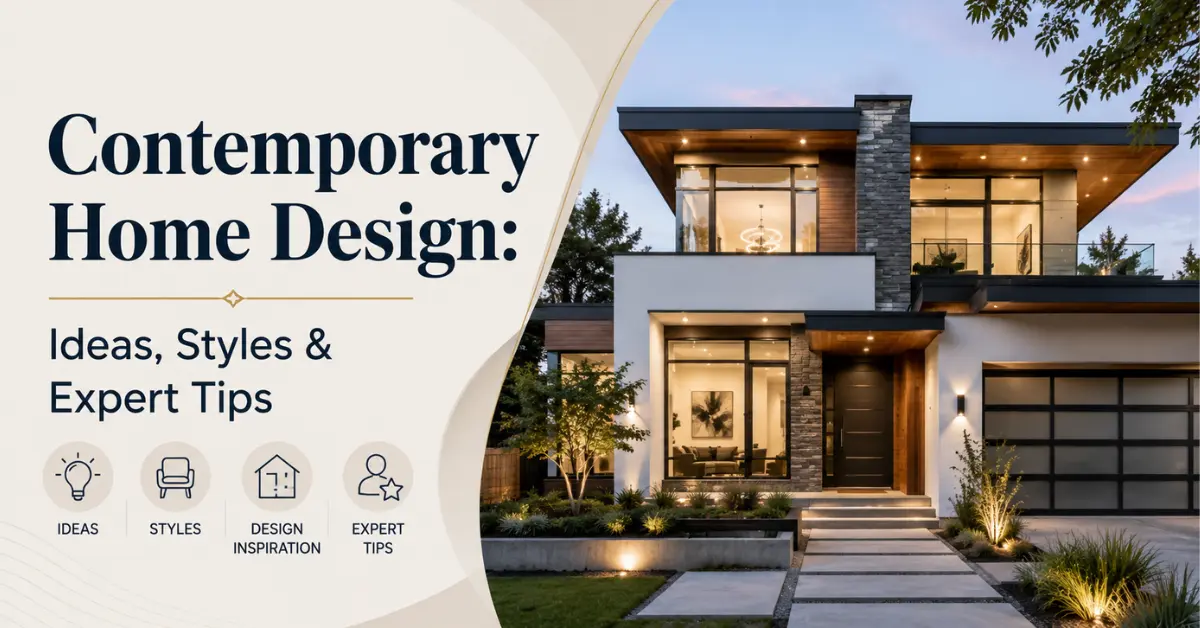
Walk down any new-development street today and you’ll spot them immediately — the homes with clean rooflines, oversized windows, and that effortless sense of “right now.” That’s contemporary home design at work. But what actually separates a contemporary home from a modern one? Why do they cost more to build? And what should you look for in a floor plan before you commit?
This guide answers all of it — straight from the design details down to the real-world build decisions nobody else talks about.
What Is Contemporary Home Design?
Contemporary home design refers to architecture and interior style that reflects the current moment — what’s being built and lived in right now, in the 2020s. Unlike “modern,” which is a fixed historical style rooted in the early-to-mid 20th century, contemporary is a moving target. It evolves with trends, technology, and cultural shifts.
In practical terms, a contemporary home today typically means:
- Clean, uncluttered exteriors with deliberate material contrasts
- Large windows and glass walls that erase the boundary between inside and outside
- Open-concept floor plans that prioritize flow over compartmentalization
- Flat, shed, or low-pitched rooflines (though not exclusively)
- Sustainable materials and energy-conscious construction
- Smart home integration as a standard expectation, not an upgrade
The style is less about a rulebook and more about intention — every design decision is made to feel purposeful rather than decorative.
Contemporary vs. Modern: The Difference Most Websites Get Wrong
This is where almost every competitor article falls short — they use these two terms interchangeably, and they shouldn’t.
Modern design is a specific architectural movement born between roughly 1920 and 1970. Think Bauhaus, Frank Lloyd Wright’s Prairie Style, and the International Style. It has fixed rules: flat roofs, open plans, natural materials (wood, stone, concrete), and a strict rejection of ornamentation. Modern homes from this era look timeless precisely because the style doesn’t change.
Contemporary design is what’s happening right now. It borrows freely from modernism — the clean lines, the open plans, the natural materials — but it adds things modernism never had: smart home systems, triple-glazed windows, sustainable insulation, and design trends that reflect today’s lifestyle priorities like home offices, indoor-outdoor entertaining spaces, and multi-generational living.
A contemporary home in 2025 can include a shed roof, a bold black steel frame, fiber cement cladding, and a solar array. A mid-century modern home from 1958 would never. The philosophies overlap, but they are not the same thing.
Transitional style is the middle ground many homeowners choose without realizing it — it blends contemporary clean lines with traditional warmth (think white oak floors, muted palettes, and soft curves). If you’re drawn to contemporary but worried it might feel cold, transitional is worth exploring.
The 7 Defining Features of Contemporary Home Design
1. The Roofline
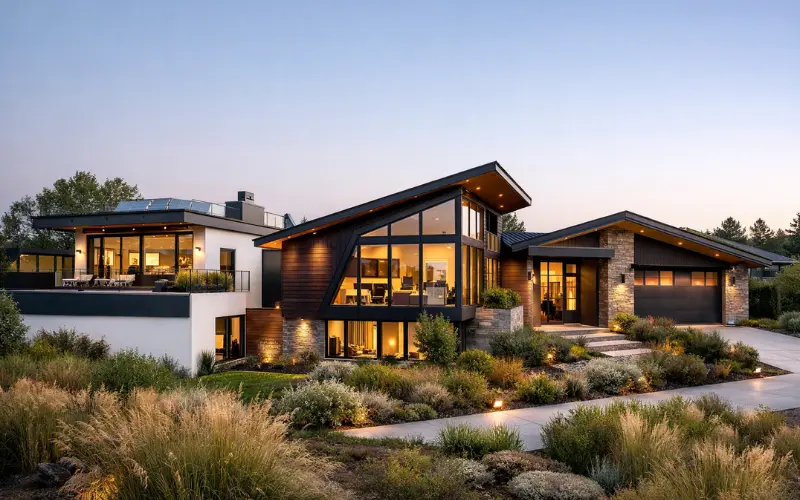
Roof shape does more for a home’s contemporary feel than almost any other exterior element. The most common profiles in contemporary design are:
- Flat roofs: The clearest signal of contemporary architecture. They enable rooftop terraces and solar panel placement, but require more maintenance than pitched roofs — proper drainage is essential.
- Shed roofs (mono-pitch): A single sloping plane, often dramatically angled. They shed water effectively and create striking interior ceiling heights.
- Low-pitched gable or hip roofs: Less aggressive than flat or shed profiles but still contemporary when paired with the right materials.
One thing almost no article will tell you: flat roofs cost more to maintain over time, especially in climates with heavy rainfall or snow. Budget for quality waterproofing membranes and regular inspection — typically every 2–3 years.
2. Large Windows and Glazing
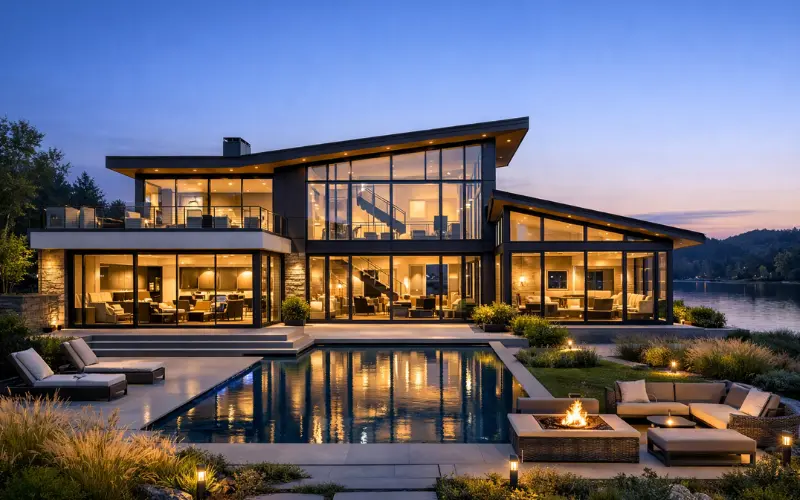
Floor-to-ceiling windows, clerestory strips, corner glazing, and sliding glass wall systems are hallmarks of contemporary design. They do three jobs at once: flood interiors with natural light, frame outdoor views, and visually expand the space.
The trade-off that most guides skip: large glazing significantly affects your thermal performance. Standard double-pane windows lose heat far faster than an insulated wall. If you’re going big on glass, budget for:
- Triple-pane glazing in cold climates
- Low-E coatings to reduce UV and heat transfer
- Strategic orientation (south-facing glazing in the northern hemisphere to capture passive solar)
In hot climates like Australia or the American Southwest, large east and west-facing windows without shading can dramatically increase cooling costs. Overhangs, pergolas, and exterior screens are the fix — and they look intentional in contemporary design.
3. Open-Concept Floor Plans
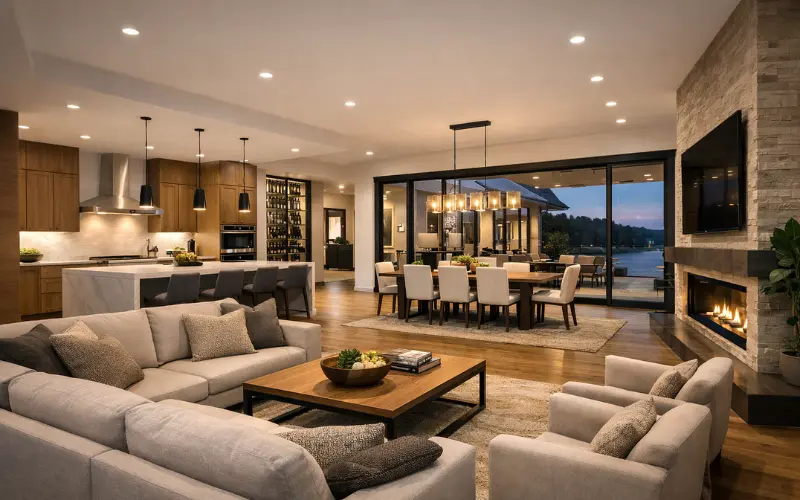
Contemporary floor plans typically reject the traditional room-by-room layout in favor of wide, flowing spaces where the kitchen, dining area, and living room occupy a continuous zone.
The benefits are real: better light distribution, easier supervision of children, and a social environment that doesn’t isolate the cook from the guests.
But there are practical considerations most plans don’t address:
- Acoustics: Open plans amplify noise. Budget for acoustic ceiling treatments or area rugs if you’re sensitive to sound.
- Heating and cooling: Large open volumes are harder to zone. Discuss HVAC design with your mechanical engineer before finalizing the floor plan.
- Privacy: Many buyers underestimate how much they miss a quiet, enclosed room. Contemporary plans that succeed tend to include at least one dedicated retreat — a study, reading room, or enclosed media space.
4. Material Contrasts
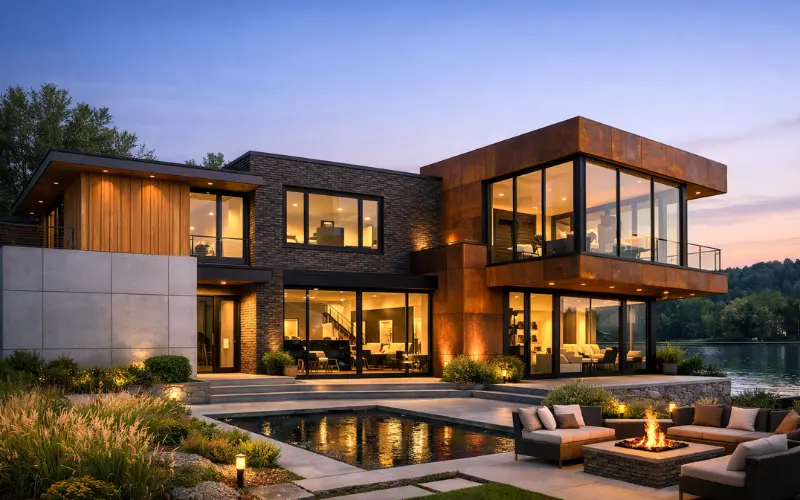
Contemporary exteriors are defined by deliberate material combinations. The goal is visual tension — surfaces that look different enough to be interesting but unified enough to feel intentional.
Common contemporary exterior material pairings:
- Board-and-batten or vertical cedar siding + concrete or fiber cement panels
- Dark brick + black steel window frames
- White stucco + natural timber accents
- Corten (weathering) steel + glass
On the interior, polished concrete, large-format porcelain tile, white oak, and blackened steel hardware are the materials most associated with contemporary homes in the 2020s.
5. Indoor-Outdoor Connection
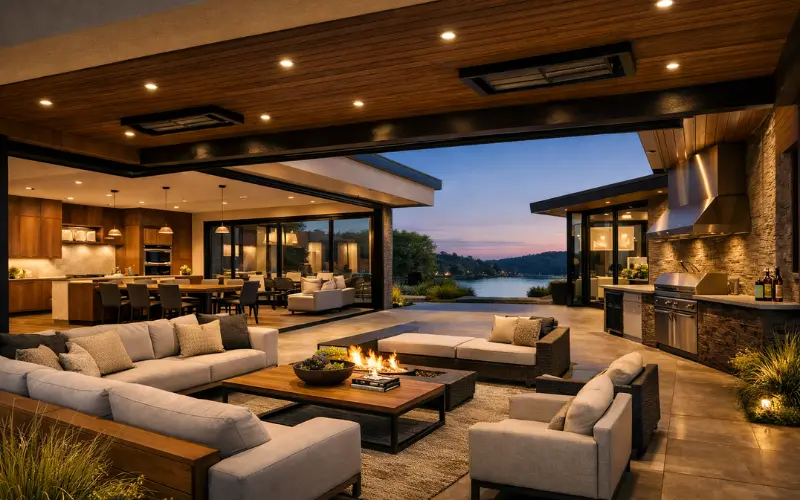
This is arguably the most sought-after feature in contemporary home design right now. Bi-fold or sliding glass walls that open an entire wall to a terrace, continuous flooring materials that run from inside to out, covered outdoor living areas with built-in grills and heating — these are no longer luxury add-ons. They’re baseline expectations in contemporary design.
Practical tip: match interior and exterior floor levels perfectly if you want that seamless transition. A 25mm step might seem trivial on paper but breaks the visual flow completely. Discuss threshold details with your architect early.
6. Sustainability and Energy Efficiency
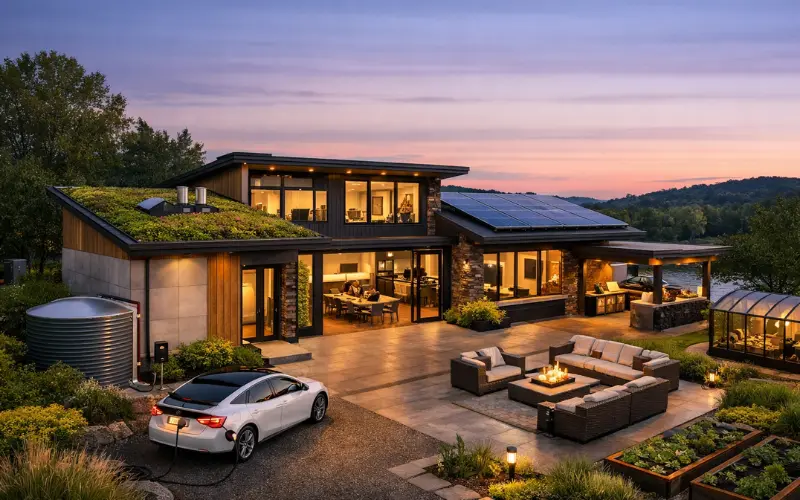
Contemporary design and sustainable building have become almost inseparable. This goes beyond solar panels. The most energy-conscious contemporary homes today incorporate:
- Passive house principles: Super-insulated envelopes, air-tight construction with mechanical ventilation (HRV systems), and thermal mass
- High-performance windows: Already covered above
- Rainwater harvesting and greywater recycling: Particularly common in Australian contemporary builds
- Cool roofs and green roofs: Reflective membranes or planted rooftop surfaces reduce urban heat island effect
- EV charging: Now a standard infrastructure consideration in new contemporary homes
If you’re building from a stock plan, ask your architect or builder what it would cost to upgrade the thermal envelope to passive house standards. Often it adds 5–10% to the build cost but reduces lifetime energy bills by 40–60%.
7. Smart Home Integration
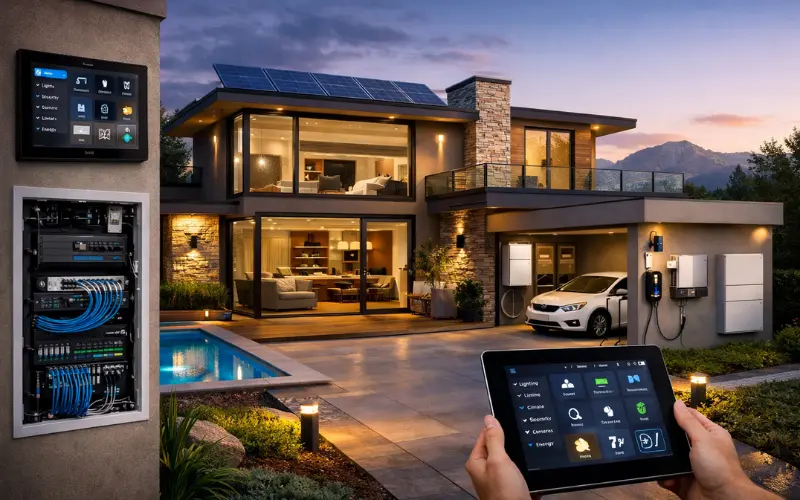
Contemporary homes are expected to accommodate smart home systems, and the best floor plans are designed with this in mind from the start — not wired afterward. This means:
- Structured wiring runs for ethernet (Wi-Fi alone isn’t reliable for whole-home coverage)
- Pre-wired conduit for future solar, battery storage, and EV integration
- Home automation hubs and touchscreen panels in logical locations
- Motorized blinds, automated lighting scenes, and integrated security
The mistake most buyers make: treating smart home as an afterthought. Retrofitting a finished home for automation is far more expensive than wiring for it during construction.
Contemporary Home Design by House Type
Contemporary Lake House Plans
Lake houses demand a specific version of contemporary design. The rear view is everything — all primary living spaces should face the water, and most glazing should do the same.
Key design considerations for contemporary waterfront homes:
- Rear-loaded glass: The street-facing elevation can be relatively restrained; all the drama belongs at the water edge
- Walkout basements: Sloped lakefront lots often allow a lower level that walks out directly to the waterfront — a huge lifestyle bonus
- Screened porches: In regions with insects, a screened outdoor living space is worth more than its square footage suggests
- Durable materials: Proximity to water accelerates weathering. Choose materials rated for coastal or high-humidity environments (fiber cement, composite decking, powder-coated aluminum windows)
Contemporary Mountain Homes
Mountain contemporary homes balance the warmth you need in a cold climate with the open, view-maximizing ethos of contemporary design. The result is a distinct aesthetic: heavy timber or steel structural elements exposed inside, massive glazing facing the view corridor, and a connection to the landscape that feels elemental rather than decorative.
Design features specific to mountain contemporary:
- Vaulted ceilings: They amplify the sense of scale and make the most of dramatic interior volumes
- Double-sided fireplaces: A warm, functional anchor between living spaces
- Four-season rooms: Glass-enclosed spaces that let you enjoy mountain views year-round
- Snow-load engineering: Flat roofs in heavy snow zones require significant structural engineering — confirm your plan is designed for local snow loads before purchasing
Small Contemporary Homes
Not all contemporary design requires a large footprint. Some of the most compelling contemporary homes being built today are under 1,500 sq ft, and the constraint forces creativity.
Small contemporary homes succeed by:
- Prioritizing ceiling height over floor area (a room feels larger with a 10-foot ceiling)
- Using lofts and mezzanines to add usable space without a full second story
- Integrating built-in storage so furniture doesn’t dominate
- Extending living space to the outdoors rather than expanding the floor plan
How Much Does Contemporary Home Design Cost to Build?
This is the question every competitor article avoids. Here are realistic numbers based on current market conditions in the United States (2025):
| Build Type | Cost per Sq Ft (USD) |
|---|---|
| Entry-level contemporary | $175–$250 |
| Mid-range contemporary | $250–$400 |
| High-end contemporary | $400–$700+ |
| Luxury custom contemporary | $700–$1,200+ |
Contemporary homes typically cost 10–20% more than a traditional home of equivalent size. Here’s why:
- Flat roofs cost more than pitched roofs. Waterproofing a flat roof requires better membranes and more careful detailing than shingles on a gable — and if it fails, repairs are expensive.
- Large windows are significantly more expensive than standard windows. A single floor-to-ceiling sliding glass wall system can cost $8,000–$25,000 depending on size and glazing specification.
- Material finishes are premium. Polished concrete floors, large-format tile, exposed steel, and board-form concrete all carry higher material and labor costs than carpet, standard tile, and drywall.
- What drives cost up most: Cantilevers, complex rooflines, and exposed structural elements. Every time a floor plan asks a beam to do something dramatic, it costs more.
- What you can control: Choosing a simpler floor plan form (rectangular rather than L- or U-shaped), selecting durable but less expensive cladding (fiber cement rather than zinc), and standardizing window sizes within a project.
What to Look for in a Contemporary House Plan
Buying a stock house plan is different from buying a custom design. Here’s what to actually evaluate:
1. What’s included in the plan set? A proper plan set for building permits typically includes: floor plans, exterior elevations (all four sides), building sections, foundation plan, roof plan, and some electrical layout. Premium sets add structural drawings, mechanical layouts, and 3D renderings. Know what you’re buying before you pay.
2. Is the plan designed for your climate zone? A plan drawn for Georgia may not perform well in Minnesota. Insulation requirements, window ratings, roof load specifications, and vapor barrier placement all vary by climate. Always have a local engineer review and stamp any stock plan before submitting for permits — most jurisdictions require this anyway.
3. Is the orientation flexible? Most stock plans can be mirrored to suit your lot. Check whether the seller offers free or low-cost mirroring. Orientation matters enormously for natural light and passive solar performance.
4. What does modification cost? If the plan is 90% right but the master suite is on the wrong side, modification services typically run $750–$2,500 depending on scope. Get a quote before you buy the plan — it affects your total investment calculation.
5. Are the room proportions livable? A room that looks spacious on paper can feel narrow in real life. Verify that bedroom dimensions are realistic (a 10’x10′ bedroom is small; 12’x14′ is comfortable) and that ceiling heights are listed, not assumed.
Common Mistakes in Contemporary Home Design
Copying a style without understanding the site. A contemporary home that ignores lot orientation, prevailing winds, and view corridors will look right but feel wrong. The best contemporary homes are inseparable from their site.
Over-glazing without thermal planning. Glass looks great in photos. Waking up in a west-facing glass bedroom in summer, or paying a $400 heating bill because your glazing has poor specs, doesn’t. Balance the glass with proper specification.
Neglecting acoustics. Hard surfaces (concrete, tile, steel, glass) on every surface in an open plan creates an echo chamber. Budget for acoustic ceiling baffles, textile wall panels, and area rugs from the start.
Choosing materials for photos, not longevity. Polished concrete scratches. Unfinished cedar greys and checks if not maintained. Corten steel stains adjacent concrete if runoff isn’t managed. Know your maintenance commitment before you specify materials.
Underestimating landscape integration costs. A contemporary home without considered landscaping looks unfinished. The clean exterior lines of contemporary design actually demand more attention to the surroundings, not less. Budget 10–15% of the home’s construction cost for landscaping.
Buying a plan without checking local codes. Some municipalities restrict flat roofs, require minimum roof pitches, or have height limits that affect the dramatic volumes contemporary design relies on. Confirm local zoning compliance before purchasing any plan.
Contemporary Home Exterior: Ideas That Work
If you’re selecting finishes for a contemporary build or renovation, these combinations are consistently successful in 2025:
- Scheme 1 — Dark and Grounded Dark grey or charcoal fiber cement panels + natural wood soffit and fascia + black aluminum windows. Works in almost every climate. Low maintenance, ages beautifully.
- Scheme 2 — Light and Sculptural White or off-white stucco + board-form concrete feature wall + bronze or dark copper fixtures. Works best in dry, sunny climates. Requires regular cleaning in wet regions.
- Scheme 3 — Warm Natural Natural cedar or thermally modified wood cladding + zinc or standing seam metal roof + steel window frames. Feels warm rather than cold — ideal for buyers nervous about contemporary feeling sterile.
- Scheme 4 — Industrial Edge Exposed concrete block or board-form concrete + Corten steel accents + oversized industrial glazing. High-impact, best for clients committed to a strong design statement.
Contemporary Interior Design: The Principles That Matter
The interior of a contemporary home design follows different logic than the exterior — it has to be livable, not just striking.
Palette: Contemporary interiors typically start with a neutral base (white, warm grey, off-white, greige) and introduce depth through texture and material rather than color. When color appears, it tends to be deliberate — a single deep hue on one wall, a colored kitchen island against white cabinetry.
Furniture: Lower profiles, clean lines, and visible legs characterize contemporary furniture. Avoid fussy silhouettes, ornate carving, or heavy wood tones that clash with the architectural intention.
Lighting: Layered lighting is essential in contemporary interiors — recessed ambient lighting, pendant fixtures over key surfaces, and task lighting all operating independently. Exposed bulb pendants over islands and dining tables remain popular in 2025 and add warmth to otherwise neutral spaces.
Storage: Concealed storage is a contemporary priority. Floating cabinetry to the ceiling, handle-free drawer fronts, and built-ins flush with walls all maintain the clean visual language.
Textiles: This is where contemporary homes introduce warmth. Linen curtains, wool area rugs, textured cushions, and natural fiber throws prevent the aesthetic from feeling cold or clinical.
FAQs About Contemporary Home Design
What is the difference between contemporary and modern contemporary home design?
Modern is a specific historical style (roughly 1920–1970) with fixed design rules. contemporary home design refers to what’s being designed and built right now — it borrows from modernism but evolves continuously with current trends and technology.
Are contemporary homes more expensive to build?
Generally yes — 10–20% more than a comparable traditional home. Large glazing systems, flat roof waterproofing, and premium finish materials all add cost. The build budget should account for these upfront.
Do contemporary homes hold their value?
Well-built contemporary homes in desirable locations tend to hold value well. The risk is dated finishes — trendy materials from 10 years ago (high-gloss cabinetry, certain tile patterns) can make a home feel dated quickly. Focus on quality over trend-driven choices.
Can I add contemporary features to an existing home?
Yes. The highest-impact changes are window enlargement (where structure permits), exterior cladding replacement, and flat-to-shed roof conversion over additions. Interior changes like floating cabinetry, large-format tile, and an open-plan kitchen renovation can dramatically modernize a traditional home.
What roof type is best for a contemporary home?
There’s no single answer — it depends on climate, local code, and personal preference. Flat roofs read as the most contemporary but require more maintenance in wet climates. Shed roofs are a strong alternative — they drain effectively, look contemporary home design, and work in most climates.
How do I choose between a stock plan and a custom design?
Stock plans work best when your lot is relatively flat and standard in shape, and when you find a plan that’s 80–90% right for your needs. Custom design is worth the additional cost when your lot is irregular or challenging, when your program is unique, or when you want the home to be architecturally distinctive.
What’s the most important thing to get right in contemporary home design?
Orientation. No amount of beautiful materials compensates for a home that’s hot in summer, cold in winter, or that turns its best rooms away from the view. Site the home correctly first, then design around it.
How long does it take to get construction documents for a contemporary home design?
For stock plans: once purchased, PDF plans are typically available immediately; full plan sets take a few days. For custom homes: concept design through construction documents typically takes 4–8 months, though firms specializing in pre-designed custom signatures can deliver in 4–5 months.
Are contemporary home design good for families?
Absolutely. The open-plan layout, indoor-outdoor flow, and technology integration are well-suited to family life. Additions like mudrooms, dedicated homework spaces, and separate teen zones can be integrated into contemporary plans without compromising the aesthetic.
What landscaping suits a contemporary home design?
Restrained, geometric landscaping reinforces the contemporary aesthetic — think clipped hedges, gravel or decomposed granite ground covers, ornamental grasses, and linear planting beds. Avoid overly cottage-style or exuberant planting schemes that fight with clean architecture.
Final Thoughts
Contemporary home design is more than a trend — it’s a way of building that prioritizes how you actually live. The homes that get it right aren’t the ones chasing the most dramatic roofline or the biggest glass wall. They’re the ones where orientation was thought through before the floor plan was drawn, where materials were chosen for a 20-year lifespan rather than a photo shoot, and where every square foot earns its place. Whether you’re selecting a stock plan, working with an architect on a custom design, or simply refreshing an existing home’s exterior, the principles stay the same: be deliberate, build for your climate, and let the site lead the design. Do that, and contemporary design will reward you with a home that feels as good to live in as it looks from the street.