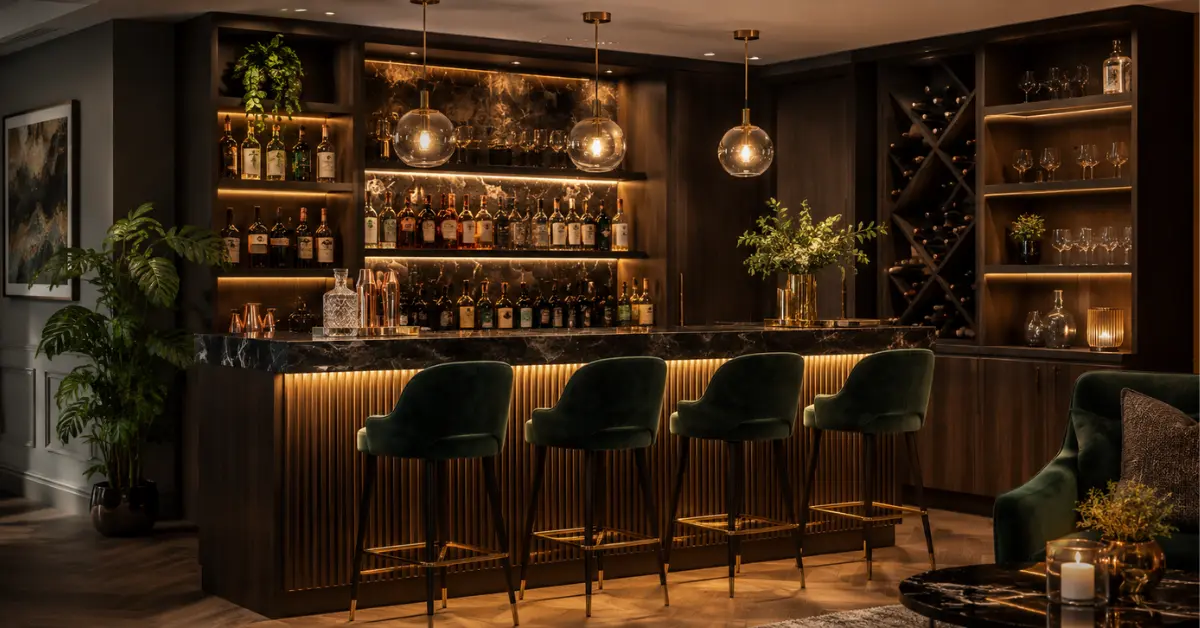
There is something genuinely special about having a dedicated spot in your home where you can mix a cocktail, pour a cold beer, or uncork a good bottle of wine without leaving the comfort of your own space. Home bars have moved well beyond a simple drinks cabinet in the corner — today they are thoughtfully designed entertainment zones that reflect personal taste, elevate the look of any room, and make hosting guests a whole lot easier.
Whether you are working with a spacious basement, a narrow alcove, or just an unused wall in your living room, there is a home bar layout that fits your space, your lifestyle, and your budget. This guide covers everything you need to know — from choosing the right style to picking the right features — so you can create a home bar you will actually love using every day.
What Is a Home Bar and Why Should You Have One?
A home bar is a dedicated area within your home designed for storing, preparing, and serving drinks. It can be as simple as a styled drinks trolley or as elaborate as a fully built-in wet bar with a sink, wine fridge, and bar seating. The key is intentionality — a home bar gives drinks service a proper home rather than scattering bottles and glassware across your kitchen.
Beyond the practical benefits, home bars add real value. They serve as a natural social focal point during gatherings, save money long-term by reducing nights out, and — when designed well — become one of the most visually striking features of a room.
Wet Bar vs. Dry Bar: Which One Is Right for You?
The first decision when planning home bars is choosing between a wet bar and a dry bar. This single choice shapes everything from your budget to your plumbing requirements.
- Wet bars include a sink with running water connected to your home’s plumbing. They make rinsing glassware, filling ice buckets, and cleaning up after a party much more convenient. Wet bars work particularly well in basements, outdoor kitchens, or large entertainment rooms where you want a fully functional setup.
- Dry bars skip the plumbing entirely. They are countertops, cabinetry, or furniture-style units that hold your bottles, glasses, and tools without a water source. Dry bars are faster to install, more affordable, and can work in virtually any room — including living rooms, dining areas, and bedrooms. If you are just starting out or renting your home, a dry bar is the smart starting point.
10 Home Bar Ideas for Every Space and Style
1. Basement Home Bar
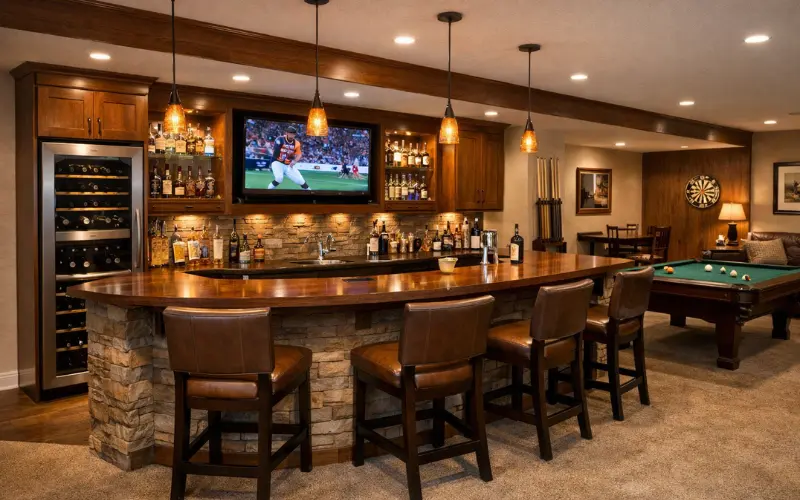
Basements are the most popular location for home bars — and for good reason. The lower level gives you the space to go big: a full bar counter with seating, a dedicated wine fridge, a TV above the bar, and even a games area nearby. Use warm lighting and natural wood tones to make the space feel like a true retreat rather than a storage area.
2. Corner Bar
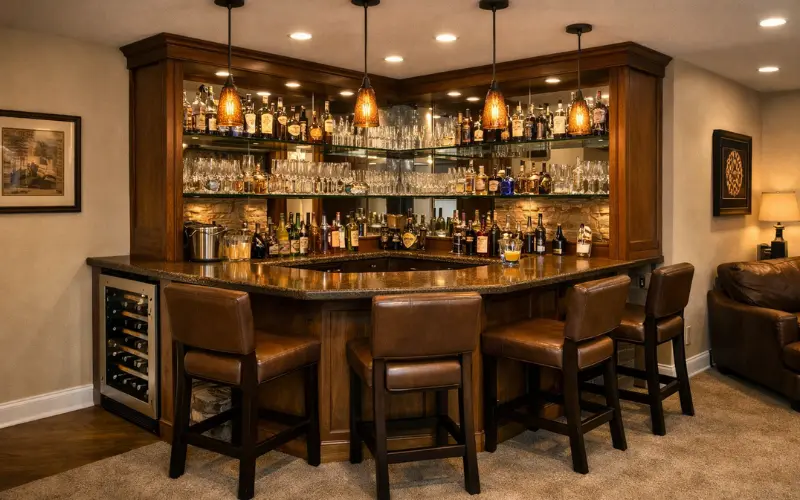
A corner of a room is one of the most underused spaces in most homes. An L-shaped corner bar setup maximises that dead space while creating a natural social hub. Add mirrored backing behind floating shelves to make the corner feel larger and draw the eye toward your collection.
3. Built-In Home Bar
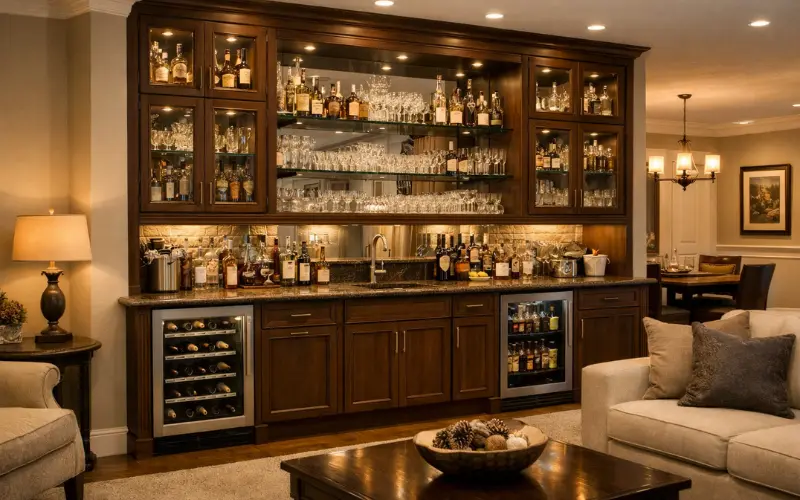
Built-in home bars are the gold standard for a seamless, high-end look. Custom cabinetry that runs floor to ceiling with integrated lighting, hidden storage, and glass-fronted cabinets gives your home bar a polished, intentional finish. Built-ins work especially well when positioned adjacent to a living area so the bar flows naturally from one space to the next.
4. Floating Shelf Bar
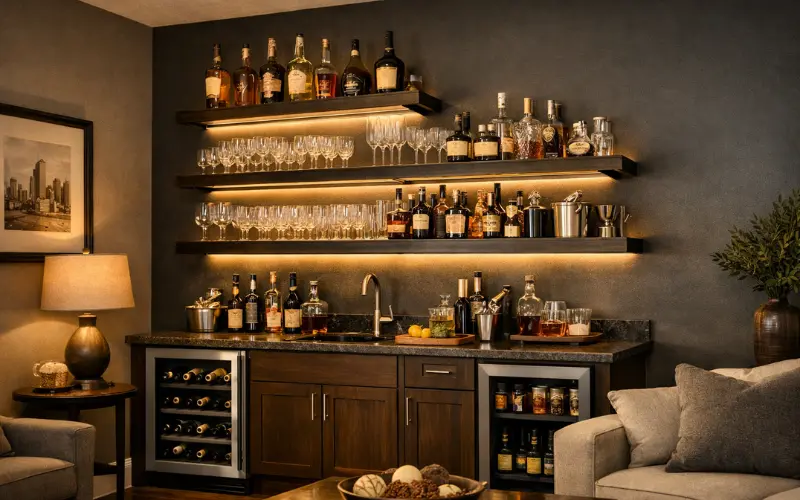
If you are short on floor space, a floating shelf home bar is your best friend. A series of staggered wooden or metal shelves on a feature wall can hold bottles, glasses, and bar tools without taking up any square footage. Pair them with LED strip lighting underneath each shelf for that warm, moody bar glow.
5. Under-Stair Bar
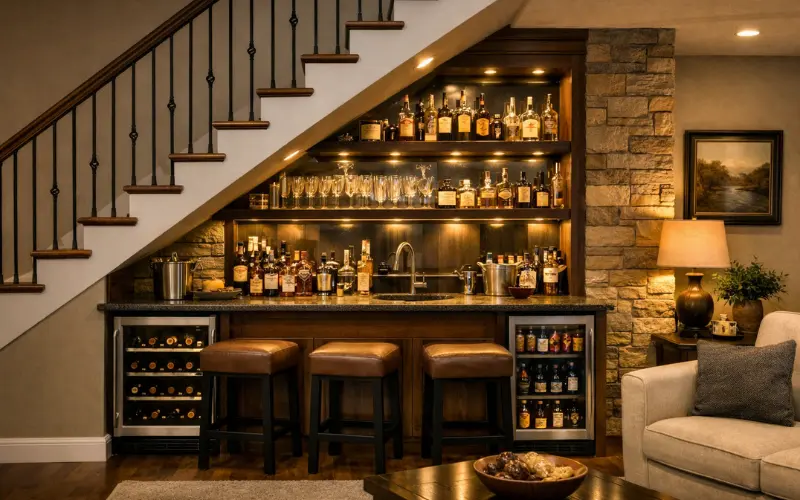
The space beneath a staircase is often wasted. Converting it into a compact home bar is one of the cleverest storage and design decisions you can make. With the right shelving, a small counter, and some creative lighting, under-stair home bars become conversation starters every time guests walk in.
6. Outdoor Bar
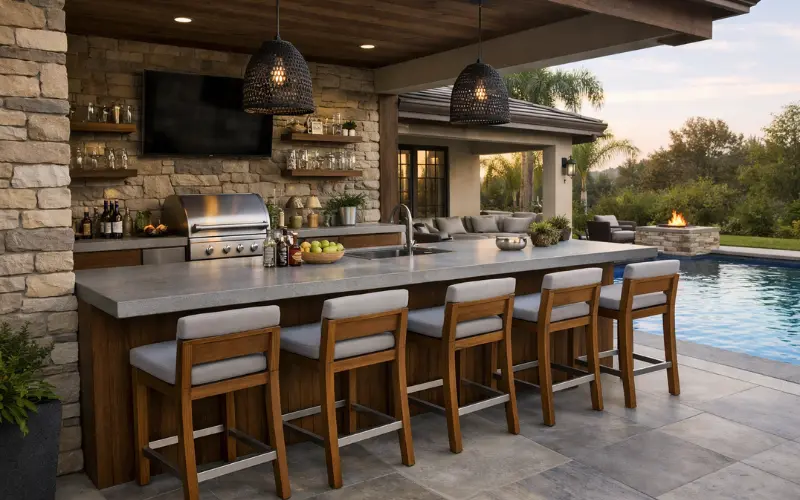
Alfresco entertaining is a lifestyle for many homeowners, and an outdoor bar takes it to the next level. Whether it is a freestanding structure beside your pool or a built-in unit within a covered patio, outdoor home bars bring the entertainment outside. Use weather-resistant materials like concrete countertops, stainless steel hardware, and teak wood to handle the elements.
7. Cabinet or Bookshelf Bar
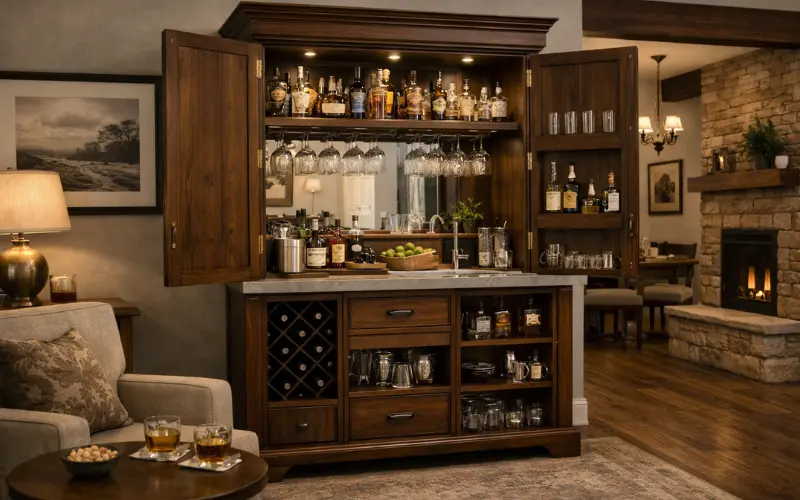
This is the smart solution for renters and those who prefer flexibility. A large wardrobe-style cabinet, sideboard, or repurposed bookshelf can be styled into a functional home bar with almost no construction work. Open the doors when entertaining and close them when you want a cleaner look.
8. Speakeasy-Style Hidden Bar
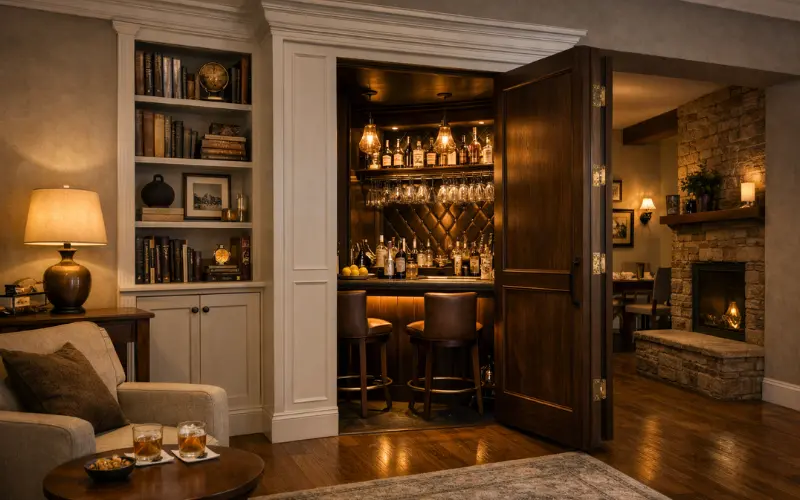
A hidden home bar tucked behind a bookcase door or disguised within a custom cabinet is one of the most dramatic and impressive design moves available to homeowners. By day the space looks like part of the room’s regular architecture; by night it reveals a stunning bar setup complete with glassware, spirits, and mood lighting.
9. Mini Bar in the Bedroom or Study
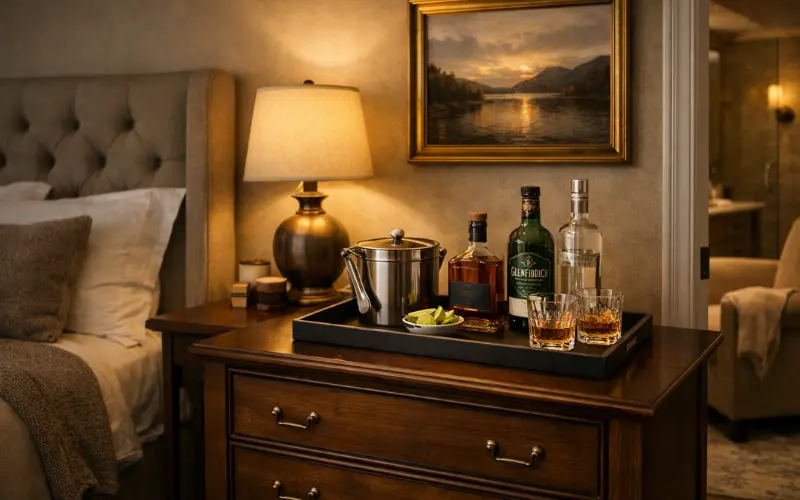
Not every home bar needs to be a full production. A compact drinks station in the primary bedroom or home office — a small tray, a few quality bottles, two crystal glasses, and a good ice bucket — adds a touch of luxury to everyday moments. Think of it as a personal retreat rather than an entertainment hub.
10. Industrial-Style Bar
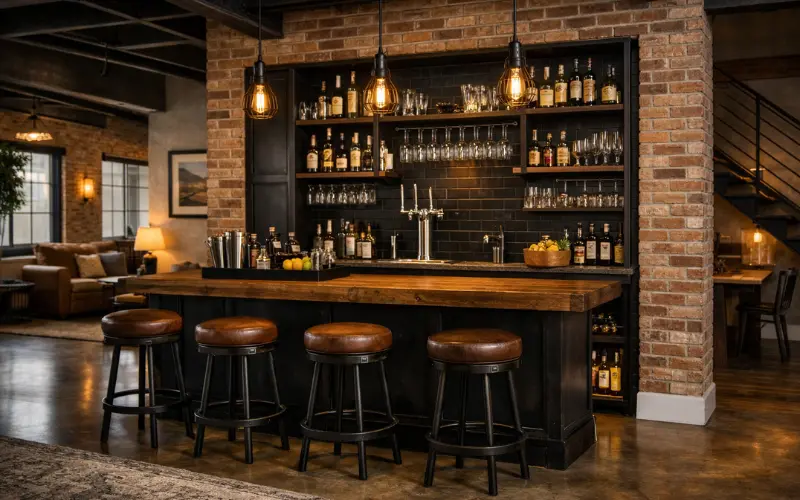
Exposed brick, dark metal shelving, Edison bulb pendants, and reclaimed wood countertops combine to create the industrial aesthetic that works beautifully in home bars. This style references the look and feel of a neighborhood craft brewery or cocktail bar and is particularly striking in open-plan homes with high ceilings.
Essential Features Every Home Bar Should Have
Regardless of the size or style of your home bar, a few features consistently separate a great bar from a mediocre one:
- Bar seating. Stools at the right counter height — typically 28 to 30 inches for a standard bar counter — make the difference between a bar people lean against and one they actually sit at and linger.
- Dedicated glassware storage. Glasses stored upside down on open shelves or in glass-fronted cabinets look professional and protect against dust. Separate storage for wine glasses, rocks glasses, highballs, and champagne flutes keeps things organised.
- A quality drinks fridge. A dedicated beverage fridge or wine cooler keeps white wine, beer, and mixers at the right temperature without filling up your main kitchen fridge. Under-counter models fit neatly beneath the bar counter.
- Good lighting. Layered lighting is the single most impactful design choice for home bars. Pendant lights above the counter, LED strip lights under shelves, and dimmable ambient lighting work together to create atmosphere. Avoid harsh overhead fluorescents — they kill the mood instantly.
- Organised storage for bottles. Whether it is a wine rack, a wall-mounted bottle holder, or built-in cabinetry with pull-out bottle drawers, having a clear system for storing your spirits, wines, and mixers keeps the space functional and tidy.
Home Bar Design Tips Competitors Miss
Most articles cover styles and aesthetics well but skip the practical details that make home bars actually work in everyday life. Here are a few things worth knowing:
- Consider bar height carefully. Standard kitchen counters sit at 36 inches; bar counters are typically 42 to 45 inches. If you want bar stools, build or buy at bar height — not counter height. Getting this wrong means uncomfortable seating.
- Plan your electrical before you build. Home bars benefit enormously from multiple power points — for a fridge, an ice maker, LED lighting controllers, a blender, and potentially a TV. Adding power points after cabinetry is installed is expensive and disruptive.
- Think about acoustics. Basement home bars in particular can get very loud with hard surfaces everywhere. Adding an area rug, upholstered bar stools, or acoustic panels behind a feature wall makes the space significantly more comfortable during gatherings.
- Non-alcoholic options deserve space too. Stock your home bar with premium sodas, craft mixers, sparkling water, and non-alcoholic spirits so every guest feels genuinely catered to — not just offered a soft drink from the kitchen.
FAQs About Home Bars
How much does it cost to build a home bar?
Costs vary enormously. A simple dry bar with furniture and floating shelves can cost under $500. A custom-built wet bar with cabinetry, a sink, and a beverage fridge typically runs between $3,000 and $15,000 depending on materials and complexity.
Do I need a permit to build a home bar?
In most cases, a basic dry bar or built-in cabinetry does not require a permit. However, if you are adding plumbing for a wet bar or making structural changes, you will likely need a permit. Always check with your local council or building authority before starting.
What is the best location for a home bar?
Basements are the most popular choice because of the available space and privacy. However, living rooms, dining rooms, outdoor entertaining areas, and even under staircases all work well depending on your floor plan and how you entertain.
What are the must-have tools for a home bar?
A cocktail shaker, jigger, bar spoon, muddler, strainer, bottle opener, corkscrew, and a good cutting board for garnishes cover the essentials. Add a hand-held citrus juicer and a fine mesh strainer for more advanced cocktail making.
How do I make a small home bar look bigger?
Use mirrored backing behind shelves, choose floating shelves over bulky cabinetry, keep colour tones light or consistent, and use warm targeted lighting rather than filling the whole space with light. Vertical shelving that draws the eye upward also makes a compact bar feel more spacious.
What countertop material is best for a home bar?
Quartz is the most popular choice — it is durable, stain-resistant, and easy to clean. Butcher block wood adds warmth but requires sealing. Marble looks stunning but is porous and stains more easily. Concrete is increasingly popular for industrial-style home bars.
Can I build a home bar without doing any construction?
Absolutely. A drinks trolley, a styled sideboard, or a repurposed cabinet can function as a complete home bar without any building work. Many people start this way and graduate to a built-in setup later.
How do I light a home bar properly?
Layer your lighting: install dimmable pendant lights above the bar counter, add LED strip lights under shelves or inside cabinets, and include a warm ambient light source. Avoid cool white or daylight bulbs — warm white (2700K to 3000K) creates the atmosphere associated with bars and lounges.
Final Thoughts
Home bars are one of the most rewarding investments you can make in your home’s living and entertaining spaces. Whether you go all-in with a custom-built basement wet bar complete with a tap system and bar seating, or keep things simple with a beautifully styled shelf and a well-chosen collection of bottles, a home bar transforms how you host and how you unwind at home. The key is to plan thoughtfully — match the style of your bar to the rest of your home, think through the practical details like lighting and electrical before you build, and design a space that works for both everyday use and special occasions. The best home bar is not necessarily the biggest or most expensive one; it is the one that feels like it belongs in your home and gets used every single day.