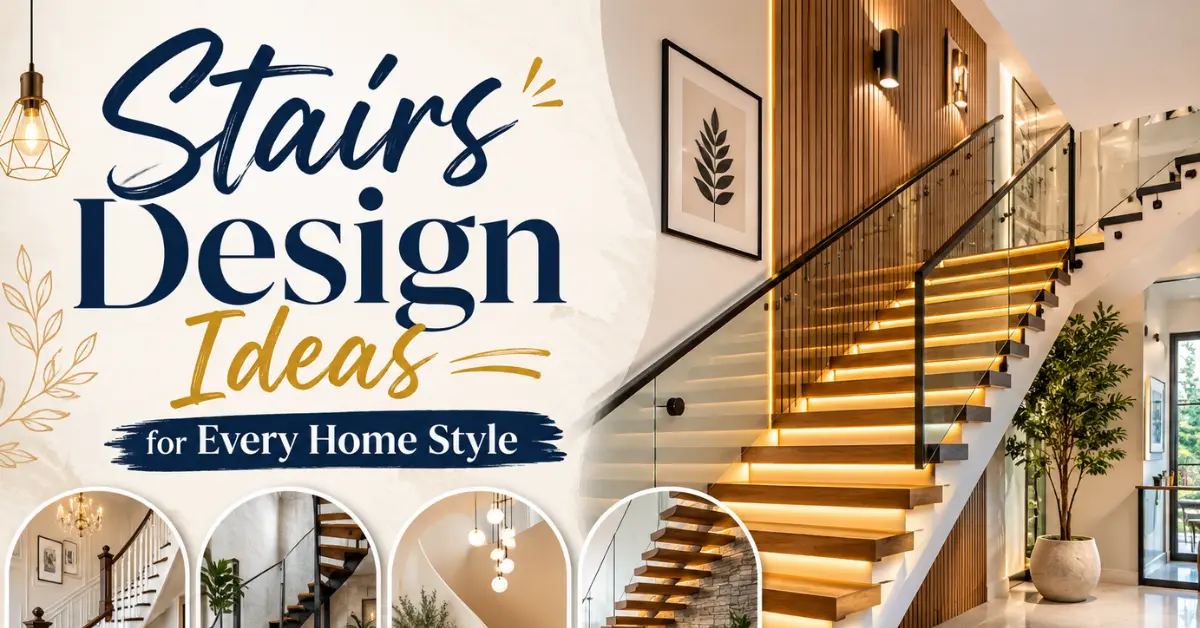
Your staircase does more than connect two floors. It sets the tone for your entire home. The right stairs design turns a purely functional structure into a statement piece — one that visitors notice the moment they walk through the door. Whether you are building from scratch, renovating an older home, or simply looking for fresh inspiration, this guide covers everything you need to know.
Why Stairs Design Matters More Than You Think
Most homeowners focus heavily on flooring, paint colours, and furniture — and treat the staircase as an afterthought. That is a missed opportunity.
A well-thought-out stairs design:
- Creates a strong visual focal point in your living space
- Improves natural light flow, especially in open-plan homes
- Adds real estate value when done with quality materials
- Enhances safety for children, elderly family members, and daily use
- Reflects your personal style more boldly than almost any other interior element
Think of it this way — your staircase is one of the largest architectural features in your home. It deserves the same attention as any other major design decision.
Types of Stairs Design: Which One Suits Your Home?
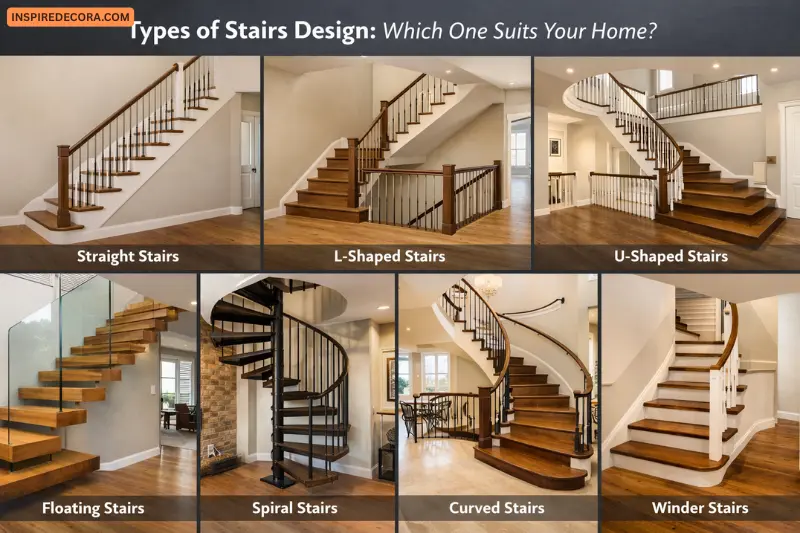
Before choosing a style, it helps to understand what your options are. Each stairs design type comes with its own character, space requirements, and cost range.
1. Straight Stairs
The most common and cost-effective option. Straight stairs run in a single, uninterrupted line from one floor to the next. They are easy to install, safe to use, and work in almost any home style. The downside? They require a long, uninterrupted wall — so they are not ideal for compact spaces.
Best for: Traditional homes, tight budgets, and spaces with long hallways.
2. L-Shaped Stairs
L-shaped stairs make a 90-degree turn at a landing. This design breaks up the climb visually, adds a natural rest point, and fits snugly into corners — making it a smart choice for homes with limited floor space. The landing also adds a safety buffer if someone stumbles.
Best for: Corner placements, medium-sized homes, and family-friendly layouts.
3. U-Shaped Stairs
Also called switchback stairs, these make a full 180-degree turn and run parallel to themselves. They look elegant, save floor space, and suit homes with higher ceilings. The wide landing in the middle can double as a display shelf or built-in seating nook.
Best for: Two-storey homes, classic and transitional interiors.
4. Floating Stairs
Floating stairs are one of the biggest trends in modern stairs design right now. The steps appear to hover in mid-air, supported by hidden steel stringers or anchored directly into the wall. With no visible risers, they create a light, open feel that works beautifully in minimalist and contemporary homes.
Important note: Floating stairs require a structural engineer to assess load-bearing capacity. They are not a DIY project.
Best for: Open-plan living areas, modern and Scandinavian-style homes.
5. Spiral Stairs
Spiral stairs wrap around a central pole in a continuous curve. They take up the smallest footprint of any stairs design, making them ideal when space is genuinely tight. However, they can be tricky to navigate with furniture or for young children and elderly users.
Best for: Loft conversions, secondary staircases, and compact urban homes.
6. Curved or Helical Stairs
Curved stairs are the grand gesture of stairs design. Unlike spiral stairs that turn around a central pole, curved stairs sweep in a broad, flowing arc. They are expensive to build but create an unforgettable entrance — particularly in foyers and double-height spaces.
Best for: Large homes, luxury interiors, and statement entryways.
7. Winder Stairs
Winder stairs are a variation of L-shaped stairs but without a flat landing — the steps themselves angle around the turn. They save even more floor space than L-shaped designs, though they can feel slightly awkward to climb if not dimensioned carefully.
Best for: Very compact homes where every square foot counts.
Stairs Design Materials: Pros, Cons, and Costs
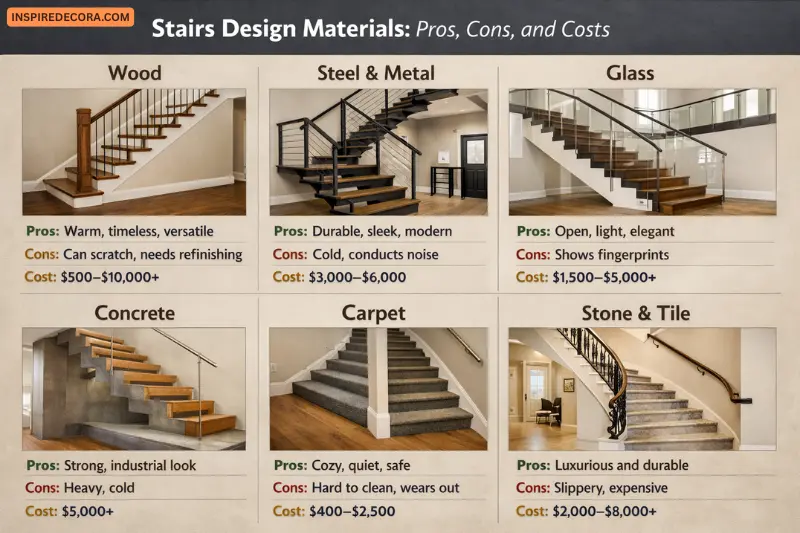
Your choice of material shapes how your staircase looks, how long it lasts, and how much maintenance it demands. Here is an honest breakdown.
Wood
Wood remains the most popular choice for interior stairs design — and for good reason. It is warm, versatile, and available in dozens of species from budget-friendly pine to premium walnut and oak.
- Pros: Timeless look, easy to refinish, works with nearly every interior style
- Cons: Scratches over time, can creak, and needs periodic refinishing
- Cost: A refinish starts around $500; full custom hardwood treads and railings can reach $10,000 or more for specialty wood species
Steel and Metal
Steel is the backbone of most modern floating and industrial stairs designs. It offers exceptional strength with a sleek, contemporary appearance. Powder-coated steel resists corrosion and scratches, making it a solid long-term investment.
- Pros: Extremely durable, low maintenance, suits modern aesthetics
- Cons: Can feel cold, conducts noise, higher upfront cost
- Cost: Steel railings typically run $3,000–$6,000 depending on complexity
Glass
Glass balustrades and panels bring an airy, open quality to any stairs design. Frameless glass with hidden clamps is particularly popular in contemporary homes, creating the illusion of more space and allowing light to travel freely between floors.
- Pros: Elegant, maximises light, easy to clean
- Cons: Shows fingerprints easily, requires tempered safety glass for compliance
- Cost: Glass balustrade systems range from $1,500–$5,000+
Concrete
Concrete stairs suit industrial, minimalist, and brutalist interiors. They are incredibly durable and require almost no maintenance. Combined with wooden treads or steel railings, concrete creates a striking material contrast.
- Pros: Extremely strong, fire-resistant, unique aesthetic
- Cons: Heavy, requires structural planning, cold underfoot without tread covering
- Cost: Custom concrete staircase designs typically start from $5,000
Carpet
Carpet runners or fully carpeted stairs are a practical choice for family homes. They reduce noise, add warmth, and are naturally slip-resistant.
- Pros: Comfortable, quiet, budget-friendly
- Cons: Collects dust and pet hair, harder to clean thoroughly, less durable
- Cost: $400–$2,500 depending on material quality and staircase complexity
Stone and Tile
Marble, porcelain, or natural stone treads work especially well for exterior stairs design and grand interior entrances. They are durable and easy to clean but can be slippery without textured or matte finishes.
- Pros: Luxurious appearance, extremely durable, low maintenance
- Cons: Expensive, heavy, cold and slippery without anti-slip treatment
- Cost: Varies widely — budget $2,000–$8,000+ depending on stone type and area
Interior Stairs Design Ideas
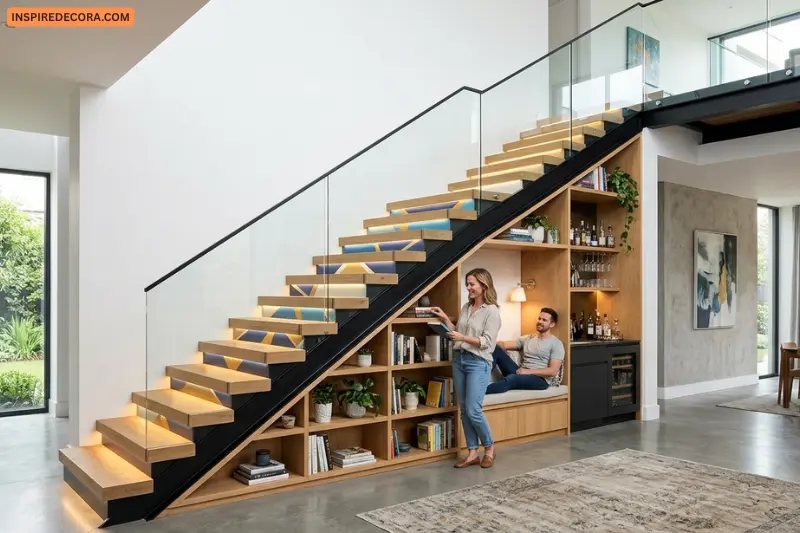
Here are the most popular interior stairs design directions homeowners are choosing right now.
Minimalist Floating Design
Clean lines, open risers, and hidden structural supports give the staircase a sculptural, almost effortless look. This style works best alongside white walls, concrete floors, and an open-plan layout. Less is genuinely more here.
Wood and Steel Combination
Natural wood treads paired with black steel stringers and cable or glass railings has become a signature look of modern homes. The warmth of timber softens the industrial edge of the metal, creating a balance that suits both contemporary and transitional interiors.
LED Integrated Lighting
Built-in LED lighting under treads or along handrails transforms your staircase after dark. It adds drama, improves safety, and gives the stairs a boutique hotel quality that feels genuinely luxurious. Motion-activated LED strips are especially practical in family homes.
Bold Painted Staircases
A trend that is gaining real momentum — painting stair risers in bold colours, geometric patterns, or tile-effect prints. This is one of the most budget-friendly ways to transform your stairs design without structural changes. It works particularly well in eclectic, maximalist, and Bohemian interiors.
Under-Stair Utilisation
One of the most practical additions to any stairs design is built-in storage, a home bar, a reading nook, or an open shelving unit beneath the staircase. This area is prime real estate that most homeowners waste on a mop cupboard.
Exterior Stairs Design Ideas
Your outside stairs deserve as much thought as what is inside. A strong exterior stairs design boosts curb appeal, improves safety in wet weather, and connects your home to its surroundings.
Grand Curved Entrance Stairs
Curved exterior stairs create a welcoming, symmetrical entrance — ideal for spacious homes with a formal or classical character. Wide steps in natural stone or porcelain tile in a marble finish add elegance and durability in equal measure.
Floating Steps with Greenery
Cantilevered outdoor steps set into a landscaped slope, framed by plants on either side, create a dramatic and organic entrance. This suits modern and contemporary homes beautifully.
Industrial Steel and Concrete
Exposed concrete steps with steel-profile railings suit urban homes and industrial-style properties. This look is low maintenance and ages gracefully.
Timber Deck Stairs
Natural hardwood or composite decking stairs blend seamlessly into garden landscapes. They feel warm underfoot and complement greenery, though they do require periodic sealing or oiling to maintain their appearance.
Key safety rule for exterior stairs: Always use anti-slip finishes, textured tiles, or non-slip nosing strips on outdoor steps. Wet steps without grip are a genuine safety hazard.
How to Choose the Right Stairs Design for Your Home
Feeling overwhelmed? Use this simple framework to narrow down your options.
Step 1 — Define your space. Measure the floor area available. Floating and curved designs need structural assessment; spiral stairs need the least floor space.
Step 2 — Set a realistic budget. Include materials, installation labour (typically 30–50% of total project cost), permits, and finishing work. A $4,000 quote rarely includes all of these — factor them in from the start.
Step 3 — Match your home’s style. Your stairs design should feel like it belongs. Wood-and-steel floating stairs suit contemporary homes. Curved timber stairs suit transitional and classic interiors. Stone entrance steps suit formal and Mediterranean-style properties.
Step 4 — Think long-term. Who lives in your home? Young children, elderly relatives, and pets all affect material and railing choices. Safety features like non-slip treads, adequate lighting, and properly spaced balusters are not optional.
Step 5 — Get a structural assessment if needed. Floating stairs, cantilevered designs, and any staircase involving glass or concrete benefit from an engineer’s sign-off early in the process — not after you have already committed to a design.
Stairs Design Cost Breakdown: What to Budget
Here is a realistic overview of what different stairs design projects cost, including materials and installation.
| Project Type | Estimated Cost Range |
|---|---|
| Carpet re-covering | $400 – $2,500 |
| Wood refinishing | $500 – $3,000 |
| New wood staircase (standard) | $3,000 – $10,000 |
| Steel railing system | $3,000 – $6,000 |
| Floating staircase | $8,000 – $20,000+ |
| Curved or helical staircase | $15,000 – $40,000+ |
| Glass balustrade | $1,500 – $5,000 |
| Exterior stone/tile stairs | $2,000 – $8,000+ |
Hidden costs to account for:
- Installation labour: 30–50% of total material cost
- Building permits: $500–$1,000+ depending on your location
- Wall repairs after installation: $300–$800
- Structural engineering assessment (for floating/curved stairs): $500–$1,500
Common Stairs Design Mistakes to Avoid
Most staircase regrets come down to a small number of avoidable errors.
1. Getting the riser height and tread depth wrong. Risers that are too high or treads that are too shallow make stairs uncomfortable and dangerous. For most homes, a riser of 7–7.5 inches and a tread depth of at least 10–11 inches creates a natural, comfortable stride.
2. Choosing the slope incorrectly. The ideal staircase angle sits between 30–37 degrees. Steeper than 45 degrees becomes genuinely hazardous; shallower than 30 degrees wastes floor space unnecessarily.
3. Underestimating material maintenance. Some materials look stunning in showrooms and become a burden to maintain. High-gloss finishes show every scuff. Light-coloured carpets trap dirt. Clear glass needs constant wiping. Be honest about how much upkeep you are realistically willing to do.
4. Skipping non-slip features on exterior steps. Smooth tiles on outdoor stairs become dangerously slippery when wet. Always specify matte, textured, or anti-slip-treated surfaces for any exterior stairs design.
5. Ignoring the under-stair space. Treating the area under your stairs as a storage dumping ground is one of the most common missed opportunities in home design. Plan this space intentionally from the beginning.
6. Choosing a stairs design that clashes with your interior. A bold industrial floating staircase looks stunning in the right home and completely out of place in another. Use material samples, mood boards, and design consultations before committing.
7. Forgetting about lighting. Poorly lit stairs are a safety risk, especially at night. Integrate lighting into your stairs design from the start rather than adding it as an afterthought.
Stairs Design Maintenance Guide by Material
| Material | Maintenance Frequency | Key Tasks |
|---|---|---|
| Wood | Every 3–5 years | Refinish, re-sand, re-stain |
| Carpet | Monthly | Vacuum; spot clean; deep clean annually |
| Steel | Annually | Check for rust spots; wipe with damp cloth |
| Glass | Weekly | Wipe with glass cleaner; check fixings |
| Concrete | Every 2–3 years | Reseal; check for cracks |
| Stone/Tile | Monthly | Clean with pH-neutral cleaner; re-grout as needed |
FAQs About Stairs Design
1. What is the most popular stairs design style in 2026?
Floating staircases with open risers, wood treads, and glass or cable railings are among the most requested designs right now. Minimalist, clean-lined designs that complement open-plan living continue to dominate.
2. How much does a new staircase cost on average?
A standard new wood staircase typically costs $3,000–$10,000. Floating or curved designs run considerably higher, from $8,000 to $40,000+, depending on materials, structural requirements, and customisation level. Always budget for installation labour, which adds 30–50% on top of material costs.
3. Can I change my stairs design without rebuilding the entire staircase?
Yes, in many cases. Replacing balustrades, painting risers, adding a carpet runner, or fitting new treads over existing ones are all cost-effective ways to refresh your stairs design without a full structural rebuild.
4. Are floating stairs safe?
Yes — when properly engineered and installed. Floating stairs require a structural assessment to confirm the wall or steel stringer can handle the load. They must also comply with local building codes regarding railing height and baluster spacing.
5. What is the safest stairs design for a home with young children or elderly residents?
L-shaped or U-shaped stairs with a wide landing, closed risers, a handrail on both sides, and non-slip tread nosing are the safest choices. Avoid spiral stairs and open-riser floating designs for households with young children or limited mobility users.
6. What is the best material for exterior stairs?
Porcelain tile with a matte or textured finish, natural stone with anti-slip treatment, and composite decking are all strong choices for exterior stairs design. They offer durability, weather resistance, and a clean aesthetic. Always prioritise anti-slip surfaces for any outdoor staircase.
7. How long does a staircase installation take?
A standard straight or L-shaped staircase installation takes 1–3 days. Custom floating or curved designs can take 1–3 weeks, including fabrication time. Factor in additional time for permits, structural assessments, and finishing work.
8. Can stairs design add value to my home?
Absolutely. A high-quality staircase is one of the most noticeable features in a home and directly influences buyer perception during viewings. Custom or premium stairs designs — particularly floating, curved, or mixed-material styles — can meaningfully increase resale value.
9. What is the minimum width for a staircase in a home?
Most building codes require a minimum clear width of 36 inches (about 90 cm) for residential staircases. Wider stairs of 42–48 inches feel more comfortable and suit larger homes and open-plan layouts.
10. How do I make a small staircase look bigger?
Use open-riser treads to let light through, choose glass or cable railings instead of solid balustrades, paint the walls alongside the stairs in a light colour, and add recessed or LED under-tread lighting to create depth. Mirrors placed near the staircase also amplify the sense of space.
Conclusion
Your staircase is not just a way to get from one floor to another — it is a design opportunity that runs right through the heart of your home. The right stairs design brings together beauty, safety, and practicality in a way that few other features can. Whether you choose the sleek drama of a floating staircase, the timeless warmth of natural wood, or the grandeur of curved stone entrance steps, the key is to plan carefully, budget honestly, and choose materials that suit your lifestyle. Take your time, get the right professional advice where needed, and invest in a staircase that you will genuinely love using every single day. Great stairs design is not a luxury — it is one of the smartest decisions you can make for your home.