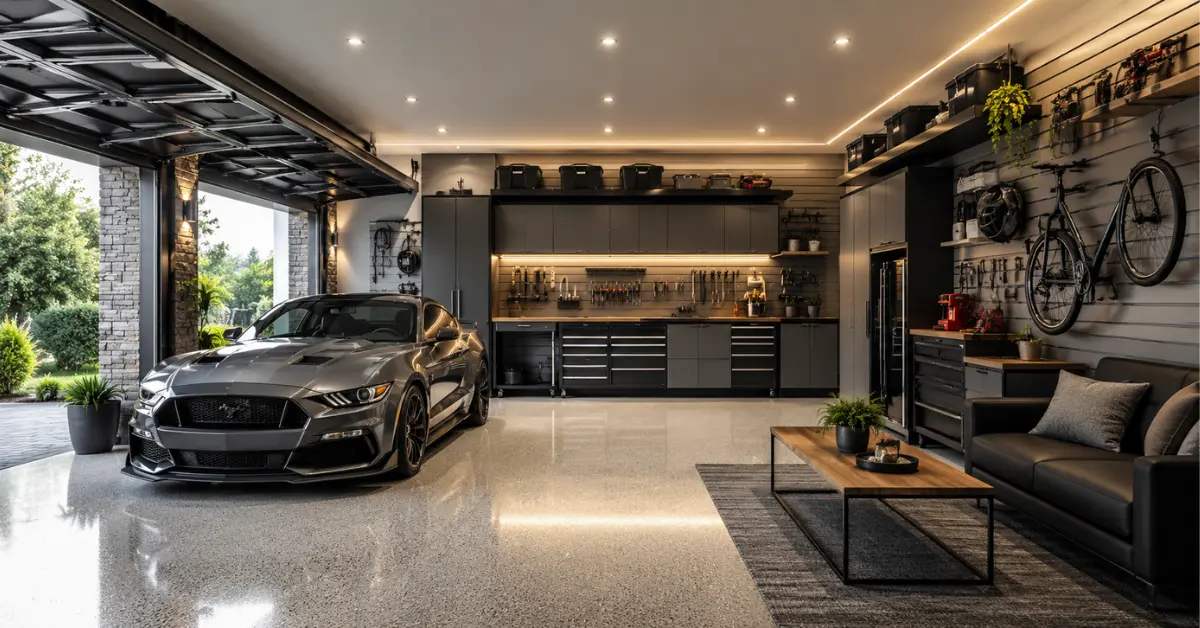
Most people treat their garage as an afterthought — a dumping ground for things that don’t fit anywhere else. But a well-planned garage design can completely change how you live at home. Whether you want a cleaner storage system, a proper workshop, a home gym, or a showroom-worthy car space, the right garage design makes it all possible. This guide walks you through everything you need to know, from layout and flooring to lighting and the finishing touches that make a garage feel intentional.
Start With a Clear Purpose
Before you order a single cabinet or pick a paint colour, decide what you actually want your garage to do. This is the foundation of any good garage design, and skipping it leads to spaces that look busy but don’t work well.
Ask yourself: Is this primarily for car storage? Do you need a workspace for tools or hobbies? Are you after extra living space — a gym, a music room, a man cave? Or is it a combination of all three? A two or three-car garage gives you room to play with multiple zones, while a single-car garage may require smarter vertical solutions. Knowing the goal shapes every decision that follows.
Layout Planning: Zone Your Garage
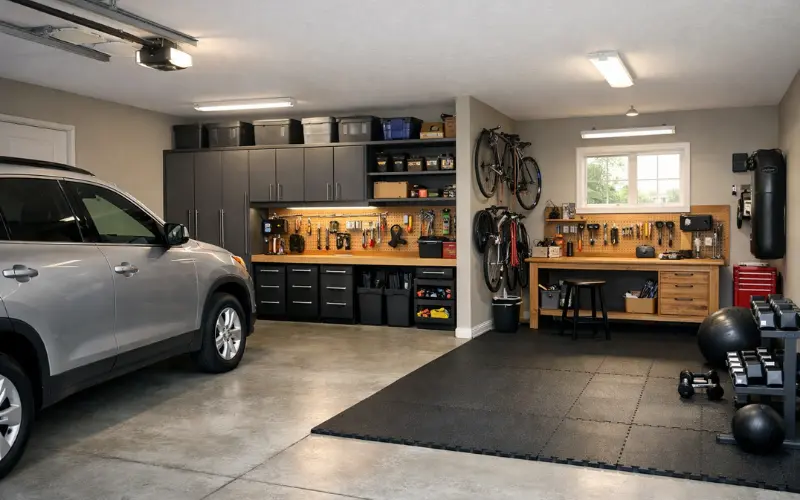
A smart garage design divides the space into dedicated zones rather than letting everything blend together. A common approach is to dedicate one side to vehicles, one wall to storage, and a corner or back wall to a workbench or hobby station. This zoning principle keeps traffic flowing and prevents the chaos that plagues most garages.
For garages used as workshops, place the workbench near a window or under direct lighting. If you’re fitting out a home gym, rubber flooring in that zone protects the concrete and reduces noise. If you park a car inside, leave at least 3 feet of clearance on each side for comfortable entry and exit.
One detail most garage design guides miss: plan for your cable and power outlet placement before installing cabinets or flooring. Retrofitting electrical after the fact is expensive and disruptive.
Flooring: The Foundation of Your Garage Design
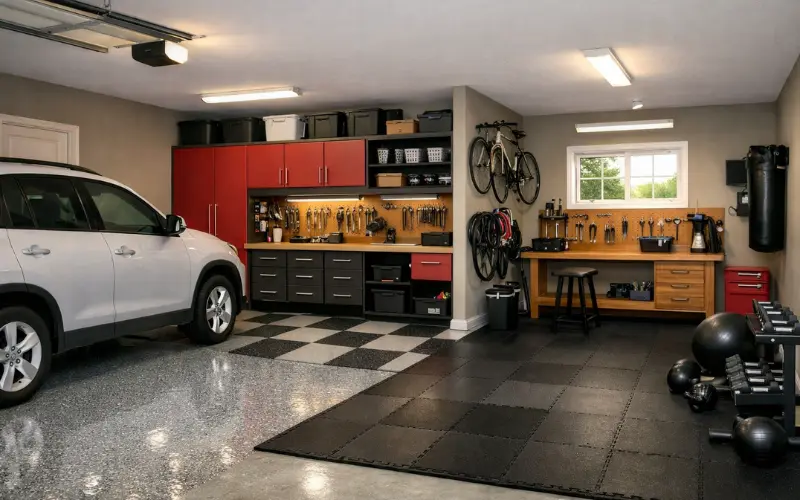
Flooring is one of the first things people notice and one of the most transformative upgrades in any garage design project.
- Epoxy coating remains the gold standard for most garages. It creates a seamless, polished surface that resists oil stains, chemicals, and heavy traffic. It also reflects light, which makes the whole space feel brighter. The downside is that surface preparation is critical — moisture in the slab can cause peeling if not addressed properly.
- Interlocking floor tiles are a more flexible option. They’re easier to install yourself, can be swapped out if damaged, and come in a wide variety of patterns and colours. They work especially well in gym areas or hobby zones where comfort underfoot matters.
- Rubber flooring is the preferred choice for home gyms inside a garage. It handles dropped weights, high traffic, and moisture without breaking down.
Whichever option you choose, make sure the floor is clean, dry, and level before installation. A quality floor does more for your garage design than almost any other single upgrade.
Storage: The Heart of a Functional Garage
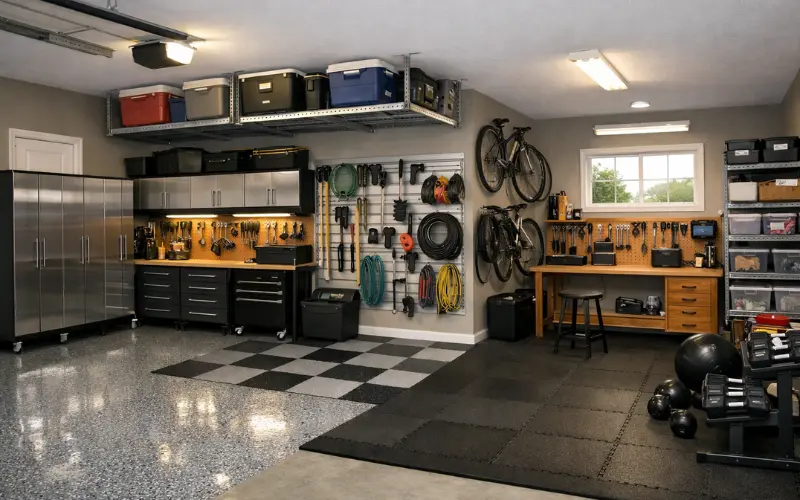
No matter how beautiful your garage design looks, it fails if there’s no smart storage system behind it. Think about your storage needs in three layers: floor, wall, and ceiling.
- Cabinets give you enclosed storage that keeps the visual clutter down. Steel cabinets outperform wood in a garage environment because they resist moisture, temperature swings, and pests. Look for cabinets rated to hold at least 400 lbs per shelf if you’re storing heavy tools or equipment.
- Wall organisation systems — slatwall panels, track rails, and pegboards — turn empty wall space into active storage. Bikes, garden tools, sports gear, and extension cords all come off the floor and become easy to grab. This is one of the highest-impact moves in garage design because it frees up valuable floor space instantly.
- Overhead storage racks are the most underused resource in residential garages. Ceiling-mounted platforms can hold seasonal items, camping gear, roof racks, and large bins that would otherwise crowd the floor. For garages with ceiling heights above 8 feet, this is a game-changer.
- Workbenches and tool storage complete the picture for anyone who uses their garage as a workspace. An adjustable-height workbench with a solid top and built-in drawers keeps your workflow organised and your tools within reach.
Walls: Paint, Panels, and Finishing
Wall treatment is often the last thing people think about in garage design, but it matters more than expected. The walls set the tone for the entire space.
Light, neutral colours — white, light grey, or off-white — make a garage feel larger and cleaner. Darker tones can work well in a man cave or entertainment setup, but they absorb light and can make a space feel smaller.
Wall panels, such as slatwall or fibreboard panelling, serve double duty: they add visual texture and provide a mounting surface for hooks and accessories. This is particularly useful if you want a cohesive look where storage is built into the wall rather than freestanding.
If your garage walls are unfinished drywall or bare concrete block, even a single coat of quality paint makes a dramatic difference. It’s one of the cheapest upgrades in any garage design project.
Lighting: Don’t Underestimate It
Poor lighting ruins an otherwise great garage design. Most builder-grade garages come with a single central light fixture — completely inadequate for working, finding items, or simply enjoying the space.
Shop lights mounted directly to the ceiling provide broad, even coverage and are relatively inexpensive. LED strip lighting along the underside of wall cabinets creates focused task lighting at the workbench level. For garages with ceilings above 12–15 feet, high-bay LED fixtures are the right choice — they’re designed to throw light down from a greater height without losing intensity.
Natural light is worth planning for too. If you’re renovating rather than designing from scratch, adding a window or a glass-panel garage door section dramatically changes how the space feels during daylight hours.
Garage Doors: First Impressions Matter
Your garage door is the face of your garage design and often one of the most visible architectural elements on your home’s exterior. The style you choose should complement your home’s overall aesthetic.
Traditional raised-panel doors work with almost every classic home style. Contemporary homes suit clean-lined aluminium or steel doors, sometimes with glass panels for a sleek look. Carriage-style doors add character to craftsman or farmhouse homes without sacrificing the convenience of an overhead opener.
Beyond style, consider insulation. An insulated garage door regulates temperature inside, which matters if you plan to spend time working in the space year-round. It also reduces noise from outside.
Climate Control and Safety
A garage design that ignores climate is incomplete. If you live in a region with cold winters or hot summers, temperature management is essential — both for your comfort and for protecting what you store.
Insulating the walls and ceiling, not just the door, makes a big difference. A wall-mounted heater or mini-split system handles both heating and cooling depending on the season. Dehumidifiers are critical in humid climates — excess moisture causes rust on tools, warps wooden furniture, and promotes mould.
From a safety standpoint, locking cabinets are important in any garage design where children or pets have access to the space. Flammable materials like petrol, propane, and solvents should be stored in a dedicated, ventilated metal cabinet away from heat sources.
Exterior and Driveway Considerations
The best garage design extends beyond the interior. The driveway and exterior contribute significantly to curb appeal and the overall first impression of your property.
A clean, well-paved driveway with edge lighting adds polish. If your garage doubles as an entertainment or social hub, consider extending the driveway pad to include a patio area with seating, a firepit, or outdoor lighting. This blurs the boundary between the garage and outdoor living in a way that most garage design guides completely overlook.
Frequently Asked Questions
1. What is the most important element of a good garage design?
Storage planning is the foundation. Without a clear system for cabinets, wall organisation, and overhead storage, even a beautifully finished garage will become cluttered quickly.
2. How much does it cost to redesign a garage?
Costs vary widely. A basic garage design refresh with paint, lighting, and wall storage can cost under $1,000 DIY. A full fit-out with epoxy floors, custom cabinets, and a workbench can run $5,000–$20,000 or more depending on the size and products chosen.
3. What flooring is best for a garage design?
Epoxy coating is the most popular choice for a polished, durable look. Interlocking tiles are a good DIY-friendly alternative. For home gym setups, rubber flooring is best.
4. How do I design a small one-car garage?
Focus on vertical space. Wall-mounted storage systems, overhead racks, and slim-profile cabinets maximise every square foot. Avoid freestanding units that eat up floor space.
5. What lighting should I use in my garage design?
LED shop lights for general coverage, under-cabinet LED strips for task lighting at the workbench, and high-bay fixtures for tall ceilings above 12 feet. Natural light through windows or a glass door panel is a bonus.
6. Should my garage door match my house style?
It’s not mandatory, but it generally improves curb appeal. Traditional homes suit raised-panel doors, modern homes suit flat-panel or aluminium-and-glass designs, and farmhouse or craftsman homes look great with carriage-style doors.
7. How do I make my garage climate-controlled?
Insulate the walls, ceiling, and door. Add a wall-mounted heater or mini-split system for year-round comfort. Use a dehumidifier in humid climates to protect tools and stored items.
8. Can I use my garage as a home gym?
Yes. Use rubber flooring for the gym zone, ensure adequate ventilation, and plan your lighting to illuminate the entire workout area. A mini-split system keeps the temperature comfortable year-round.
9. What should I not store in my garage?
Avoid storing flammable liquids like petrol or propane near heat sources. Paint can separate or become unusable in temperature extremes. Electronics not rated for outdoor temperatures can fail in a garage environment.
10. How do I start a garage design project?
Begin by measuring your space accurately, including ceiling height and the location of all doors, windows, and outlets. Then define your primary purpose for the space and work outward from there — floor, storage, walls, lighting, and finally decor.
Final Thoughts
A great garage design isn’t about spending the most money — it’s about thinking clearly about how you use the space and making intentional decisions at every level. Start with your goals, plan your zones, invest in quality flooring and storage, and don’t forget lighting. Whether you’re converting a cluttered one-car garage or outfitting a brand-new three-car build, the principles are the same: function first, aesthetics second, and always leave room to grow. Your garage has more potential than you probably realise — a thoughtful garage design simply unlocks it.