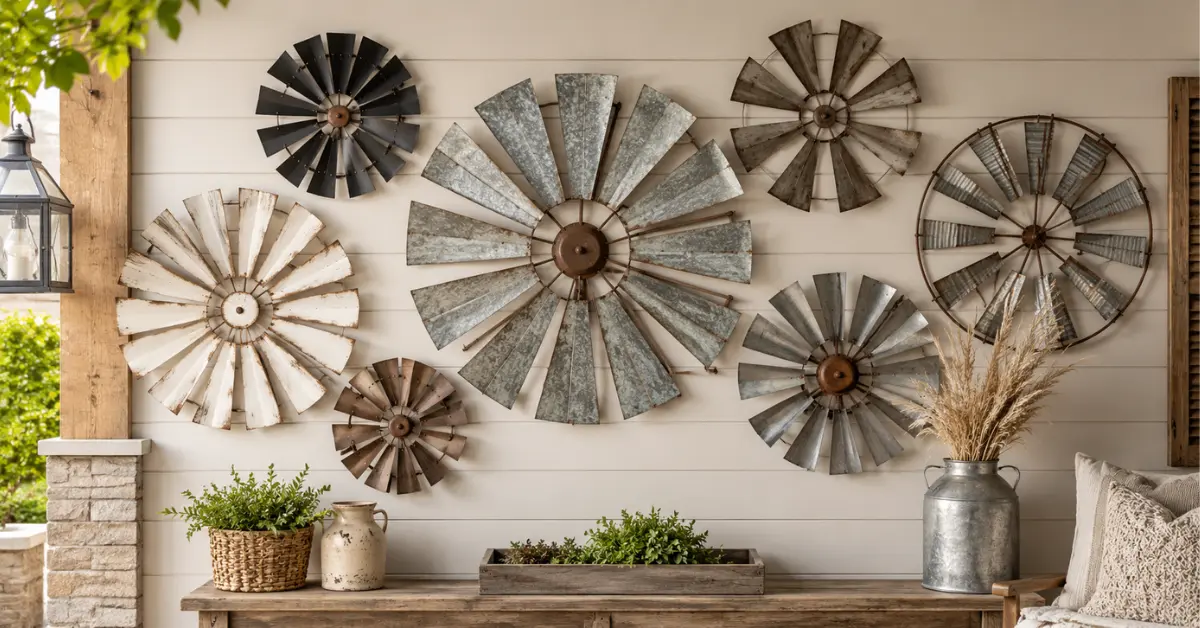
Walk into almost any farmhouse-style home, and there is a good chance you will spot it: a large, weathered metal windmill mounted above a fireplace, a half-windmill sculpture hanging over a doorway, or a set of smaller blades arranged on a gallery wall. Windmill wall decor has become one of the most popular choices for homeowners who want to bring rustic warmth, texture, and character into their living spaces.
But with so many options out there, from galvanized steel to reclaimed wood, from 16-inch accent pieces to 72-inch statement pieces, knowing what to buy and where to put it can feel overwhelming.
This guide walks you through everything you need to know: the different styles of windmill wall decor, how to choose the right size, which rooms work best, how to style them, and what to look for in terms of quality and materials.
What Is Windmill Wall Decor?
Windmill wall decor refers to any decorative piece inspired by the classic farm windmill, designed to be mounted or displayed on a wall. These pieces capture the look and silhouette of real windmills without the mechanics.
The most common forms include:
- Full windmill heads: A circular hub with blades radiating outward, mounted flat against the wall
- Half-windmill sculptures: A semi-circular piece showing the lower half of a windmill, ideal for hanging above mantels, doors, or windows
- Windmill wall clocks: A functional clock built into a windmill-shaped metal frame
- Windmill tail pieces: The fan-shaped rudder section of a windmill, used as a standalone wall accent
- Canvas or metal prints: Photographic or illustrated windmill artwork printed on canvas or aluminum
Each type brings a different energy to a space. Dimensional metal sculptures add texture and depth, while canvas prints feel softer and more painterly.
Popular Styles of Windmill Wall Decor
Not all windmill wall decor fits the same aesthetic. Here are the main styles and what they work best with.
Rustic and Farmhouse
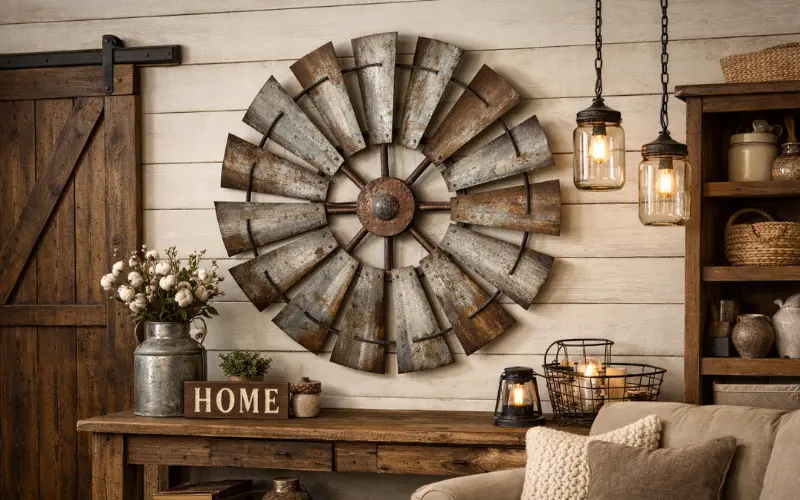
This is the most common and recognizable style. Pieces in this category typically feature a distressed, aged-metal finish, often with faux rust or galvanized silver tones. The weathered look gives them the appearance of a real farm windmill that has spent years in the elements.
These pieces pair well with shiplap walls, barn wood furniture, mason jar lighting, and neutral color palettes. Brands like Weathered Finishes and Millwood Pines specialize in this category, with sizes ranging from 30 to 72 inches.
Industrial
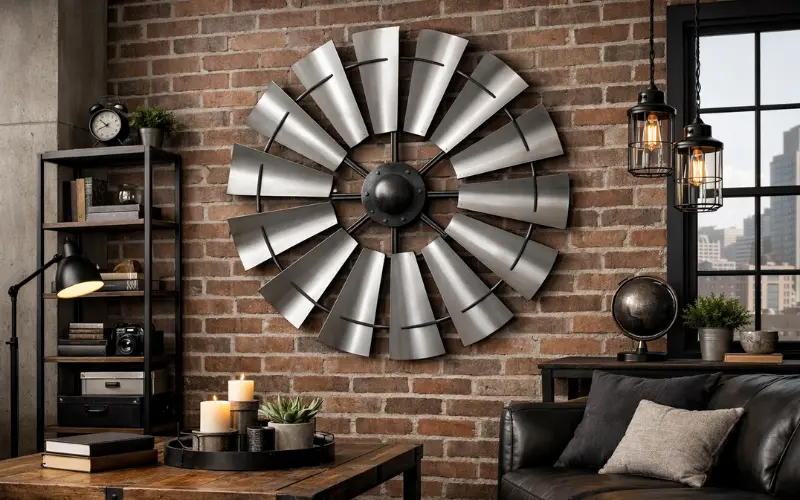
Industrial windmill wall decor tends to use raw or matte metal finishes without the heavy distressing. The look is cleaner and more structured. These pieces work well in loft-style spaces, urban homes, and rooms with exposed brick or concrete.
Vintage and Antique
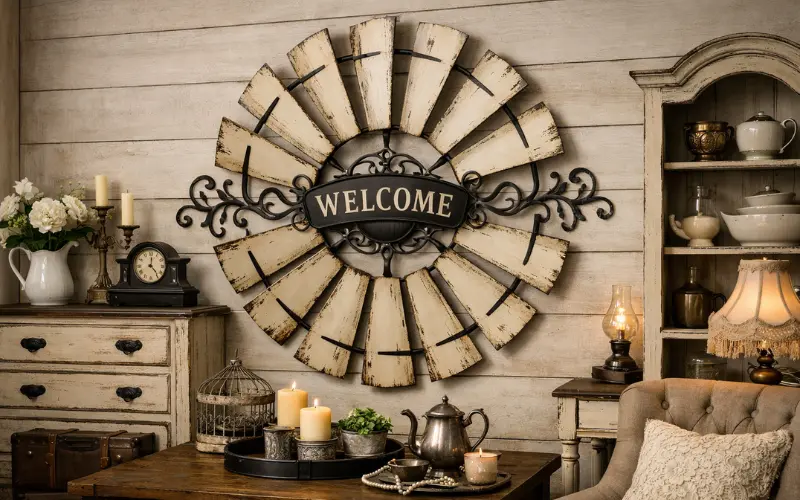
Some windmill decor leans into a more antique aesthetic, using aged paint finishes in cream, black, or deep brown. These pieces often feature decorative details like scrollwork or lettering and pair naturally with vintage farmhouse or shabby chic interiors.
Modern Farmhouse
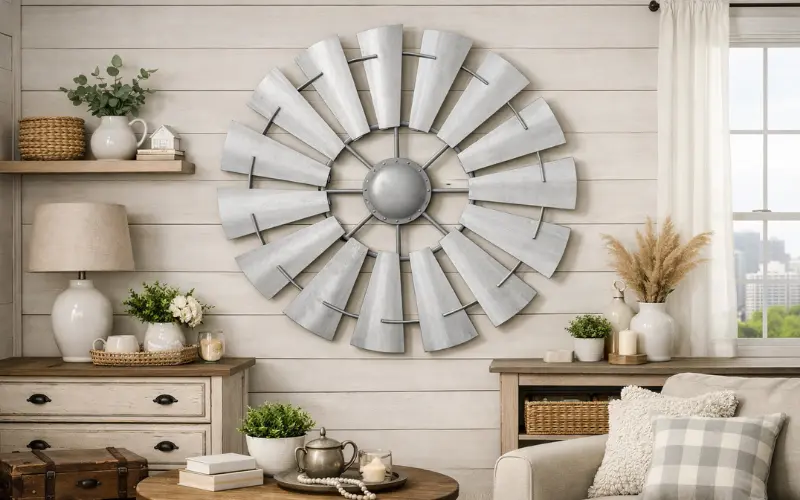
Modern farmhouse windmill wall decor blends rustic elements with cleaner lines. Think galvanized finishes in white or soft gray, with minimal ornamentation. These pieces suit homes that balance contemporary furniture with natural textures.
Canvas and Print Art
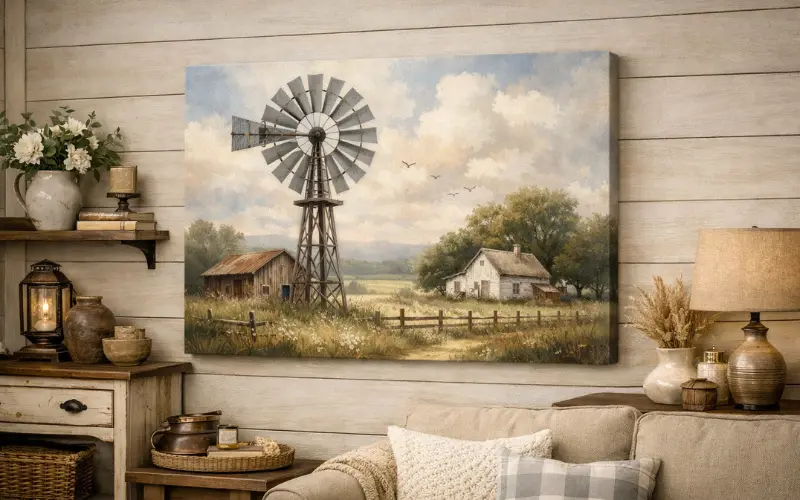
For rooms that need something softer, windmill wall art on canvas offers a more painterly alternative. Artists like Cindy Jacobs and Marla Rae have created popular windmill-themed prints that evoke wide-open landscapes and country living without the weight of dimensional metal.
How to Choose the Right Size
Size is one of the most common mistakes people make when buying windmill wall decor. Here is a straightforward way to think about it.
For a statement piece above a fireplace or sofa:
You generally want the piece to span about two-thirds of the width of the furniture below it. For a standard 6-foot sofa, that means a windmill piece in the 36- to 48-inch range works well. For a wide fireplace surround, pieces in the 47- to 60-inch range create a more balanced look.
For above a door or window:
Half-windmill sculptures in the 24- to 35-inch range work well here. Their horizontal, semi-circular shape mirrors the arch of a doorframe nicely.
For a gallery wall:
Smaller windmill pieces in the 16- to 24-inch range work well when grouped with other farmhouse elements like barn stars, wood signs, or vintage frames.
For large, open walls:
If you have a barn door, vaulted ceiling, or expansive entryway wall, go big. Pieces in the 60- to 72-inch range create the kind of presence these spaces demand.
Room-by-Room Placement Ideas
Living Room
The living room is the most popular spot for windmill wall decor, and for good reason. A large full windmill or half-windmill sculpture above the mantel becomes an instant conversation piece. Pair it with warm lighting, layered textiles, and wooden furniture for maximum impact.
For a gallery wall in the living room, try combining a windmill head with a barn star, a set of buffalo check pillows on the sofa, and a woven jute rug to tie the farmhouse look together.
Kitchen and Dining Area
Windmill wall decor works beautifully in kitchens, especially above open shelving, above the range hood, or on a breakfast nook wall. Windmill clocks are a particularly smart choice here since they serve double duty as both art and a functional time piece.
Bedroom
In the bedroom, windmill wall decor adds rustic character without overwhelming the space. A smaller half-windmill above the headboard or a set of two matching windmill sculptures flanking a window creates a cozy, layered look. Stick to softer finishes like distressed white or aged cream for a bedroom, as they feel more restful than raw galvanized metal.
Entryway and Hallway
First impressions matter, and a windmill piece in the entryway sets a clear design intention from the moment guests walk in. A vertical windmill sculpture or a canvas print of a rural landscape works well in narrower hallway spaces where a wide sculptural piece might feel crowded.
Covered Outdoor Areas
Many metal windmill wall decor pieces are suitable for covered patios, porches, and outdoor living rooms. Always check the product description before hanging metal pieces outdoors since not all finishes are weather-resistant. Galvanized and powder-coated finishes tend to hold up better in outdoor conditions.
Materials: What You Are Actually Buying
Most windmill wall decor falls into one of these material categories:
- Iron and Steel: The most common and durable choice. Iron pieces are heavy but long-lasting. Steel is slightly lighter and often used for larger pieces. Both can be powder-coated, galvanized, or left with a raw finish.
- Galvanized Metal: Steel that has been treated with a zinc coating to resist rust. Galvanized windmill decor has that distinctive silver-gray look that defines modern farmhouse style. Note that galvanized finishes can develop surface rust over time if exposed to outdoor moisture.
- Reclaimed and Barn Wood: Some windmill wall art incorporates reclaimed wood, either as a backing panel or as part of a framed print. These pieces add warmth and organic texture that pure metal pieces cannot replicate.
- Canvas: Windmill canvas art is lightweight, easy to hang, and available in a wide range of sizes. The trade-off is that prints lack the dimensional quality of sculptural pieces.
- Combination Materials: Some of the most visually interesting windmill wall decor pieces combine metal blades or frames with wood panels, rope accents, or mixed-metal finishes.
How to Style Windmill Wall Decor Like a Designer
The secret to making windmill wall decor look intentional rather than random is context. Here are a few styling principles that work every time.
- Pair it with natural textures. Metal windmill decor looks best when surrounded by organic materials. Think woven baskets, linen throw pillows, raw wood shelving, or a jute rug. The contrast between industrial metal and soft natural textures is what gives farmhouse style its warmth.
- Add string lights for evening ambiance. Draping string lights around a large windmill sculpture, especially a half-windmill above a mantel, adds a soft glow that makes the piece feel intimate and cozy after dark.
- Use greenery to soften sharp edges. A trailing pothos or a few stems of eucalyptus placed near the base of a dimensional windmill piece soften the look and add color. This works especially well for pieces hung above shelves or console tables.
- Repeat the shape at a smaller scale. If you have a large windmill as your focal point, adding a small windmill-shaped clock or a windmill tail piece in the same room creates visual cohesion without making the space feel cluttered.
- Keep the wall color simple. Windmill wall decor stands out best against neutral walls: whites, warm creams, light grays, and soft sage greens. Avoid busy wallpapers or bold accent colors directly behind dimensional metal pieces, as they compete for attention rather than complementing each other.
Where to Buy Windmill Wall Decor
- Specialty retailers like Weathered Finishes LLC in Mesa, Arizona offer handmade, American-made windmill decor in sizes from 30 to 72 inches, including full heads, half pieces, and windmill tails. These are high-quality sculptural pieces built for longevity.
- Large marketplaces like Wayfair, Amazon, Walmart, and Etsy carry a wide range at various price points. Wayfair in particular has a strong selection of galvanized windmill wall sculptures from brands like Gracie Oaks, Millwood Pines, and August Grove, with customer reviews that give you a realistic sense of size and quality.
- Etsy is the best source for custom or handmade windmill wall decor, including personalized monogram versions and one-of-a-kind reclaimed wood pieces.
- Big box stores like Walmart carry budget-friendly options that work well if you want to fill a space without a large investment.
Frequently Asked Questions About Windmill Wall Decor
1. What is windmill wall decor?
Windmill wall decor refers to decorative pieces inspired by classic farm windmills, designed to be mounted or displayed on a wall. These include metal sculptures, half-windmill pieces, canvas prints, windmill clocks, and tail accents that bring rustic farmhouse character to interior spaces.
2. What size windmill wall decor should I buy?
For above a sofa or fireplace, choose a piece that spans about two-thirds the width of the furniture below it. For above a door or window, a 24- to 35-inch half-windmill works well. For large open walls or entryways, go for 47 inches and above. Always tape out the dimensions on your wall before ordering.
3. What rooms work best for windmill wall decor?
Windmill wall decor works in almost any room. Living rooms and entryways are the most popular choices for large statement pieces. Kitchens suit windmill clocks and smaller sculptures. Bedrooms benefit from softer distressed finishes, while covered patios and porches can handle metal pieces with galvanized or powder-coated finishes.
4. Is windmill wall decor only for farmhouse-style homes?
Not at all. While windmill wall decor is closely associated with farmhouse and rustic interiors, it also works in industrial, transitional, and modern farmhouse spaces. The key is choosing the right finish: raw or matte metal for industrial spaces, galvanized silver or white for modern farmhouse, and heavily distressed rust finishes for classic country farmhouse.
5. Can windmill wall decor be used outdoors?
Some pieces can, but not all. Many metal windmill sculptures are suitable for covered patios and porches, but always check the product description first. Galvanized and powder-coated finishes hold up better in outdoor conditions. Avoid placing uncoated iron pieces in direct rain or humid environments, as they can rust and stain surrounding surfaces.
6. What is the difference between a full windmill and a half-windmill wall piece?
A full windmill head is a complete circular piece with blades on all sides, designed as a bold focal point on an open wall. A half-windmill shows only the bottom semicircle, making it ideal for mounting above doors, windows, mantels, and headboards where the horizontal shape fits the space naturally.
7. Do windmill wall decor pieces come with hanging hardware?
Many do, but not all. Most pieces include keyhole brackets on the back for wall mounting, but nails, screws, and wall anchors are often sold separately. For heavy iron or steel pieces, always use proper wall anchors, especially if you cannot mount directly into a stud.
8. How do I style windmill wall decor?
Pair metal windmill pieces with natural textures like woven baskets, linen pillows, and reclaimed wood for a cohesive farmhouse look. Add string lights around large sculptural pieces for evening warmth. Use trailing greenery or eucalyptus near the base to soften sharp metal edges. Keep the wall color neutral so the piece stands out.
9. What materials are windmill wall decor pieces made from?
The most common materials are iron, steel, and galvanized metal. Some pieces combine metal blades with reclaimed wood panels or rope accents. Canvas and aluminum prints are also widely available for a lighter, softer alternative to dimensional sculptures.
10. How much does windmill wall decor cost?
Prices vary widely depending on size and material. Small accent pieces start around $25 to $50. Mid-size pieces in the 30- to 47-inch range typically cost $100 to $250. Large statement pieces 60 inches and above, especially handmade or American-made versions, can range from $300 to $570 or more.
Final Thoughts
Windmill wall decor is one of those rare design choices that works across a surprisingly wide range of home styles. Whether you lean toward classic farmhouse, modern rustic, or industrial chic, there is a windmill wall piece that fits. The key is getting the size right, choosing a finish that suits your existing palette, and styling it with the natural textures and soft lighting that make these pieces come alive on a wall.
Start with the wall you have in mind, tape out the dimensions before you order, and choose a piece that feels proportional to the space. Once it is up, you will understand exactly why windmill wall decor has stayed popular for so long.