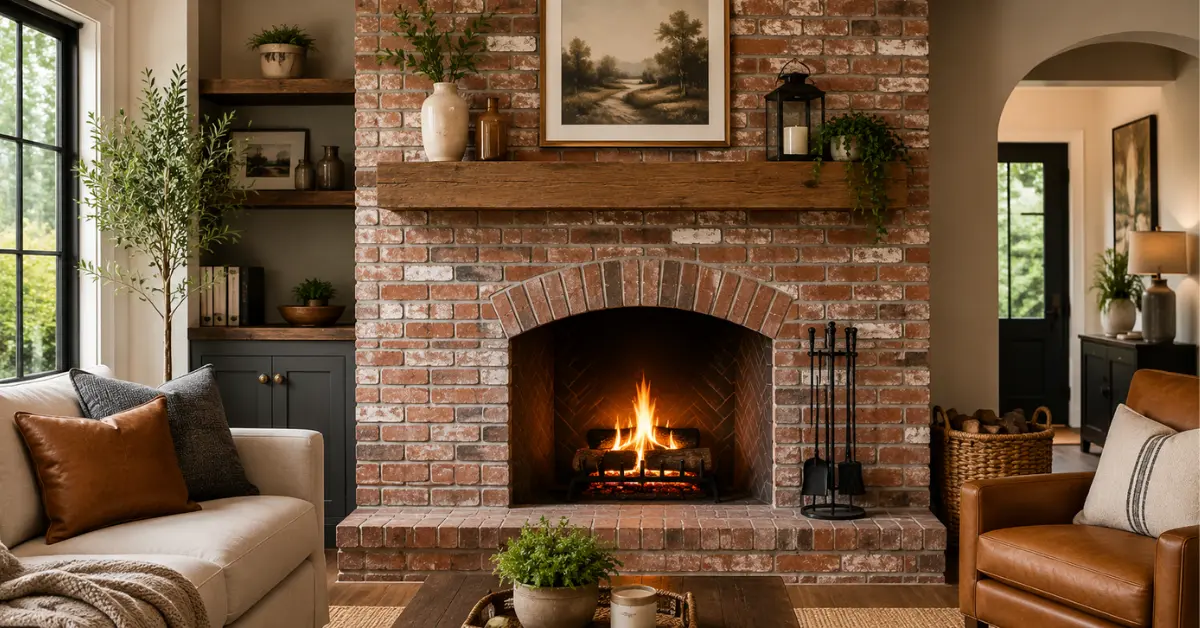
A brick fireplace is one of the few design features that gets better with age. While trends in flooring, paint, and furniture come and go, a well-built brick fireplace remains the anchor of a room for decades. If you’re planning a renovation, building new, or simply looking to refresh an existing hearth, this guide covers everything you need: styles, costs, materials, maintenance, and the practical details most articles skip.
Why Homeowners Still Choose a Brick Fireplace
Brick has survived centuries of design trends for good reason. Unlike trendier materials, a brick fireplace offers genuine longevity, fire resistance, and a texture that machine-made finishes simply can’t replicate.
Here’s what makes brick worth the investment:
- Durability. Properly fired brick can last well over a hundred years with minimal upkeep.
- Heat resistance. Brick handles direct flame and high temperatures far better than drywall, wood paneling, or most stone veneers.
- Thermal mass. Brick absorbs heat slowly and releases it gradually, which helps a room stay warm long after the fire dies down.
- Resale value. Real estate agents consistently note that a brick fireplace adds character buyers respond to, especially in older or historic-style homes.
- Low long-term cost. Aside from occasional repointing, brick rarely needs the kind of repair or replacement that veneer products require.
Popular Brick Fireplace Styles
Every brick fireplace idea below works across different home styles, so pick the one that matches your existing decor rather than chasing a trend that clashes with your space.
Classic Red Brick Fireplace
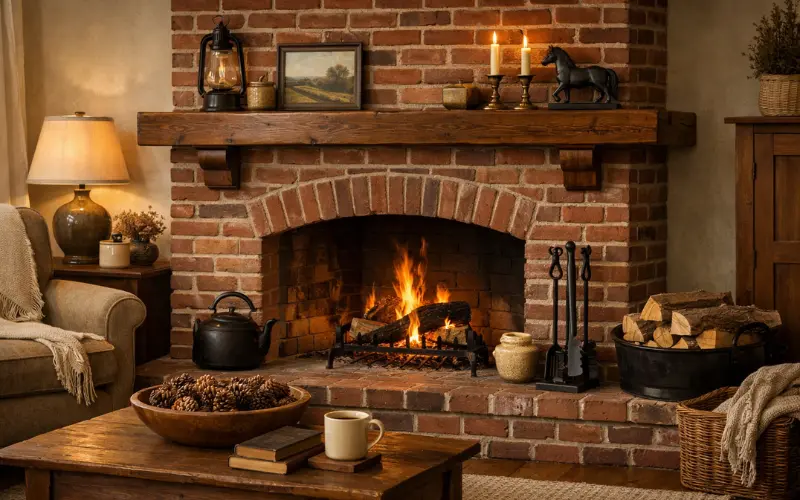
The traditional red brick fireplace remains a favorite for farmhouse, cottage, and colonial interiors. Pair it with a wood mantel, cast iron accessories, and warm neutral furnishings for a timeless look that never feels dated.
Whitewashed or Painted Brick Fireplace
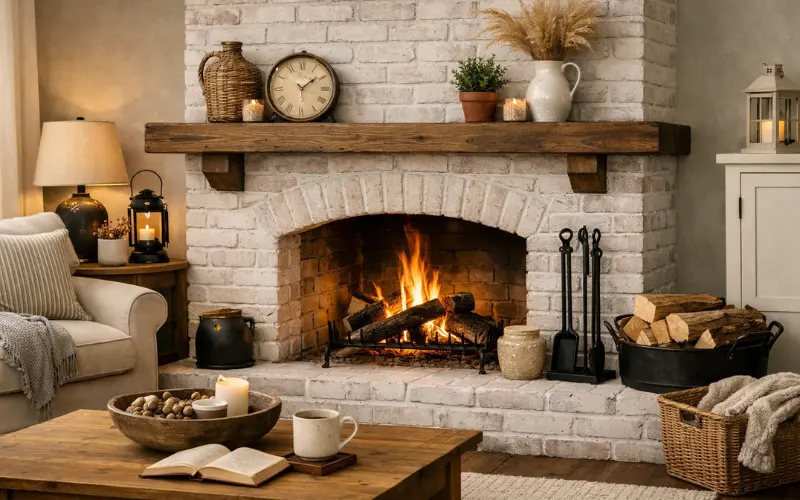
Whitewashing softens the brick’s natural color while letting the texture show through. It’s a popular middle ground for homeowners who love brick’s character but want a brighter, more modern feel. Unlike solid paint, a whitewash can usually be reversed with a wire brush and patience.
Painted White Brick Fireplace
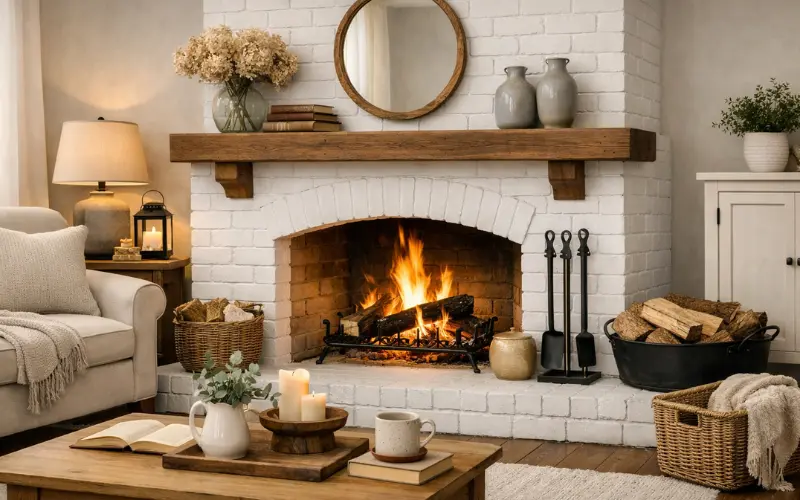
A fully painted white brick’s fireplace creates a clean, modern backdrop that works in farmhouse, coastal, and minimalist interiors alike. Use masonry-specific paint and always seal the brick first to prevent moisture from getting trapped underneath.
Whitewashed Brick Fireplace with a Floating Mantel
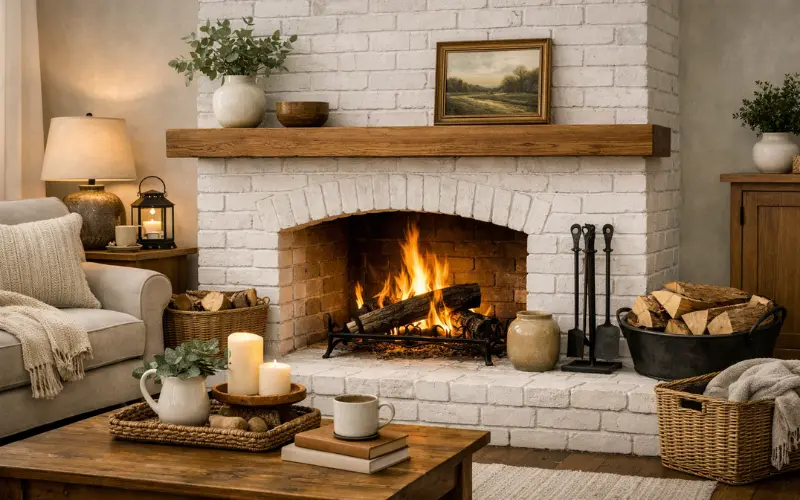
For a more contemporary edit on a traditional material, pair whitewashed brick with a simple floating wood mantel instead of ornate millwork. This combination bridges rustic and modern styles particularly well.
Floor-to-Ceiling Brick’s Fireplace
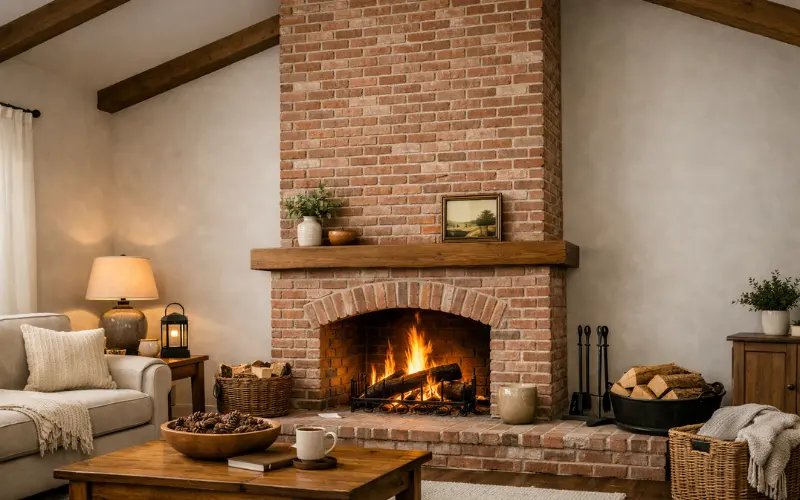
A floor-to-ceiling brick fireplace makes a dramatic architectural statement, especially in rooms with high ceilings or open floor plans. This style works best as the room’s clear focal point, so keep surrounding decor simple.
Thin Brick Fireplace
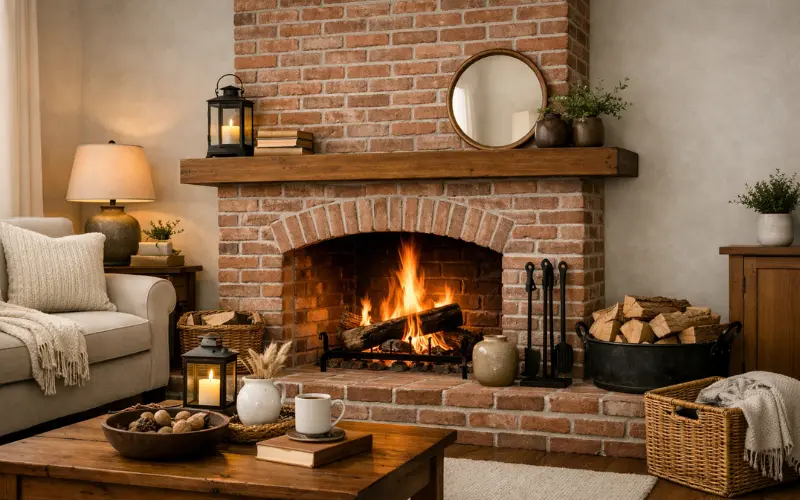
Thin brick veneer delivers the same authentic look as full brick at a fraction of the weight and cost. It’s an excellent choice for retrofitting an existing fireplace surround without structural changes, since it can often be installed directly over drywall with the right backing.
Herringbone or Patterned Brick’s Fireplace
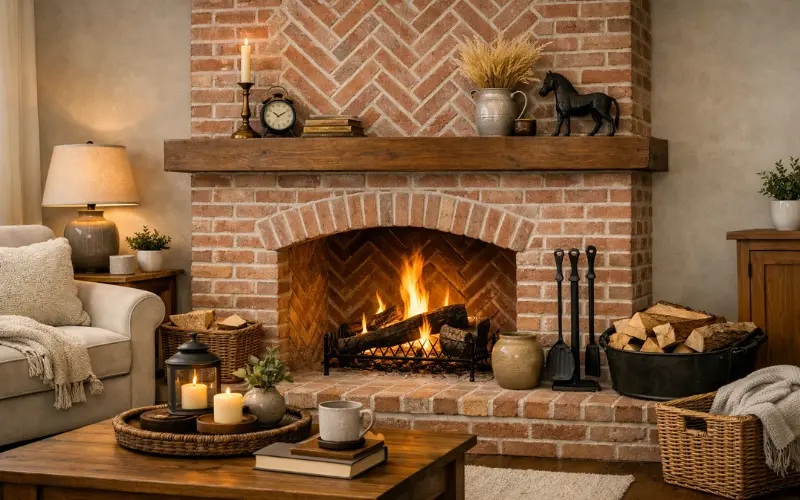
Laying brick in a herringbone, basketweave, or running bond pattern adds visual texture without adding color. This is a detail most competitor articles overlook, but pattern alone can completely change how a fireplace reads in a room.
Brick Fireplace Mantel Ideas
The mantel often gets more attention than the brick itself, since it’s where most of the personality and styling happens.
- Reclaimed wood beam: Adds rustic warmth and pairs especially well with red or whitewashed brick.
- Painted wood mantel: A crisp white or black painted mantel creates contrast against natural brick tones.
- Floating concrete shelf: A minimalist option for modern brick’s fireplace designs.
- No mantel at all: Increasingly popular in modern builds, letting the brick texture stand fully on its own.
How Much Does a Brick Fireplace Cost?
Cost is one of the most searched questions around this topic, yet it’s often missing or vague in competitor content. Here’s a realistic breakdown:
| Project Type | Estimated Cost Range |
|---|---|
| New full brick’s fireplace build | $3,500 to $8,000 |
| Thin brick veneer over existing fireplace | $800 to $2,500 |
| Repointing or repairing mortar joints | $500 to $1,500 |
| Painting an existing brick’s fireplace | $300 to $900 (DIY: under $150) |
| Whitewashing an existing brick fireplace | $200 to $600 (DIY: under $100) |
Prices vary by region, labor rates, and the complexity of the chimney structure, so always get at least two local quotes before committing to a full rebuild.
Brick Fireplace Maintenance: What Most Guides Leave Out
A brick fireplace needs far less upkeep than people assume, but a few habits make a real difference over time.
- Inspect mortar joints annually. Crumbling or cracked mortar lets moisture in, which can damage brick from the inside over winter freeze-thaw cycles.
- Schedule a chimney sweep every year if you use the fireplace regularly, and every two years for occasional use.
- Avoid pressure washing brick. It forces water into the porous surface and can erode mortar joints over time. Use a soft brush and mild detergent instead.
- Apply a breathable masonry sealer, not a glossy or non-breathable sealant, which can trap moisture and cause spalling (when brick faces flake off).
- Clean soot gently with a mixture of warm water and dish soap, applied with a soft-bristle brush, rather than harsh chemical cleaners that can discolor the brick.
Common Brick Fireplace Mistakes to Avoid
- Painting brick that has active moisture issues. Sealing in trapped moisture accelerates damage rather than preventing it.
- Choosing a mantel that’s too small for the scale of the fireplace, which makes the whole wall look unfinished.
- Skipping a structural inspection before adding a floating mantel or heavy stone hearth extension.
- Mismatching brick color when extending or repairing an existing fireplace, since brick can fade or vary by batch and supplier.
- Ignoring local building codes for hearth clearance and combustible material distances, which vary by municipality and fireplace type.
Brick Fireplace Ideas by Room
A brick’s fireplace isn’t limited to the living room anymore.
- Bedroom: A smaller, low-profile brick fireplace adds warmth without overwhelming the space.
- Kitchen: Increasingly popular in open-concept homes, often paired with a built-in bench or banquette.
- Outdoor patio: Brick handles weather exposure well, making it a natural choice for outdoor fireplaces and fire pits.
- Sunroom: Brick’s thermal mass helps regulate temperature swings in glass-heavy rooms.
Frequently Asked Questions
Is a brick fireplace outdated?
No. A brick fireplace isn’t outdated; the finish and styling around it determine whether it feels current. Whitewashing, pairing with modern furniture, or simply leaving the brick exposed in its natural state keeps it relevant in nearly any decor style.
Can you paint a brick fireplace yourself?
Yes, painting a brick fireplace is a manageable DIY project for most homeowners. Clean the surface thoroughly, use masonry primer, and apply a heat-resistant masonry paint in thin, even coats.
How do you clean a brick fireplace without damaging it?
Use warm water, a mild dish soap, and a soft-bristle brush. Avoid wire brushes, pressure washers, and harsh acidic cleaners, which can wear down the brick face and mortar joints.
Is whitewashing or painting better for a brick fireplace?
Whitewashing preserves more of the brick’s natural texture and is easier to undo later, while painting offers a more uniform, opaque finish. The right choice depends on whether you want the brick’s character to remain visible.
How long does a brick fireplace last?
A properly built and maintained brick’s fireplace can last well over a hundred years. The mortar joints typically need attention before the brick itself does.
Do brick’s fireplaces need a liner?
Most do, especially for wood-burning fireplaces, since a chimney liner protects the surrounding masonry from heat and contains combustion byproducts safely. A certified chimney inspector can confirm what your specific fireplace needs.
What’s the difference between thin brick and full brick fireplaces?
Thin brick is a veneer, typically half an inch to an inch thick, applied over an existing surface. Full brick is structural and load-bearing. Thin brick costs less and installs faster, while full brick offers more flexibility for new construction.
Can a brick’s fireplace be too dark for a room?
Yes, in smaller or low-light rooms, dark red brick can feel heavy. Whitewashing or painting lighter tones helps balance the room without losing the texture brick provides.
Final Thoughts
A brick fireplace is more than a design trend. It’s a long-term investment that adds warmth, character, and resale value to a home, whether you keep the classic red brick look or update it with paint, whitewash, or a modern thin brick veneer. The key is matching the style to your home’s existing character, budgeting realistically for the project, and keeping up with the simple maintenance that keeps brick looking good for decades. Whichever brick fireplace idea you choose, the result is a feature that only gets better with time.