
Pottery home decor means using handmade or hand-finished ceramic pieces, vases, bowls, sculptures, wall tiles, as functional art within a room rather than as an afterthought on a shelf. Done right, a single stoneware vase can anchor an entire console table. Done wrong, pottery gets scattered around a room with no relationship to anything else in it, and it just reads as clutter with a higher price tag.
I went through nine of the most visited pottery retail pages online while researching this piece, from Shopify collection pages to Pinterest boards to Amazon search results, and something became obvious fast: almost none of them tell you how to actually decorate with the pieces they’re selling. They show you a product grid. That’s it. This guide fills that gap.
Why Most Pottery Home Decor in Homes Looks Accidental
Walk into a house with three or four pottery pieces and you can usually tell within seconds whether someone thought about placement or just bought things they liked at different times. The difference isn’t the quality of the pottery. It’s repetition and restraint.
A pottery collection reads as intentional when at least two pieces share a trait: glaze family, clay body color, or silhouette. A single earthy stoneware bowl on a bookshelf next to a bright cobalt vase on the mantel and a white porcelain planter in the entryway looks like three separate purchases, because it is. Group pieces by warmth (terracotta, umber, sand) or by coolness (celadon, slate blue, charcoal) and the same three pieces suddenly look curated.
Scale matters just as much. Pottery pieces under 8 inches tall tend to disappear on anything larger than a side table. If you’re working with a console, dining table, or mantel that’s 4 feet or wider, you need at least one piece in the 14 to 20 inch range to hold visual weight, flanked by smaller companions.
Where Pottery Home Decor Actually Earns Its Space
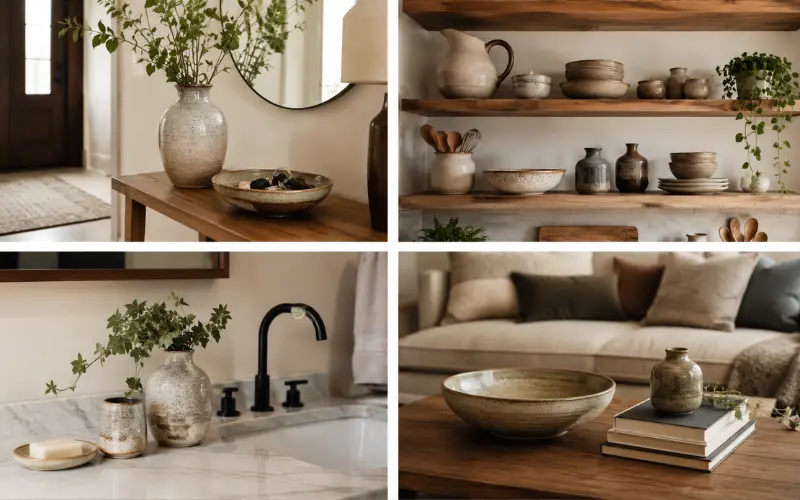
Entryways and console tables. This is the highest-traffic decorating spot in most homes and the easiest place to get pottery wrong, because people treat it like storage instead of display. A wide, shallow bowl for keys works, but pair it with one taller vessel behind it (empty or holding dried branches) so the eye has somewhere to travel vertically, not just across.
Open shelving in kitchens. Stoneware crocks, pitchers, and mixing bowls belong here more than almost anywhere else, because they get used, not just looked at. A pitcher that holds cooking utensils does double duty. The trick is leaving negative space between pieces. Shelves packed edge to edge with pottery read as a display case, not a kitchen.
Bathroom vanities. A single ceramic tumbler or soap dish in a glaze that echoes your tile or hardware finish ties the whole room together far more effectively than a matched bath accessory set from a big-box store.
Low, wide coffee tables. This is where a lot of pottery gets stranded because people put one tall vase in the center and nothing else. Try a low, wide bowl instead, off-center, with a stack of two or three books beside it. Height variation across a coffee table vignette matters more than any single piece.
The Glaze and Finish Distinction Almost No One Explains
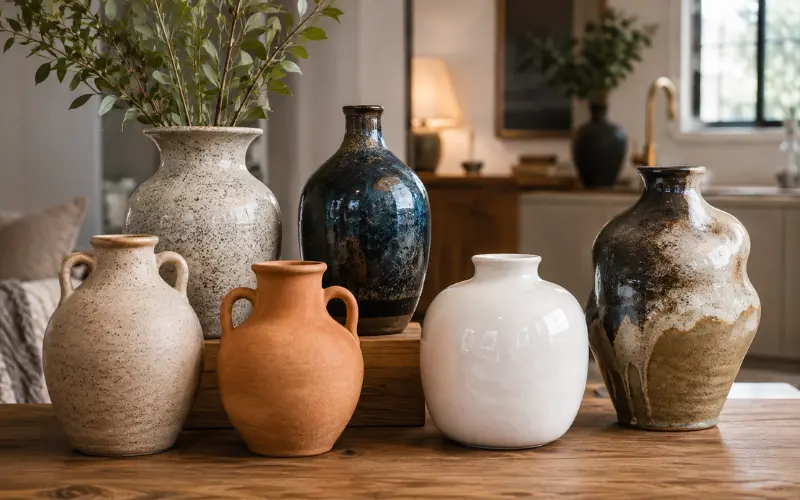
Retailers sell pottery by shape and color. What they rarely explain is that glaze finish changes how a piece behaves in a room, and that matters more than the color itself when you’re trying to match pottery to existing decor.
- Matte glazes absorb light and read as more casual, earthy, and modern-farmhouse. They photograph flat but look richer in person, especially under warm lighting.
- Glossy or reactive glazes bounce light and pull the eye. One glossy piece in a room of matte finishes becomes the focal point automatically, whether you planned it that way or not.
- Unglazed or raw clay areas (common on the base of a piece, or in “wabi-sabi” style pottery) add texture contrast next to smoother surfaces like glass, marble, or lacquered wood.
If your room already leans glossy (lacquered cabinets, polished brass, glass tabletops), a matte stoneware piece will stand out as a deliberate contrast rather than clash. If your room is already textured and matte (linen, raw wood, wool rugs), one glossy or crackle-glazed piece keeps the space from feeling flat.
| Pottery Style | Best Room Pairing | Glaze Tendency |
|---|---|---|
| Stoneware / earthenware | Kitchens, farmhouse, coastal | Matte, speckled |
| Porcelain | Bathrooms, minimalist, modern | Glossy, smooth |
| Terracotta / unglazed | Outdoor-adjacent rooms, boho | Raw, unglazed |
| Studio art pottery (sculptural) | Living rooms, entryways | Mixed, often reactive |
Buying Direction: Local Studios vs. Online Marketplaces vs. Big Retail
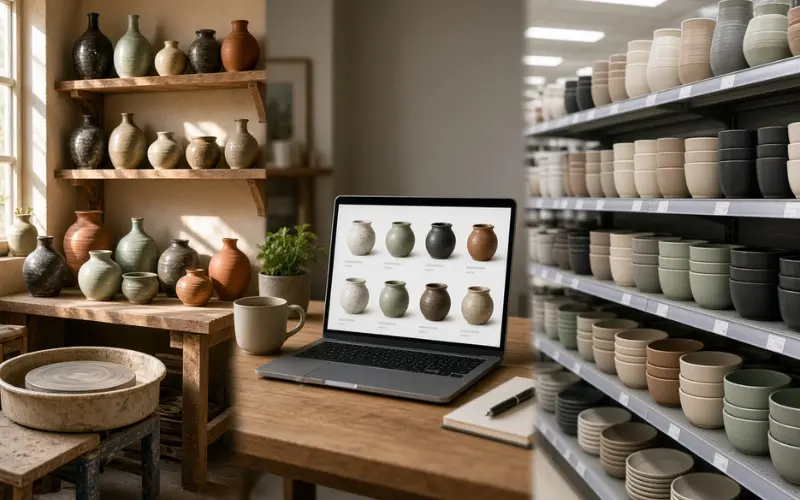
Most buying guides stop at “shop small.” That advice alone doesn’t tell you what you’re actually trading off.
Local pottery studios and regional makers (the kind you’ll find through a quick search of “pottery near me” or at a farmers market) give you one-of-a-kind pieces and the ability to see glaze and scale in person before buying, which matters enormously since photos consistently misrepresent both. The tradeoff is a narrower selection and, often, no returns.
Marketplace platforms and larger online pottery retailers give you volume and price comparison but flatten a lot of nuance. Product photos on white backgrounds make every glaze look brighter and every piece look bigger than it is. If you’re buying pottery home decor online without seeing it first, order the smallest piece in a collection first to gauge true color and glaze texture before committing to a large or expensive item.
Big-box and outlet home decor stores fill the gap for budget decorating or for people who want a “pottery-adjacent” look without the studio price tag. These pieces are usually slip-cast rather than hand-thrown, meaning they’re molded rather than shaped on a wheel, which is fine for a starter piece but won’t have the small asymmetries that make handmade pottery feel warm.
My Take, After Actually Living With It
I’ll be direct here: the single biggest styling mistake I see is people buying pottery to match a color scheme first and a room’s actual light second. A blush pink vase that looks perfect in a north-facing room with cool light can look washed out and dusty in a south-facing room with warm afternoon sun. Before you commit to a piece for a specific spot, sit with a sample swatch or a small companion piece in that exact location at the time of day you’ll see it most. It’s a five-minute step that saves a lot of regret purchases.
Pottery decor also ages better than most trend-driven decor categories precisely because it isn’t mass-manufactured on the same cycle as furniture or textiles. A well-chosen stoneware piece bought today will still look intentional in a room redesign five years from now, the way a good mirror as a wall decor piece or a piece of handcrafted home decor tends to outlast whatever color trend was popular the year it was bought.
Layering Pottery Home Decor With Wall Decor
Pottery rarely works in isolation from what’s on the walls around it. A grouping of ceramic vessels on a console beneath a gallery of botanical wall decor or nature wall decor creates a cohesive earthy vignette rather than two competing displays. If your pottery leans toward raw, unglazed, or organic shapes, pairing it with macrame wall decor reinforces the same handmade, textural mood instead of fighting it. For rooms with a more global or eclectic direction, Moroccan home decor or Mexican home decor accents can share shelf space with terracotta pottery since both draw from similar clay traditions.
If you’re building toward a specific overall style rather than piece by piece, it helps to decide the direction first. Cottagecore leans toward soft, irregular glazes and dried florals in the vessels themselves, closer to the ideas in this cottagecore home decor guide. Coastal styling favors pale, sandy, unglazed tones, which pairs naturally with the palette covered in coastal home decor. And if your taste runs toward denser, richer glazes and antique-adjacent silhouettes, the old money home decor approach favors exactly that kind of pottery.
FAQs on Pottery Home Decor
Is Pottery Home Decor still in style?
Yes. Unlike trend-driven decor categories, handmade and artisan pottery has stayed consistently popular because it’s tied to craft and material authenticity rather than a seasonal color palette.
How do I know if pottery is handmade or mass-produced?
Check the base. Hand-thrown pieces usually have slight asymmetry, visible throwing rings, or a hand-trimmed foot ring. Slip-cast pieces are perfectly symmetrical with a seam line that’s sometimes visible if you look closely.
Can I mix different pottery glazes in the same room?
Yes, as long as you keep a common thread, either matching clay tone, matching glaze family (all matte or all glossy), or matching scale. Mixing all three variables at once usually reads as chaotic.
Where should I place a large pottery sculpture in a small room?
Corners and empty floor space near a window work better than tabletops for oversized sculptural pottery, since it needs breathing room on multiple sides to avoid looking cramped.
Is it worth buying pottery from an outlet or clearance section?
For beginner collectors or budget decorating, yes, especially for functional pieces like bowls and pitchers. For statement or sculptural pieces, quality differences show up more, so it’s worth spending on the piece that will anchor a room.
How do I clean and maintain decorative pottery?
Dust glazed pieces with a dry microfiber cloth. Unglazed terracotta is porous and shouldn’t be scrubbed with harsh cleaners, a damp cloth is usually enough. Avoid placing unglazed pottery in direct, prolonged sun exposure, which can fade natural clay tones over time.
Does Pottery Home Decor work in modern minimalist homes?
Yes, particularly smooth porcelain or single-glaze stoneware in neutral tones. The key in minimalist spaces is restraint: one or two strong pieces rather than a grouped collection.
What’s the difference between ceramic and Pottery Home Decor purposes?
“Ceramic” is the broader material category. “Pottery” specifically refers to functional or decorative vessels shaped from clay, whether wheel-thrown, hand-built, or slip-cast. In everyday decor language the terms overlap, but pottery implies more of a handmade craft tradition.

