
Western style home decor blends rugged materials like reclaimed wood, leather, and cowhide with warm earth tones and handcrafted details to create a home that feels grounded, lived-in, and unmistakably American frontier. Done well, it reads as confident and collected rather than themed. Done poorly, it turns into a costume for your living room. This guide walks through what actually separates the two.
I have redecorated three homes in this style over the past decade, and I have made most of the mistakes I am about to warn you about. So this is not theory. It is what worked, what looked cheap after six months, and what I would tell a friend before they order their first cowhide rug.
What Makes a Room Read as “Western Style Home Decor” Instead of Just Rustic
Rustic and western get used interchangeably online, but they are not the same thing. Rustic is about texture and imperfection: raw wood grain, distressed metal, uneven surfaces. Western adds a specific cultural layer on top of that texture: ranch life, leather tack, turquoise stone, and Native-inspired pattern work.
A room can be rustic without being western (think a Scandinavian cabin with pale wood and linen). But western almost always leans rustic first, then layers in the specific motifs: a horseshoe, a set of longhorns, a Navajo-print throw. If you strip those cultural markers out, you are left with generic farmhouse decor, which is a different look with a different color story.
From experience: the fastest way to tell if a western room will age well is to look at what happens when you remove the obviously themed pieces (the horseshoes, the cowboy figurines). If the room still looks intentional through its materials and palette alone, the theme is built on a solid foundation. If it collapses into a bare beige box, the whole look was resting on props.
Building the Palette: Colors That Actually Work Together
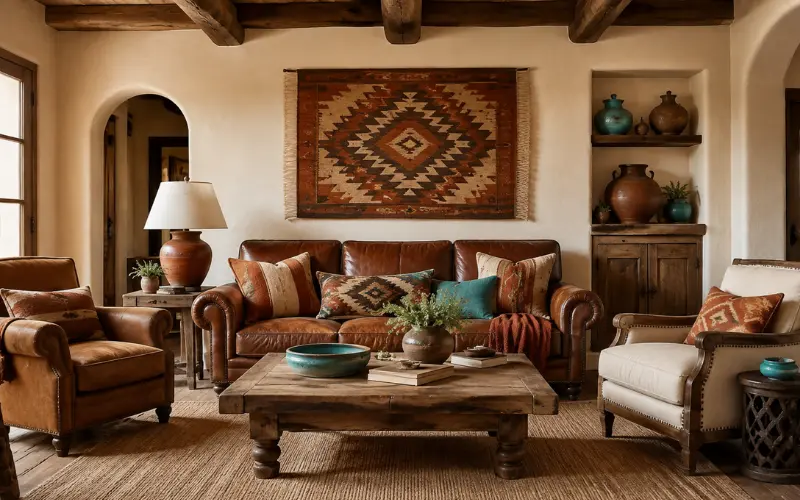
Most guides tell you to “use earth tones,” which is true but not useful on its own. Here is the breakdown that actually holds a room together:
- Base layer (60% of the room): warm browns from leather and wood, plus a soft cream or oatmeal on walls
- Secondary layer (30%): rust, terracotta, or burnt orange, usually through textiles
- Accent layer (10%): turquoise or deep teal, used sparingly in pottery, pillows, or a single statement piece
Turquoise is the color people overuse the most. One or two pieces reads as authentic southwestern influence. Five pieces reads as a themed hotel lobby. Keep it to a single strong accent per room and let the browns and rust do the heavy lifting.
Living Room: Where the Style Has to Work the Hardest
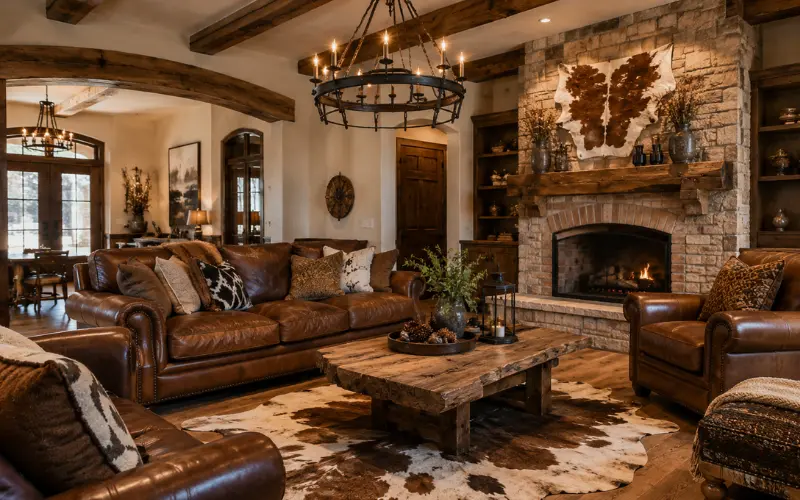
The living room is the room your guests judge first, and it is also the easiest to overdo. A Western Style Home Decor living room works when the furniture carries the weight and the accessories fill in the gaps, not the other way around.
Start with a leather sofa in a saddle brown or deep cognac tone. If leather is out of budget, a heavy woven fabric in a solid earth tone does the job almost as well and shows wear less obviously. Pair it with a reclaimed wood or live-edge coffee table, since the raw grain does more visual work than any decorative object you could place on top of it.
For rustic western living room ideas that hold up over years rather than months, prioritize:
- One quality cowhide rug or wall piece instead of several small ones
- A brick or stone fireplace surround if your layout allows it, since it anchors the whole room without needing extra decor
- Wrought iron light fixtures instead of brushed nickel or chrome, which read as too clean-lined for the aesthetic
- Wool or leather throw pillows, capped at two patterns per sofa so the room does not feel cluttered
Bedroom, Kitchen, and Bath: Where Restraint Matters Most
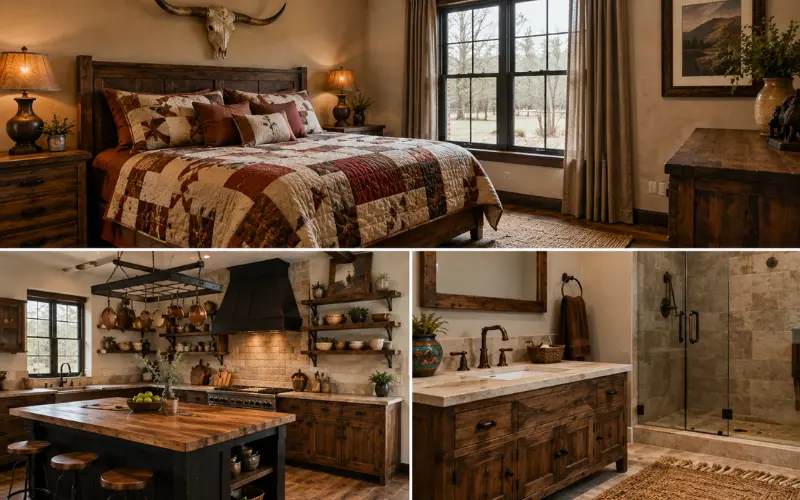
The bedroom is where a lot of homeowners go too far, layering print on print until the room feels like a saddle shop. A better approach: pick one patterned element, usually the bedding, and keep the walls, curtains, and rug solid or lightly textured. A quilted patchwork comforter in rust and cream against plain oatmeal walls does more than five smaller accent pieces combined.
Kitchens lend themselves to western style through materials rather than decor. Open wood shelving, wrought iron pot racks, and a butcher block island do the visual work that a “themed” kitchen usually tries to fake with signs and figurines. If you want a lighter touch, handmade wood accent pieces on open shelving carry the look without committing your whole kitchen to a single aesthetic.
Bathrooms are the easiest room to get wrong because moisture limits your material choices. Skip real cowhide and raw wood near the tub. Instead, lean on copper or bronze fixtures, a woven jute bath mat, and a single piece of turquoise-accented pottery on the counter.
Rustic vs. Modern Western: Choosing Your Version
Not everyone wants a full ranch-house look, and that is fine. Modern western decor keeps the same material story (leather, wood, iron) but trims the cultural motifs down to almost nothing and cleans up the lines. Here is how the two compare in practice:
| Element | Traditional/Rustic Western | Modern Western |
|---|---|---|
| Furniture lines | Carved, heavy, distressed edges | Clean lines, minimal carving |
| Motifs | Longhorns, horseshoes, saddle details | Little to none; material tells the story |
| Wood tone | Dark, reclaimed, visible knots | Lighter or matte-sealed, less rustic grain |
| Metal accents | Wrought iron, aged bronze | Matte black or brass, simplified shapes |
| Best fit for | Ranch-style or larger homes | Apartments, smaller or modern-build homes |
If your home already has clean architectural lines, going full traditional western will fight the bones of the house. Modern Western Style Home Decor almost always looks more intentional in that setting.
A Few Mistakes I See Constantly
The most common mistake is buying decor before buying furniture. People order wall art, horseshoes, and figurines first, then try to build a room around them. Furniture and materials should come first every time. Decor fills gaps; it does not create a style on its own.
The second mistake is mixing too many wood tones. Reclaimed barnwood, honey oak, and dark walnut in the same room fight each other. Pick one dominant wood tone and let any secondary wood pieces stay close in shade.
The third is treating vintage western decor pieces as disposable. Actual antique tack, old branding irons, worn leather trunks, and hand-tooled saddles carry a texture and history that no reproduction piece matches. A single authentic vintage find often does more for a room than ten new “distressed” items from a big box store.
Hosting: Western Decor for a Party Without Going Full Theme Park
If you are setting up for a Western Style Home Decor party rather than a permanent room redesign, the rules loosen a bit, but the same discipline still helps. Use your existing furniture and lighting as the base, then bring in temporary layers: burlap table runners, mason jar centerpieces with wildflowers, and rope or twine accents on chairs. Save the costume-level pieces (inflatable cacti, plastic sheriff badges) for kids’ spaces only. For adult gatherings, string lights, leather coasters, and a genuinely good playlist do more than any prop.
Where to Shop and What to Prioritize
When you are ready to buy, resist filling a cart in one sitting. Start with the one or two anchor pieces (sofa, bed frame, or dining table) and build outward. Specialty western home decor stores are worth the higher price on furniture, since the leather and wood quality holds up. For smaller decor and textiles, general home stores and marketplaces are usually fine, since the risk of a mediocre pillow cover is much lower than a mediocre sofa. If you are still narrowing down your overall aesthetic before committing to western specifically, it is worth browsing a general home decor stores guide to compare price points across styles before you specialize your budget.
Frequently Asked Questions
What is the difference between Western Style Home Decor and rustic home decor?
Rustic refers to raw, textured materials in general. Western is a specific style within rustic decor that adds ranch and frontier culture on top, through motifs like horseshoes, cowhide, and southwestern pattern work.
Is Western Style Home Decor still trending in 2026?
Yes, particularly modern western, which pairs the same leather and wood materials with cleaner lines and fewer cultural motifs, making it easier to blend into contemporary homes.
How do I add Western Style Home Decor without a full room renovation?
Start with textiles and lighting. A leather throw, a woven southwestern blanket, and a single wrought iron fixture change the feel of a room without touching furniture or walls.
What colors pair best with Western Style Home Decor?
Warm brown and cream as your base, rust or terracotta as a secondary color, and a small amount of turquoise as an accent. Avoid using more than one or two turquoise pieces per room.
Can western style work in a small apartment?
Yes, if you lean modern western. Skip oversized carved furniture and heavy antler chandeliers, and focus on leather, wood tone, and one or two motif pieces instead of filling every surface.
Is real cowhide worth the cost compared to faux?
Real cowhide holds its texture and color longer and tends to look better as it ages. Faux is a reasonable choice for smaller pieces like pillows, but for a rug or large wall piece, real hide usually looks better after a year or two.
How much should I budget for a western living room refresh?
A meaningful refresh (sofa, rug, lighting, and a few accent pieces) typically runs from a few hundred dollars if you mix in secondhand and vintage finds, up to several thousand for new leather furniture and custom pieces.
What is a good starter piece if I am new to this style?
A single reclaimed wood coffee table or a quality cowhide rug. Both work as a foundation piece you can build the rest of the room around, and neither commits you to a full theme if you decide to adjust the style later.

