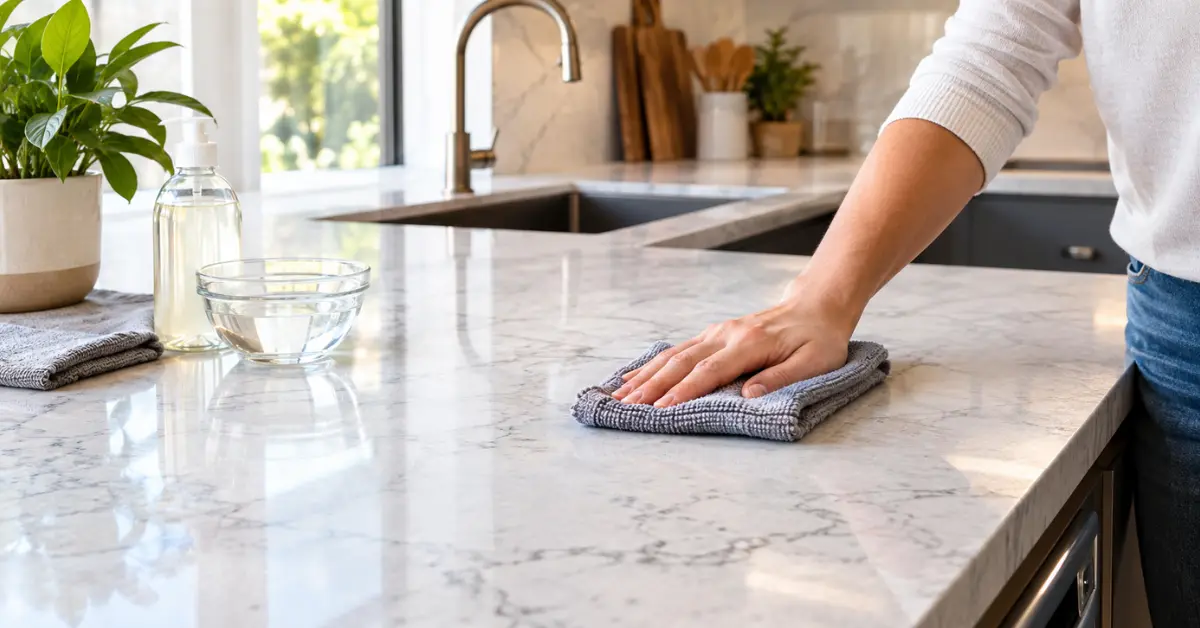
The safest way How to Clean Stone Bench Tops is a soft microfibre cloth, warm water and a few drops of pH-neutral dish soap, wiped in gentle circles and dried off straight after. Skip vinegar, lemon, bleach and anything abrasive, since these strip sealants and etch the surface permanently. Beyond that daily habit, how you care for the bench depends heavily on the stone itself and, just as importantly, on its finish.
Expert note: Most of the stone damage I come across in Australian kitchens has nothing to do with heavy use. It comes from a well-meaning wipe-down with whatever spray bottle is sitting under the sink. Bathroom cleaner, glass cleaner and citrus-based sprays are the three most common culprits, and none of them belong anywhere near stone.
Why the Finish Matters Just as Much as the Stone
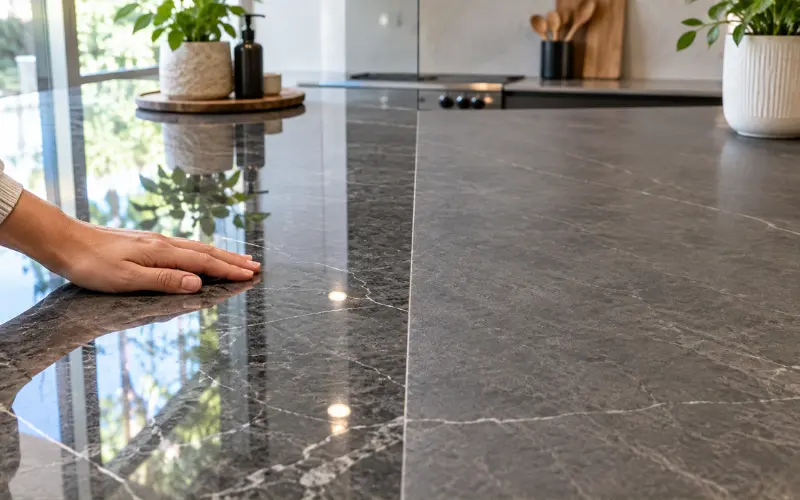
Most guides talk about marble versus granite versus quartz and stop there. What they skip is the finish, and it changes your cleaning approach more than people realise.
A polished finish has a glossy, reflective surface. It shows streaks, soap film and fine scratches far more obviously than a matte one, so you need a lighter hand and a proper dry-buff every time.
A honed finish has a flat, matte look. It hides minor marks better but is often more porous at the surface, which means spills soak in faster and staining shows up sooner rather than later.
If you don’t know which finish you have, run a fingertip across the surface in low light. Polished stone reflects light sharply; honed stone diffuses it. This one detail explains why two identical granite benches in different kitchens can need noticeably different care.
Daily Cleaning That Actually Protects the Surface
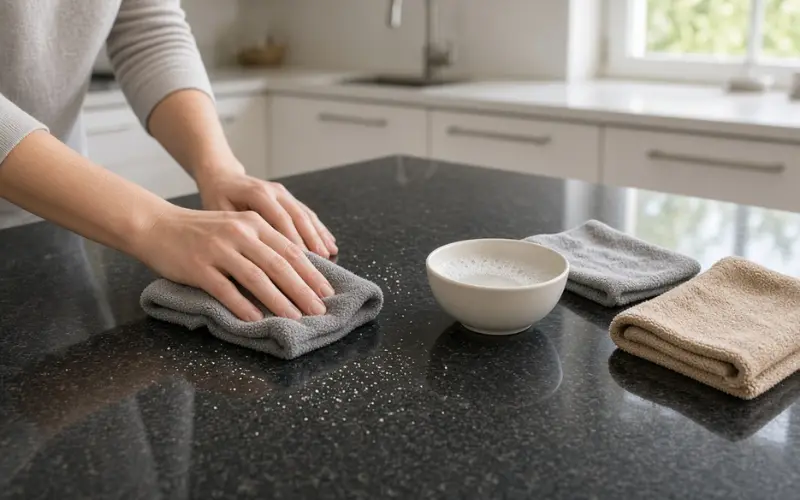
- Clear crumbs and grit first. A dry microfibre cloth or soft brush removes debris before it gets dragged across the surface like fine sandpaper.
- Wipe with warm, lightly soapy water. Two or three drops of mild, pH-neutral dish soap in warm water is enough. More soap just means more residue to rinse off later.
- Rinse with a separate clean cloth. Leftover suds are the main reason a bench top looks cloudy the next morning.
- Buff dry with a fresh microfibre towel. This single step prevents most water spotting, and it matters even more on dark charcoal or black stone where marks show up instantly.
Keep a dedicated cloth for the bench top. A dishcloth that has already wiped greasy plates transfers oil straight onto the stone and leaves a dull, hazy film that’s easy to mistake for a lost polish.
Matching the Cleaner to the Stone
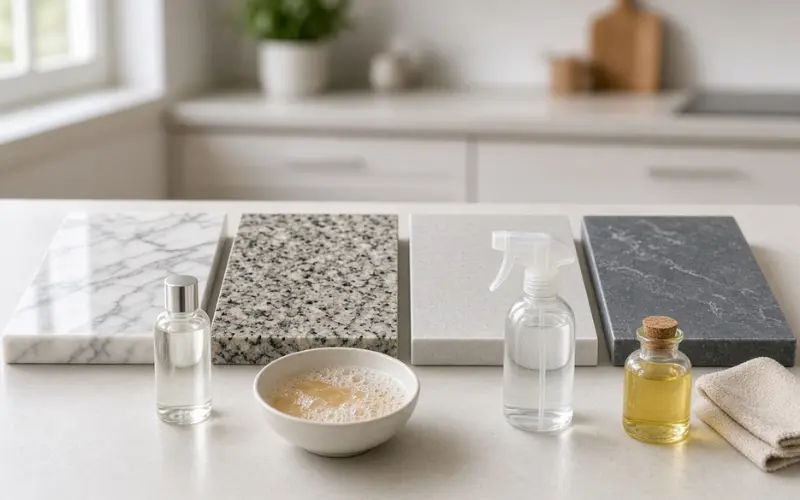
| Stone Type | Finish Sensitivity | Sealing Needed? | Safest Cleaner |
|---|---|---|---|
| Marble & Limestone | Etches easily on both finishes; polished shows it fastest | Yes, every 6–12 months | pH-neutral marble cleaner |
| Granite | Honed absorbs oil faster than polished | Yes, every 1–2 years | Warm water and mild soap |
| Engineered Quartz | Non-porous, but polished resin dulls under harsh chemicals | No | Mild dish soap or quartz-specific spray |
| Soapstone | Develops patina over time, scratches show on both finishes | No, but benefits from oiling | Warm soapy water, then mineral oil |
If your bench pairs stone with a kitchen peninsula layout, the extra exposed edges mean more surfaces catching spills and knocks, so build the wipe-down into your daily routine rather than saving it for a weekly clean.
The Australian Engineered Stone Rule Most Guides Miss
Here’s something almost none of the competing articles mention properly: Australia banned the manufacture, supply and installation of engineered stone containing crystalline silica from 1 July 2024, due to the silicosis risk during cutting and fabrication. This ban applies to new products, not existing benchtops. If your quartz bench was installed before the ban, it’s perfectly safe to keep using and clean as normal.
What changes is repair work. Any cutting, grinding, drilling or polishing of an older engineered stone bench top should only be done by a licensed professional using proper dust controls. Never attempt a DIY chip repair or edge modification on engineered stone yourself, even if it looks like a five-minute job.
Treating Stains Without Making Them Worse
Oil and grease marks sink into porous stone rather than sitting on top, so wiping doesn’t fully remove them. Mix bicarbonate of soda with water into a thick paste, spread it over the mark about 5mm deep, cover with plastic cling wrap taped at the edges, and leave for 24 hours. The paste draws the oil back out of the stone. Wipe away with warm water and dry.
Wine, coffee and turmeric need speed more than strength. Blot immediately with paper towel rather than wiping, which just spreads the colour further. Clean the area with warm soapy water straight after, and if a shadow remains on marble or limestone, resist the urge to scrub harder. Aggressive scrubbing on an etched or stained spot often widens the mark rather than removing it.
Hard water spots near the tap respond well to a weak mix of one part isopropyl alcohol to eight parts water, wiped on with a microfibre cloth and dried immediately. This cuts through mineral film without the acid risk that comes with vinegar.
Checking Whether Your Bench Needs Resealing
Natural stone loses its water resistance gradually, and most homeowners only notice once a stain has already set. Test it yourself: place a few drops of water on a clean, dry section and leave it for 15 minutes. If the water still beads up, the seal is doing its job. If it soaks in and darkens the stone, book a resealing before your next dinner party rather than after.
Preventing the Damage Before It Happens
- Always use a trivet under hot pans, even on stone marketed as heat resistant. Sudden temperature swings can cause hairline stress cracks, particularly near sink cut-outs and slab joins.
- Cut on a board, not the bench. Even granite will show fine scratches over years of direct knife contact, and it dulls your blades faster too.
- Wipe around joins and the sink edge weekly. Food particles and standing water collect in these spots long before they show up in the middle of the slab.
- If your kitchen features a white kitchen with a grey stone benchtop, keep the dry-buff step non-negotiable, since light backgrounds show soap film and water spots far more readily than darker schemes.
For deeper, material-specific routines, our separate guides on cleaning granite bench tops and cleaning marble benchtops go further into stain treatment for each stone. If you’re after everyday habits across all kitchen surfaces, our broader cleaning kitchen benchtops guide is worth a read too. And if soapstone is your bench of choice, our dedicated soapstone benchtop guide covers the oiling schedule that keeps its patina looking rich rather than patchy.
FAQ’s on How to Clean Stone Bench Tops
What is the best way How to Clean Stone Bench Tops?
Warm water, a few drops of pH-neutral dish soap and a soft microfibre cloth, followed by a full dry-buff. This works across marble, granite and engineered quartz for everyday spills.
What is the best thing to How to Clean Stone Bench Tops countertops?
A dedicated pH-neutral stone cleaner is the safest bet for natural stone. For engineered surfaces, plain mild dish soap in warm water does the job just as well.
How do you make stone How to Clean Stone Bench Tops shiny again?
Clean off soap residue with a weak isopropyl alcohol solution, then dry thoroughly with a clean cloth. If shine loss is due to etching or fine scratches rather than film, that’s a job for a stone restoration professional, not a stronger cleaner.
How do I clean a stone table top?
The same routine as a kitchen bench: warm soapy water, a soft cloth and a full dry-off. Table tops collect more glass rings, so coasters make a real difference.
Can I use vinegar or bleach on stone bench tops?
No. Vinegar’s acidity etches calcium-based stone like marble instantly, and bleach breaks down the resin binders in engineered stone, leaving patchy discolouration over time.
Why does my stone bench top look streaky after cleaning?
Usually too much detergent, a greasy cloth, or letting soapy water air-dry instead of buffing it off. Rinse with a separate cloth and dry immediately to fix it.
How often should stone bench tops be resealed?
Marble and limestone typically need resealing every 6 to 12 months, granite every 1 to 2 years, and engineered quartz never, since it’s non-porous.
Is it safe to keep using an older engineered stone benchtop?
Yes. Australia’s 2024 ban covers new manufacturing and installation, not existing benchtops. Routine cleaning is completely fine; just leave any cutting or repair work to a licensed professional.