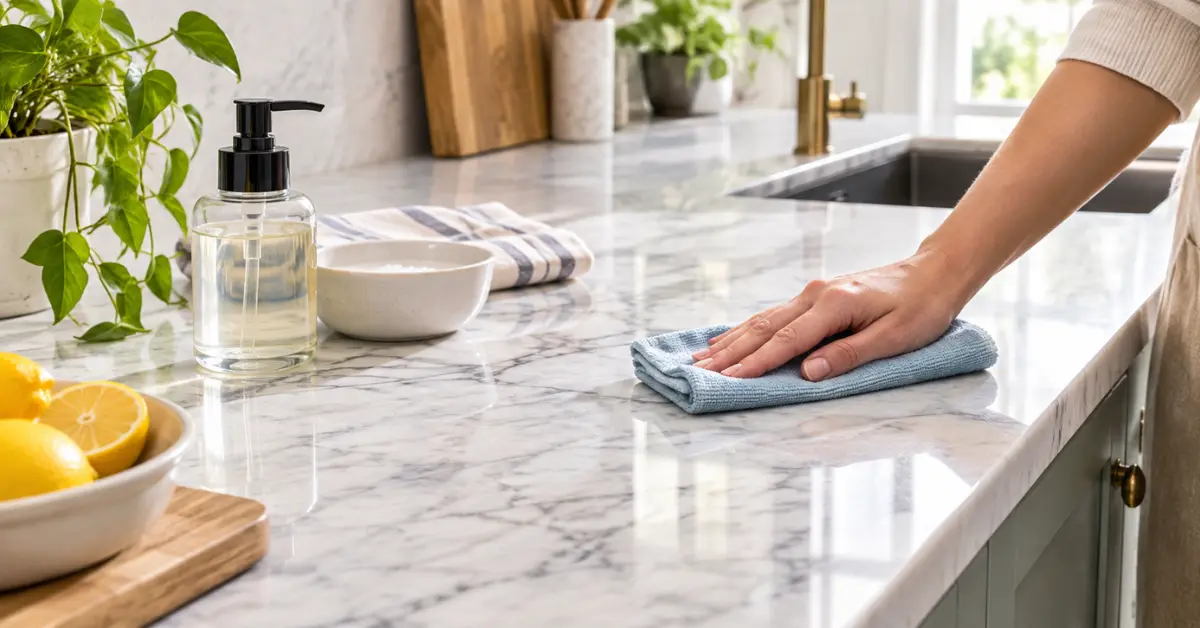
Warm water, a soft microfibre cloth and a few drops of pH-neutral dish soap is all a Cleaning Marble Benchtops needs for everyday cleaning. Rinse the soap off with a second damp cloth and dry the surface straight away. Skip vinegar, lemon juice, bleach and anything abrasive, because marble is calcium-based and reacts to acid the moment it touches the surface.
Most guides stop there and repeat the same warning about vinegar for the next thousand words. This one goes further, into the parts that actually cause callouts to stonemasons: how to tell marble from a look-alike engineered stone before you clean it with the wrong product, what genuinely happens chemically when a lemon wedge sits on the bench overnight, and why two identical benchtops in the same street can age completely differently depending on one habit most people never think about.
Check What You Actually Have Before You Clean It
A surprising number of “marble” benchtops in newer Australian builds are actually engineered stone, porcelain, or a marble-look laminate. This matters because the Cleaning Marble Benchtops rules are not identical, and treating engineered stone with marble caution (or vice versa) either wastes effort or invites damage.
A quick way to check: marble feels cool and slightly porous, and a magnified look at the surface shows natural veining that runs unevenly, sometimes disappearing and reappearing. Engineered stone has a more uniform, repeating pattern because it is manufactured. If you’re not sure, ask whoever installed the benchtop, or check the paperwork from the fabricator. Cleaning the wrong material with marble-only precautions isn’t harmful, but cleaning true marble with a product rated only for engineered stone can leave dull patches within weeks.
What’s Really Happening When Marble Etches
Marble is mostly calcium carbonate. Acids, even mild ones like citrus juice or a wine splash, dissolve a microscopic layer of that mineral on contact. The reaction starts within seconds, not minutes, which is why “I wiped it up quickly” doesn’t always prevent a mark.
The result is an etch: a dull, slightly rough patch where the polish has been chemically stripped, not a stain sitting on top of the stone. This is the detail most cleaning guides blur together. Cleaning removes dirt. It does not undo an etch, because the etch is a change to the surface itself, not something resting on it.
From experience: the etches I hear about most often in Australian kitchens don’t come from cooking accidents. They come from bathroom-style habits carried into the kitchen, like leaving a spray-and-wipe glass cleaner on the bench “just for a minute” while doing something else. That minute is enough.
The Daily Routine That Actually Protects the Surface
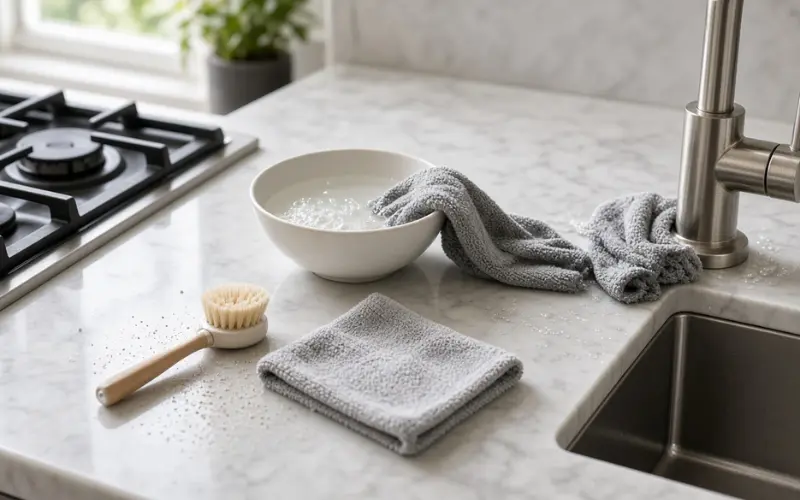
- Clear loose grit first. A dry microfibre cloth or soft brush lifts crumbs, sugar and sand before you introduce water. Wiping wet over loose grit is one of the most common causes of fine surface scratching, and it’s entirely avoidable.
- Mix a mild solution. A few drops of pH-neutral dish soap in about 500 mL of warm water is plenty. More soap doesn’t mean cleaner marble, it means more residue left behind.
- Wipe with a damp, not wet, cloth. Focus on the areas around the tap, cooktop and sink edge, where grease and mineral deposits build up fastest.
- Rinse with a second cloth and clean water. This step gets skipped constantly. Leftover detergent film is what makes marble look permanently “cloudy” even after cleaning.
- Dry it completely. Australian tap water carries enough dissolved minerals in most areas to leave a chalky film if left to air-dry, particularly around the tap base.
Spills: React to What the Liquid Actually Is, Not Just That It Spilled
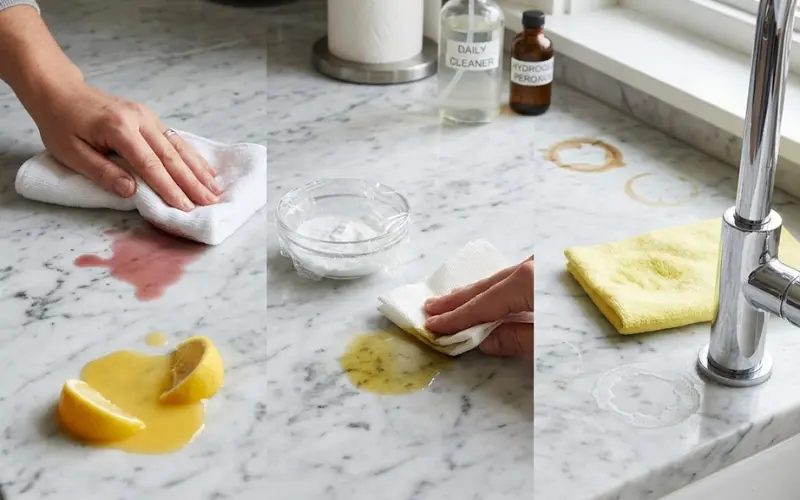
Blotting beats wiping every time, because wiping drags the liquid sideways into stone that was otherwise untouched.
- Acidic spills (citrus, wine, tomato, most soft drinks): blot immediately, then run the daily cleaning steps above. Speed reduces the chance of etching but doesn’t guarantee it, since the reaction can start before you’ve even reached for a cloth.
- Oil and cooking fat: press with paper towel to lift the excess first. Oil that’s already sunk in looks like a dark shadow rather than a wet patch, and a mild soap solution alone may not shift it.
- Coffee, tea, turmeric and curry pigments: lift what you can, clean gently, then let it dry fully before judging whether a mark remains. Marble often looks darker while damp and lighter once dry, so waiting matters more than most people expect.
- Hard water rings around the tap: never treat these with a bathroom limescale remover. Those products are acidic by design, which is exactly the chemistry marble can’t tolerate.
For oil-based marks that have already set, a baking soda paste left under plastic wrap overnight can draw the oil back out. For organic pigment stains on pale stone, a very dilute hydrogen peroxide solution left under cover for several hours can lift colour without the abrasion of scrubbing. Neither of these is a daily-use product, and both should be tested on a hidden corner of the benchtop first.
Sealing Buys You Time, It Doesn’t Change the Chemistry
A penetrating sealer slows how fast liquid soaks into the stone, which gives you a longer window to wipe up a spill before it stains. It does nothing to stop an acid etching the surface, because etching is a surface reaction, not an absorption problem.
Run a simple check every few months: place a few drops of water on a clean, dry section and watch it for 10 to 15 minutes. If it beads up, the sealer’s doing its job. If it darkens the stone or soaks in quickly, it’s time to reseal. Most kitchen benchtops in Australian homes need resealing somewhere between 12 and 18 months, though heavy daily use around an island bench can shorten that.
Safe vs Unsafe: A Quick Reference
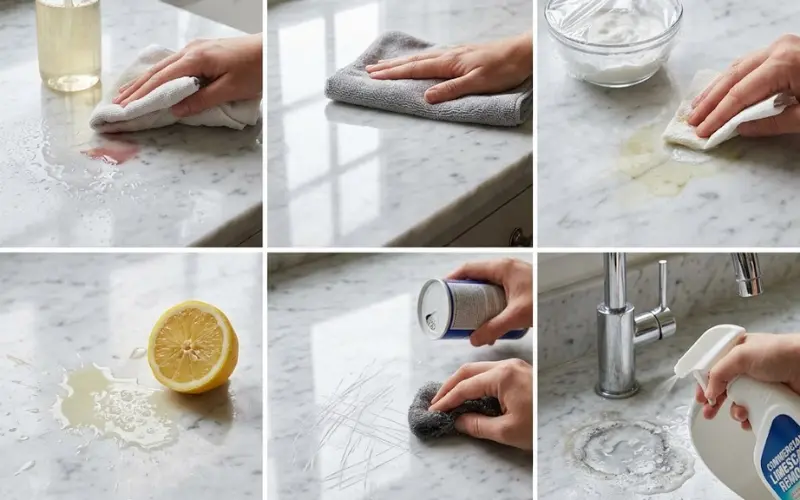
| Product or Method | Safe on Marble | What Happens If You Use It Anyway |
|---|---|---|
| Warm water + pH-neutral soap | Yes | Nothing, this is the baseline routine |
| Microfibre cloth, dry buffing | Yes | Prevents water spotting and film |
| Baking soda poultice (oil stains only) | Yes, occasional use | Fine when left as a paste, not scrubbed |
| Vinegar or lemon juice | No | Etches within seconds of contact |
| Bleach or ammonia | No | Breaks down sealer, leaves surface unprotected |
| Abrasive powders or steel wool | No | Scratches the polished finish permanently |
| Bathroom limescale remover | No | Same acidic reaction as vinegar |
Finish Type Changes What You’ll Notice First
Polished marble reflects light, so an etch shows up fast as a dull patch that breaks the shine. Honed marble has a matte finish already, which can hide light etching for longer, but it still absorbs oil and coloured liquids just as readily. Neither finish is more resistant to acid than the other. The difference is purely in how visible the damage is, not whether it happens.
Habits That Do More Than Any Product
- Keep a chopping board between acidic food and the benchtop, not just for hygiene but to stop juice contact entirely.
- Use coasters under wine glasses and coffee cups, especially in a household where drinks sit out during meal prep.
- Trivets under anything straight off the stove. Marble can develop fine stress cracks from sudden heat, separate from any chemical damage.
- Keep a dedicated cloth for the benchtop. A cloth that’s touched the floor or a stainless steel splashback can carry grit that scratches polished stone.
If your kitchen pairs marble with other surfaces, our guide to cleaning kitchen benchtops covers the broader routine, and if you’re weighing marble against a more forgiving option, see how to clean granite bench tops or the maintenance profile in our soapstone benchtop overview. For kitchens built around a white kitchen with a grey stone benchtop, the same acid-avoidance rules apply regardless of the stone’s colour.
When to Stop and Call a Professional
Home Cleaning Marble Benchtops has limits. Get a stone restorer involved if you see:
- A dull patch that doesn’t shift after normal cleaning, since that’s usually an etch, not dirt
- Scratches you can catch with a fingernail
- A dark stain that keeps spreading days after the spill
- Cracking or lifting near a seam, sink cutout or edge
Trying several online remedies on a damaged area first often makes the eventual professional job more expensive, particularly if abrasive “fixes” have already scratched the surface.
FAQ on Cleaning Marble Benchtops
What is the best way to Cleaning Marble Benchtops?
Warm water, a soft microfibre cloth and a few drops of pH-neutral dish soap, rinsed off and dried immediately. That routine handles the vast majority of everyday marks safely.
What is the best thing to Cleaning Marble Benchtops countertops with?
A dedicated pH-neutral stone cleaner works well if you want a ready-made product, but diluted mild dish soap is just as effective for routine cleaning and far cheaper.
What should you not Cleaning Marble Benchtops with?
Vinegar, lemon juice, bleach, ammonia, abrasive powders and bathroom limescale removers. All of them either etch the surface or strip the sealer.
What is the best Cleaning Marble Benchtops?
Anything labelled pH-neutral and safe for natural stone. If a product doesn’t state this on the label, don’t assume a “multi-purpose” or “kitchen-safe” claim covers marble.
How can I tell if my benchtop is real marble and not engineered stone?
Real marble feels cool to the touch and shows uneven, natural veining. Engineered stone tends to have a more repetitive, manufactured pattern. Check installation paperwork if you’re still unsure.
Does sealing stop marble from etching?
No. Sealing slows how fast liquid soaks into the stone, which helps prevent staining, but it doesn’t change how the stone reacts to acid on contact.
Can I use baking soda on marble every day?
Not as a routine cleaner. It’s useful as an occasional poultice for oil stains left overnight under plastic wrap, but daily use as an abrasive can dull the polish over time.
How often should Cleaning Marble Benchtops be resealed in Australia?
Most homes need resealing every 12 to 18 months, though heavy daily use can shorten that. A simple water-drop test every few months tells you when it’s due.