
A white kitchen grey stone benchtop is one of the most requested kitchen combinations for a reason. It looks clean, it photographs beautifully, and it never really goes out of style. But choosing the right shade of grey, the right stone type, and the right finish takes more thought than most articles let on.
This guide walks you through everything you need to know before you commit to a white kitchen grey stone benchtop: how to pick a shade that suits your cabinets, which stone materials perform best, what it actually costs, and how to avoid the mistakes homeowners make most often.
Why a White Kitchen Grey Stone Benchtop Works So Well
White cabinets reflect light and make a room feel larger. Grey stone adds depth and grounds the space so it doesn’t feel sterile. Together, they create a balance that pure white or pure dark kitchens struggle to achieve.
There’s also a practical reason this pairing has stayed popular for over a decade. Grey hides everyday marks like water spots, flour dust, and light scratches far better than pure white or black surfaces do. For a busy family kitchen, that matters just as much as how it looks in photos.
A white kitchen grey stone benchtop also gives you flexibility. You can swap out hardware, lighting, or a rug and completely change the mood of the room without touching the two biggest surfaces in the space.
Choosing the Right Shade of Grey
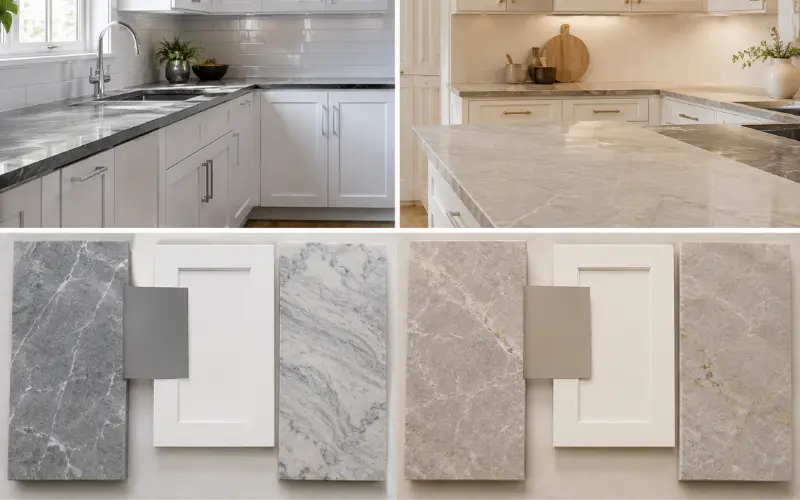
Not all grey stone reads the same way, and this is where most homeowners get tripped up. Undertones matter more than the general color category.
Cool white cabinets (with blue or grey undertones) pair best with:
- Charcoal or slate grey stone
- Cool-toned grey with blue-grey veining
- High-contrast pairings for a modern, crisp look
Warm white cabinets (with cream or yellow undertones) pair best with:
- Soft dove grey or greige stone
- Grey with warm gold or beige veining
- Lower-contrast pairings for a softer, more traditional feel
Before you order a slab, hold a sample against your cabinet doors in the actual room, not under showroom lighting. Natural daylight, warm LED bulbs, and cool LED bulbs can each make the same stone look like a different color. A grey that looks perfectly neutral in the store can shift noticeably blue or green once it’s installed under your kitchen lights.
Best Stone Materials for a Grey Benchtop
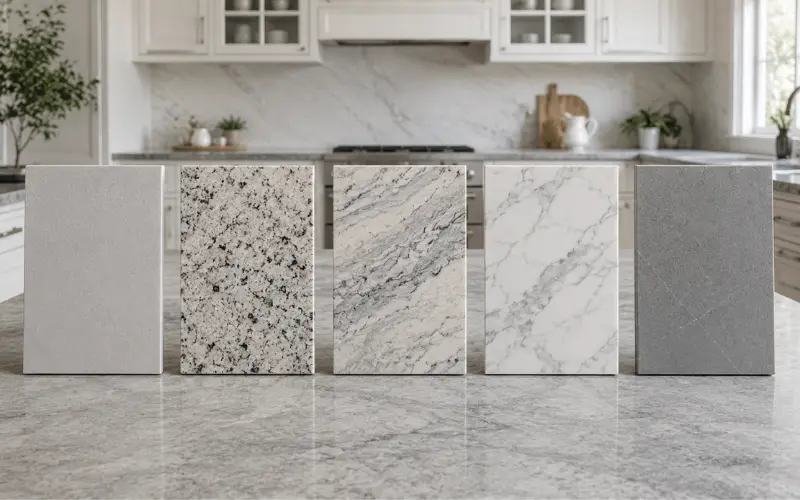
Not every grey stone performs the same way in daily use, and the material you choose will define how your white kitchen grey stone benchtop holds up over time. Here’s how the main options compare.
- Quartz (engineered stone) Quartz is the most popular choice for good reason. It’s non-porous, so it resists stains without sealing, and the color is consistent across the whole slab. It handles daily wear well, though it can be damaged by direct high heat from pots and pans.
- Granite Natural granite offers unique, one-of-a-kind veining that no engineered material can fully replicate. It’s extremely heat resistant and durable, but it’s porous and needs sealing once a year to stay stain-resistant.
- Quartzite Often confused with quartz, quartzite is a natural stone that looks similar to marble but is significantly harder. It handles heat well and offers a premium, organic look, though it typically costs more and still needs periodic sealing.
- Marble Marble delivers the most dramatic veining and a timeless, high-end look. It’s soft and porous compared to the other options here, so it scratches and stains more easily. It suits homeowners who don’t mind a little natural patina developing over time.
- Porcelain Porcelain slabs are a newer option that resists heat, scratches, and UV fading better than almost any other material. It’s a strong choice for kitchens with large windows or for anyone who wants a low-maintenance, modern finish.
| Material | Maintenance | Heat resistance | Typical look |
|---|---|---|---|
| Quartz | Low, no sealing | Good, avoid direct heat | Consistent pattern |
| Granite | Annual sealing | Excellent | Natural, varied |
| Quartzite | Occasional sealing | Excellent | Marble-like |
| Marble | Regular sealing, careful use | Good | Dramatic veining |
| Porcelain | Very low | Excellent | Sleek, matte |
How Much Does a White Kitchen Grey Stone Benchtop Cost?
Pricing depends on material, slab size, and edge detail, but as a general guide in the US market:
- Quartz: roughly $50 to $120 per square foot installed
- Granite: roughly $40 to $100 per square foot installed
- Quartzite: roughly $70 to $150 per square foot installed
- Marble: roughly $60 to $140 per square foot installed
- Porcelain: roughly $60 to $130 per square foot installed
Waterfall edges, large islands, and complex cutouts for sinks or cooktops all add to the final quote. Get at least three quotes and ask each fabricator to break down material cost, fabrication, and installation separately so you can compare fairly.
Edge Profiles and Finishes Worth Considering
The finish you choose changes how the grey reads in the room.
- Polished: Glossy and reflective, it makes grey tones look richer and shows veining clearly.
- Honed: A matte finish that softens the grey and hides fingerprints and water marks better than polished stone.
- Leathered: A textured finish that adds subtle depth and is very forgiving of smudges.
For edges, a simple eased or bullnose profile keeps the look clean and modern, while a bevelled or ogee edge suits a more traditional white kitchen grey stone benchtop pairing.
Pairing Tips: Backsplash, Flooring, and Hardware
- Backsplash: A plain white or subway tile backsplash lets the benchtop stay the visual focus. If you want more texture, choose a backsplash with the same grey undertone as your stone.
- Flooring: Light oak flooring warms up a cool grey and white kitchen, while grey-toned tile or polished concrete reinforces a more contemporary look.
- Hardware: Matte black or brushed brass hardware both work well, but brushed brass tends to soften a cool grey palette, while matte black sharpens the contrast in a warm grey kitchen.
- Lighting: Warm white bulbs (around 2700K to 3000K) keep grey stone looking inviting, while cooler bulbs (4000K and above) push it toward a more clinical, blue-grey tone.
Maintenance and Care
Keeping a white kitchen grey stone benchtop looking new is easier than most people expect, as long as you follow a few habits.
- Wipe up spills, especially wine, coffee, and citrus, as soon as they happen.
- Use a cutting board. Even the hardest stones can be scratched by knives over time.
- Avoid abrasive scouring pads or bleach-based cleaners, which can dull certain finishes.
- For porous stone like granite, marble, or quartzite, reseal on the schedule your fabricator recommends, usually once a year.
- Use trivets under hot pans, even on heat-resistant materials, to protect the sealant and finish.
Common Mistakes to Avoid
- Choosing the stone before the cabinets are confirmed. Undertones can clash if you pick materials out of order.
- Skipping the in-room sample test. Showroom lighting rarely matches your kitchen’s actual light.
- Underestimating slab variation. Natural stone slabs vary piece to piece, so always view the actual slab that will be cut for your project, not just a catalogue photo.
- Forgetting maintenance requirements. A stunning marble benchtop loses its shine fast if nobody etch-proofs their habits around acidic foods.
- Matching everything too closely. A kitchen where the walls, floor, and stone are all the same grey tone can feel flat. Contrast is what makes the pairing work.
Does a Grey Stone Benchtop Add Resale Value?
Real estate agents consistently point to white kitchens as one of the safest, most broadly appealing renovation choices, and grey stone benchtops extend that appeal by adding a premium, updated feel without polarizing buyers the way bold colors can. Because the combination reads as timeless rather than trendy, it tends to age well in photos and in person, which matters if you plan to sell within the next several years.
Frequently Asked Questions
Is a white kitchen grey stone benchtop still trending in 2026?
Yes. It has remained one of the most searched and installed kitchen combinations for years because it suits nearly every architectural style, from farmhouse to modern.
What is the most durable stone for a grey benchtop?
Quartz and porcelain are generally the most durable for daily kitchen use because they resist stains, scratches, and heat with minimal maintenance.
Should I choose a light grey or dark grey benchtop with white cabinets?
Light grey creates a soft, airy feel and works well in smaller kitchens, while dark grey adds drama and contrast and suits larger, well-lit spaces.
Does grey stone show fingerprints and smudges?
Polished grey stone shows smudges more than a honed or leathered finish. If you have a busy household, a matte or honed finish will need less frequent wiping.
Can I install a white kitchen grey stone benchtop myself?
Cutting and installing stone slabs requires specialized tools and experience. It’s best left to a professional fabricator to avoid cracked slabs or an uneven fit.
How do I know if my white cabinets have warm or cool undertones?
Compare your cabinet sample to a true white sheet of paper in daylight. If it looks slightly yellow or cream, it’s warm. If it looks slightly blue or grey, it’s cool.
Will a grey benchtop clash with wood flooring?
No, most grey tones pair well with wood flooring. Cooler greys work best with light, pale wood, while warmer greys suit medium and honey-toned wood.
How often should I reseal a natural stone grey benchtop?
Most granite, marble, and quartzite benchtops need resealing once a year, though this can vary based on how porous the specific stone is and how heavily the kitchen is used.
Final Thoughts
A white kitchen grey stone benchtop is more than a passing trend. It’s a pairing built on genuine design logic: light cabinets that open up the room and grey stone that grounds it and hides everyday wear. The key to getting it right isn’t just picking a color you like in a photo. It’s matching undertones correctly, choosing a stone material that suits your lifestyle, and understanding the maintenance you’re signing up for.
Take the time to test samples in your own kitchen light, compare at least a few stone types side by side, and you’ll end up with a white kitchen grey stone benchtop that looks as good in five years as it does on installation day.

