
Your driveway does more work than almost any other part of your property, and it rarely gets the credit. It greets every guest, holds up your car every single day, and shapes the first impression of your home before anyone even reaches the front door. Good driveway design turns that hardworking surface into a real asset, one that adds curb appeal, boosts resale value, and actually functions well for years to come.
This guide walks you through everything that matters: materials, layout, patterns, drainage, lighting, and the small details most articles skip entirely. By the end, you will know exactly how to plan a driveway that looks great and holds up under real-world use.
Why Driveway Design Matters More Than You Think
Many homeowners treat their driveway as an afterthought, something to pave and forget. That is a missed opportunity. A thoughtful driveway design can:
- Increase your home’s perceived value the moment a buyer pulls up
- Improve drainage and reduce erosion around your foundation
- Extend the lifespan of your vehicle’s tires and suspension
- Reduce ice and puddle hazards in winter and rainy months
- Tie your entire front yard landscape together visually
Real estate agents often say curb appeal sells homes before the front door ever opens, and the driveway is usually the largest hardscaped surface a visitor sees first. Investing a little extra thought here pays off in ways that go beyond looks.
Start With a Plan, Not a Material
Most guides jump straight into paver patterns or pea gravel. Before any of that, a strong plan starts with three practical questions:
- How will the space actually be used? A single car household needs different width and turning space than a family with two SUVs and a boat trailer.
- What does your local climate demand? Freeze-thaw cycles, heavy rain, or intense heat all affect which materials will last.
- What is your home’s architectural style? A modern glass-and-steel house calls for a different approach than a cottage-style bungalow.
Sketch your driveway’s footprint on paper, or use a free garden design app, before you commit to any material. This single step prevents the most common and expensive mistake in driveway design: choosing a beautiful material that does not fit the space or the slope of the land.
Popular Driveway Materials Compared
Each material brings its own balance of cost, durability, and style. Here is an honest breakdown.
Asphalt
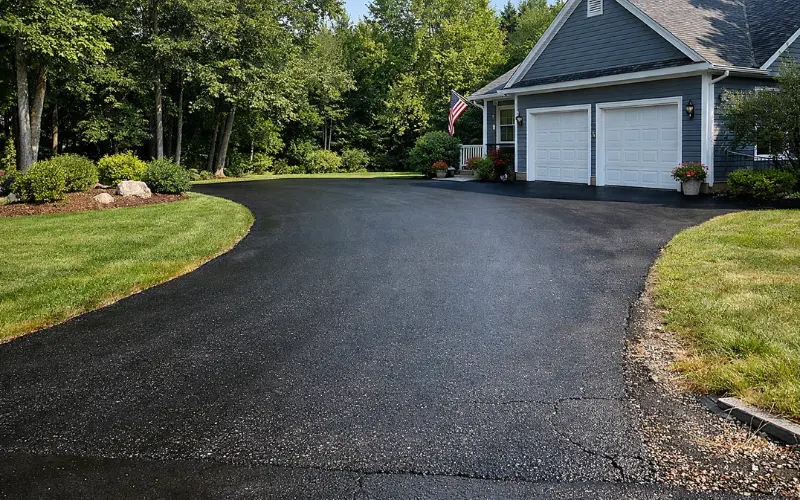
Asphalt is the most budget-friendly option and installs quickly. It handles cold climates reasonably well but softens in extreme heat and typically needs resealing every two to three years.
Concrete
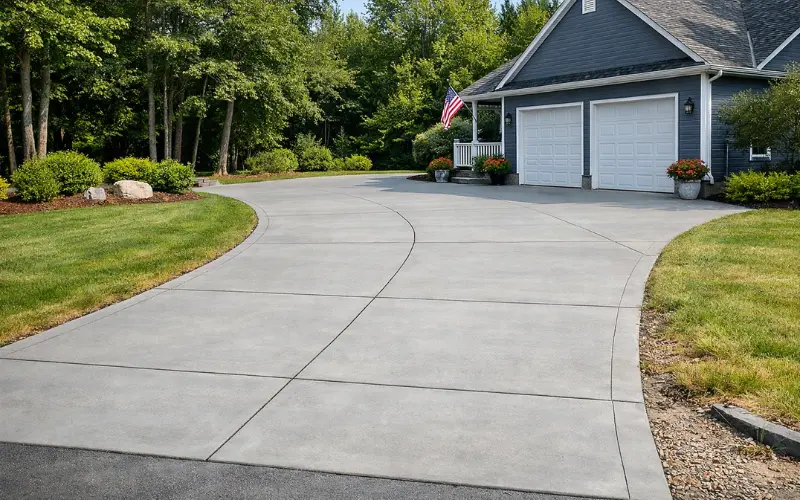
Concrete offers a clean, modern look and can be stamped or stained to mimic stone. It lasts 25 to 30 years with proper care, though it can crack in regions with severe freeze-thaw cycles unless properly reinforced.
Pavers
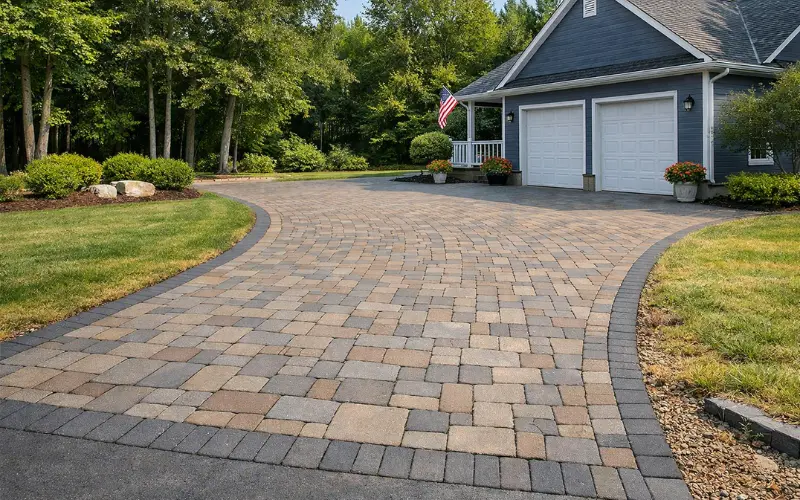
Pavers, whether brick, concrete, or natural stone, are the most flexible option available. Individual units can be replaced if damaged, and the range of colors, shapes, and laying patterns is unmatched. They cost more upfront but often outlast asphalt and concrete.
Gravel
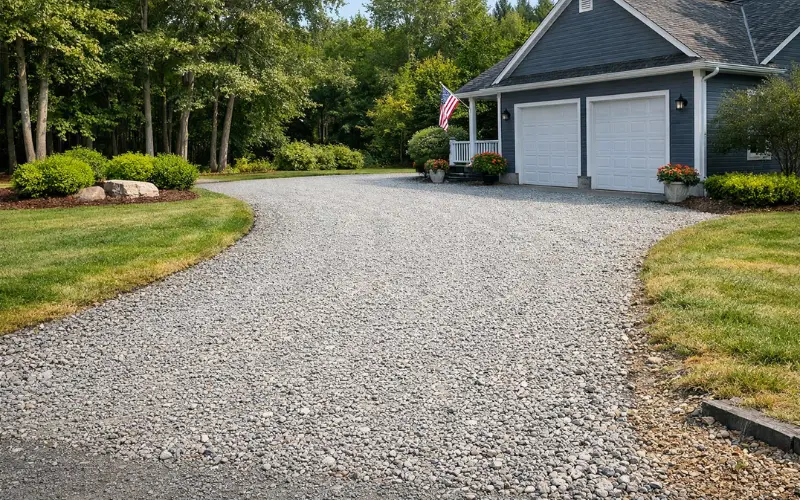
Loose gravel or crushed stone is the most affordable and eco-friendly choice. It drains well and suits rustic or country properties, though it requires periodic top-ups and is not ideal for steep slopes.
Permeable Options
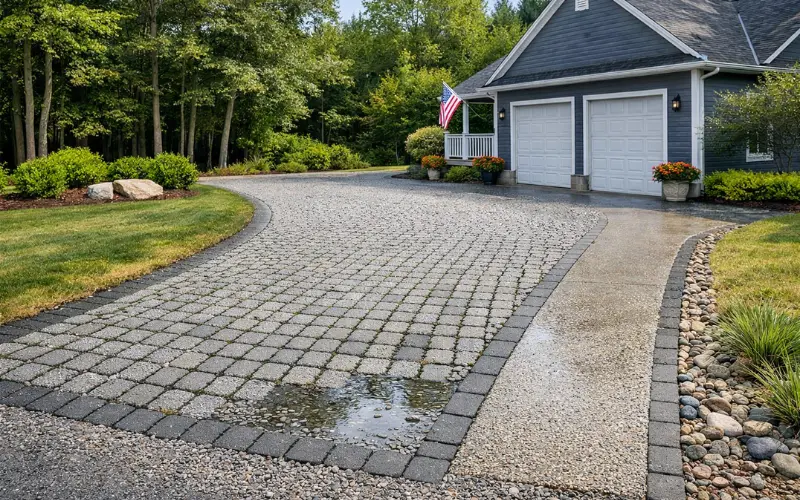
Permeable pavers and porous concrete let water filter through the surface instead of running off. Many municipalities now offer stormwater credits or rebates for permeable driveway design, something few competitor articles mention. If your area has strict stormwater regulations, this is worth researching before you install anything.
Driveway Layout Shapes That Work
The shape of your driveway is just as important as the material. Common layouts include:
- Straight driveways: Simple, cost-effective, and ideal for narrow lots.
- Curved driveways: Add visual softness and work well on larger properties with mature landscaping.
- Circular driveways: Provide easy turnaround for large homes and eliminate the need to reverse into traffic.
- Y-shaped or branched driveways: Useful when a home has a detached garage, workshop, or guest parking area.
A curved layout can also slow the visual approach to a home, making the property feel larger and more grand, an effect landscape architects call “sequence of arrival.”
Paver Patterns Worth Considering
If you choose pavers, the laying pattern changes the entire personality of the driveway.
- Herringbone: Interlocking angles create excellent load distribution, making it a favorite for high-traffic driveways.
- Running bond: Offset rows give a clean, understated look that suits modern homes.
- Basketweave: Pairs of pavers alternate direction for a classic, traditional feel.
- Mosaic or geometric: Mixed shapes and colors create a bold, custom look for larger driveways.
- Random or cobblestone: Irregular stone sizes suit curved driveways and European-inspired homes.
Herringbone in particular is worth highlighting because its interlocking angles resist shifting under the weight of vehicles better than straight patterns, which matters if you park heavier trucks or RVs regularly.
Driveway Edging: The Detail That Ties It All Together
Edging defines the border between your driveway and your lawn or garden beds. It keeps gravel contained, prevents grass from creeping into paver joints, and gives the whole space a finished look. Popular edging choices include:
- Natural stone for a rustic, textured border
- Brick for a classic, timeless frame
- Steel or aluminum strips for a sleek, modern line
- Low plantings or ornamental grasses for a softer transition
A well-chosen edge is often the difference between a driveway that looks intentional and one that looks unfinished, even when the main surface material is excellent.
Drainage: The Step Everyone Forgets
This is where most guides on this topic fall short. A gorgeous surface means nothing if water pools on it every time it rains. Proper drainage planning should include:
- Slope: A grade of roughly 1 to 2 percent away from the home prevents water from pooling near the foundation.
- Channel drains: These slim, hidden drains sit flush with the surface and catch runoff before it reaches the garage.
- Permeable joints: Even solid pavers can be installed with permeable jointing sand to let some water pass through.
- French drains: For sloped properties, a French drain along the low side of the driveway redirects water safely away.
Skipping drainage planning is the number one reason driveways crack, shift, or flood within the first five years. If you take away one thing from this guide, let it be this: plan your water flow before you plan your pattern.
Lighting Your Driveway the Smart Way
Lighting is another area competitors tend to gloss over, yet it affects both safety and design.
- Bollard lights placed along the edge define the driveway’s path after dark.
- In-ground well lights create a subtle glow without visible fixtures during the day.
- Solar-powered options cut installation costs and work well for driveways far from an existing power source.
- Motion-sensor floodlights near the garage add a security layer alongside the aesthetic one.
Good lighting design does not just look elegant. It reduces trip hazards, deters potential intruders, and makes the entire property feel more welcoming at night.
Landscaping Around Your Driveway
Plants soften the hard edges of a paved surface and help it blend naturally into the rest of the yard. Consider:
- Low, drought-tolerant shrubs along the border for year-round structure
- Ornamental grasses that move with the wind and require minimal upkeep
- Seasonal flower beds for color that changes through the year
- Shade trees set back far enough that roots will not damage the pavement over time
A common mistake is planting trees too close to the driveway. Roots from species like willows or silver maples can lift pavers or crack concrete within a decade, so always check a tree’s mature root spread before planting near hardscaping.
Budgeting for Your Driveway Design Project
Costs vary widely by region, material, and size, but a rough national comparison looks like this:
| Material | Typical Cost Range (per square foot) | Expected Lifespan |
|---|---|---|
| Gravel | $1 to $3 | 5 to 10 years with upkeep |
| Asphalt | $3 to $6 | 15 to 20 years |
| Stamped concrete | $8 to $15 | 25 to 30 years |
| Pavers | $10 to $25 | 30+ years |
Getting at least three quotes from licensed contractors is standard practice, but also ask each one about warranty terms, base preparation depth, and how they handle drainage. These questions reveal a contractor’s real expertise far better than price alone.
Maintenance Tips to Protect Your Investment
- Reseal asphalt or concrete every two to three years.
- Sweep polymeric sand joints on pavers annually to prevent weed growth.
- Clear snow with a plastic shovel rather than metal to avoid surface scratches.
- Address small cracks immediately before winter freeze-thaw cycles widen them.
- Rinse gravel driveways periodically to prevent dust buildup and compaction issues.
A little routine care extends the life of your driveway by years, saving significant money on premature replacement.
Common Driveway Design Mistakes to Avoid
- Choosing a material based on looks alone, without checking local climate suitability
- Ignoring slope and drainage until water damage appears
- Making the driveway too narrow for modern vehicle sizes, typically under 10 feet wide
- Skipping a proper compacted base, which leads to sinking and cracking
- Forgetting to check local permit requirements before installation begins
Frequently Asked Questions
What is the most durable material for driveway design?
Pavers generally last the longest, often 30 years or more, because individual units can be replaced without repaving the entire surface.
How wide should a driveway be?
A single-car driveway should be at least 10 to 12 feet wide, while a double-car driveway typically needs 20 to 24 feet to allow comfortable access on both sides.
Can I install a permeable driveway myself?
Basic gravel or permeable paver installation is possible for a confident DIYer, but proper base compaction and drainage planning are technical enough that most homeowners benefit from hiring a professional.
How much does driveway design typically cost?
Costs range from about $1 per square foot for gravel to over $25 per square foot for premium pavers, depending on material, labor rates, and site preparation needs.
Does driveway design affect home value?
Yes. A well-designed, well-maintained driveway is one of the first things buyers notice, and real estate professionals frequently cite curb appeal as a factor that influences offers.
How often should a driveway be resealed?
Asphalt and concrete driveways typically need resealing every two to three years, while paver driveways mainly need joint sand refreshed and occasional cleaning.
What is the best driveway design for a sloped property?
Curved layouts paired with proper channel drains and a French drain on the low side work best for sloped properties, since they manage water flow while softening the visual grade.
Are permeable driveways worth the extra cost?
In many cases yes, especially in areas with strict stormwater regulations, since permeable driveway design can reduce runoff, prevent pooling, and sometimes qualify for local rebates.
Final Thoughts
Great driveway design is not just about picking a pretty paver pattern. It is the sum of smart planning: the right material for your climate, a layout that fits how you actually live, drainage that protects your home’s foundation, and lighting that keeps the space safe after dark. Get those fundamentals right, and the finishing touches, from edging to landscaping, will fall into place naturally.
Take the time to plan properly, ask contractors the right questions, and choose materials suited to your specific property. A driveway built this way will not just look good on day one. It will keep looking good, and keep working hard, for decades.

