
A balcony is one of the easiest places in a home to make a big visual impact, and the railing is what pulls the whole look together. A well-chosen modern balcony railing design does more than hold a railing up. It frames the view, sets the tone for your home’s exterior, and keeps everyone on that balcony safe.
Most guides online show you pretty pictures and stop there. This one goes further. Below, you will find the materials that actually last outdoors, the building code rules most homeowners never hear about until an inspector mentions them, real cost ranges, and a simple framework for picking the right design for your specific balcony. No fluff, just what you need to make a confident decision.
Why the Right Railing Design Matters
Your railing is not just a safety barrier. It is one of the first things a visitor or a passerby notices about your home’s exterior. A dated, rusting railing can make an otherwise beautiful balcony look neglected. A clean, well-proportioned modern balcony railing design, on the other hand, adds instant curb appeal and can even raise resale value.
Beyond looks, railings carry real responsibility. They stop falls, block strong wind gusts, and, depending on the style you choose, offer privacy from neighbors. Getting the balance right between beauty, safety, and budget is the whole game.
Popular Modern Balcony Railing Design Styles
Here are the design directions homeowners are choosing most often right now, along with an honest look at where each one works best.
1. Cable Railing
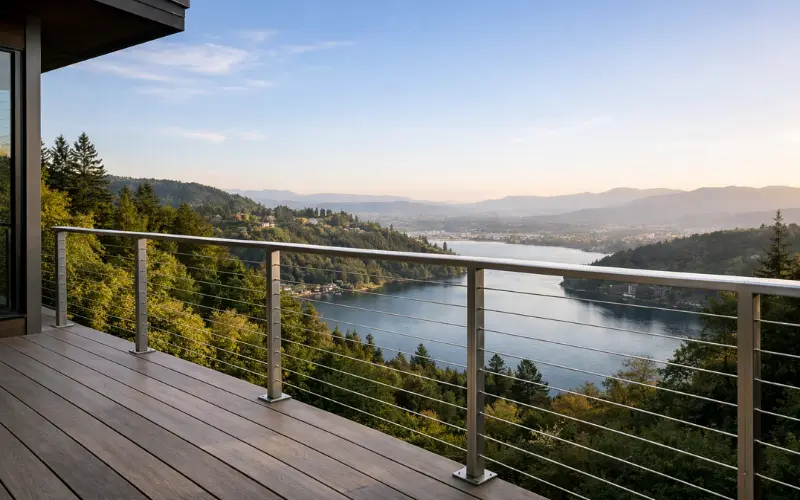
Thin horizontal or vertical stainless steel cables stretched between posts create a nearly invisible barrier. This is a favorite modern balcony railing design for anyone who wants an unobstructed view, since the cables barely register visually from a distance.
- Best for: hillside homes, waterfront balconies, contemporary architecture
- Watch for: cables need periodic tensioning to stay tight
2. Glass Panel Railing
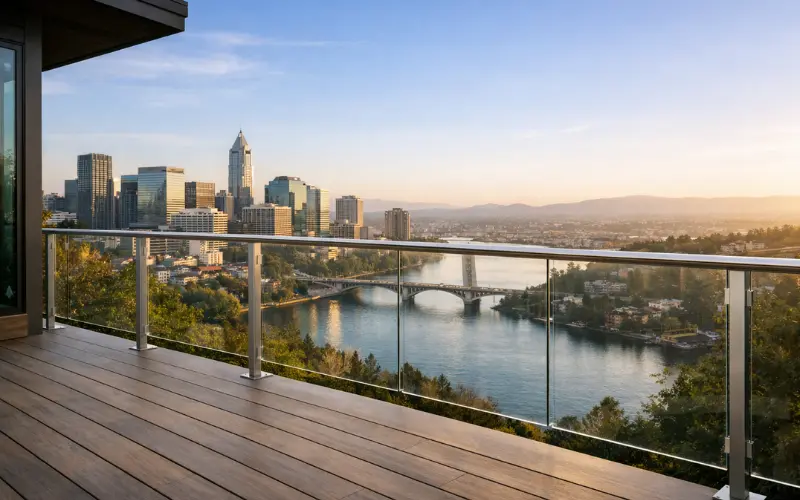
Tempered or laminated glass panels held by slim metal posts let light flood through while still blocking wind. This style suits a modern balcony railing design that needs to feel open without sacrificing weather protection.
- Best for: city balconies, small spaces that need to feel larger
- Watch for: glass shows fingerprints and water spots, so plan for occasional cleaning
3. Horizontal Metal Bar Railing
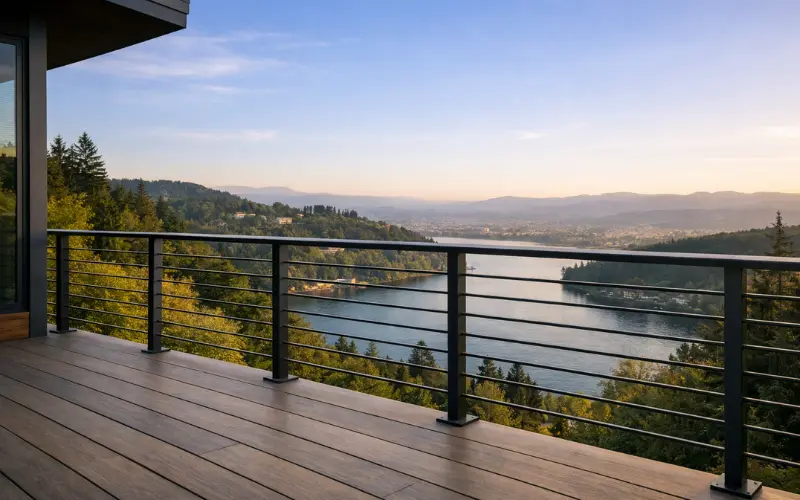
Steel or aluminum bars run horizontally between posts, giving a crisp, architectural line that reads as unmistakably modern.
- Best for: minimalist and industrial-style homes
- Watch for: local codes may restrict horizontal bars if they create a climbing hazard for children
4. Perforated or Laser-Cut Metal Panels
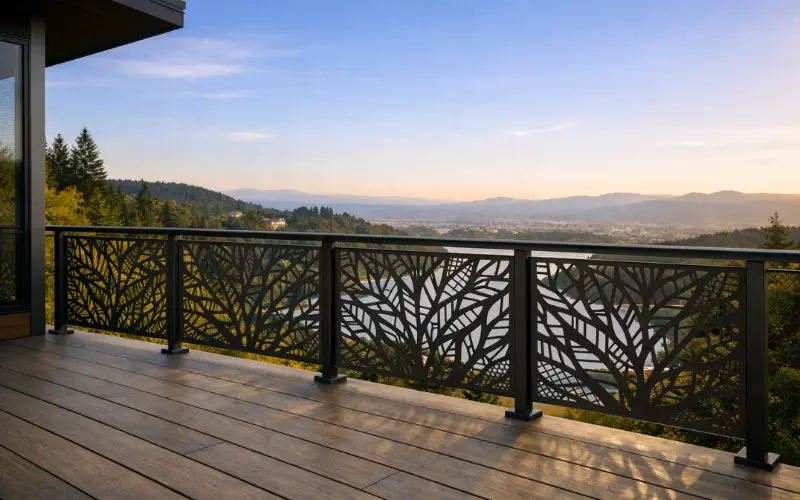
Sheet metal punched with geometric or organic patterns filters light and airflow while adding privacy and a bit of artistic flair.
- Best for: homeowners who want a statement piece, not just a barrier
- Watch for: intricate patterns cost more to fabricate and install
5. Mixed-Material Railing
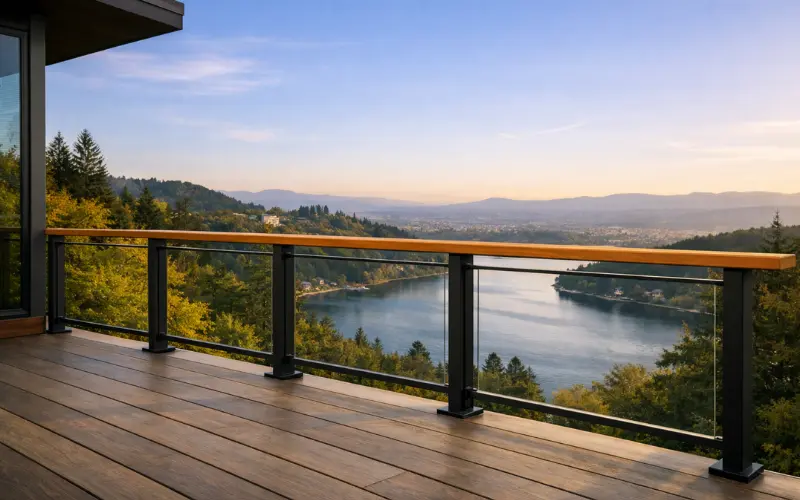
Combining wood handrails with metal or cable infill, or glass panels with a black metal frame, gives warmth alongside a contemporary edge. Mixed materials are one of the fastest-growing directions in modern balcony railing design because they let you soften an otherwise stark, industrial look.
- Best for: homes that want modern lines with a touch of natural texture
- Watch for: different materials age at different rates, so maintenance schedules will vary
6. Frosted or Fluted Glass
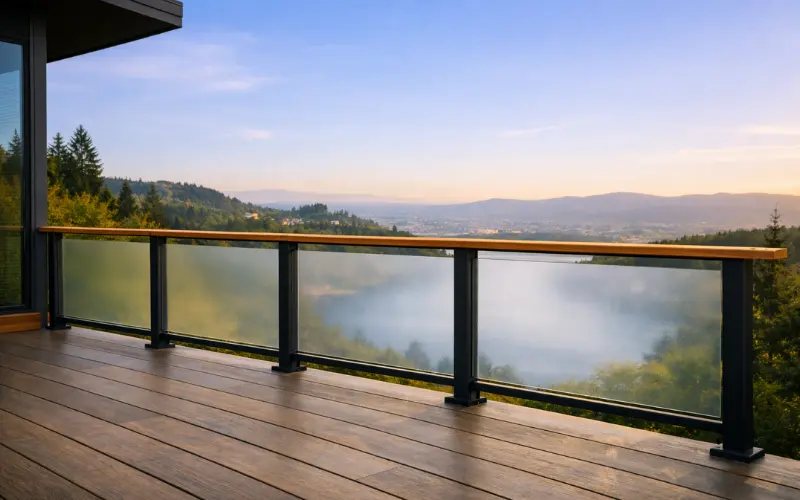
Instead of clear panels, frosted or fluted glass diffuses the view while still letting light pass through, giving privacy without a fully solid wall.
- Best for: balconies facing neighbors or busy streets
- Watch for: higher price point than standard clear glass
Choosing the Right Material: What Actually Holds Up Outdoors
Material choice matters more than style trends, because your railing lives outside in sun, rain, and temperature swings year-round.
- Stainless steel: Excellent strength and a sleek, modern finish. Resists rust well, especially in 316-grade for coastal areas. Slightly higher upfront cost but very low maintenance over time.
- Aluminum: Lightweight, naturally corrosion-resistant, and available in powder-coated finishes that hold color for years. A popular budget-friendly option for a modern balcony railing design that still looks high-end.
- Tempered glass: Strong, safe when it breaks (it shatters into small, dull pieces rather than shards), and gives the most open sightline of any material.
- Wrought iron: Heavier and more traditional in feel, but can be shaped into modern geometric patterns for a hybrid look. Needs repainting every few years to prevent rust.
- Composite and wood: Warmer in tone, good for balconies attached to wood decks. Composite versions resist rot and insects better than natural wood but cost more upfront.
- Vinyl and PVC: The lowest maintenance option and budget-friendly, though it lacks the premium feel of metal or glass.
Building Codes and Safety Rules Most Guides Skip
This is the part competitor articles rarely cover in useful detail, and it is the part that actually matters most.
- Height requirement: Most residential codes require railings to be at least 36 to 42 inches tall, depending on your local jurisdiction and whether the balcony is a single-family home or a multi-unit building.
- The 4-inch rule: In many building codes, gaps between vertical balusters, cables, or mesh openings cannot allow a 4-inch sphere to pass through. This rule exists specifically to stop small children from squeezing through or getting stuck.
- Horizontal elements and climbability: Some codes restrict horizontal rails or cables because they can act as a ladder for a curious child. If you love the horizontal cable look, check with your local building department before installing.
- Load requirements: Railings must withstand a specified lateral load (commonly 50 pounds per linear foot in many US codes) to prevent failure if someone leans against it.
- Permits: Replacing a railing on an existing structure often requires a permit, especially on multi-story buildings or shared condo balconies. Skipping this step can create problems when you sell the property later.
Always confirm exact numbers with your local building authority, since requirements shift by region and by whether you live in a house, apartment, or strata-titled unit.
Real Cost Ranges by Material
Budgeting is where most people get stuck, so here is a general range for a standard residential balcony (professionally installed, per linear foot, prices will vary by region):
| Material | Approximate Cost per Linear Foot |
|---|---|
| Vinyl/PVC | $20 to $40 |
| Aluminum | $30 to $60 |
| Wood/Composite | $35 to $70 |
| Wrought iron | $50 to $100 |
| Cable railing | $60 to $120 |
| Glass panel | $70 to $150 |
| Stainless steel | $80 to $160 |
Fabrication complexity, finish quality, and local labor rates all shift these numbers, so treat this as a starting point for conversations with contractors rather than a final quote.
Matching Your Railing to Your Climate
A detail most articles leave out entirely: your local weather should influence your material choice as much as your style preference does.
- Coastal or humid areas: Choose 316-grade stainless steel or aluminum. Standard steel and wrought iron rust faster near salt air.
- Cold, snowy climates: Metal railings can get very cold to the touch. Composite handrails on top of a metal frame keep things comfortable for bare hands.
- High-wind regions: Glass and solid infill panels create more wind resistance than open cable or bar designs. Check whether your structure is rated to handle the added load.
- Intense sun exposure: Dark-colored metal and vinyl can heat up significantly. Lighter finishes stay cooler to the touch.
Maintenance by Material: What to Expect
- Stainless steel: Wipe down every few months with mild soap and water to prevent water spotting.
- Aluminum: Rinse occasionally, touch up chipped powder coating promptly to prevent corrosion underneath.
- Glass: Clean with a standard glass cleaner every few weeks to keep the view crisp.
- Wrought iron: Inspect yearly for rust spots, sand and repaint as needed every 3 to 5 years.
- Wood: Reseal or restain every 1 to 2 years depending on sun exposure.
- Cable: Check tension annually and re-tighten turnbuckles as cables naturally stretch over time.
A Simple Decision Framework
If you are still not sure which direction to take, run through these three questions:
- What do you want to see? If the view matters most, choose cable or glass. If privacy matters more, choose perforated metal, frosted glass, or a solid panel.
- How much upkeep can you realistically commit to? Vinyl and aluminum need the least attention. Wood and wrought iron need the most.
- What is your home’s existing architecture? A modern balcony railing design should complement, not clash with, your home’s overall style. Sleek horizontal lines suit contemporary builds, while mixed wood and metal can bridge older homes into a fresher look.
Common Mistakes to Avoid
- Choosing a style before checking local code requirements, which can force a costly redesign later
- Picking a material that is not rated for your climate
- Ignoring maintenance needs and ending up with a rusted or faded railing within a few years
- Skipping professional installation on load-bearing connections, since a poorly anchored railing is a genuine safety risk
- Forgetting to check permit requirements before starting work on a shared or multi-unit building
Frequently Asked Questions
What is the most popular modern balcony railing design right now?
Cable railing and glass panel railing are currently the two most requested styles, since both offer clean lines and an open view while still meeting modern safety codes.
How tall does a balcony railing need to be?
Most residential codes require a minimum height of 36 to 42 inches, though exact requirements depend on your local building authority and the type of structure.
Is glass railing safe for balconies?
Yes, when it uses tempered or laminated glass designed for exterior railing applications. Tempered glass breaks into small, dull pieces rather than sharp shards, which reduces injury risk.
Which material needs the least maintenance?
Aluminum and vinyl require the least upkeep. Both resist corrosion naturally and rarely need more than an occasional rinse.
Can I install a modern balcony railing design myself?
Simple panel replacements on a low balcony may be manageable for an experienced DIYer, but load-bearing anchor points should be installed or inspected by a professional to meet safety codes.
Do I need a permit to replace my balcony railing?
In many areas, yes, especially for multi-story homes or shared condo balconies. Check with your local building department before starting the project.
What is the 4-inch rule in railing design?
It is a common code requirement stating that gaps between balusters, cables, or panel openings cannot be wide enough for a 4-inch sphere to pass through, which prevents small children from squeezing through or getting stuck.
How much does a modern balcony railing design typically cost?
Costs range from about $20 per linear foot for vinyl to $160 per linear foot for premium stainless steel or glass, depending on material, finish, and installation complexity.
Are horizontal railings allowed everywhere?
Not always. Some building codes restrict horizontal bars or cables because they can be climbed by children, so it is worth confirming with your local code before choosing this style.
What is the best balcony railing design for a small balcony?
Glass or cable railing works well for small balconies, since both create minimal visual bulk and make the space feel more open than solid panels or thick balusters.
Final Thoughts
A great modern balcony railing design balances three things: how it looks, how safe it is, and how well it holds up to your climate and lifestyle. Take the time to check local codes, choose a material suited to your weather, and be honest with yourself about how much maintenance you are willing to do. Get those three things right, and your balcony railing will look sharp and perform well for decades.

