
Most garages get treated like an afterthought. The floor gets a coat of epoxy, the shelves get stuffed with bins, and the walls just sit there, bare and forgotten. That’s a missed opportunity. Thoughtful garage wall decor can turn a dull storage box into a room you’re actually proud to walk into, whether it doubles as a workshop, a gym, or simply the place your car sleeps at night.
This guide skips the generic mood boards you’ll find elsewhere and focuses on what really matters: which materials hold up in a garage environment, how to combine style with storage, and the mistakes that quietly ruin a lot of DIY projects. By the end, you’ll have a clear plan for your own garage wall decor, no matter your budget or skill level.
Why Garage Wall Decor Deserves More Attention
A garage isn’t just a parking spot anymore. For many households, it’s a home gym, a hobby workshop, a second living space, or an extension of the home’s curb appeal when the door is open. Bare drywall, exposed studs, or peeling paint undercut all of that.
Good garage wall decor does three things at once:
- It hides unattractive construction details like wiring, studs, and patchwork repairs.
- It adds usable storage without cluttering the floor.
- It reflects your personality, whether that’s through car-themed art, a workbench setup, or a simple, clean color palette.
Skipping this step is the reason so many garages feel unfinished even after a full cleanout. Decor is what turns “organized” into “finished.”
Start With the Wall Itself, Not the Decorations
Before you buy a single hook or poster, look at the condition of your walls. Skipping this step is the single biggest mistake homeowners make with garage wall decor, because no amount of styling fixes a damp, unfinished wall underneath it.
Check for these three things first:
- Moisture. Garages often lack proper vapor barriers, so damp walls can ruin paint, wallpaper, or wood panels within a year.
- Insulation. If your garage shares a wall with living space, insulating first will save on energy costs and make the room more comfortable to decorate and use.
- Surface condition. Cracked drywall, exposed studs, or bare cinder block all need different decor approaches. Concrete block, for instance, holds paint differently than drywall and may need a primer built for masonry.
Once the wall itself is sound, you’re ready to actually plan your garage wall decor.
Choosing the Right Base Finish
Your finish sets the tone for everything that follows. Here’s a quick comparison to help you decide:
| Finish | Best For | Durability | Approximate Cost |
|---|---|---|---|
| Painted drywall | Most finished garages | Moderate | Low |
| PVC slatwall panels | Storage-heavy garages | High | Medium to high |
| Fiberglass reinforced panels (FRP) | Workshops, wet areas | Very high | Medium |
| Exposed brick or block, sealed | Industrial or rustic look | High | Low to medium |
| Wood plank or shiplap | Home gyms, lounges | Moderate | Medium |
A lot of competitor guides recommend one finish and move on. In reality, most garages benefit from mixing two: a durable panel system near the workbench or car, paired with a decorative finish like paint or wood accents on a feature wall. This combination gives you function where you need it and style where you want it.
Practical Ideas for Decorating Your Garage Walls
1. Create a Feature Wall
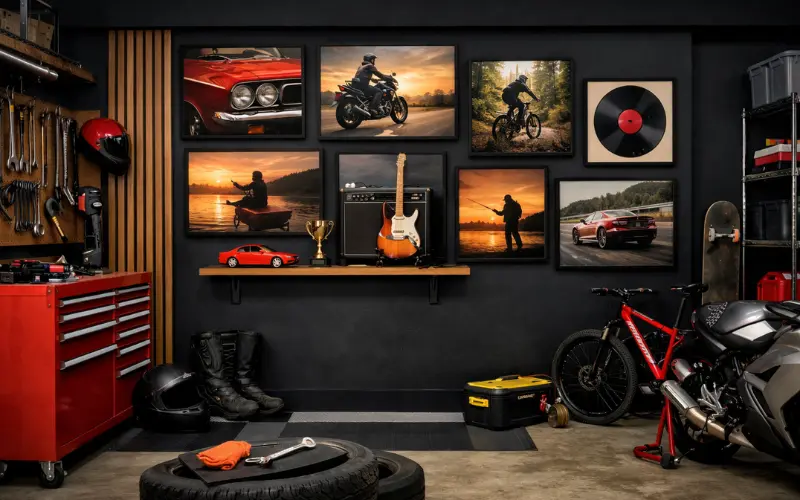
Instead of decorating every wall equally, pick one as a focal point. Paint it a bold color, add wood slats, or install a gallery of framed prints related to your hobbies. This single choice does more for the room’s personality than scattering small decorations everywhere.
2. Use Wall Storage as Decor
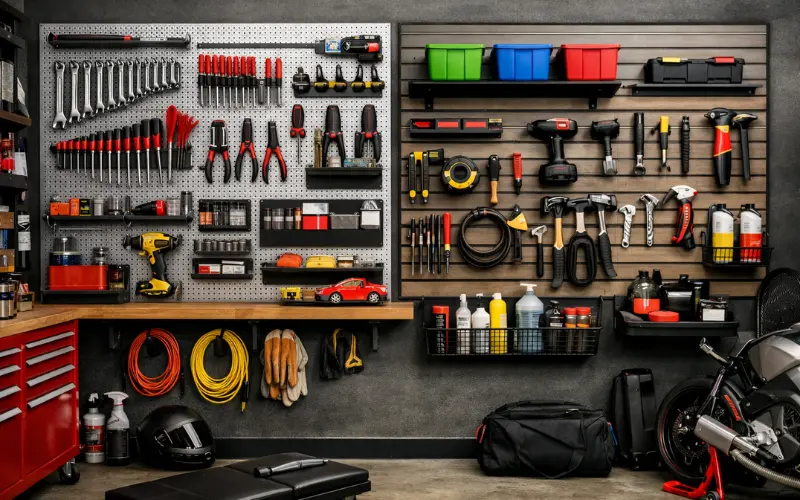
Slatwall panels, pegboards, and modular track systems aren’t just storage, they’re also visual texture. A well-organized pegboard with color-coded tools looks intentional, almost like art. This is one of the smartest approaches to styling a garage because it serves two purposes with zero wasted space.
3. Hang Themed Art
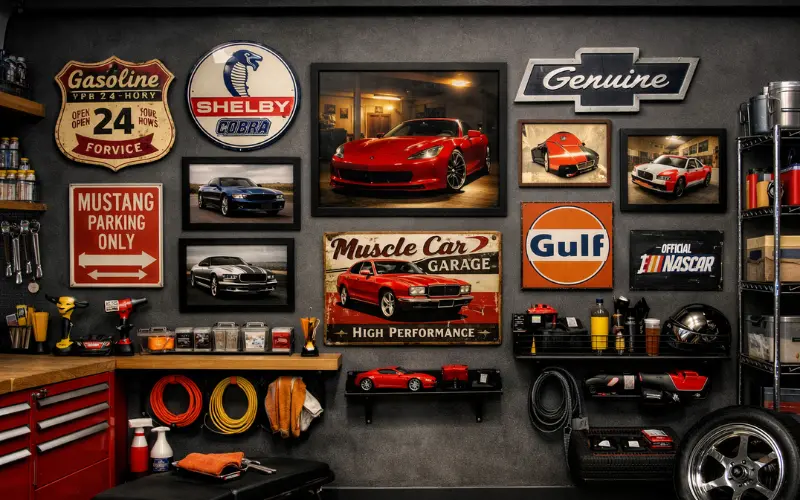
Car enthusiasts often hang metal signs, framed photos, or brand logos related to their favorite vehicles. Others prefer sports memorabilia, vintage advertisements, or even a rotating gallery of family photos. The key is restraint. A wall crowded with mismatched items reads as clutter, not personality.
4. Add a Statement Light Fixture
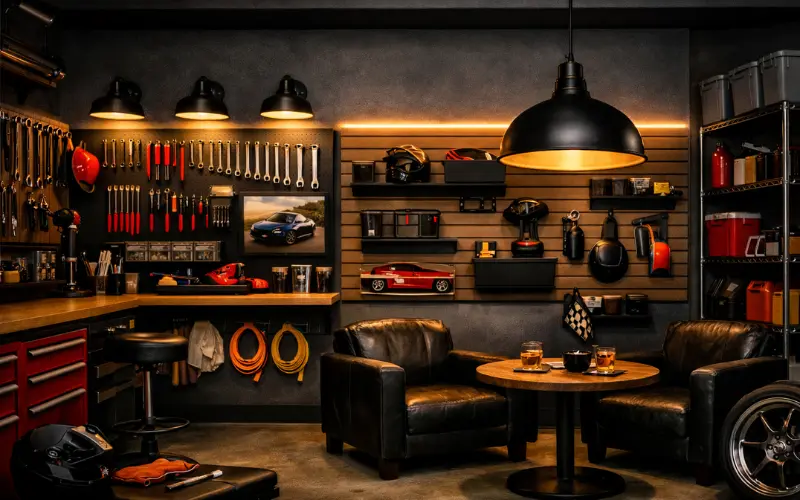
Lighting is one of the most overlooked ways to upgrade a garage’s walls. LED strip lighting behind slatwall, a row of sconces along a workbench, or even a single pendant over a seating area instantly upgrades the mood of the room. Warm white lighting (around 3000K to 4000K) tends to feel more inviting than the cold blue-white light common in overhead garage fixtures.
5. Bring in Textiles and Rugs

It sounds unconventional, but a durable outdoor rug near a workbench or seating nook softens the concrete-and-metal feel of a garage. Combined with a warm wall color, it makes the space feel less like a warehouse and more like a room you’d actually spend time in.
Common Mistakes to Avoid
Most articles list ideas without warning you about what goes wrong. Here’s what trips people up most often:
- Overcrowding the walls. A garage with wall art on every inch feels chaotic rather than curated. Leave breathing room.
- Ignoring weight limits. Heavy items need to be anchored into studs, not just drywall. A stud finder is a five-dollar tool that prevents expensive mistakes.
- Choosing indoor materials for a garage environment. Regular wallpaper paste, untreated wood, and non-exterior paint can fail quickly in a space with temperature swings and humidity.
- Matching decor to the house, not the garage’s function. A pristine white wall looks great in photos but shows every scuff within a month if the space is used as a workshop.
- Forgetting the ceiling-to-wall transition. Baseboards, trim, or a painted stripe where the wall meets the floor make the whole room look finished, not just the decorated sections.
Budgeting for Garage Wall Decor
You don’t need a full renovation budget to make a noticeable difference. Here’s a rough breakdown by tier:
- Under $100: Paint one accent wall, add removable decals, hang a few framed prints.
- $100 to $500: Add a pegboard or small slatwall section, install LED strip lighting, buy a durable outdoor rug.
- $500 to $2,000: Cover a full wall in slatwall or FRP panels, add a custom shelving unit, invest in proper insulation and drywall repair.
- $2,000 and up: Full custom cabinetry, professional panel installation, integrated lighting design, and premium flooring to match.
Starting small and expanding over time is a perfectly reasonable approach. Many homeowners find that a single well-executed feature wall gives them a better sense of what they want before committing to a full garage makeover.
Seasonal and Climate Considerations
If you live somewhere with harsh winters or humid summers, your garage wall decor choices need to account for temperature swings. Wood panels can warp, metal decor can develop condensation, and adhesive-backed decals can peel in extreme heat. Sealed finishes, moisture-resistant materials like PVC or FRP, and proper ventilation will keep your decor looking good for years rather than months.
Maintaining Your Garage Wall Decor
A little upkeep goes a long way:
- Wipe down painted or paneled walls every few months to prevent dust buildup, especially near a workbench.
- Reseal wood accents annually if your garage isn’t climate-controlled.
- Check that hooks, shelves, and hung items are still securely anchored, particularly after seasonal temperature changes that can loosen fasteners.
- Rotate décor occasionally. Swapping out a few framed pieces or decals keeps the space feeling fresh without a full redo.
Frequently Asked Questions
What is the cheapest way to decorate garage walls?
Paint is almost always the most affordable option, followed by removable decals and a few framed prints. A single accent wall can transform the room for well under $100.
Do I need special paint for garage walls?
Yes, ideally. Garages experience more temperature and humidity swings than the rest of the house, so a paint rated for those conditions, often labeled for exterior or garage use, will last longer than standard interior paint.
Can I hang heavy items directly on garage drywall?
Not safely. Heavy items like shelving, cabinets, or large mirrors should be anchored into wall studs using a stud finder. Drywall alone can’t support significant weight over time.
What garage wall decor works best for a home gym?
Mirrors, motivational wall decals, and a durable rubber or foam mat on the floor pair well with a clean, painted wall. Keep the wall itself simple so it doesn’t distract from the workout space.
How do I make my garage walls look finished without a full remodel?
Focus on one wall at a time. A coat of paint, a baseboard trim, and a couple of well-placed shelves or art pieces can make a huge visual difference without a complete renovation.
Is slatwall better than pegboard for garage wall decor?
Slatwall generally offers a cleaner look and higher weight capacity, while pegboard is more budget-friendly and just as functional for lighter tools. The right choice depends on your storage needs and budget.
How often should I update my garage wall decor?
There’s no fixed rule, but many homeowners refresh smaller elements, like art or decals, every year or two, while larger investments like panels or cabinetry are meant to last a decade or more.
Will humidity ruin my garage wall decor?
It can, especially with untreated wood or paper-based decor. Choose moisture-resistant materials like PVC panels, sealed wood, or exterior-grade paint if your garage isn’t climate-controlled.
Final Thoughts
Garage wall decor isn’t about turning your garage into a showroom. It’s about making a space you use every day feel intentional instead of neglected. Start with a solid wall surface, choose materials suited to a garage environment, and layer in personality through art, lighting, and smart storage. Whether your budget is fifty dollars or five thousand, the same principle applies: function and style should work together, not compete.

