
A home decor boutique is a small, independently curated shop, online or brick and mortar, that sells a tightly edited selection of decor items instead of the mass-produced inventory you’ll find at big box retailers. The appeal comes down to curation: someone with an actual eye for design picked every piece, which usually means better quality and pieces you won’t see in five other living rooms on your street. That trade-off comes with a higher price tag and a learning curve most articles gloss over.
What Actually Separates a Boutique From a Big Box Store
Everyone tells you boutiques are “curated” and leave it there. Here’s what that word actually means in practice.
A boutique buyer typically works with 20 to 80 small vendors, not 2,000. That’s why you’ll walk into a home decor boutique and see maybe 40 vases instead of 400. Fewer choices, but almost everything on the shelf has been vetted for craftsmanship.
Big box retailers optimize for price point and turnover speed. A home decor boutique optimizes for point of view. You’re not just buying a candle holder, you’re buying into someone’s taste, which is exactly why boutique shopping feels more personal and why it’s harder to return an item that just doesn’t work once it’s home.
Signs you’re looking at a genuine boutique and not a relabeled dropshipper:
- The “About” page names an actual owner and tells you where they’re based
- Product photos are shot in-house, not lifted from a manufacturer’s catalog
- Inventory changes seasonally rather than staying static for years
- Prices reflect small-batch or handmade production, not bulk manufacturing
The Real Cost Difference Nobody Breaks Down
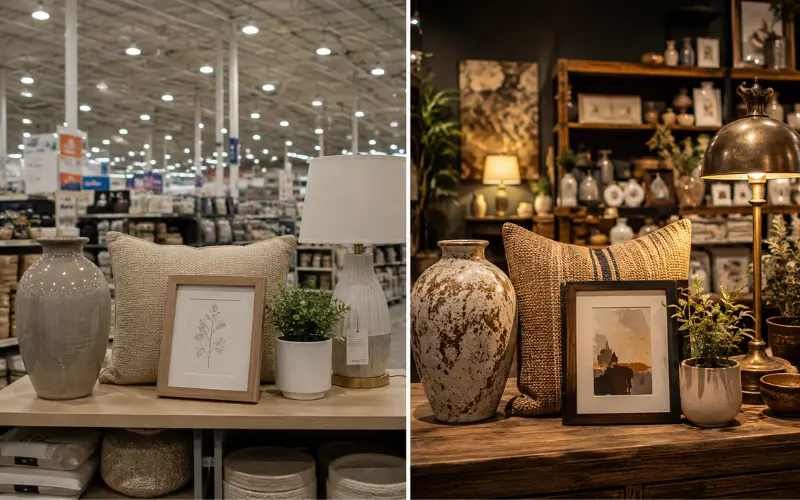
Most guides mention boutiques are “pricier” and move on. That’s not useful when you’re actually budgeting. Here’s how the math tends to shake out across categories, based on comparing similar-style items across boutique and big box listings.
| Item Type | Big Box Price Range | Boutique Price Range | Typical Markup Reason |
|---|---|---|---|
| Ceramic vase | $15-$40 | $45-$120 | Small-batch pottery, handmade glaze |
| Throw pillow | $20-$35 | $50-$90 | Natural fiber fill, artisan textile |
| Wall art print | $10-$30 | $60-$200 | Limited run or original work |
| Table lamp | $40-$90 | $150-$400 | Vintage sourcing or custom hardware |
The gap isn’t arbitrary markup. Small vendors don’t get the bulk manufacturing discounts that let a big retailer sell a $12 vase. If a boutique price feels shockingly high compared to what you’d see at a chain store, that’s usually the honest cost of low-volume production, not price gouging.
Where to Actually Find One

Search results for “home decor boutique near me” tend to surface either big-name furniture chains that have branded themselves as boutiques, or Yelp listings with outdated hours. A few better tactics:
- Follow the maker, not the shop. Instagram accounts run by the actual owner (not a marketing team) usually link directly to their storefront and post real inventory drops, not stock photography.
- Check local artisan markets and craft fairs. A lot of the best boutiques started as a market booth before they had a storefront or website.
- Search by material or technique instead of “decor.” Terms like “hand-thrown ceramics shop” or “vintage textile shop” surface independent sellers that generic decor searches bury under bigger retailers.
- Ask your interior designer or stager, if you have one. Designers keep a running list of small vendors because their clients want pieces that aren’t at every open house.
What Nobody Tells You About Shipping and Returns
This is the part that trips up first-time boutique shoppers, and it’s the one section almost no roundup article covers.
Small operations ship items themselves or through a small fulfillment partner, not an Amazon-style warehouse network. That means:
- Handling time runs longer. Expect 3-7 business days before an item even ships, especially around holidays when a two-person team is packing everything by hand.
- Return windows are shorter and stricter. A lot of boutiques run final-sale policies on vintage or one-of-a-kind pieces, since they can’t restock an identical item.
- Breakage risk is real. Ceramic and glass pieces from small vendors sometimes arrive with less robust packaging than what a major retailer’s logistics team uses. Photograph everything the moment it arrives, before you even unwrap it fully, in case you need to file a damage claim.
- Email support beats phone support. Most boutiques don’t have call centers. If you need a fast answer, email with your order number in the subject line and expect a response within a business day or two, not instantly.
Scaling a Boutique Piece Into Your Actual Room
The biggest mistake I see in boutique shopping isn’t picking the wrong style, it’s picking the wrong scale. Boutique product photos are almost always shot in a styled vignette with other oversized pieces, which makes a lamp or vase look smaller than it actually is.
Before buying, measure the exact spot the piece is going and compare it against the listed dimensions, not just the photo. A mirror that looks proportional on a boutique’s styled console might dwarf your actual entryway table. If a listing doesn’t include dimensions at all, that’s worth emailing about before you buy, not after it shows up too big.
FAQ
Is a home decor boutique more expensive than shopping at a store like World Market or Pottery Barn?
Usually yes, because boutique inventory comes from small-batch or handmade production instead of bulk manufacturing, but not always. Some boutiques carry mid-range imported pieces priced close to mainstream retailers.
How do I know if an online home decor boutique is legitimate and not a dropshipping site pretending to be one?
Check for a named owner, in-house product photography, a physical return address, and reviews that mention specific product names rather than generic praise.
Can I negotiate prices at a home decor boutique?
Rarely for individual items, but many boutiques offer trade discounts for interior designers or seasonal sales during slow retail periods, so it’s worth asking about upcoming promotions.
What’s the difference between a home decor boutique and a home decor store like World Market?
A boutique typically carries a small, personally curated inventory from independent makers. A larger store like World Market carries broader, higher-volume inventory sourced globally at bigger scale.
Do home decor boutiques ship internationally?
Some do, but many smaller operations limit shipping to domestic addresses because of the cost and complexity of customs paperwork for handmade or fragile goods. Check the shipping policy page before assuming.
Why do boutique items sometimes look different in person than in photos?
Handmade ceramics, vintage pieces, and natural materials like wood or stone vary piece to piece. A boutique selling one-of-a-kind items can’t guarantee your item will match the photo exactly, since no two are identical.
Are boutique home decor pieces worth it if I’m renting and might move soon?
It depends on the piece. Smaller items like vases, textiles, and lighting travel well between homes. Larger custom or built-in-style pieces are a bigger commitment if you’re not settled long-term.
How do I find a home decor boutique that matches a specific style, like Japandi or coastal grandmother?
Search boutique directories or Instagram hashtags tied to the specific aesthetic rather than the generic term, since most boutiques specialize in one or two styles rather than carrying everything.

