
Luxe home decor looks expensive because of layered texture, intentional lighting, correct furniture scale, and restraint in what you display, not because of the price tag on any single item. A $40 lamp placed with purpose will out-perform a $400 lamp dropped into a cluttered corner every time.
The Mistake Most People Make First
Here’s what nobody tells you when you start decorating: buying “luxury” branded items is often the fastest way to make a room look cheap. I call this luxury signaling, and it backfires constantly. Throw pillows with oversized designer logos, faux-marble anything, or furniture sets that all match perfectly read as trying too hard. High-end interiors rarely look coordinated in an obvious way. They look collected, like the pieces arrived over years rather than in one Saturday afternoon at a big-box store.
If you’re starting from scratch, resist buying a matching set. A glam home decor approach works because it mixes finishes and eras instead of repeating the same silhouette across every surface.
Texture Does More Work Than Price
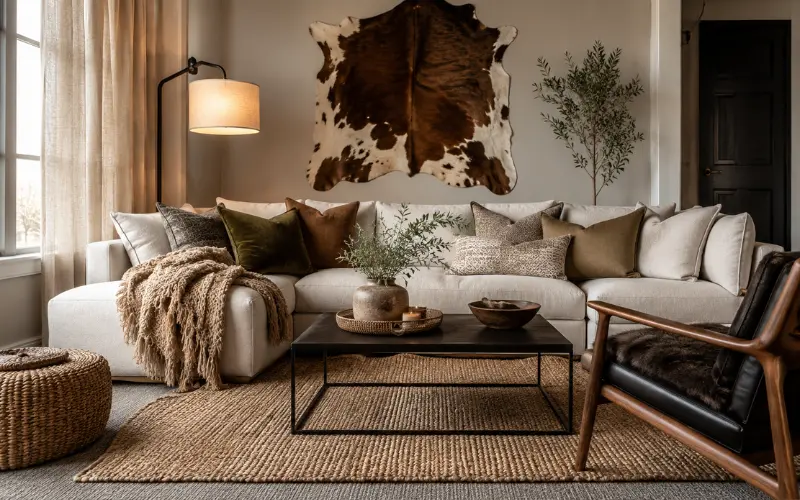
This is the part competitors gloss over. Texture is the single biggest lever you can pull, and it costs almost nothing to change. A room with only smooth, flat surfaces (laminate, glossy paint, polyester upholstery) reads flat and cheap no matter how much it cost. A room with mixed textures reads rich even on a budget.
Practical ways to layer texture Luxe Home Decor:
- Swap a synthetic throw for a chunky knit or real wool
- Add a jute or wool rug under a sleek coffee table
- Mix matte paint walls with a glossy trim
- Introduce one hair-on-hide or textured accent, like a cowhide wall decor piece, in an otherwise smooth room
I redid a rental living room for under $150 by doing nothing but this: velvet pillow covers over the existing pillows, a jute rug layered on top of the builder-grade carpet, and linen curtain panels. The furniture never changed. The room read like a different apartment.
Fabric choice matters just as much on the walls as it does on the sofa. If you want a fast texture upgrade without touching furniture, home decor fabrics applied to a headboard, ottoman, or set of curtains can shift a whole room’s feel in an afternoon.
Lighting in Layers, Not One Overhead Fixture
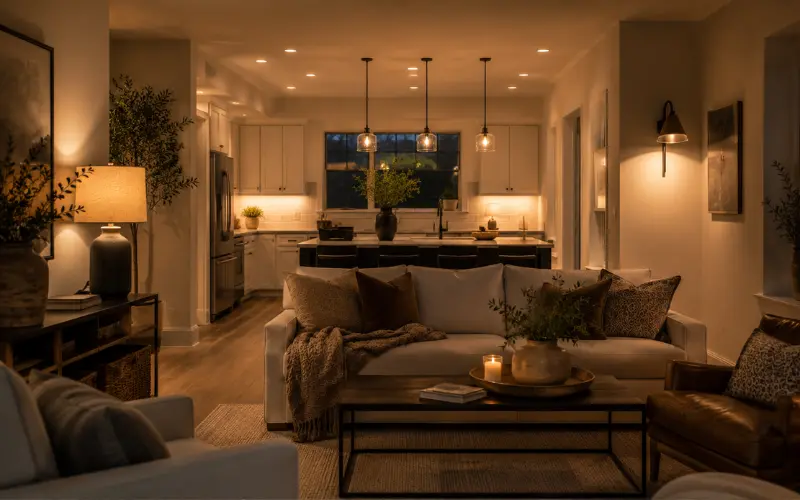
Most rooms rely on a single ceiling light, and that’s the number one reason they look flat and a little institutional. Designers build light in three layers: ambient (general), task (functional), and accent (mood). A room missing the accent layer will never feel luxe, regardless of the furniture in it.
A cheap trick that works surprisingly well: a plug-in sconce or a small rechargeable wall light tucked into a dim corner. You don’t need an electrician. Layer that with a table lamp on a dimmer and you’ve built dimension a single overhead bulb can’t fake. If you’re updating fixtures anyway, kitchen lights that use warm-toned bulbs (2700K, not the harsh blue-white of standard bulbs) instantly soften a space that otherwise reads clinical.
Scale Is Where Budget Decor Usually Fails
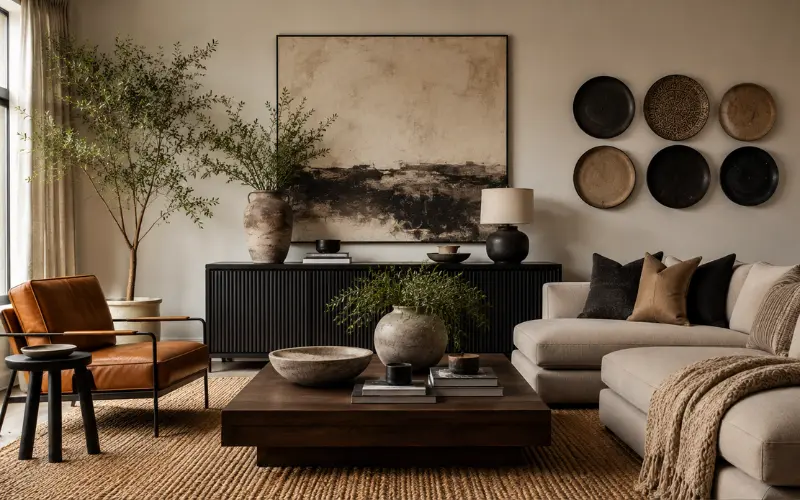
Small, scattered accessories are the fastest way to make a room look like it came from a clearance bin. High-end rooms tend to use fewer, larger pieces instead of many tiny ones. One oversized vase on a console beats five small trinkets every time. One substantial mirror beats a gallery wall of mismatched small frames.
This applies to art too. A single large-scale piece, properly framed, does more for a wall than four small unframed prints. If you’re building out a gallery moment anyway, keep the frames consistent in color and material so the collection reads intentional rather than accidental, the way a circle wall decor arrangement works when the shapes repeat but the artwork inside varies.
Curate, Don’t Cover
Luxe Home Decor Cluttered surfaces are the opposite of luxe, full stop. Every open shelf and coffee table packed edge to edge with objects reads busy and cheap, even if every object on it was expensive. The fix is editing, not adding.
A quick rule that works in almost every room: group objects in odd numbers (three or five), vary their height, and leave visible empty space around the grouping. A stack of books, one sculptural object, and something organic like a plant or branch will consistently look more expensive than a shelf crammed with knickknacks.
If you’re drawn to handmade or artisan pieces for that curated look, handcrafted home decor tends to photograph and feel more expensive per dollar than mass-produced decor, because the slight imperfections read as intentional rather than accidental.
The Small Details Competitors Skip
Luxe Home Decor This is the part that actually separates a decent DIY room from one that fools people into asking who your designer is:
- Cabinet hardware backplates: A plain knob on bare wood looks unfinished. Adding a backplate underneath instantly makes hardware look built-in and considered.
- Curtain height: Hang rods 4 to 6 inches above the window frame, as close to the ceiling as your wall allows. This tricks the eye into reading taller ceilings and a bigger window.
- Frame matting: Adding a mat border around art, even inexpensive prints, makes the piece look gallery-sourced instead of poster-shop cheap.
- Mirror placement: A well-placed mirror does double duty, bouncing light around the room and adding perceived depth. A mirror home decor piece opposite a window is one of the highest-return, lowest-cost moves in the entire luxe playbook.
Quick Reference: What Reads Expensive vs. What Reads Cheap
| Element | Reads Cheap | Reads Luxe |
|---|---|---|
| Curtains | Short, level with window frame | Floor-length, hung near ceiling |
| Lighting | Single overhead fixture | Layered ambient, task, and accent light |
| Accessories | Many small items packed together | Fewer, larger items with breathing room |
| Hardware | Bare knob, no backplate | Knob or pull with backplate |
| Textiles | All one texture (all cotton, all polyester) | Mixed textures (velvet, wool, linen, jute) |
| Frames | Mismatched, unframed prints | Consistent frame finish, matted |
Common Mistakes That Undo an Otherwise Good Room
Even with the right pieces, a few habits will quietly cheapen a room:
- Buying everything from one matching furniture set
- Skipping window treatments entirely, leaving windows bare
- Overhead lighting as the only light source in the room
- Choosing trend-driven decor that will look dated within a year instead of pieces with staying power
FAQs on Luxe Home Decor
Does luxe home decor have to be expensive?
No. Most of what reads as Luxe Home Decor comes from layout, lighting, and texture choices, not the price of individual items. A well-placed $40 lamp can outperform a $400 one placed without thought.
What’s the fastest, cheapest way to make a room look more expensive?
Add a layer of accent lighting and swap one flat textile (a pillow cover, a throw) for something textured like velvet or wool. Both changes take under an hour.
Why do matching furniture sets look cheap even though they’re expensive?
Matching sets read as a single purchase rather than a collected space. High-end rooms mix eras, finishes, and sources so the room feels assembled over time rather than bought all at once.
Is it better to buy fewer, bigger decor pieces or more small ones?
Fewer and bigger, almost always. A handful of larger, well-placed pieces reads more intentional than a surface packed with small accessories.
Do I need an interior designer to get a luxe look on a budget?
No. Most of the specific tricks in this guide, like lighting layers, curtain height, and texture mixing, are things you can do yourself over a weekend without hiring anyone.
What colors make a home look more expensive?
There’s no single “luxe” palette, but rooms with a cohesive, restrained color story (2 to 3 core colors plus neutrals) consistently read more expensive than rooms with many competing colors and finishes.
Does clutter really affect how expensive a room looks?
Yes, significantly. Even high-end furniture photographs and reads as cheap when surfaces are overcrowded. Editing down what’s on display matters as much as what you choose to display.
How do I know if my decor style has drifted into “trying too hard”?
If every piece in the room is visibly branded, perfectly matched, or brand new with no variation in age or source, it likely reads as staged rather than lived-in and collected. Mixing in one or two older or handmade pieces usually fixes this.

