
Poor gardening dirt usually shows itself before you ever open the bag. Look for a light, chalky color instead of dark brown, a bag that feels rock hard or bone dry, and any sour or ammonia-like smell once opened. If the bag lists “fill dirt” or “topsoil” only, with no organic matter or nutrients on the label, it is not built for planting and will fight you all season.
Most gardening dirt problems trace back to one moment: the second you tossed a bag in the cart without checking it. I have done it during a rushed spring sale and paid for it in July when nothing grew past three inches. The good news is that a bad bag gives off warning signs almost every time, if you know where to look.
The Quick Visual Test You Can Do at the Store
Before you load anything into your cart, hold the bag up and look at it through the plastic where it is thin enough to see through, or check any printed photo panel against the actual contents if the bag has a small window.
Good gardening dirt is a deep, even brown or near black. That color comes from decomposed organic matter, not dye.
Poor gardening dirt often looks pale tan, gray, or streaky. That usually means it is mostly sand, clay fill, or ground construction debris with almost nothing organic mixed in.
Squeeze the bag gently. A healthy bag gives a little and feels slightly springy, almost like a firm pillow. A bag that feels like a brick, or one that sloshes with standing water, has already gone wrong in storage.
Red Flags Printed Right on the Bag
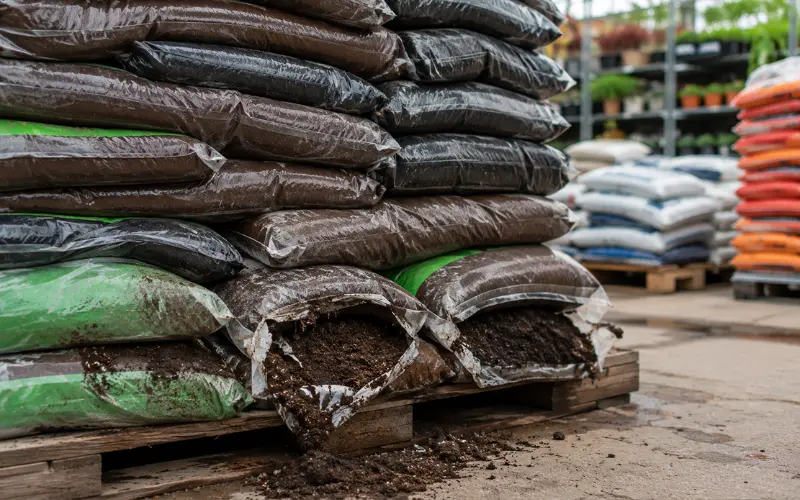
Retailers are required to list basic contents, and this label is where a lot of buyers skip straight past the fine print.
- “Fill dirt” or “clean fill” labeling means the product is meant for grading and leveling ground, not for growing anything.
- No listed organic matter (compost, aged forest products, peat, coir) is a sign you are buying inert filler, not planting soil.
- Missing or worn manufacture date on bags stored outdoors for a long stretch, since sun and rain break down nutrients fast even in a sealed bag.
- Torn or resealed bags at the bottom of a pallet, which have likely absorbed ground moisture and started to sour.
I make it a habit to dig a few bags down in the stack rather than grabbing the top one. Pallets get rained on, and the bags closest to the ground or the edges take the worst of it.
The Hand and Sniff Test That Never Fails Me
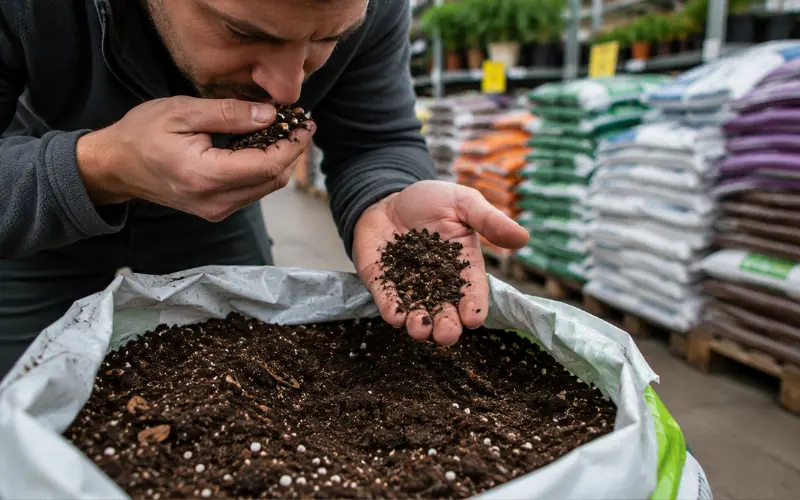
If the store allows it, and most garden centers do since bags are meant to be handled, open the top seam slightly and do two things.
Smell it. Healthy soil smells earthy, almost like a forest floor after rain. That smell comes from beneficial microbes called actinomycetes. A sour, swampy, or ammonia smell means the bag has gone anaerobic, usually from sitting wet and sealed for too long.
Crumble it. Grab a small handful and rub it between your fingers. It should break apart easily into small crumbs. If it forms a hard, dense clod that resists breaking, or if it feels gritty and sandy with nothing holding it together, the structure is off in one direction or the other.
A quick expert note from my own routine: I keep a small squeeze bottle of water in my garden bag and dampen a pinch of soil right in the store before buying. Good soil holds together loosely when squeezed, then breaks apart again when tapped. Bad soil either turns to mud instantly or refuses to absorb the water at all.
Why Your Region Changes What “Good” Even Means
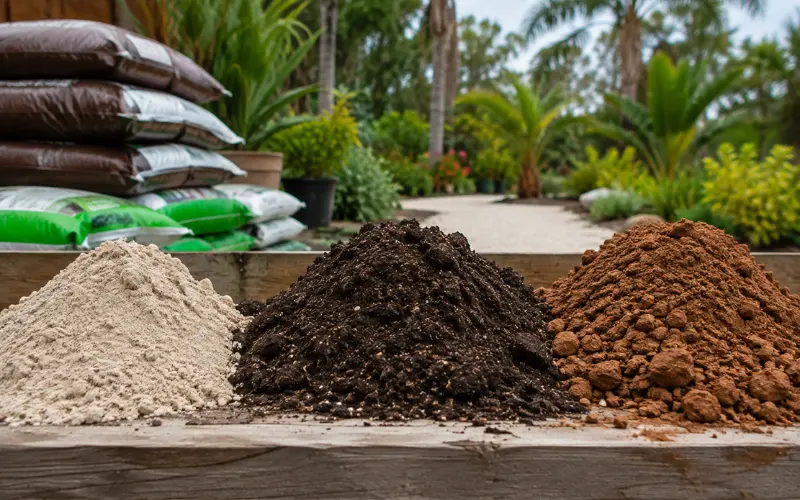
This is the part most buying guides skip entirely, and it matters more than people think. A bag that performs beautifully in the Pacific Northwest can behave completely differently once it hits sandy ground in the Southeast.
If you garden in a sandy coastal region, Florida gardening conditions in particular demand soil with extra water retention, since native sand drains almost too fast for young roots to keep up. A bagged soil that is heavy on bark fines will drain even faster there and leave plants gasping between waterings. Clay-heavy regions need the opposite: soil with enough grit and compost to keep it from compacting into a brick once it dries.
Before buying, it helps to know your baseline. A basic squeeze test on your own native ground, done once, tells you whether you need a bag that adds drainage or one that adds water-holding capacity.
Bulk vs Bagged: The Math Retailers Hope You Skip
Sale pricing on garden soil is aggressive every spring, and deals like Home Depot’s or Lowe’s five bags for ten dollars promotions look like a steal on the shelf tag. They often are, for small beds. But the math changes fast once you are filling anything larger than a couple of containers.
| Project Size | Bagged Cost Estimate | Bulk Cost Estimate |
|---|---|---|
| 2-3 containers (small) | $8-15 | Not practical |
| One 4×8 raised bed | $45-70 | $25-40 |
| Full backyard bed (200+ sq ft) | $180+ | $60-100 |
Bulk soil, delivered by the cubic yard from a landscape supplier, almost always wins once a project crosses roughly 15-20 cubic feet. That is about four to five standard 40 lb bags. Below that threshold, bagged soil is usually cheaper once you account for delivery minimums on bulk orders.
If you are stretching a budget across a full yard renovation, it is worth checking wholesale gardening supplies options before defaulting to whatever is on the endcap. Wholesale suppliers often sell the exact same product lines at a lower per-bag cost when you buy a full pallet.
What a 40 lb Bag Actually Covers
This trips up a lot of first time buyers, myself included on my very first raised bed. A standard 40 lb bag of garden soil covers roughly:
- 0.75 cubic feet, which fills about a 2 ft by 2 ft area at 2 inches deep
- Roughly half of one square foot of a raised bed filled to a full 12 inch depth
- Enough to top dress three to four large containers, not fill them from empty
If you are filling a new raised bed from scratch, plan on far more bags than intuition suggests. A standard 4×8 bed at 12 inches deep needs about 32 cubic feet, which is closer to 40 bags at that size. This is exactly where bulk delivery starts to make financial sense.
How Poor Soil Shows Up in Specific Plants
Bad gardening dirt does not always announce itself right away. Sometimes it takes a full growing season to notice, and by then the damage is done.
Tomatoes are one of the clearest indicators. If you are chasing better yields, our tomato gardening tips guide covers this in more depth, but the short version is that tomatoes planted in nutrient-poor fill dirt develop yellowing lower leaves within three to four weeks and stall out at half their expected height. That yellowing is often mistaken for a watering problem when the real cause is soil that never had nitrogen to begin with.
Container and small-space growers face a slightly different risk. Our apartment gardening guide covers why standard garden soil, as opposed to potting mix, is often too dense for pots and balcony containers. It compacts around roots and holds too much water in a confined space, which suffocates roots that would otherwise be fine in open ground.
When Bagged Soil Isn’t the Right Call At All
Sometimes the smartest move is skipping bagged soil altogether. If you are building out a full garden bed system, a gardening boxes guide can help you plan the framing first, since box dimensions determine exactly how much fill you need and change the bagged versus bulk math entirely.
And if your native ground already drains reasonably well and just needs organic matter worked in, building your own mix from compost and existing dirt is often cheaper and more reliable than any bagged product. That said, this article is about buying decisions, not building from scratch, so I will leave the full mixing process for another guide.
Frequently Asked Questions
What is the 70/30 rule in gardening soil?
In a soil mix context, the 70/30 rule refers to blending roughly 70 percent structural topsoil with 30 percent compost or organic amendment. This ratio gives you enough mineral structure to hold plant roots steady while still adding enough organic matter for nutrients and drainage.
What is the cheapest way to get garden soil?
For small projects, timed seasonal sales on bagged soil, like five for ten dollar deals, are usually cheapest. For anything larger than a few containers, bulk delivery from a local landscape supplier almost always beats bagged pricing per cubic foot, even after delivery fees.
How much will a 40 lb bag of soil cover?
A 40 lb bag covers about 0.75 cubic feet, enough for a 2×2 foot area at 2 inches deep, or roughly half a square foot in a raised bed filled a full 12 inches deep.
What is the difference between dirt and soil?
Dirt is displaced earth with no guaranteed structure or nutrient content, often sold as fill. Soil, especially bagged “garden soil,” is formulated with organic matter, drainage material, and sometimes starter fertilizer specifically for growing plants.
Is the Home Depot or Lowe’s five bags for ten dollars deal worth buying?
For small beds and containers, yes, it is genuinely good value. Just apply the same bag checks in this guide before loading up, since sale bags sit on outdoor pallets just as long as regular stock and are not immune to storage damage.
Can I fix a bad bag of soil instead of returning it?
Sometimes. Compacted soil can be broken up and mixed with fresh compost. Soil with a sour smell or visible mold is riskier to save and is usually not worth the gamble on plants you care about.
How do I find good gardening dirt near me without guessing?
Ask a local garden center which brand they personally use for their demo beds, not just which brand they sell. Independent nurseries tend to be more candid about which bagged products are inconsistent than big box associates who rotate departments.
Does a higher price always mean better quality garden soil?
Not always. Price often reflects added ingredients like mycorrhizae or slow-release fertilizer rather than base quality. A mid-priced bag that passes the smell and crumble test can outperform a premium bag that has sat too long on a hot pallet.

