
Yes, online thrift store home decor is worth buying, but only if you know how to read a listing before you commit. Well-run platforms and small resale shops can save you 40 to 70 percent compared to retail on pieces with real character. The catch is that quality and honesty vary wildly from seller to seller, so the value depends entirely on how carefully you vet before you click “add to cart.”
Why Online Thrift Store Home Decor Is Suddenly Everywhere
Search interest in secondhand decor has climbed for a reason that has nothing to do with nostalgia. Younger buyers, especially Gen Z shoppers furnishing their first apartments, are treating thrifted decor as a design statement rather than a budget compromise. A chipped ceramic pitcher or a mismatched brass candlestick reads as intentional, not cheap, when it’s styled well.
There’s also a practical shift happening. Retail home decor prices have climbed faster than wages over the past few years, and mass-produced pieces from big-box stores tend to look identical in every third apartment on Instagram. Buying secondhand solves both problems at once: it’s cheaper, and no one else has your exact vase.
Expert take: in my experience, the buyers who end up happiest aren’t chasing the lowest price. They’re chasing pieces that can’t be bought new at any price, like a hand-thrown bowl from a shop that closed in the 1980s. That’s the actual value proposition, not just the discount.
What You Actually Save (With Real Numbers)
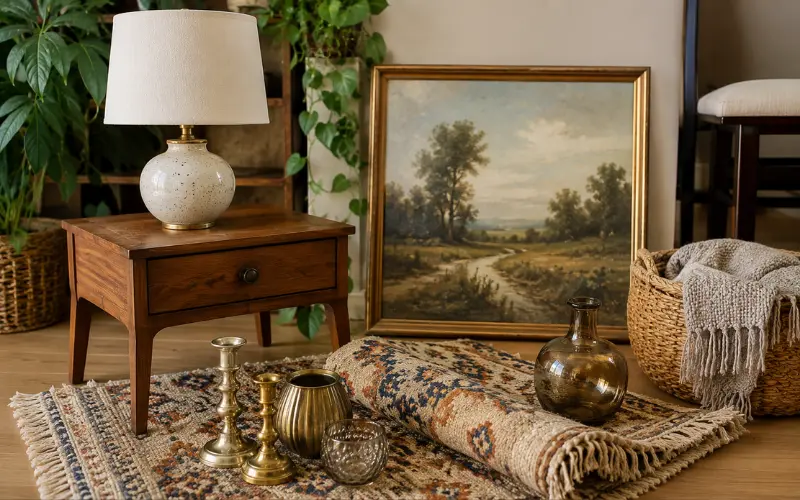
Retail comparisons on decor sites tend to stay vague, so here’s a concrete breakdown based on categories that move often on resale platforms.
| Item Type | Typical Retail Price | Typical Thrifted Price | Realistic Savings |
|---|---|---|---|
| Solid wood side table | $180 to $350 | $25 to $80 | 55 to 85% |
| Ceramic table lamp | $60 to $120 | $15 to $35 | 60 to 75% |
| Framed vintage art | $40 to $150 | $10 to $40 | 60 to 75% |
| Woven or wool area rug | $200 to $500 | $40 to $150 | 65 to 80% |
| Brass or glass decor accents | $20 to $60 | $5 to $18 | 65 to 75% |
Shipping eats into these numbers more than most guides admit. Furniture and rugs can add $30 to $150 in freight depending on weight and distance, so the savings shrink fast on bulky items ordered from a solo Instagram seller instead of a platform with negotiated shipping rates.
The Three Types of Online Thrift Store Home Decor Sellers
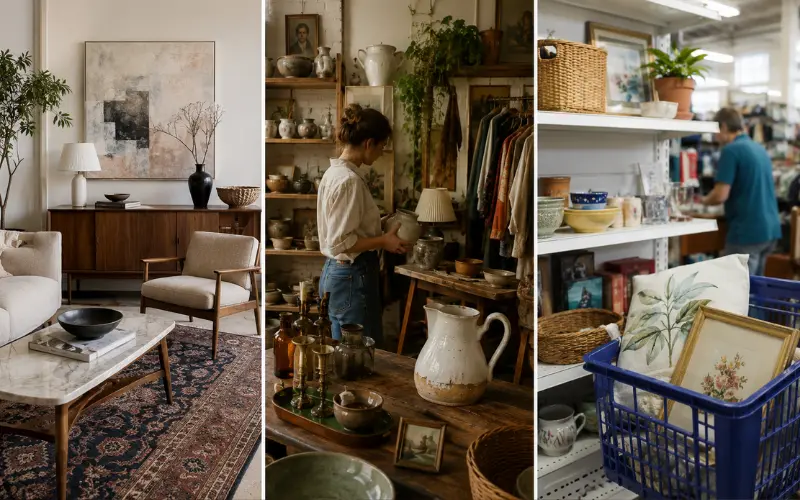
Not every “online thrift store” operates the same way, and mixing them up is where most first-time buyers get burned.
Curated resale marketplaces like Chairish work more like a design gallery than a garage sale. Sellers are vetted, listings usually include multiple angles and dimensions, and prices reflect that curation, so the discounts are real but smaller than you’d get elsewhere.
Independent thrifter-run shops, often run on Shopify or Instagram by a single person hunting estate sales and thrift bins, tend to have the deepest discounts and the most one-of-a-kind pieces. The trade-off is inconsistent photography, slower shipping, and no formal return policy in many cases.
Nonprofit and organizational thrift stores that have moved online, including large charitable retailers, sell decor as a byproduct of their broader mission. Selection is unpredictable since it depends entirely on what gets donated that week, but prices are usually the lowest of the three categories and proceeds fund a cause.
How to Vet a Listing Before You Buy
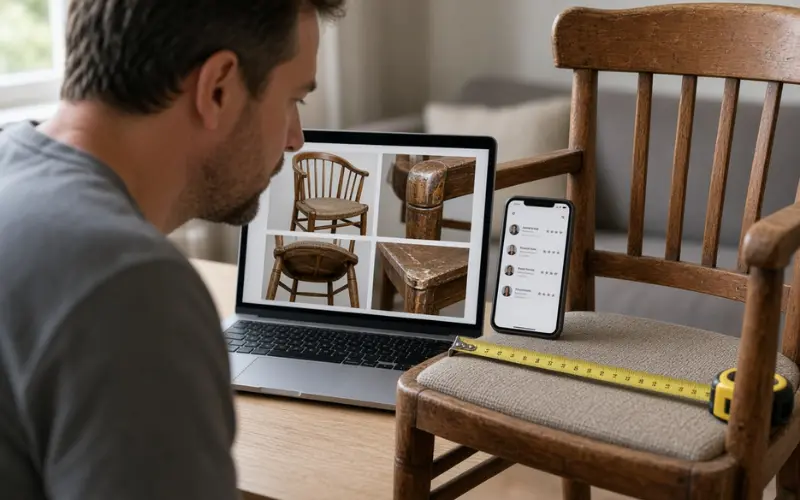
Every seasoned thrifter I know follows some version of this checklist, and it takes less than two minutes per listing.
- Count the photos. A seller with four or fewer images, all from flattering angles, is usually hiding wear. Look for close-ups of joints, undersides, and any visible chips.
- Check for a stated measurement, not a comparison object. “About the size of a shoebox” tells you nothing. Real sellers list exact inches.
- Read the most recent three reviews, not the top-rated ones. Platforms sometimes surface older glowing reviews first while recent ones flag slow shipping or damage.
- Ask about structural integrity directly, especially on chairs, shelving, and anything with joints or hinges. A seller who answers with specifics (glue type, wobble, weight capacity) is more trustworthy than one who just says “sturdy.”
- Search the seller’s name plus “review” or “scam” before paying through anything other than the platform’s built-in checkout.
What’s Genuinely Worth Buying Secondhand, and What to Skip
Some categories reward thrifting. Others quietly cost you more in the long run.
Buy secondhand: solid wood furniture, ceramics, glassware, framed art, brass and metal fixtures, and most woven textiles. These materials age well and any wear usually adds character instead of subtracting value.
Think twice: upholstered furniture with unclear cleaning history, anything with exposed foam (foam degrades and can trap odors or pests), and electrical lamps without a visible UL-listed cord. A $15 lamp with frayed wiring isn’t a deal, it’s a fire hazard waiting for a rewire you’ll have to pay someone else to do.
If a listing description skips the word “condition” entirely, that’s usually the seller telling you something without saying it directly.
Styling Secondhand Finds So They Don’t Look Random
The biggest complaint about thrifted decor isn’t quality, it’s that a room full of mismatched pieces can look cluttered instead of curated. A tighter color palette fixes this faster than anything else. If you’re leaning into a specific look, pieces built around cottagecore home decor ideas or a quieter old money home decor palette tend to unify thrifted finds because the aesthetic tolerates age and imperfection by design.
Grouping by material also helps more than grouping by color. Three brass items on one shelf read as intentional even if they’re from three different decades and three different sellers. If your thrifted haul leans toward bold, collected pieces, browsing vintage western home decor can give you a framework for mixing worn leather, turquoise accents, and reclaimed wood without it looking like a yard sale.
Small hardware swaps stretch a thrifted budget further too. A dated dresser with a fresh coat of paint and new pulls from a knobs & more home decor resource can look like a $400 piece for the price of a $60 hardware upgrade.
Shipping, Returns, and the Costs Nobody Mentions Upfront
Return policies on secondhand decor are nowhere near as forgiving as retail. Curated marketplaces usually allow returns within a short window, often 3 to 7 days, but independent sellers frequently sell “as is, no returns” by default. Read the policy before you buy, not after the box arrives damaged.
Packaging matters more than people expect. Ceramics and glass shipped in a plain cardboard box with newspaper padding arrive broken far more often than pieces double-boxed with actual foam or bubble wrap. If a listing photo shows the seller’s packaging setup, that’s a good sign they’ve shipped fragile items before.
Red Flags That Usually Mean Trouble
- Prices dramatically below every comparable listing for the same item, especially on furniture
- A seller who insists on payment outside the platform (Venmo, Zelle, wire transfer)
- Stock photos instead of the seller’s own images of the actual item
- No response to a direct question about condition within a reasonable window
- A brand-new seller account with dozens of listings posted the same day
If two or more of these show up on the same listing, walk away even if the price looks tempting.
Final Verdict
Online thrift store home decor earns its reputation when you treat it like any other secondhand purchase: read carefully, ask questions, and buy from sellers who show their work in photos and reviews. The savings are real, often 50 percent or more on solid pieces, and the styling upside of owning something no one else has is hard to replicate with anything mass-produced.
Frequently Asked Questions
Is buying home decor from an online thrift store safe?
It’s generally safe when you pay through the platform’s official checkout and avoid sellers who push you toward outside payment apps, since those purchases usually have no buyer protection.
How long does shipping usually take from an online thrift store?
Independent thrifters typically ship within 3 to 7 business days, while larger curated marketplaces often ship faster, within 2 to 5 days, because they have established freight partners.
Can I negotiate prices on online thrift store home decor?
Many independent sellers on Shopify or Instagram accept reasonable offers, especially on items that have sat unsold for weeks, but curated marketplaces with fixed listings rarely negotiate.
Why is Gen Z so drawn to thrifted home decor?
It combines a lower price point with pieces that don’t match what’s sold in every big-box store, which fits a broader preference for individuality over mass-produced sameness.
What’s the best online thrift store for furniture specifically?
Platforms built around furniture logistics tend to perform better here than general decor sellers, since they’ve solved the delivery and assembly problem that trips up most independent shops.
Do online thrift stores sell fake or reproduction vintage items?
Occasionally, yes. Reproduction pieces are sometimes listed as vintage by sellers who either don’t know the difference or hope you won’t check, which is why confirming maker’s marks or asking direct questions matters.
Is it cheaper to thrift online or in person?
In-person thrifting is almost always cheaper before shipping costs, but online thrift stores save you the time and gas of visiting multiple physical locations to find one good piece.
What should I do if a thrifted item arrives damaged?
Photograph the damage and the packaging immediately, then contact the seller or platform within the stated return window, since most policies require proof within 48 to 72 hours of delivery.

