
A durable outdoor privacy screen needs three things: a weather-stable material (aluminum, WPC composite, or treated cedar, not raw pine or thin vinyl), a wind-rated anchoring system with buried or bolted footings, and a finish that resists UV fading. Skip any of the three and the screen will warp, lean, or bleach out within one or two seasons, regardless of price.
Why Most Outdoor Privacy Screen Fail Within Two Years
The failure point almost never shows up where people expect. It’s rarely the panel face that gives out first. It’s the base.
Cheap freestanding screens ship with narrow footplates or plastic stakes meant for calm, sheltered patios. The moment a screen sits somewhere with real gusts, coastal wind, an open yard, or a spot near a building corner that funnels air, those thin bases start rocking. Rocking loosens the post joints, and loosened joints let rainwater track down into the panel core.
I learned this the hard way with a bamboo-look screen that looked great for exactly one summer, then split at the seams after its footing worked itself half out of the soil.
Look past the panel photo and check three things before buying:
- Footing weight and depth. A stable outdoor privacy screen needs either a footplate rated for the panel’s wind load or a post set at least 18 to 24 inches into concrete.
- Fastener metal. Stainless or powder-coated aluminum hardware outlasts basic zinc-plated screws, which rust and streak the panel within a year in humid climates.
- Panel core material. Solid wood-plastic composite (WPC) resists moisture far better than hollow-core plastic look-alikes that trap condensation.
Material Comparison: What Actually Holds Up Outside
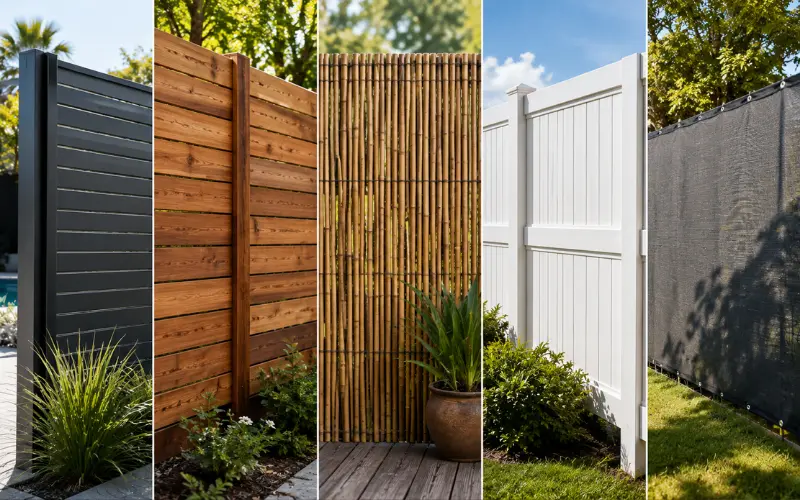
Every brand claims “weatherproof.” Here’s what that word means once you get past the marketing.
| Material | Typical Lifespan Outdoors | Best For | Watch Out For |
|---|---|---|---|
| Aluminum frame + WPC panel | 10–15 years | Patios, pool areas, coastal zones | Higher upfront cost |
| Treated cedar or redwood | 8–12 years with resealing | Traditional yards, DIY builds | Needs restaining every 2–3 years |
| Bamboo or reed roll-up screens | 2–4 years | Renters, temporary balcony fixes | Fades and frays fast in full sun |
| PVC/vinyl panels | 6–10 years | Budget fencing, low-maintenance yards | Can go brittle in freezing climates |
| Woven polyester/olefin fabric | 5–8 years | Wind and sun screening, not full privacy | Not fully opaque, can sag over time |
If your yard gets direct afternoon sun for more than five hours a day, cross bamboo and basic vinyl off the list. UV exposure at that level breaks down the plasticizers in cheap vinyl within two summers and turns bamboo grey and brittle even faster.
For a look at how these same material trade-offs play out on full-length boundary fencing rather than standalone screens, my guide to front fence ideas breaks down cost per linear foot for wood, brick, and composite options.
Hard Surface vs Soft Ground Installation
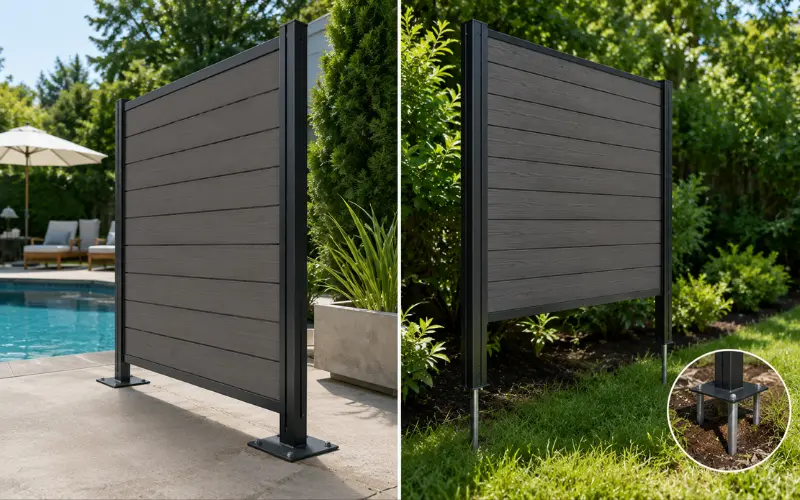
This is the one factor almost every buying guide skips, and it’s the reason so many Outdoor Privacy Screen end up crooked within a month.
Hard surface installs (concrete, pavers, decking) need a surface-mount base plate bolted with concrete anchors. Never rely on adhesive-only mounts for anything taller than 4 feet. Wind load on a solid panel acts like a sail, and adhesive alone can’t counter that leverage.
Soft ground installs (grass, soil, mulch beds) need ground stakes driven at least 11 inches deep, ideally in an L-shaped or staggered layout rather than a straight line. A straight run of panels has no lateral bracing, so a strong gust can tip the whole row like dominoes. An L-shaped corner section locks the structure against itself and cuts wind failure dramatically, even without extra hardware.
If you’re mounting near a pool deck or hard patio, pair this with a look at modern pool designs for screen placement that doesn’t block pump access or skimmer lines.
Screen Types by Purpose (Not Just by Look)
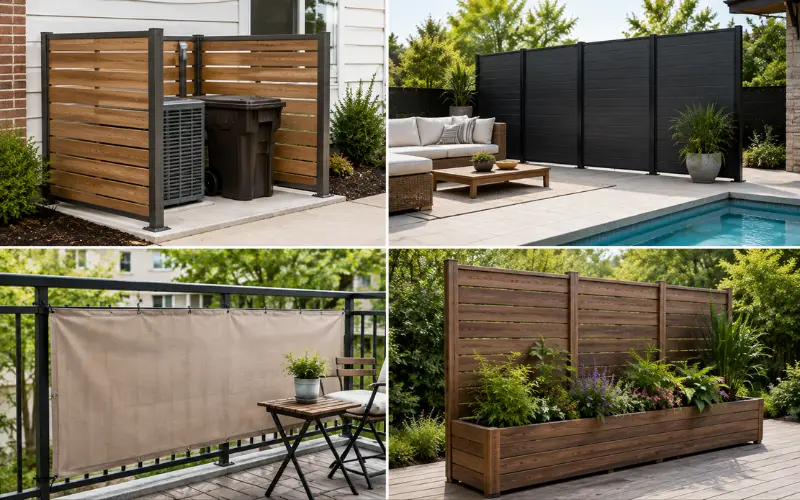
Most product pages sort Outdoor Privacy Screen by style. Sort them by job instead, and the right choice gets a lot clearer.
- Equipment screening (AC units, trash bins, pool pumps): choose a shorter, ventilated slat panel, 4 to 5 feet tall, so airflow around the unit isn’t blocked.
- Full patio enclosure: go with 6 to 8 foot tall solid panels rated for continuous wind exposure, anchored on all sides.
- Balcony or apartment privacy: lightweight roll-up or clip-on panels work, since permanent anchoring usually isn’t allowed. My balcony privacy screen guide covers the mounting hardware that won’t damage rented railings.
- Garden or planter divider: a screen with an integrated planter box adds privacy and doubles as a raised bed, useful in smaller yards where every square foot needs to earn its place.
What HOA and Local Codes Actually Say
Almost none of the competing pages I checked mention permitting, and it’s the single biggest reason DIY Outdoor Privacy Screen get torn down or fined after the fact.
Most municipalities treat a freestanding screen over 6 feet tall the same as a fence for permit purposes, especially if it’s anchored into concrete. Before buying:
- Check your local fence height ordinance, which commonly caps front-yard structures at 3 to 4 feet and backyard structures at 6 to 8 feet.
- If you’re in an HOA, get material and color approval in writing, not a verbal okay, since many associations restrict vinyl or require the “finished side” to face outward.
- Corner lots often have separate visibility triangle rules near driveways and intersections that a straight privacy panel run can violate.
A quick call to your local building department before installation takes fifteen minutes and avoids a much longer argument later. For inspiration that tends to clear most residential codes without issue, see these front gate ideas that pair well with lower privacy panel heights.
Real Cost Breakdown (Not Just the Panel Price)
The listed panel price is rarely the full cost. Budget for these add-ons before comparing totals across brands:
- Concrete or gravel for footings: $15 to $40 per post depending on soil type
- Hard-surface mounting hardware kits: $25 to $60 per base
- Exterior sealant or restain (wood only): $30 to $50 every 2 to 3 years
- Professional installation, if the run is over 20 feet: typically $8 to $15 per linear foot in labor
A 4-panel aluminum and composite kit that lists for $250 can realistically run $350 to $450 once footing materials and hardware are factored in. Wood and DIY builds skew cheaper upfront but add the recurring resealing cost every few seasons.
Maintenance That Actually Extends Lifespan
A screen doesn’t fail from age alone. It fails from neglect between seasons.
- Rinse panels with a garden hose every month during pollen or dust-heavy seasons; buildup traps moisture against the surface.
- Check post anchors twice a year, once before and once after winter, since freeze-thaw cycles loosen ground stakes.
- Touch up any exposed screw heads or scratched powder coating before rust starts, since rust spreads fast once it reaches bare aluminum or steel.
- For wood panels, reseal at the first sign of graying, not after the wood has already started to crack.
Pairing a screen with the right surrounding layout also cuts down wear. A well-planned outdoor living design positions screens to block prevailing wind rather than take it head-on, which alone can add years to the panel’s life.
Frequently Asked Questions
What is the best outdoor privacy screen?
For most yards, an aluminum-framed WPC composite panel offers the best balance of lifespan, low maintenance, and wind resistance. It costs more upfront than vinyl or bamboo but rarely needs replacing for a decade or more.
What can I use as an outdoor privacy screen?
Beyond purpose-built panels, options include lattice with climbing vines, tall planter boxes with dense shrubs, outdoor curtains on a tension rod, or a short section of fencing like a white picket fence styled for partial privacy rather than full enclosure.
What is the cheapest way to add privacy to my backyard?
Fast-growing screening plants like arborvitae or bamboo in containers cost less than manufactured panels, though they take one to two growing seasons to reach full coverage. A roll-up reed screen is the cheapest instant option but lasts only a few years.
What are some good weatherproof outdoor privacy screens?
Aluminum-post screens with WPC or solid vinyl panels handle rain, humidity, and UV exposure best. Avoid hollow plastic or basic reed panels in climates with heavy sun or coastal salt air.
How tall should an outdoor privacy screen be?
Six feet blocks eye-level sightlines from most standing neighbors and passersby. Eight-foot panels are worth it only where privacy from a second-story window is the concern, and only after confirming local height limits.
Do I need a permit for a freestanding privacy screen?
It depends on height and anchoring method. Screens under 6 feet that aren’t permanently anchored usually skip permitting requirements, but anything taller or set in concrete often falls under the same rules as a fence.
Can an outdoor privacy screen handle strong wind?
Yes, if it’s anchored correctly. An L-shaped or staggered panel layout with deep ground stakes or bolted base plates handles far more wind load than a straight run on shallow footings.
Is a portable outdoor privacy screen worth it for renters?
For balconies and rented patios, a portable clip-on or weighted-base screen makes sense since it avoids damaging railings or triggering lease violations, though it won’t match the wind stability of a permanently anchored panel.

