So you want to build your own cabin. Maybe you’ve been dreaming about a quiet retreat in the woods, a cozy backyard studio, or a weekend getaway you can actually call yours. DIY cabin kits make that dream more achievable than ever — but only if you go in with the right information.
This guide covers everything the other sites skip: real cost breakdowns, permit realities, common buyer mistakes, and how to match the right DIY cabin kit to your specific needs.
What Are DIY Cabin Kits?
A DIY cabin kit is a pre-engineered package that includes all the major structural components you need to build a cabin — pre-cut logs or timber panels, roofing materials, windows, doors, and hardware. You (or a small crew) assemble it on-site, like a very satisfying puzzle.
Most DIY cabin kits are designed for first-time builders. That means numbered parts, step-by-step instructions, and components that fit together without needing custom cuts or heavy machinery.
They are not the same as buying lumber at a hardware store and starting from scratch. A quality DIY cabin kit saves weeks of planning, reduces waste, and makes the building process far more predictable.
Types of DIY Cabin Kits
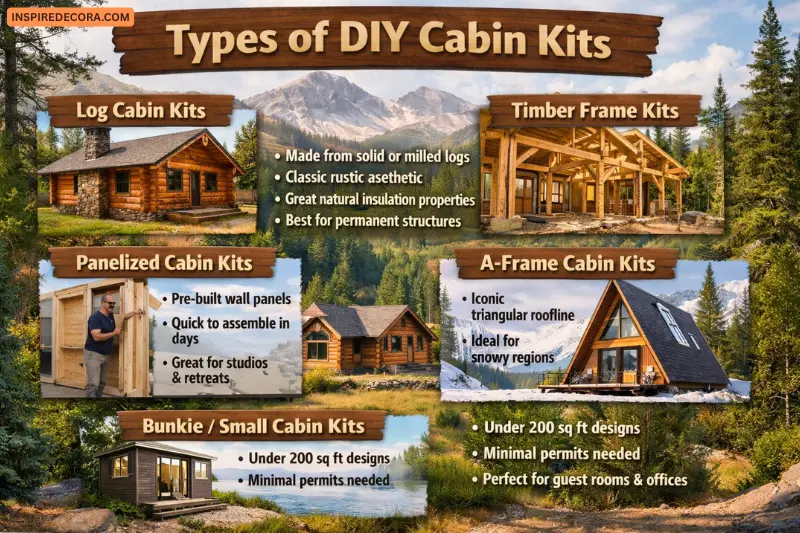
Not all DIY cabin kits are built the same. Here is a quick breakdown of the main types:
Log Cabin Kits
- Made from solid or milled logs
- Classic rustic aesthetic
- Great natural insulation properties
- Best for permanent structures and year-round use
Timber Frame Kits
- Uses large structural beams with open interior spaces
- Stronger and more architectural than standard log kits
- Usually requires more skill to assemble
Panelized Cabin Kits
- Pre-built wall panels that bolt together
- Fastest to assemble — often completed in a few days
- Ideal for backyard studios, guest cabins, and retreats
A-Frame Cabin Kits
- Distinctive triangular roofline
- Excellent for snow-heavy regions (steep roof sheds snow naturally)
- Highly popular for vacation rentals and Instagram-worthy retreats
Bunkie / Small Cabin Kits
- Compact designs under 200 sq ft
- Minimal or no permit required in many areas
- Perfect for guest rooms, home offices, or lakeside getaways
How Much Do DIY Cabin Kits Actually Cost?
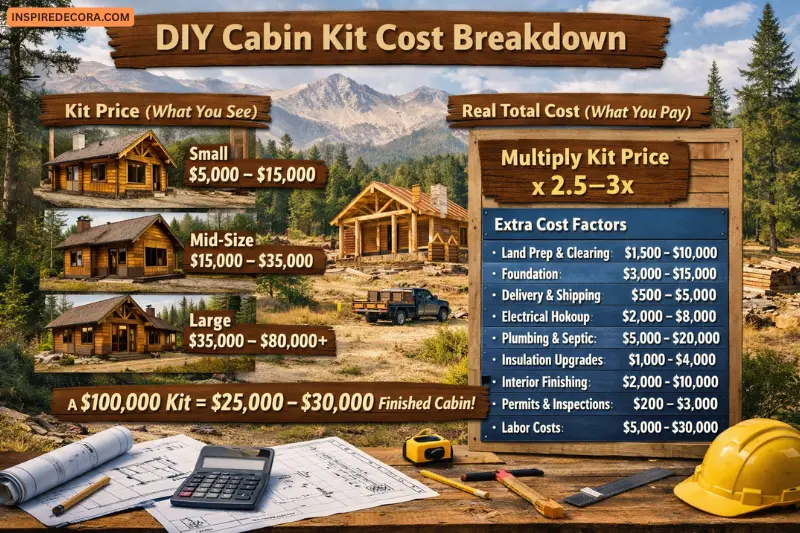
This is where most articles let you down. They list kit prices without telling you the full story.
Here is the honest breakdown:
The Kit Price (What You See)
DIY cabin kits typically range from:
- Small kits (under 150 sq ft): $5,000 – $15,000
- Mid-size kits (150–300 sq ft): $15,000 – $35,000
- Large kits (300–600 sq ft): $35,000 – $80,000+
The Real Total Cost (What You Pay)
The kit is only the beginning. Industry experts consistently recommend multiplying your kit price by 2.5 to 3 times to estimate your true total project cost. That multiplier covers everything outside the box:
| Extra Cost Item | Estimated Range |
|---|---|
| Land preparation / site clearing | $1,500 – $10,000+ |
| Foundation (concrete slab or piers) | $3,000 – $15,000 |
| Delivery and shipping | $500 – $5,000 |
| Electrical hookup | $2,000 – $8,000 |
| Plumbing and septic (if needed) | $5,000 – $20,000 |
| Insulation upgrades | $1,000 – $4,000 |
| Interior finishing (flooring, walls) | $2,000 – $10,000 |
| Permits and inspections | $200 – $3,000 |
| Labor (if hiring help) | $5,000 – $30,000+ |
The bottom line: A $10,000 kit can become a $25,000–$30,000 finished cabin once everything is added in. Budget accordingly and keep a 10–15% buffer for surprises.
Do You Need a Permit for a DIY Cabin Kit?
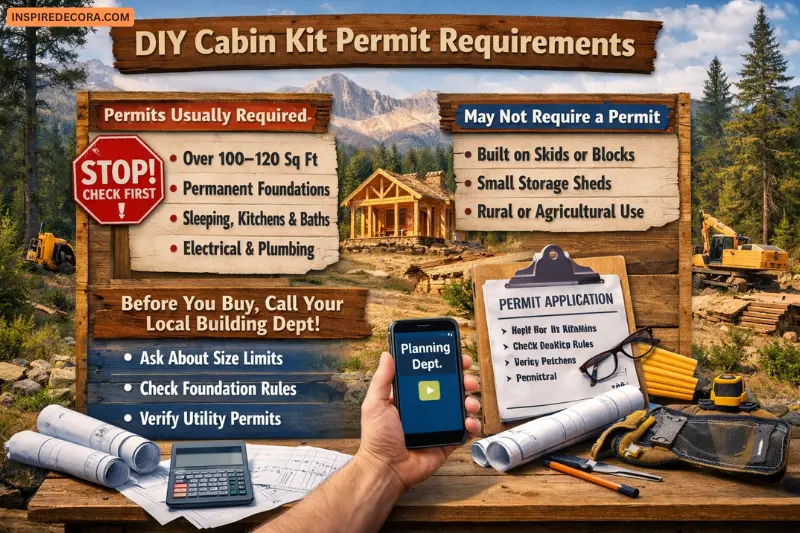
Yes — in most cases. This is one of the most overlooked parts of buying a DIY cabin kit, and skipping it can cost you dearly.
Here is what generally triggers a permit requirement:
- Size: Most municipalities require permits for structures over 100–120 sq ft (or 10 sq meters in Canada)
- Permanent foundation: Cabins on concrete slabs or poured foundations almost always need a permit
- Intended use: Sleeping quarters, kitchens, and bathrooms bring stricter requirements
- Utilities: Any electrical or plumbing connection requires separate permits
Here is what may not require a permit:
- Structures on skids or temporary foundations
- Small storage or studio cabins under local size thresholds
- Certain agricultural or rural properties
What to do before you buy: Contact your local planning or building department before spending a single dollar on a kit. Ask specifically about size limits, foundation requirements, setback rules, and whether your intended use triggers residential building codes. A 10-minute phone call can save you months of costly rework.
How to Choose the Right DIY Cabin Kit for Your Situation
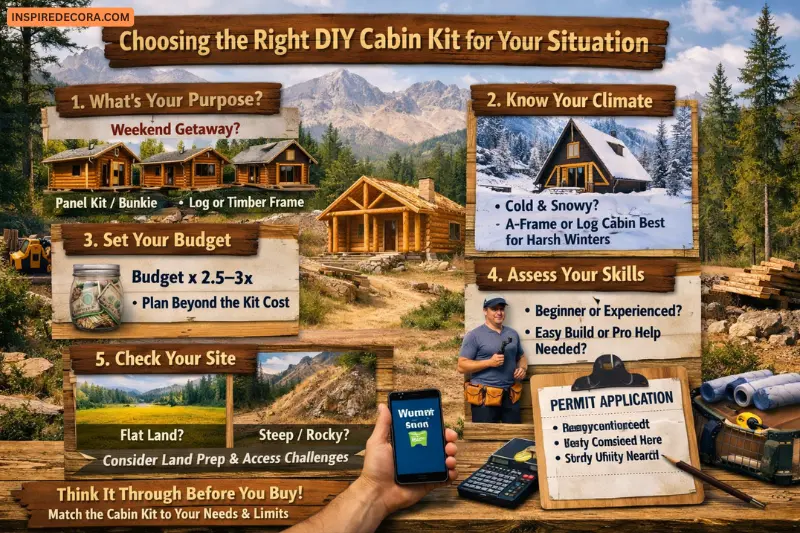
With so many options out there, picking the right kit comes down to answering five questions honestly:
1. What is the primary purpose?
- Weekend retreat → small panelized or bunkie kit
- Year-round living → full log or timber frame kit with proper insulation
- Guest room or home office → compact kit under 150 sq ft
2. What is your climate? Cold or snowy regions demand better insulation and a steeper roof pitch. An A-frame or log cabin kit handles winter far better than a thin-walled panel kit without insulation upgrades. Skipping this step leads to high heating bills and moisture problems down the road.
3. What is your actual budget (total, not just the kit)? Use the 2.5–3x multiplier. If your all-in budget is $30,000, look for kits in the $10,000–$12,000 range to leave room for everything else.
4. How much construction experience do you have? Be honest here. Most DIY cabin kits are designed to be beginner-friendly, but larger kits over 300 sq ft can take weeks to assemble and require knowledge of foundations, framing, and weatherproofing. If in doubt, hire a general contractor for the structural phases and DIY the finishing work.
5. What are your site conditions? Sloped land, rocky soil, or remote locations all add cost and complexity. A flat, accessible lot is your best friend when it comes to keeping a DIY cabin kit project on budget.
What Is Usually Included in a DIY Cabin Kit?
Most kits include:
- Pre-cut wall logs or structural panels
- Roof framing materials
- Windows and exterior doors
- Hardware, screws, and fasteners
- Assembly instructions and/or diagrams
Most kits do NOT include:
- Foundation materials
- Roofing felt, shingles, or metal roofing
- Insulation
- Interior flooring and wall finishes
- Electrical wiring, plumbing, or HVAC
- Paint or stain
Always read the product specification carefully and ask the supplier exactly what is and is not in the box before purchasing.
Common Mistakes People Make with DIY Cabin Kits
Learning from other people’s mistakes is free. Here are the ones that come up again and again:
Mistake 1: Focusing only on the kit price The kit is often the smallest cost in the entire project. Always plan for the full build cost, not just the sticker price.
Mistake 2: Skipping the permit check Building without a permit can result in fines, forced demolition, or being unable to sell or insure the property later. Always check local rules first.
Mistake 3: Underestimating the foundation A poor foundation leads to structural problems, moisture intrusion, and door and window alignment issues down the line. Never cut corners here.
Mistake 4: Ignoring insulation A cabin built for mild climates will be miserable in cold winters. If you plan to use your cabin year-round, invest in proper wall and roof insulation — it pays for itself quickly.
Mistake 5: Buying too big for your first build A smaller, well-finished cabin beats a larger unfinished one every time. Start with a manageable size and expand later if needed.
Mistake 6: Not confirming delivery logistics Large kit packages require truck access, and some rural properties are not easily accessible. Confirm delivery details — including crane or forklift requirements — with your supplier before ordering.
Mistake 7: Choosing the wrong wood species for your climate Cedar and pine perform differently in humid versus dry climates. Ask your supplier which wood species they use and whether it suits your local weather conditions.
DIY Cabin Kit Maintenance: What Competitors Don’t Tell You
Most articles stop at assembly. But a DIY cabin kit is a long-term investment, and how you maintain it determines how long it lasts.
Exterior wood care:
- Apply a UV-protective stain or sealant every 2–4 years depending on sun exposure
- Inspect for cracks or gaps in log chinking annually — these are entry points for moisture and insects
- Clean gutters and roof valleys regularly to prevent water pooling
Seasonal checks:
- Spring: Check the foundation perimeter for settling or water damage after winter
- Fall: Inspect the roof, seals around windows and doors, and caulking before cold weather sets in
Pest prevention:
- Treat the wood with a borate-based product during construction to deter wood-boring insects
- Keep firewood and debris at least 20 feet from the cabin to discourage termites and rodents
Moisture management:
- Ensure proper ventilation in the roof and crawl space to prevent condensation buildup
- Consider a vapor barrier under any slab or pier foundation
A cabin that gets annual attention will easily last 30–50 years or more. One that gets ignored will start showing serious problems within a decade.
Top Features to Look for When Comparing DIY Cabin Kits
When you start comparing kits from different suppliers, keep these factors on your checklist:
- Wall thickness: Thicker walls = better insulation and structural integrity
- Wood treatment: Is the lumber kiln-dried and pre-treated against rot and insects?
- Window and door quality: Double-pane windows significantly improve energy efficiency
- Assembly instructions: Clear, numbered, illustrated instructions save enormous time and frustration
- Customer support: Does the supplier offer technical support during your build?
- Warranty: What does the manufacturer cover, and for how long?
- Shipping timeline: Lead times range from a few weeks to several months depending on the supplier and season
Who Should Consider a DIY Cabin Kit?
DIY cabin kits are a great fit for you if:
- You want a cabin faster and more affordably than a custom build
- You enjoy hands-on projects and have basic tool skills
- You want to reduce labor costs by doing the work yourself
- You are looking for a weekend retreat, vacation rental, backyard studio, or off-grid shelter
- You have a clear, accessible building site
They may not be the right choice if:
- Your land has difficult access, steep slopes, or rocky terrain requiring significant site prep
- You need a large, full-time residence with complex utility requirements
- You have no construction experience and are not comfortable managing the non-kit elements (foundation, electrical, plumbing)
Frequently Asked Questions About DIY Cabin Kits
1. How long does it take to assemble a DIY cabin kit?
It depends on the size and type. Small panelized kits (under 150 sq ft) can be assembled in 2–5 days with a small crew. Larger log cabin kits can take 2–8 weeks, not including foundation work and finishing.
2. Can I build a DIY cabin kit by myself?
Small kits are manageable solo or with one helper, but most builds benefit from 2–4 people for the heavy lifting phases. Larger kits are not realistically a solo project.
3. Do DIY cabin kits come with everything I need?
No. Most kits include the structural shell components. You will need to source and budget separately for the foundation, insulation, interior finishes, utilities, and roofing materials.
4. Are DIY cabin kits a good investment for vacation rentals?
Yes — especially A-frame and modern cabin designs. Unique, well-built cabins in desirable locations perform strongly on short-term rental platforms. Factor in local short-term rental regulations before purchasing.
5. What is the cheapest DIY cabin kit I can buy?
Small bunkie-style and compact panel kits start around $5,000–$8,000. However, remember that the all-in cost including foundation, finishing, and utilities will be significantly higher.
6. Can I get a mortgage or financing for a DIY cabin kit?
Some lenders offer construction loans or personal loans for cabin builds, but DIY kits on undeveloped land are often harder to finance than a traditional home. Talk to a lender early in your planning process.
7. What permits do I need for a DIY cabin kit?
It varies by location. At minimum, expect to need a building permit for anything with a permanent foundation or over 100–120 sq ft. Electrical, plumbing, and septic require their own separate permits. Always check with your local building department first.
8. How do I maintain a log or timber DIY cabin kit?
Re-seal or re-stain the exterior every 2–4 years, inspect chinking and caulking annually, keep the roof and gutters clear, and treat the wood for pest resistance. Consistent small maintenance prevents costly large repairs.
9. Are DIY cabin kits suitable for cold climates?
Yes, if you choose a kit designed for cold weather and invest in proper insulation. Log cabin kits with thick walls and high-quality double-pane windows perform well in cold regions. Avoid budget panel kits with minimal insulation if you plan to use the cabin in winter.
10. How do I compare DIY cabin kit suppliers?
Look beyond the price tag. Compare wall thickness, wood treatment, what is and is not included, assembly instructions quality, customer support, warranty terms, and delivery timelines. Reach out to each supplier with specific questions — how they respond tells you a lot about the after-purchase experience.
Final Thoughts
Building a DIY cabin isn’t just a purchase decision — it’s a long-term project that rewards planning, patience, and realistic expectations. The appeal of cabin kits is clear: they simplify construction, reduce upfront complexity, and make ownership of a custom space more achievable than traditional builds.
But the real success of a DIY cabin project rarely comes from the kit itself. It comes from everything around it — choosing the right size for your needs, understanding the true total cost, getting permits sorted early, and not cutting corners on foundation, insulation, or site preparation.
If there’s one takeaway, it’s this: treat the cabin kit as the starting point, not the finished solution. The more carefully you plan the parts outside the box, the more enjoyable the building process becomes — and the more likely you’ll end up with a cabin that actually lasts, performs well in your climate, and fits your lifestyle for years to come.