
A cluttered TV corner can drag down an otherwise beautiful living room. A well-planned wall mounted TV unit fixes that in one move. It clears the floor, hides the mess of wires, and turns your screen into a real design feature instead of an afterthought.
This guide walks you through everything competitors’ articles leave out: how to match a unit to your wall type, the right height formula for your actual seating distance, and honest budget breakdowns so you don’t overspend on the wrong option.
What Is a Wall Mounted TV Unit?
A wall mounted TV unit is a piece of furniture or a mounting system that holds your television off the floor, usually paired with storage or open shelving fixed directly to the wall. Unlike a traditional TV cabinet that sits on the floor, this style floats, which frees up space and gives the room a lighter, more modern feel.
You’ll find three broad categories:
- Floating shelf style: A single slim shelf holds the media console below the screen.
- Closed cabinet style: Wall-mounted cabinetry with doors that hide consoles, routers, and cables.
- Full media wall style: Floor-to-ceiling paneling that integrates the TV, storage, and sometimes a fireplace or bookshelves into one design.
Why Choose a Wall Mounted TV Unit
Homeowners pick this setup for reasons beyond looks:
- More floor space. Rooms feel bigger instantly, which matters most in apartments and smaller living rooms.
- Cleaner sightlines. No cabinet legs, no dust traps underneath, easier vacuuming.
- Safety around kids and pets. A properly mounted unit cannot be pulled over the way a freestanding stand can.
- Better cable control. Wires run inside the wall or through built-in channels instead of trailing across the floor.
- Higher perceived value. A neatly mounted TV wall reads as intentional design, which matters if you ever sell or rent the home.
Choosing the Right Wall Mounted TV Unit for Your Wall
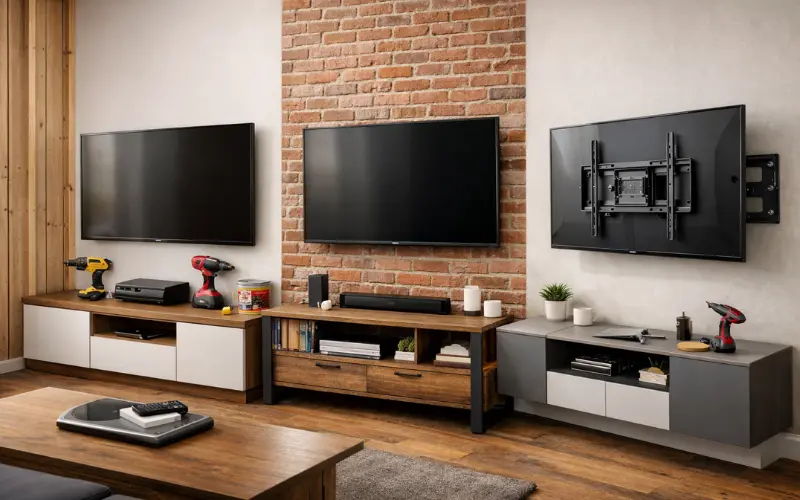
This is the step most articles skip, and it’s the one that prevents disasters later.
Know your wall type before you shop:
- Drywall over wood studs: The most common setup in newer homes. Anchors must land in studs, spaced 16 or 24 inches apart. A stud finder is worth the ten dollars it costs.
- Brick or concrete: Needs masonry anchors and a hammer drill. Heavier units may need a professional installer here.
- Plasterboard on metal studs: Common in apartments and offices. Use toggle bolts rated for the unit’s full weight, not just the TV.
Check the weight math. Add the TV’s weight to the loaded unit’s weight (books, gear, decor) and compare that total against the bracket’s rated capacity. Never assume the listed capacity already includes what you plan to store inside the unit.
Confirm VESA compatibility. VESA is the standard hole pattern on the back of your TV that lines up with the mount. Measure it before buying any wall mounted TV unit that includes a built-in bracket, since mismatched patterns are the most common return reason.
Getting the Height Right: A Formula, Not a Guess
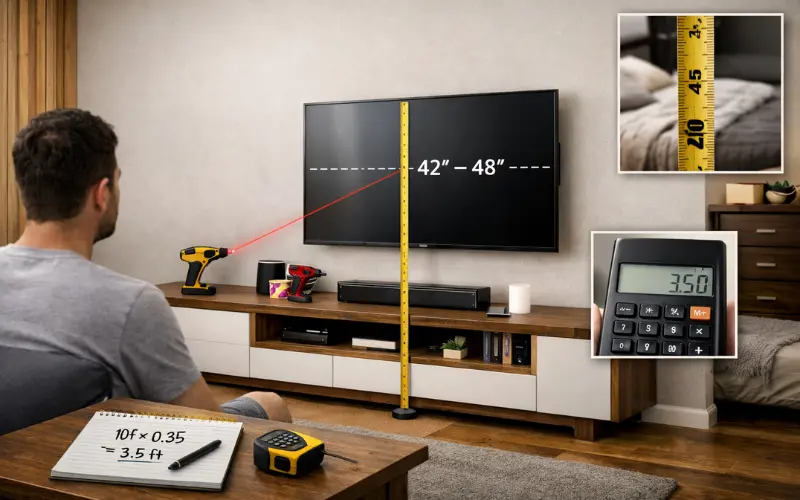
Most guides repeat a flat “42 inches from the floor” rule. That number only works for average ceiling height and average sofa seating. Use this instead:
- Measure the distance from where you normally sit to the wall.
- Multiply that distance by roughly 0.35 to estimate ideal screen center height in relation to your eye line when seated.
- Adjust the wall mounted TV unit’s position so the television’s center sits at that height, not the top or bottom edge.
For a typical 8 to 10 foot seating distance, this usually lands the screen center between 42 and 48 inches off the floor. Bedrooms, where people watch from bed, often need the unit mounted higher, closer to 55 to 60 inches.
Wall Mounted TV Unit Ideas by Room Size
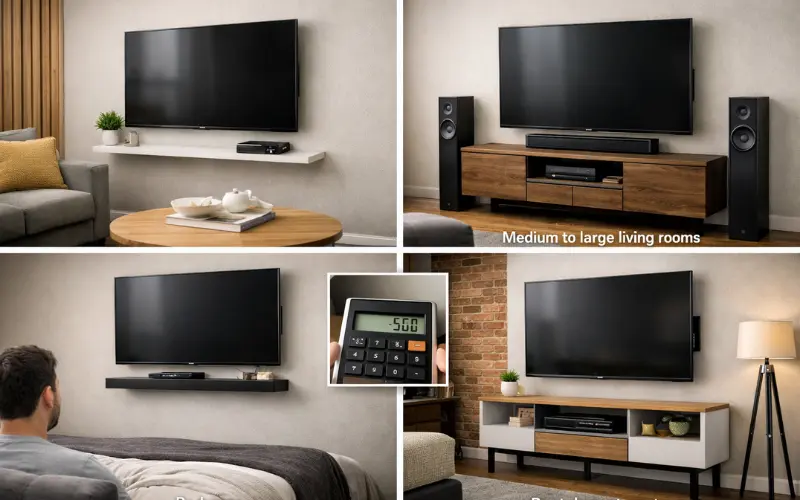
Small living rooms (under 150 sq ft):
Choose a slim floating shelf under 12 inches deep. Stick to one or two open cubbies rather than a full cabinet, and keep the finish light to avoid visually shrinking the room.
Medium to large living rooms:
A closed cabinet style wall mounted TV unit works well here, since it can stretch 60 to 90 inches wide to properly anchor a large screen without looking undersized. Add a soundbar shelf directly beneath the TV for balanced proportions.
Bedrooms:
Go narrow and mounted higher, since floor space matters less but sightline from the bed matters more. A compact unit under 45 inches wide is usually enough.
Rentals and apartments:
Look for units with reversible anchor kits or freestanding legs that still allow a wall-mounted look without permanent wall damage. Always keep the original hardware so holes can be patched cleanly on move-out.
Materials Worth Considering
- Solid wood: Most durable, ages well, best long-term value despite higher upfront cost.
- Engineered wood with veneer: Good middle ground on price and appearance.
- MDF with laminate: Budget-friendly, lighter to mount, but less resistant to moisture and heavy daily wear.
- Stone-effect or matte panel finishes: Trending for 2026, pair well with textured walls like limewash or micro-cement.
Cable Management That Actually Works
Cables are the detail that makes or breaks the finished look of any wall mounted TV unit:
- Route cords through the unit’s built-in cutouts first, before considering an external raceway.
- Use a paint-matched cord cover if cables must run visibly down the wall.
- Keep the power strip inside the cabinet, not dangling behind it, so only a single cord is visible.
- If your local electrical code allows in-wall rated cable, running it inside the wall gives the cleanest result of all.
DIY, Ready-Made, or Custom: What Fits Your Budget
- Ready-made units ($50 to $300): Fastest option, widely available, fine for renters and smaller TVs.
- Mid-range branded units ($300 to $1,000): Better materials, more storage, sturdier brackets, suited to permanent homes.
- Custom-built media walls ($1,000 and up): Built to exact wall dimensions, often integrate lighting or a fireplace, best for a true design centerpiece.
Match the spend to how long you plan to stay in the space. A rental deserves the ready-made tier. A forever home justifies the custom build.
Common Mistakes to Avoid
- Mounting into drywall alone without hitting studs or using rated anchors.
- Choosing a unit too narrow for the TV, which leaves it looking stranded on the wall.
- Ignoring glare: check window position before fixing the final height and angle.
- Ignoring the loaded weight of books and decor when calculating bracket capacity.
- Skipping a stud finder scan, even when the listing says “easy install.”
Frequently Asked Questions
What is the ideal height for a wall mounted TV unit?
Base it on your seating distance rather than a fixed number. For most living rooms, the screen center works best between 42 and 48 inches off the floor.
Can I mount a wall mounted TV unit on drywall alone?
Only for very light units. Anything holding a TV and storage needs anchors driven into studs or rated toggle bolts for metal stud walls.
How much weight can a wall mounted TV unit typically hold?
This varies by bracket, usually between 50 and 150 pounds. Always add the loaded weight of books and decor to the TV’s weight before comparing against the rating.
Is a wall mounted TV unit suitable for rental apartments?
Yes, if you choose one with a reversible mounting kit or freestanding legs. Keep the original hardware so you can patch holes cleanly when you move.
What size wall mounted TV unit do I need for a 65 inch TV?
Aim for a unit at least as wide as the TV, ideally 10 to 20 inches wider on each side, so the screen doesn’t visually overpower the furniture.
Do I need a professional to install a wall mounted TV unit?
Not always. Drywall installs into studs are manageable as a DIY project with a stud finder and level. Brick, concrete, or very heavy units are safer left to a professional.
What is the best material for a wall mounted TV unit?
Solid wood offers the best long-term durability. Engineered wood with veneer is a solid mid-range choice, while MDF suits tighter budgets.
Final Thoughts
A wall mounted TV unit does more than hold your television. Done right, it becomes the visual anchor of the entire room, balances the size of your screen, and keeps cables and clutter out of view. Measure your wall, match the unit to your wall type and room size, and use the height formula above instead of a generic number. That combination is what separates a unit that looks bought from one that looks designed.

