
Few features say “welcome home” louder than a white picket fence. It has framed front yards for over two centuries, and it remains one of the most requested fence styles in the country. This guide covers everything competitors skip: the real history, exact anatomy terms, an honest materials comparison, current code rules, true costs, and a maintenance schedule that actually works.
What Is a White Picket Fence, Really?
A white picket fence is a low, open-style fence made of evenly spaced vertical boards, called pickets, attached to horizontal rails and set between posts. Most stand between 3 and 4 feet tall, tall enough to mark a boundary but low enough to keep sightlines open.
The design traces back to colonial dooryard gardens, where families built simple staved fences to keep chickens out of vegetable beds and toddlers off the road. Early pickets were often pointed on top for a practical reason: it stopped chickens from perching and hopping over into the garden. By the Victorian era, homeowners dressed up their white picket fence with decorative finials and scalloped tops to rival the ironwork of wealthier neighbors. That blend of function and charm is still the appeal today.
Anatomy of a White Picket Fence
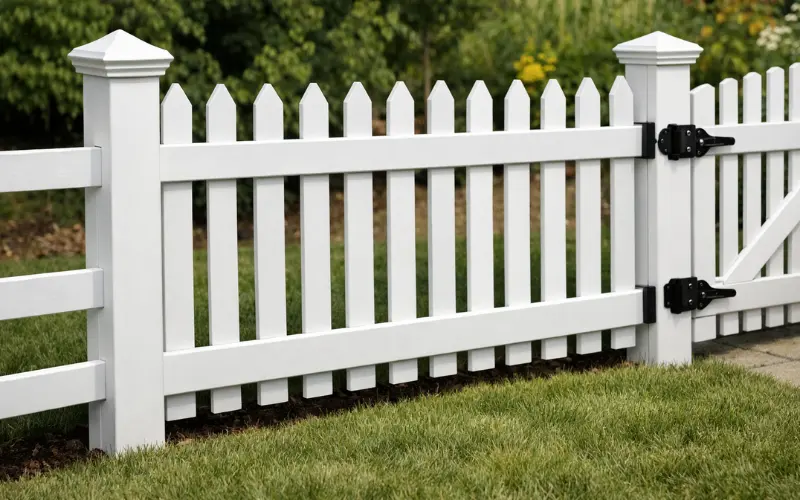
Understanding the parts helps you talk to a contractor, compare quotes, and spot quality work.
- Posts: The vertical anchors set into the ground every 6 to 8 feet, carrying the structural load
- Rails: The horizontal boards, usually two per section, that connect the posts and hold the pickets
- Pickets: The narrow vertical boards that make up the visible face of the fence
- Caps: Decorative toppers on posts and sometimes pickets that shed water and add style
- Gate hardware: Hinges, latches, and posts that support foot traffic without sagging over time
A well-built white picket fence keeps the pickets off the ground by an inch or two, since direct soil contact is what causes rot fastest, whether the fence is wood or a wood-look composite.
Wood vs. Vinyl vs. Composite vs. Aluminum
Most articles only mention wood and vinyl. Here is the full picture, including two materials homeowners often overlook.
| Material | Upfront Cost | Lifespan | Maintenance |
|---|---|---|---|
| Wood (pine, cedar, spruce) | Low to moderate | 10 to 20 years | Repaint or reseal every 3 to 5 years |
| Vinyl (PVC) | Moderate to high | 20 to 30 years | Occasional pressure wash, no painting |
| Composite | Moderate to high | 25 to 30 years | Minimal, no painting, no rot |
| Aluminum | High | 30-plus years | Rinse occasionally, rust-resistant coating |
Wood remains popular for its classic look and lower entry cost, but a white picket fence in wood needs the most upkeep. Vinyl has become the default choice for many homeowners because it stays bright white without repainting, and a simple pressure wash during the dormant season keeps it looking new. Composite and aluminum picket options are newer to the market but worth considering if you want decades of low maintenance, even though they cost more upfront.
Popular Style Variations to Consider
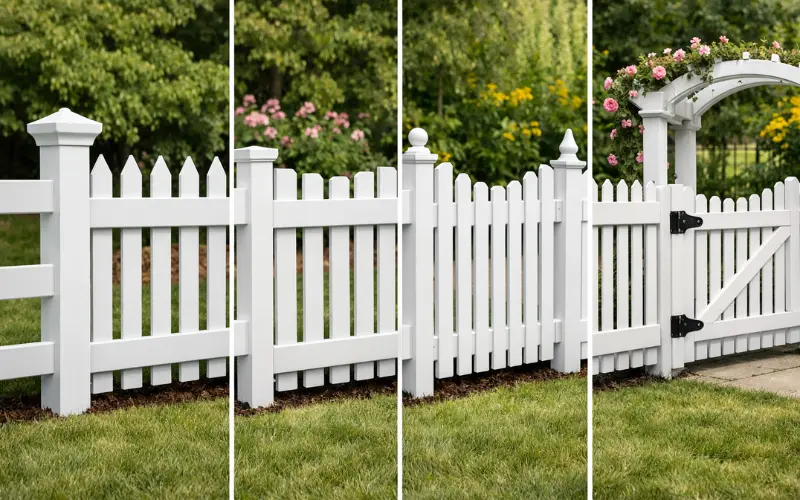
A white picket fence does not have to look identical to your neighbor’s. Common style options include:
- Pointed pickets: The traditional colonial look, still the most requested style
- Flat-top or “dog-ear” pickets: A cleaner, more contemporary silhouette that suits modern cottages
- Scalloped top: Pickets graduate in height between posts for a wave-like curve, a hallmark of Victorian-era charm
- Gothic top: Pickets end in a steep point for a slightly more formal, storybook appearance
- Solid top rail: A straight board runs along the top of the pickets for a tidier, more modern finish, often used near pools
Mixing a picket style with a matching arbor over the gate is one of the simplest upgrades. A climbing rose or clematis trained over the arch turns a basic white picket fence into a genuine curb-appeal centerpiece, something few budget installers mention but every landscape designer recommends.
How Tall Should Your Fence Be?
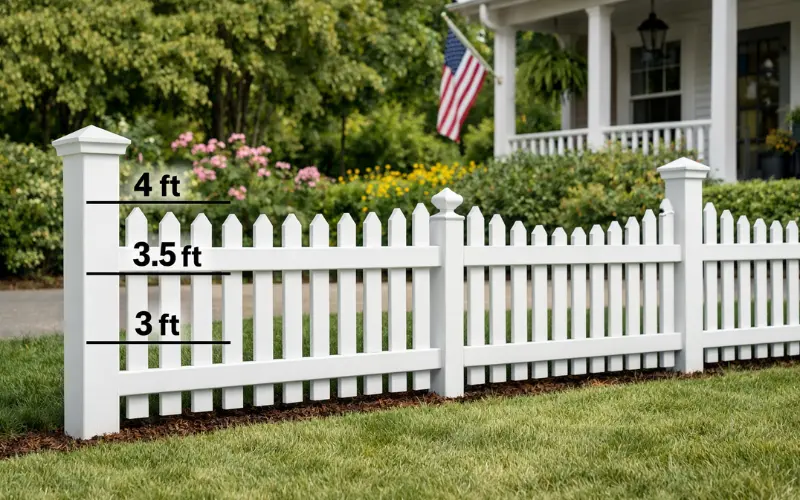
Most front-yard white picket fences run 3 to 4 feet high. This height is intentional. It is tall enough to define the yard and slow down foot traffic without blocking views or feeling closed off, and it is usually the maximum many cities allow for front-yard fencing without a variance.
Before you install one, check three things:
- Your city or county’s front-yard height ordinance, since many cap front fences at 3 to 4 feet
- Your homeowners association rules, which sometimes dictate approved colors or styles
- Local setback requirements, which determine how close to the property line or sidewalk you can build
Skipping this step is the single most common reason homeowners end up rebuilding a brand-new fence within the first year.
What Does a White Picket Fence Cost?
Pricing depends on material, length, height, and how many gates you need. As a general guide:
- Wood picket fencing typically runs lower per linear foot than vinyl but adds cost over time through repainting
- Vinyl picket fencing costs more upfront but has no repainting expense over a 20-year span
- Composite and aluminum sit at the higher end of the price range but require the least maintenance
- Gates, decorative caps, and scalloped or gothic cuts all add labor cost, since more detail means more precise measuring and installation time
Get at least two or three quotes, and ask each installer to break out material cost, labor, and any add-ons like finials or arbors so you can compare apples to apples.
Where to Place Plants Along the Fence Line
This is one detail most competitor guides completely miss. If you want roses, hydrangeas, or a cottage border along your white picket fence, placement matters:
- Setting the fence back at least a foot or two from the sidewalk creates a proper planting strip for climbing roses and perennials
- Planting right against the fence line without a gap makes it harder to paint or pressure wash later
- If pets in the neighborhood roam, keeping the planting bed on the inside of the fence protects it from damage
- Climbing plants trained onto a trellis panel or arbor add height and softness without blocking the classic open sightline a white picket fence is known for
Maintenance Schedule That Actually Works
A white picket fence only stays picture-perfect with the right care routine.
For wood fences:
- Wash with mild soap and water once or twice a year
- Repaint every 3 to 5 years using exterior-grade paint with a primer coat first
- Check posts annually for rot at the soil line, the most common failure point
- Trim back grass and mulch touching the base to reduce moisture contact
For vinyl, composite, and aluminum fences:
- Rinse with a garden hose or pressure washer once or twice a year
- Spot-clean mildew with a vinegar and water solution rather than harsh chemicals, which can dull the finish
- Inspect gate hinges and latches yearly, since hardware wears out long before the fence material does
Following this schedule is the difference between a fence that looks worn after five years and one that still looks freshly painted after fifteen.
Frequently Asked Questions
How much does a white picket fence cost per linear foot?
Wood options generally cost less upfront, while vinyl, composite, and aluminum cost more initially but save money over time by skipping repainting.
How long does a white picket fence last?
Wood typically lasts 10 to 20 years with regular maintenance. Vinyl, composite, and aluminum can last 20 to 30 years or longer with minimal upkeep.
What is the standard height for a front-yard picket fence?
Most front-yard fences are 3 to 4 feet tall, which is also the typical maximum allowed by many local ordinances without a special permit.
Do I need a permit to install one?
Many cities require a permit for any fence over a certain height, and some regulate front-yard fencing regardless of height. Always check with your local building department first.
Is vinyl better than wood for a picket fence?
Vinyl requires far less maintenance and holds its white color longer, but wood offers a lower upfront cost and a more traditional, natural look many homeowners still prefer.
How often should I repaint a wood picket fence?
Plan on repainting every 3 to 5 years, sooner in humid or coastal climates where moisture speeds up wear.
Can I plant flowers directly against my fence?
You can, but leaving a small gap makes future cleaning and painting far easier, and it protects the planting bed from pet traffic if the fence sits along a walkway.
What is the difference between scalloped and gothic picket tops?
A scalloped top curves in a wave pattern between posts, while a gothic top comes to a sharper, more formal point on each individual picket.
Final Thoughts
A white picket fence is more than a boundary line. It is a design statement rooted in more than two hundred years of American front yards, and the right material, height, and maintenance plan will keep it looking sharp for decades. Whether you choose classic painted wood or a low-maintenance vinyl alternative, a well-planned white picket fence adds charm, function, and lasting curb appeal to any home.

