
Florida gardening isn’t one climate, it’s three. What thrives in a Tallahassee backyard in March can rot in the ground in Miami the same month, and a planting calendar built for one region will quietly sabotage a gardener in another. The short version: match your plant choices and timing to your specific region (North, Central, or South Florida), test and amend your soil before you plant anything, and build your calendar around the wet season and hurricane window, not just frost dates.
That’s the part most calendars leave out. They’ll tell you what to plant in October. They won’t tell you why your tomatoes rotted in June, why your soil test keeps coming back alkaline no matter what you add, or why your neighbor two counties over is planting the exact same crop a full month before you.
Why Florida Doesn’t Follow the Rest of the Country’s Rules
Most of the U.S. gardens by frost dates. Florida Gardening by heat, humidity, and rainfall timing instead, and that’s the single biggest mental shift a transplant gardener needs to make.
North Florida (Panhandle down through Gainesville and Jacksonville) sits in USDA zones 8b to 9a and still gets real frosts, sometimes even light snow flurries. Central Florida Gardening (Orlando, Tampa, Ocala) runs 9a to 9b with milder winters but occasional cold snaps that catch new gardeners off guard. South Florida (Miami, Fort Lauderdale, the Keys) is zone 10a to 11, essentially frost-free, and behaves more like a tropical growing region than anything most transplants have gardened in before.
The practical effect: South Florida gardeners plant their “spring” vegetables in fall and winter, then coast through what northern gardeners would call the growing season doing something else entirely. If you copy a generic Florida gardening guide without checking which zone it was written for, you’ll plant three to six weeks off in either direction.
The Soil Problem Nobody Explains Clearly
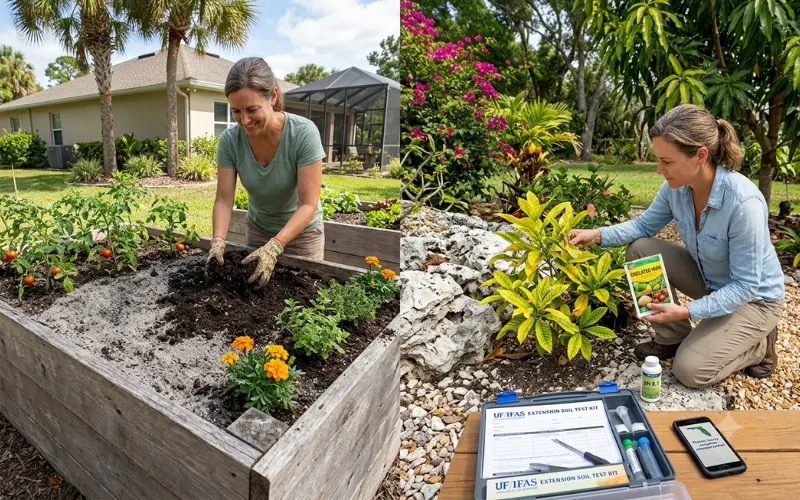
Here’s a gap in almost every gardening guide I’ve read: Florida Gardening soil isn’t one thing, and treating it that way wastes money on the wrong amendments.
North and Central Florida sit on Myakka soil, the official state soil, which is mostly fine sand with almost no organic matter. It drains fast, holds nutrients poorly, and dries out between rains even in summer. You need to work in compost or aged manure every season, not just at planting time, or you’re feeding your irrigation system more than your plants.
South Florida Gardening is a different animal. Much of Miami-Dade and the Keys sit on oolitic limestone, sometimes just inches below the surface. That soil runs alkaline, often pH 7.5 to 8.5, which locks up iron and manganese and causes the yellowing leaves (with green veins) that new South Florida gardeners mistake for a watering problem. If that’s what you’re seeing, more water won’t fix it. You need chelated iron, acid-forming fertilizer, or raised beds filled with proper soil so roots skip the limestone entirely.
The fix that actually works long-term: get a soil test through your county extension office before you buy a single bag of amendment. It costs little and tells you exactly what your specific yard needs instead of guessing based on advice written for sandy Panhandle soil when you’re gardening on Miami limestone.
Timing Around Florida’s Real Growing Calendar
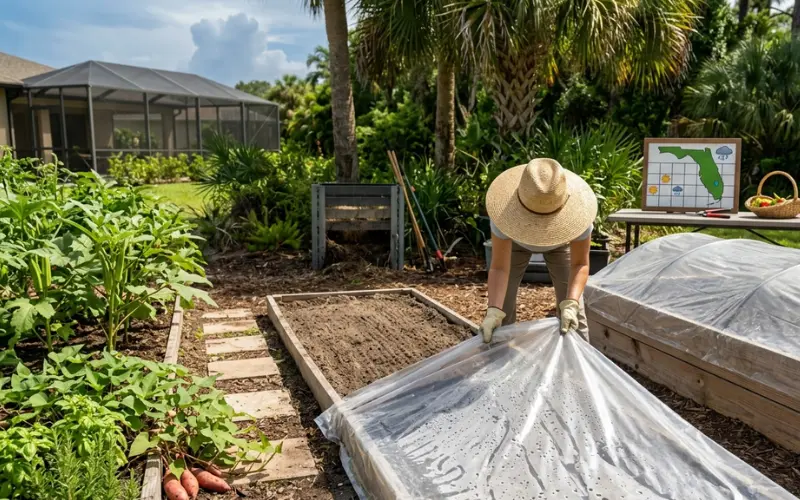
Florida effectively runs two vegetable seasons in the north and central regions and closer to three in the south, but the detail most calendars skip is the rainy season disruption in between.
From roughly May through October, Florida gets a daily pattern of brief, heavy afternoon thunderstorms. That’s good for water bills, bad for fungal disease. Tomatoes, squash, and cucumbers planted mid-summer often succumb to blight or powdery mildew before they fruit, which is why experienced Florida gardeners treat summer as a “rest and prep” season for the vegetable bed rather than a full planting window.
A practical trick worth stealing: use the summer heat to solarize your beds. Cover damp soil tightly with clear plastic for four to six weeks during peak summer sun. The trapped heat kills nematodes, weeds, and soilborne disease, and your bed is clean and ready right as fall planting season opens in September and October.
Hurricane season (June 1 through November 30) also deserves a spot on your gardening calendar that most guides ignore entirely. Avoid planting top-heavy or newly staked trees in August and September when storm risk peaks. If a storm is forecast, harvest anything close to ripe rather than risk losing it, and hold off on fertilizing right before a major rain event since heavy runoff just washes the nutrients away.
Chill Hours: The Fruit Tree Detail Most Guides Skip
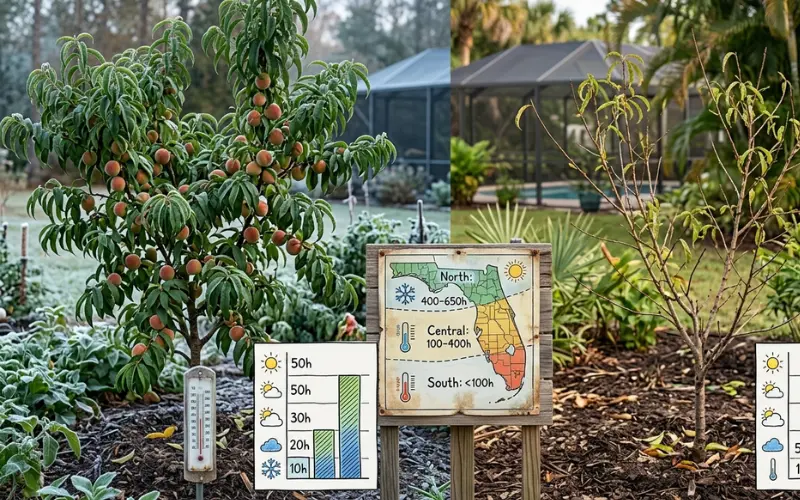
If you’re planting peaches, apples, or blueberries, chill hours matter more than hardiness zone, and almost nothing online explains this for home gardeners.
Chill hours count the cumulative time between 32°F and 45°F a plant needs during dormancy to fruit properly the following season. North Florida gets 400 to 650 chill hours most winters. Central Florida gets 100 to 400. South Florida often gets under 100, sometimes close to zero in warm years.
Plant a “low-chill” variety bred for the Deep South (there are peach and apple cultivars specifically developed by UF for 150 to 400 chill hours) and it’ll fruit reliably in Central Florida. Plant a standard-issue peach tree from a big-box store that needs 800+ chill hours, and you can do everything else right and still get no fruit, because the tree never gets the cold exposure it’s genetically wired to require.
Water Restrictions Most New Gardeners Don’t Know Exist
Florida is divided into five water management districts (South Florida, St. Johns River, Southwest Florida, Suwannee River, and Northwest Florida), and each one sets mandatory watering restriction days by address, usually tied to whether your house number is odd or even. Violating them can mean a real fine, not just a warning.
This matters for garden planning in a way most content skips entirely: if you’re only allowed to irrigate two or three days a week, that changes what you can reasonably grow. Deep-rooted, drought-tolerant natives and Florida-Friendly plants handle restricted watering far better than thirsty ornamentals that expect daily moisture. Check your specific district’s current schedule before you commit to a water-hungry planting plan, since the days and hours do shift seasonally.
Pest Pressure That’s Specific to Florida’s Climate
Humidity and warmth don’t just help plants grow, they help problems grow too, and the pest list here differs from what most transplants are used to managing.
- Chinch bugs attack St. Augustine lawns in hot, dry stretches; look for yellowing patches that don’t respond to watering.
- Love bugs swarm twice a year (roughly May and September) and are mostly a nuisance rather than a plant threat, but their sheer numbers can coat and stress tender new growth.
- Powdery mildew and fungal blights thrive in the humid rainy season; space plants for airflow rather than crowding them for looks.
- Root-knot nematodes are common in Florida’s sandy soil and stunt vegetables without obvious above-ground symptoms until you pull a plant and see the knotted roots. Soil solarization and crop rotation are your best defenses.
- Citrus greening (HLB) has devastated backyard citrus statewide; buy only certified disease-free trees from a reputable nursery, not a cutting from a neighbor’s tree.
Small-Space Florida Gardening: Condos, HOAs, and Rentals
A huge share of South and Central Florida residents garden in condos or HOA-controlled communities, and standard gardening guides written for suburban yards with no restrictions simply don’t apply.
Container gardening solves the limestone soil problem automatically since you control the growing medium entirely. Look for HOA language around “Florida-Friendly Landscaping,” since many associations are legally required to permit these low-water, native-leaning designs even if their standard rules restrict vegetable beds in front yards. Balconies with strong afternoon sun exposure (common on west-facing units) need heat-tolerant choices like peppers, herbs, or succulents rather than anything that sulks above 90°F.
Quick Reference: Florida Gardening by Region
| Factor | North Florida | Central Florida | South Florida |
|---|---|---|---|
| USDA Zone | 8b–9a | 9a–9b | 10a–11 |
| Chill Hours | 400–650 | 100–400 | Under 100 |
| Frost Risk | Yes, real winters | Occasional light frost | Rare to none |
| Soil Type | Sandy, acidic | Sandy, mixed | Limestone, alkaline |
| Spring Planting | March | Late Feb–March | Fall through Feb |
For deeper crop-by-crop planting dates, the UF/IFAS regional calendars (searchable as the North Florida, Central Florida, and South Florida gardening calendars) and the UF Vegetable Gardening Guide remain the most reliable free references, and most counties will hand you a printable Florida gardening guide PDF or UF planting guide PDF at your local extension office if you ask.
FAQ: Florida Gardening Questions People Actually Ask
When should I start a vegetable garden in Florida?
It depends entirely on your region. North and Central Florida gardeners plant spring crops in February and March, while South Florida gardeners plant their main season from October through February, avoiding the brutal heat and disease pressure of summer.
Why does my soil test keep coming back alkaline in South Florida?
You’re likely gardening on or near oolitic limestone bedrock, common throughout Miami-Dade and the Keys. Raised beds filled with proper soil, or chelated iron amendments, address this more reliably than trying to acidify native ground.
Can I garden in Florida during the summer?
Yes, but choose heat-tolerant crops like sweet potatoes, okra, southern peas, and cherry tomatoes. Many experienced gardeners use summer to solarize and rest their beds instead of fighting fungal disease pressure from daily rain.
Do I need to worry about frost in Central Florida?
Occasionally. Central Florida sees light frost most winters, so keep frost cloth on hand for cold-sensitive plants, especially in January.
What’s the biggest mistake new Florida gardeners make?
Copying a generic planting calendar without checking whether it was written for their specific region. A South Florida gardener following a North Florida schedule will be months off.
Are there watering restrictions I need to follow?
Yes. All of Florida falls under one of five water management districts, each with mandatory watering days tied to address. Check your local district’s current schedule before planning irrigation-heavy beds.
Why won’t my fruit tree produce fruit even though it looks healthy?
It may not be getting enough chill hours for its variety. Standard peach or apple varieties often need far more cold exposure than Central or South Florida provides; look for low-chill cultivars instead.
Is it safe to plant citrus trees in Florida right now?
Yes, but only buy certified disease-free trees from a licensed nursery due to the ongoing spread of citrus greening (HLB), which has no cure and can wipe out a backyard tree within a few years.
Final Thoughts
Florida gardening rewards patience more than any other skill. The state will punish a rushed planting calendar, an unamended soil bed, or a fruit tree picked without checking chill hours, but it forgives almost everything else if you give it time and pay attention to your specific region. Start with a soil test, plant by your zone and not by habit from wherever you gardened before, and build your calendar around the wet season and hurricane window instead of just frost dates. Get those fundamentals right and Florida’s long growing season does most of the heavy lifting for you.

