
Standing in a glass showroom with a dozen samples in front of you gets confusing fast. Two names keep coming up: translucent and frosted. They look almost identical at first glance, yet they are not the same thing, and picking the wrong one can leave you with less privacy than you expected. Getting the translucent glass vs frosted glass distinction right from the start saves you a costly do-over later.
This guide breaks down translucent glass vs frosted glass in plain language. You will learn what each term means, how they perform in real rooms, what they cost, and which one fits your project.
What Is Translucent Glass?
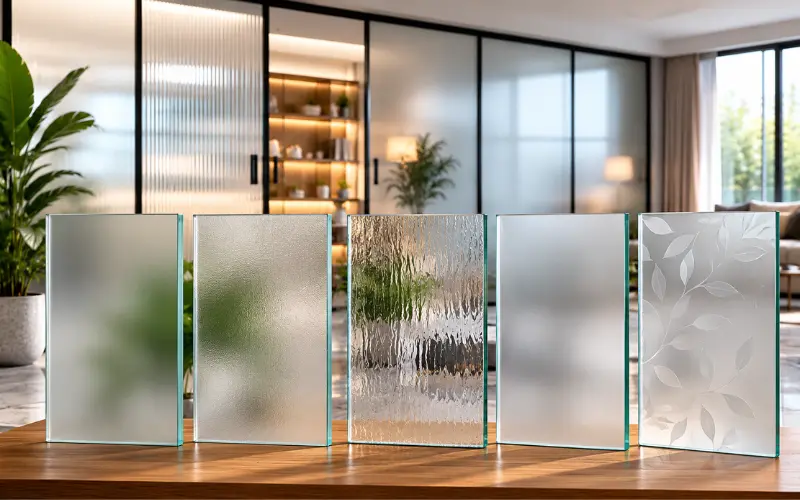
Translucent glass is the broad category. It describes any glass that lets light pass through while blurring the image on the other side. You cannot see sharp shapes or faces through it, but the room behind it never goes dark.
Translucent glass includes several finishes:
- Acid-etched glass
- Sandblasted glass
- Rain glass and other textured patterns
- Satin or matte-coated glass
- Frosted glass
That last point matters. Frosted glass is one type of translucent glass, not a separate category sitting beside it. When people search for translucent glass vs frosted glass, they are often really asking how frosted compares to other translucent finishes like textured or satin glass.
What does translucent glass look like? Picture a foggy window on a cold morning. You can tell there is movement or color behind it, but details stay soft. That glowing, blurred quality is the whole point of translucent glass.
What Is Frosted Glass?
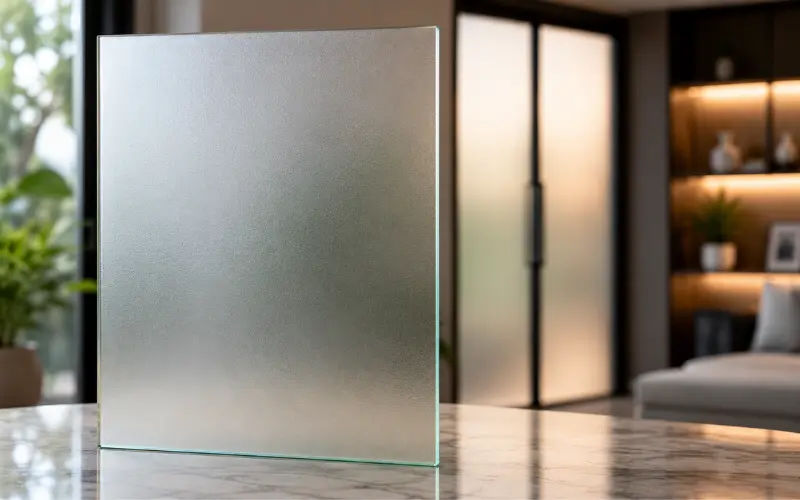
Frosted glass is a specific finish within the translucent glass family. It starts as ordinary clear glass, then gets treated with sandblasting or an acid bath to roughen one surface. That rough surface scatters light instead of letting it pass straight through, creating the classic milky, even look.
Frosted glass typically lets around 90 percent of natural light through while hiding shapes and silhouettes completely. That mix of privacy and brightness is why it shows up so often in bathrooms, front doors, and office partitions.
Compared with other translucent options like rain glass or reeded glass, frosted glass has a smoother, uniform surface. There is no visible pattern, just a consistent haze from edge to edge.
The Core Difference
Here is the simplest way to remember it: translucent glass is the umbrella term for anything that diffuses light and blurs vision. Frosted glass is a specific, sandblasted or acid-etched version of translucent glass.
Every frosted panel is translucent. Not every translucent panel is frosted. Rain glass, reeded glass, and satin glass are also translucent, each with its own texture and effect.
Is translucent glass the same as frosted glass? No. Think of it like fruit and apple. An apple is a fruit, but not every fruit is an apple. Frosted glass is one member of the translucent family, not the whole category.
Appearance and Style
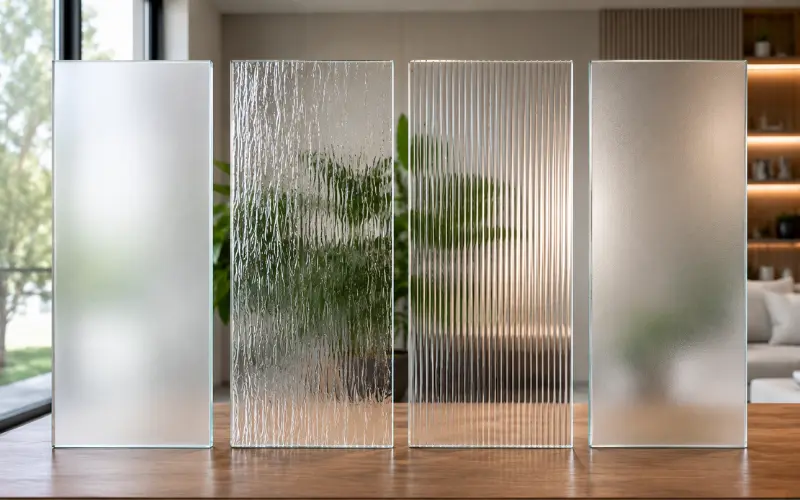
Frosted glass has a smooth, even, milky finish with no visible pattern. It works with almost any interior style, from minimalist to traditional, and can be custom-etched with logos or simple graphics.
Other translucent options vary more:
- Rain glass has vertical streaks that create a rippled look
- Reeded glass has fine ribbed lines for a retro or coastal feel
- Satin glass has a slightly softer sheen than frosted
If you want a clean, contemporary look, frosted usually wins. If you want texture, a patterned translucent finish may suit your space better. This is the visual side of the translucent glass vs frosted glass decision, and it often matters as much as privacy.
Ideas Worth Studying Before You Decide
Before ordering, look for translucent glass vs frosted glass ideas pictures that show real rooms in natural light, not showroom samples under fluorescent bulbs. Good places to check:
- Bathroom windows at different times of day
- Front doors and sidelights
- Interior office partitions
- Pantry and closet doors
For translucent glass vs frosted glass ideas exterior projects specifically, pay attention to how each finish handles direct sun and how visible fingerprints or water spots become from the street, since exterior glass takes more weathering than interior panels.
Privacy Comparison
Privacy usually decides the winner. Ranked from most to least private:
- Frosted glass: Excellent, even privacy across the whole panel. Best for showers and front doors.
- Rain and reeded glass: Good privacy, though vertical lines can allow faint shapes through at certain angles.
- Satin glass: Similar to frosted, with slightly softer diffusion.
- Lightly etched translucent glass: Moderate privacy, better suited to interior partitions than bathrooms.
If privacy is your top priority, frosted glass is the safest choice in the translucent glass vs frosted glass lineup.
Cost Comparison
- Frosted glass vs clear glass price: Frosted glass typically costs 20 to 40 percent more than clear glass of the same thickness, because of the etching process involved.
- Translucent glass price varies by pattern. Basic frosted or satin finishes sit at the lower end, rain and reeded glass cost a bit more due to the rolling process, and custom-etched designs push the price up the most.
Plain frosted glass is one of the more affordable translucent glass vs frosted glass choices if you want privacy without a decorative pattern. On a tight budget, ask about frosted vinyl film applied to clear glass. It mimics the look for far less money, though it will not last as long as etched glass.
Where Each Type Works Best
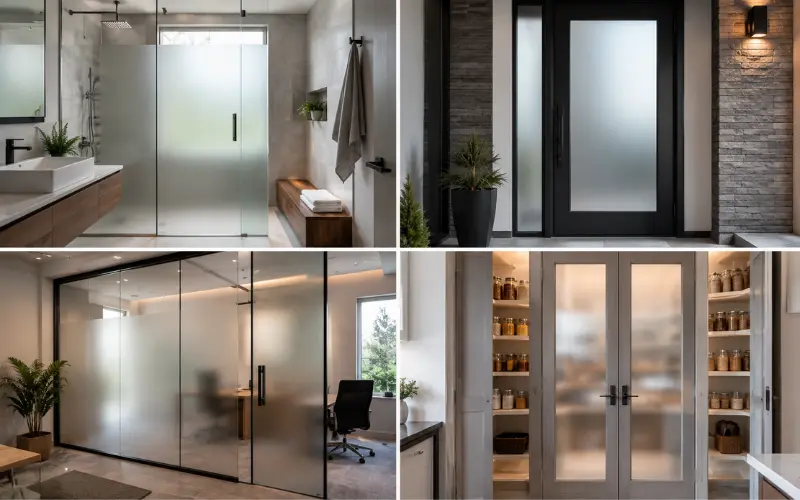
Room by room, the translucent glass vs frosted glass choice tends to follow a pattern.
Bathrooms and showers: Frosted glass is the standard. It hides silhouettes while letting daylight in.
Front doors: Both frosted and rain glass work well. Frosted keeps a clean, modern face; rain glass adds texture and curb appeal.
Home offices and partitions: Satin or lightly frosted glass keeps rooms feeling open while blocking direct eye contact.
Pantry and closet doors: This is where translucent glass vs frosted glass choices often come down to preference. Frosted hides clutter completely, while a lighter translucent finish lets you glimpse shapes without opening the door.
Translucent Glass for Windows
Translucent glass for windows solves a common problem: a room that needs daylight but faces a street or a neighbor. Bathroom windows and ground-floor rooms benefit most from a translucent finish. Frosted glass remains the most popular pick because it blocks views completely while still brightening the room.
What Are the Disadvantages of Frosted Glass?
No option wins every category in the translucent glass vs frosted glass comparison, and frosted glass has real trade-offs worth knowing before you buy:
- It can show oily fingerprints and hard water spots more visibly than clear glass.
- The textured surface traps dust, so cleaning takes a bit more effort with a soft brush.
- It slightly reduces light transmission, so already-dim rooms may feel darker.
- Custom, heavily patterned panels cost more to replace if they crack.
- Vinyl frosted film, the budget alternative, can peel over time.
Opaque Glass: A Different Category
It is worth clarifying one more term: opaque glass. Opaque glass blocks light completely, unlike translucent or frosted glass, which both allow diffused light through while blurring the image. If total blackout is your goal, opaque glass or a solid panel is the better fit.
Translucent Glass Name: Terms You Will Hear
Suppliers use several names interchangeably, which adds to the confusion. Common terms include obscure glass, satin-etch glass, sandblasted glass, acid-etched glass, and diffused glass. When ordering, ask your supplier exactly which process was used, since names on a price list do not always match showroom terms.
Is Frosted Glass Design Outdated?
No. Frosted glass remains one of the most requested finishes for showers and front doors because it solves a real problem: privacy without losing light. What has changed is styling, with black metal frames and partial frosting now common. The material is a classic; the details around it evolve.
How to Choose
Ask yourself three questions when weighing translucent glass vs frosted glass for your project:
- How much privacy do I need? Full privacy points toward frosted; partial privacy with texture points toward rain or reeded glass.
- What style is my home? Modern spaces usually suit smooth frosted glass; traditional or coastal homes often pair well with textured finishes.
- What is my budget? Plain frosted glass or vinyl film keeps costs down; custom patterns cost more but stand out.
Frequently Asked Questions
Is translucent glass the same as frosted glass?
No. Translucent glass is the broad category that diffuses light and blurs images. Frosted glass is one specific type within that category, made through sandblasting or acid etching.
What does translucent glass look like?
It has a soft, foggy appearance that lets light glow through while hiding sharp shapes, similar to a window fogged up on a cold morning.
What are the disadvantages of frosted glass?
It shows fingerprints and water spots, collects dust in its texture, slightly reduces light, and custom patterns cost more to replace.
Is frosted glass design outdated?
No. Frosted glass remains a timeless choice for privacy. Trends update the framing and pattern details, not the material itself.
How much does frosted glass cost compared to clear glass?
Frosted glass typically costs 20 to 40 percent more than clear glass of the same size and thickness.
Can I use translucent glass for windows in a bathroom?
Yes. Translucent glass for windows is one of the most common bathroom upgrades, letting in daylight while blocking outside views.
What is the difference between frosted glass and opaque glass?
Frosted glass diffuses light while blurring images. Opaque glass blocks light completely, with no visibility or transmission at all.
Which is cheaper, plain frosted glass or patterned translucent glass?
Plain frosted glass is usually cheaper than patterned options like rain or reeded glass, since it needs a simpler treatment process.
Does frosted glass need special cleaning?
Use a soft brush or microfiber cloth with a mild glass cleaner. Avoid abrasive scrubbers, which wear down the textured surface.
What is the best translucent glass option for a front door?
Frosted glass gives a clean, modern look, while rain or reeded glass adds texture and curb appeal for a more decorative entrance.
Final Thoughts
Frosted glass is simply the most common, most reliable member of the translucent glass family, not a rival to it. Once you understand that relationship, choosing becomes much easier. Match the finish to the privacy you need, your home’s style, and your budget, and you will end up with a result that looks intentional.

