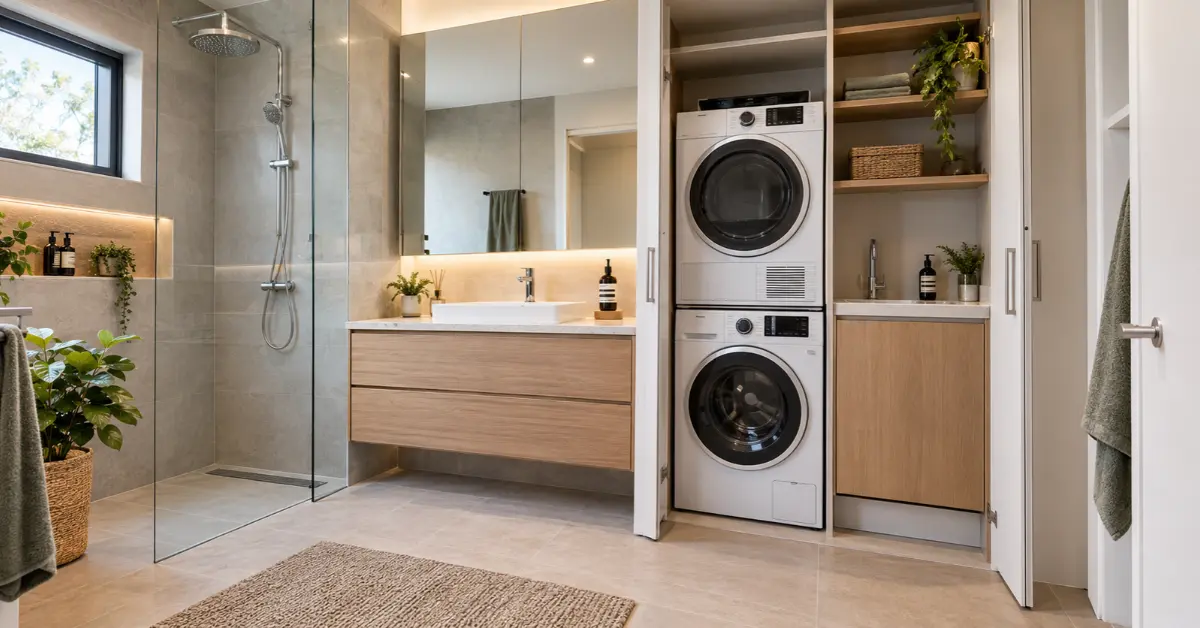
A Modern Bathroom with Laundry works best when the washer and dryer sit well outside the shower splash zone, behind concealed doors, with proper ventilation and a licensed trade handling the electrical and waterproofing. It is a smart use of space in compact Australian homes, units and older renovations where a separate laundry simply does not fit.
My take: The combos that look great in photos are the ones where the laundry is treated as part of the bathroom design from day one. The ones that disappoint are usually a washing machine pushed into a leftover corner.
Is a Combined Modern Bathroom with Laundry Actually a Good Idea?
It depends on your floor plan and how many people share the space. For a couple or a small family, it frees up a whole room. For a household of five with staggered morning routines, it can create a queue.
The real upside is plumbing. Water supply and drainage are already there, so you avoid running new lines to a separate room. The real downside is moisture, because a dryer and a hot shower in one small room will punish weak ventilation.
Layouts That Work in a Modern Bathroom with Laundry
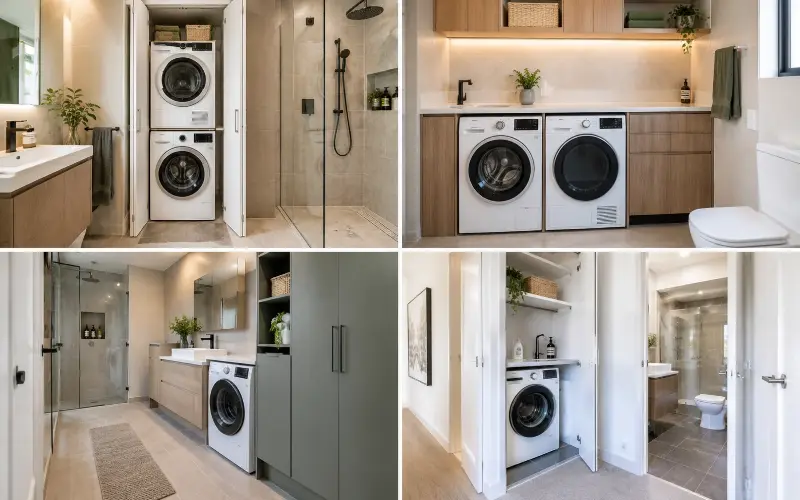
- Stacked tower behind bifold or sliding doors. The most popular fix for small bathroom laundry layouts. A front loader with a dryer on top takes about 600 mm of floor width and needs roughly 1,800 mm of vertical clearance. Closing the doors hides the lot.
- Side-by-side under a bench. A front loader and a dryer tucked under a continuous stone or laminate benchtop. You get a folding surface, and the bench doubles as vanity-adjacent storage.
- One wall, three jobs. Vanity, washer and tall linen storage along a single wall keeps the opposite side clear for the shower. This suits narrow bathrooms around 1.6 m wide. If your vanity choice is still open, our bathroom vanity ideas cover sizes and styles.
- Hallway cupboard laundry, adjacent bathroom. Not a true combo, but worth considering. A laundry cupboard on the other side of the bathroom wall shares plumbing without sharing humidity.
| Layout | Minimum room size (approx.) | Best for | Watch out for |
|---|---|---|---|
| Stacked tower in a recess | 1.6 m x 2.4 m | Small bathrooms, units | Door swing, ceiling height |
| Side-by-side under bench | 2.0 m x 2.7 m | Families wanting a folding zone | Needs 1,200 mm+ of wall |
| Single wall run | 1.6 m x 2.8 m | Narrow rooms | Vanity and washer door clashing |
| Half bath with laundry | 1.5 m x 2.0 m | Powder room conversions | No shower, so check resale value |
Treat these as starting points. Appliance depth varies from about 550 mm to 700 mm, so measure your actual model before locking in joinery.
Dimensions That Catch People Out
Most combo mistakes are clearance mistakes. A front loader needs around 600 to 800 mm of clear floor in front so the door opens fully and you can bend down to load it. If that clear zone overlaps with the shower door swing or a toilet, you will feel it every single day.
Allow 20 to 50 mm behind the machine for hoses and a flush-mounted tap set. Leave a few millimetres either side so vibration does not rattle against joinery. And check the dryer door hinge direction, because many can be reversed.
Is It Legal to Put a Washing Machine in a Bathroom?
Generally yes, with conditions. Australian wiring rules (AS/NZS 3000) divide bathrooms into zones around the bath and shower, and power points are restricted inside those zones. A washing machine is typically placed outside them, with a power point on an RCD-protected circuit installed by a licensed electrician.
Plumbing must comply with AS/NZS 3500, and wet area waterproofing follows AS 3740. Permit requirements vary by state and council, so check before you strip anything out. I always tell readers to get written confirmation from their electrician about the power point location before ordering joinery, because moving it later is expensive.
Ventilation and Moisture: The Part Most Competitors Skip
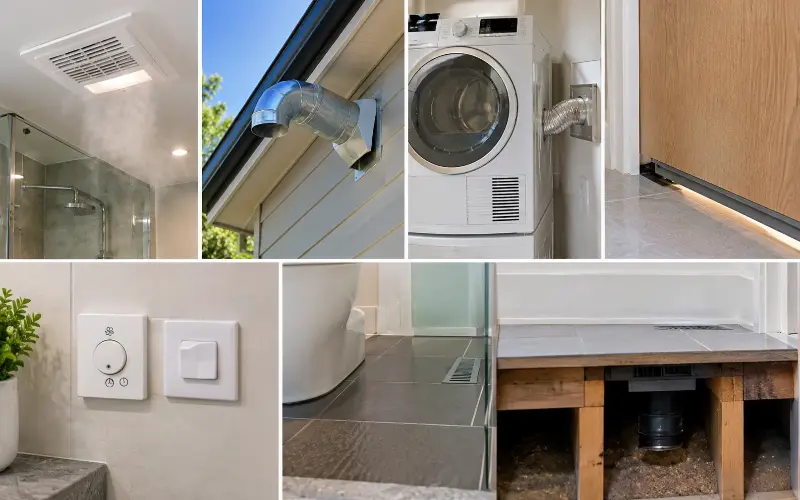
Steam plus dryer humidity is what ruins combined rooms. Black mould on the ceiling within a year is a classic sign of an undersized fan.
- Use a fan that vents outside, never into the roof cavity.
- Choose a heat pump or condenser dryer if you cannot vent a traditional one. Vented dryers need a proper duct run to the outdoors.
- Add a door undercut or grille so replacement air can enter.
- Run the fan for 20 minutes after showering, ideally on a timer or humidity sensor.
Field note: In older Queenslander-style homes with timber floors, I would also ask the builder about subfloor ventilation. A wet bathroom floor above a damp cavity is a slow problem that shows up as swollen skirting.
Waterproofing and Drainage Around the Machine
A washing machine can fail, and a burst hose floods a bathroom fast. Ask your waterproofer to extend the membrane beyond the shower and across the laundry zone, with a floor waste positioned near the machine. Raise the membrane up the wall behind and beside the appliance.
Fit a tap set with an isolation lever so you can shut the water off quickly. An overflow tray under the machine is a cheap extra that can save a floor. If you want a deeper look at wet-area design, see our guide to the modern wet room bathroom.
Hiding the Laundry So It Still Feels Like a Bathroom
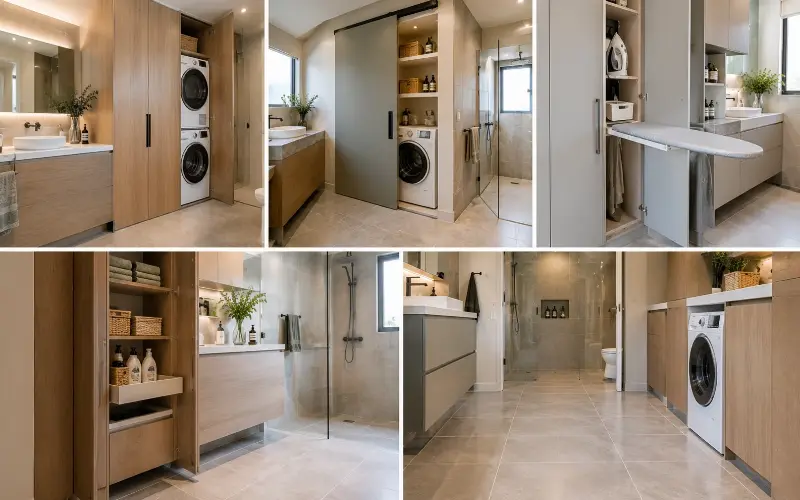
This is where modern design earns its keep. The goal is a room that reads as a calm bathroom first.
- Full-height doors in the same finish as the vanity, like timber veneer or matte two-pack.
- Slimline sliding doors on a top-hung track, so no swing space is lost.
- A pull-out bench or drop-down shelf for folding. A fold-out ironing board tucked into a cupboard door is handy in tight rooms.
- Concealed storage for detergent and baskets, so nothing sits on show. A linen cupboard beside the machine keeps towels and laundry supplies together.
- Tile continuity. Run the floor tile through the laundry zone so it feels like one space.
Bathroom Trends for 2026 That Suit Laundry Combos
From what I see in current renovations, these suit a combined room well:
- Warm timber-look joinery and soft earthy colours instead of stark white
- Fluted or textured tiles on a feature wall
- Microcement or large-format porcelain with minimal grout, which is easier to keep dry and clean
- Curved mirrors and arched niches, which soften the hard lines of appliances
- Integrated, handleless cabinetry that blends the machine doors away
If you like the idea of built-in shower storage, our bathroom niche ideas show how to add it without cluttering the floor.
What Does It Cost? A Realistic Budget
Costs vary by city, access and finishes, so treat these as ballpark ranges. A mid-range combined bathroom and laundry renovation in Australia often lands somewhere between $20,000 and $35,000, with premium finishes going well beyond that.
Is $10,000 enough? For a very basic cosmetic refresh with no layout change, sometimes. Once you move plumbing, add waterproofing, new wiring and custom joinery, it is tight. Our guide to bathroom renovations under $10k shows where savings are realistic and where they are not.
Where I would not cut corners: waterproofing, ventilation and electrical. Where I would save: tapware, mirrors and décor, which are easy to upgrade later.
Common Mistakes to Avoid
- Placing the washer where the shower door or toilet blocks the loading clearance
- Forgetting to confirm power point and RCD requirements before joinery goes in
- Using a weak fan or venting it into the ceiling
- Choosing a top loader under a low shelf, then discovering the lid will not open
- Skipping a floor waste or overflow tray
- Picking tiles with a slippery finish in a room where water drips from laundry
Planning Steps Before You Start
- Measure the room and the appliances you actually plan to buy.
- Sketch the clearances: 600 to 800 mm in front of the washer and the shower door swing.
- Book a licensed plumber and electrician early to confirm service positions.
- Confirm permit rules with your local council.
- Choose joinery and tiles only after the layout is locked.
- Hire a licensed waterproofer and get the membrane certificate.
If you need a broader starting point for the whole project, our guides on bathroom and laundry renovations and how to renovate a small bathroom are good next reads.
FAQs on Modern Bathroom with Laundry
Can a bathroom and laundry share the same electrical circuit?
Often they can, but it depends on the total load and your switchboard. The circuit needs RCD protection, and a high-draw dryer may warrant its own circuit. Only a licensed electrician can confirm this for your home.
What is the 30% rule for renovations?
It is a rough guideline that you should avoid spending more than about 30% of your home’s value on a single renovation, so you do not over-capitalise. It is a rule of thumb, not a law, and local market conditions matter more.
What is the most expensive part of redoing a bathroom?
Usually labour, followed by tiling and waterproofing. Moving plumbing and drainage adds a lot, which is why keeping fixtures in place saves money.
What adds the most value to a bathroom?
Good waterproofing and ventilation, quality tiling, and a layout that works. Buyers also respond to extra storage and a clean, neutral finish more than to expensive taps.
Can I make a half bathroom with laundry work?
Yes. A toilet, small vanity and stacked washer-dryer can fit in about 1.5 m x 2.0 m. Keep the washer away from the toilet’s door swing and plan for a fan that vents outside.
Where should the laundry go in a house?
Ideally near the bedrooms and bathrooms, close to an external wall for venting and drainage. A ground-floor spot near a clothesline or drying area is the most practical.
Can I install a combined laundry in a unit or rental?
In strata, check your by-laws and get body corporate approval before altering plumbing or waterproofing. In a rental, you need the owner’s written consent first.
Should I choose a washer-dryer combo or a stacked pair?
Combined units save space but dry slowly and in smaller loads. A stacked washer and dryer cost more and take a bit more height, but they handle daily family loads far better.