
A soaking tub is built deep, usually 17 to 27 inches of water, so your whole body goes under at once. A garden tub is built wide and shallow, typically 14 to 18 inches deep but 40 to 48 inches across, so you get room to stretch out rather than sink in. Neither one is objectively better. It comes down to whether your bathroom has the floor space, whether your water heater can keep up, and how you actually like to bathe Soaking Tub vs Garden Tub.
I’ve walked through this decision with more than a few homeowners mid-remodel, standing in a gutted bathroom trying to picture what will actually fit. Most people get the terminology wrong at first, and that’s fine. Here’s what actually separates these two tubs, plus the practical stuff most guides skip: what it does to your water bill, what happens if you’re renting, and where a Roman tub fits into all this.
What Actually Separates a Soaking Tub From a Garden Tub
Forget the marketing copy for a second. The real difference is one word: orientation.
A soaking tub is engineered vertically. The whole design goal is depth, so water covers your shoulders while you sit. A garden tub is engineered horizontally. It’s built to let you lie back with your legs extended, more like a small pool than a deep basin.
That single difference cascades into everything else:
- Water use. A garden tub holds 60 to 80 gallons. A soaking tub holds 80 to 120 gallons, sometimes more if it’s a deep Japanese-style ofuro model.
- Floor footprint. A garden tub needs close to 24 square feet of clear floor space. A soaking tub, because it’s narrower and goes deep instead of wide, can fit in roughly the same footprint as a standard alcove tub.
- Entry and exit. Garden tubs sit lower to the ground and are easier to step into. Soaking tubs have taller walls, which can be a real problem for older adults or anyone with knee issues.
None of the competitor articles I looked at actually connect these dots. They list features side by side without explaining why one tradeoff creates the next. Once you understand it’s a depth-versus-width decision, the rest of the choice gets a lot simpler.
Soaking Tub vs Garden Tub Cost: The Real Numbers
This is where a lot of homeowners get blindsided, because the tub price tag is only part of the bill.
| Cost Category | Garden Tub | Soaking Tub |
|---|---|---|
| Tub unit only | $700 – $3,000 | $600 – $5,000+ |
| Installation labor | $500 – $1,500 | $500 – $2,000 |
| Plumbing modifications | $200 – $800 | $200 – $1,000 |
| Floor reinforcement | $0 – $500 | $200 – $1,500 |
| Total installed | $1,400 – $5,800 | $1,500 – $9,500+ |
A few things worth knowing that don’t show up in the sticker price. A cast iron soaking tub filled with water and a person can hit 1,200 pounds concentrated on maybe 15 square feet of floor. If you’re upstairs, budget $300 to $500 just for a structural engineer to check your joists before anyone talks about the tub itself.
The other hidden cost is the water heater. A 40-gallon tank, which is what most homes have, will not fill a deep soaking tub with hot water. You need at least 50 gallons of tank capacity or a tankless unit rated at 8+ GPM. That upgrade runs $1,000 to $3,000 installed, and it’s the single most common surprise I hear about after someone installs a soaking tub without checking first.
Garden Tub vs Roman Tub: Where the Confusion Comes From
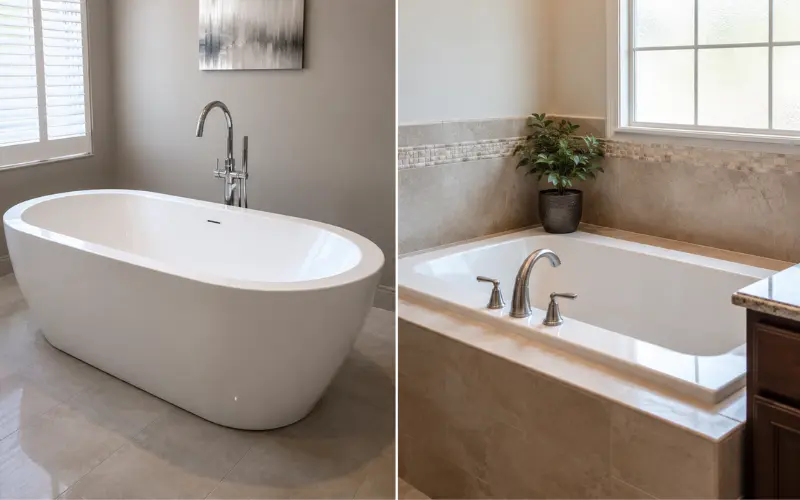
People use “garden tub” and “Roman tub” almost interchangeably, and honestly, in casual conversation with a contractor, that’s often fine. But if you’re specifying a fixture for a remodel, the distinction matters.
A garden tub is defined by its shape and footprint: big, oval or rectangular, freestanding or set into a platform, wall-mounted or deck-mounted faucet, either works.
A Roman tub is defined by its faucet placement and finish. It always has a deck-mounted faucet set into the tub’s wide rim, not a wall-mounted spout. That faucet is typically an arched, dual-handle design built to fill a large tub quickly. Roman tubs also lean into a specific aesthetic: flat rims, thick decks, sometimes carved from solid stone, echoing the bathhouses of ancient Rome rather than a suburban master bath.
Practically speaking, a Roman tub is almost always a garden tub with a deck-mounted faucet package. If your contractor says “Roman tub,” ask specifically about the faucet location and rim width before assuming it means anything about depth or capacity.
What Is a Garden Tub in an Apartment
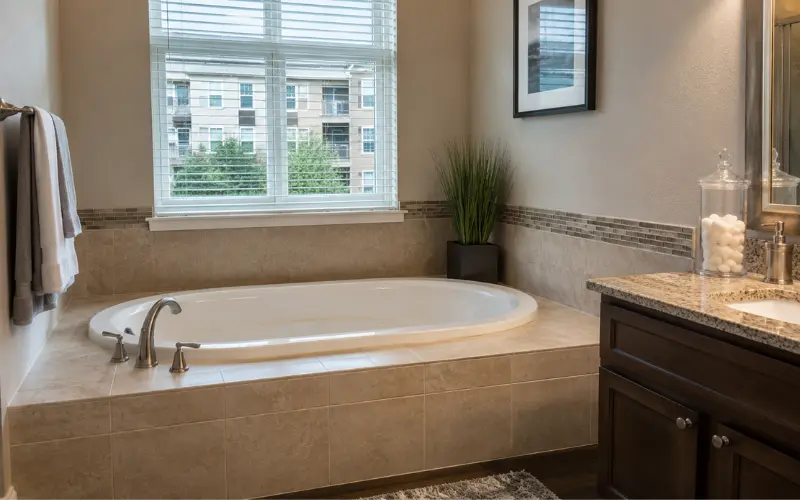
If you’ve rented anywhere built in the late 1990s or 2000s, you’ve probably seen one: a wide, oval tub set into a tiled platform in the primary bathroom, usually under a window. Builders like Pulte and Lennar dropped these into thousands of suburban apartment complexes and townhomes as a standard luxury amenity during that era.
A few things renters should know that owners don’t have to think about:
- You almost never get to replace it, so check whether it drains slowly or has visible wear before signing a lease if a long soak matters to you.
- Apartment garden tubs rarely include jets. If the listing photo shows one, ask directly, because staged photos sometimes show a display model.
- Filling it can strain shared building water heaters in older complexes, especially if you’re on an upper floor during peak evening hours.
If a deep soak is the whole reason you want this apartment, run the tap for a few minutes during your tour and see how the water pressure and temperature hold upSoaking Tub vs Garden Tub.
Drop-In Garden Tub: The Installation Type Everyone Skips Over
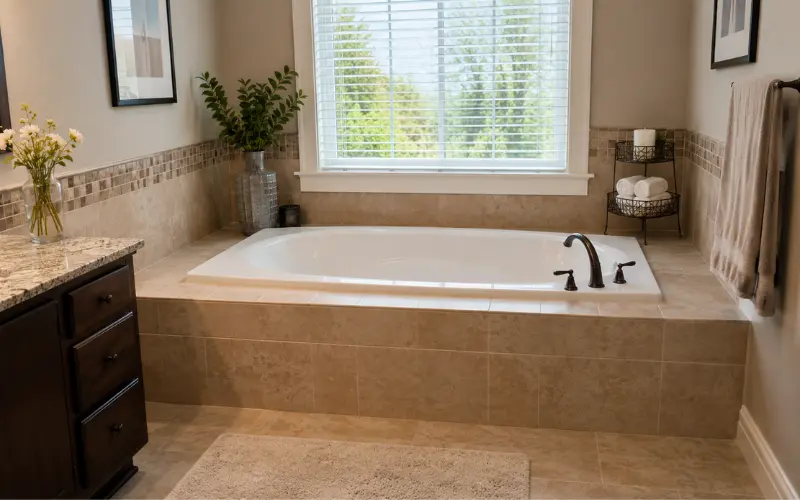
Most Soaking Tub vs Garden Tub content focuses on freestanding models, but drop-in is actually the more common real-world installation, especially in production-built homes.
A drop-in garden tub sits inside a frame or platform built by a carpenter, usually finished with tile, stone, or wood surround. The tub itself has no finished exterior, since the platform hides the sides.
This matters for a few practical reasons:
- Cost control. Drop-in installs are generally cheaper than freestanding because you’re not paying for a finished exterior on the tub.
- Repair access. If plumbing fails, a drop-in tub requires cutting into the platform to reach it. Freestanding tubs give a plumber direct access from underneath or behind.
- Customization. You can size the surrounding deck to whatever the room allows, which is useful in oddly shaped bathrooms where a standard freestanding footprint won’t work.
If you’re weighing a drop-in garden tub against a soaking tub, remember the platform itself eats additional floor space beyond the tub’s own footprint. Measure the finished platform dimensions, not just the tub’s spec sheet.
Garden Tub Shower Combo: Does It Exist
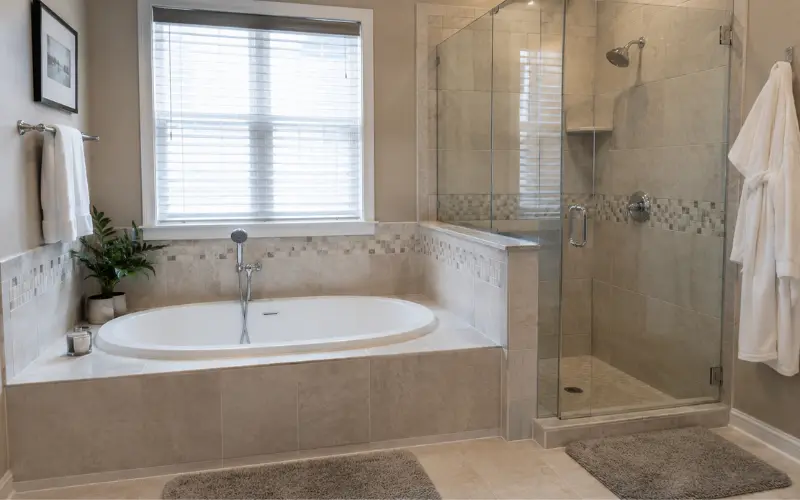
Rarely, and usually not by design. Soaking Tub vs Garden Tub are built for soaking, not standing, so most don’t have the wall height, non-slip flooring, or surround needed for a safe shower.
That said, there are two real-world workarounds I’ve seen used successfully:
- A handheld shower attachment on the tub filler, useful for rinsing but not a true standing shower.
- A separate glass-enclosed shower installed adjacent to the garden tub within the same bathroom footprint, which has become the standard approach in newer primary bathroom layouts rather than trying to combine both functions in one fixture.
If your household genuinely needs a daily shower and only has room for one fixture, a Soaking Tub vs Garden Tub combo is almost never the right call. A standard tub/shower combo or a soaking tub with a surround will serve you better.
Types of Bathtubs Beyond These Two
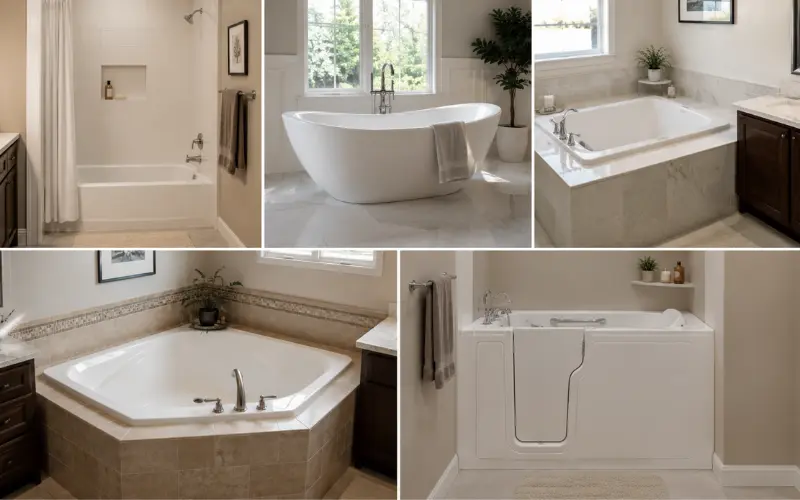
Soaking Tub vs Garden Tub aren’t the whole picture. A quick rundown of what else you’ll encounter while shopping:
- Standard alcove tub: 60 inches long, 30 to 32 inches wide, fits between three walls, doubles as a shower base. What’s in most homes.
- Freestanding tub: Stands alone, not attached to any wall, can be a soaking or garden style.
- Undermount tub: Set into a deck with the rim below the surface, seamless look, common in luxury remodels.
- Corner tub: Triangular footprint designed to fit into a corner, popular in the 1990s, now largely out of favor.
- Walk-in tub: Has a door for entry, built for accessibility rather than aesthetics.
Resale Value: What Buyers Actually Want Now
Soaking Tub vs Garden Tub This is where the market has shifted hard in the last ten years, and it’s worth being honest about it. Garden tubs were a must-have selling point in the early 2000s. Today, buyer preference data from national real estate and remodeling surveys consistently shows a large walk-in shower ranks above a garden tub for master bath appeal.
The exception is luxury homes over 3,000 square feet in southern markets, especially Texas, Florida, and the Carolinas, where garden tubs still carry weight with buyers relocating from other regions. Outside of that pocket, a freestanding soaking tub paired with a separate shower is the safer bet if resale is on your mind.
Which One Should You Choose
Pick a garden tub if you have a large primary bathroom, over 80 square feet ideally, want room to stretch out or bathe with a partner, and don’t mind the water and utility tradeoff.
Pick a soaking tub if you want genuine full-body immersion, have a smaller footprint to work with, and are willing to upgrade your water heater if needed.
Pick a Roman tub if you already want a garden tub’s shape but prefer a deck-mounted faucet and a more sculptural, spa-like finish.
FAQ
Is a garden tub the same as a Roman tub?
Not exactly. A garden tub is defined by its wide, shallow shape. A Roman tub is defined by its deck-mounted faucet and flat rim. Many garden tubs are sold with Roman-style faucet packages, which is where the overlap comes from.
Which uses less water, a Soaking Tub vs Garden Tub?
A garden tub typically holds 60 to 80 gallons. A soaking tub holds 80 to 120 gallons because the depth requires more volume to reach shoulder height.
Can I put a soaking tub where my Soaking Tub vs Garden Tub used to be?
Usually yes, since a soaking tub’s narrower footprint often fits into the space a garden tub occupied. You’ll likely need to relocate the drain and check whether the faucet placement needs to move too.
Do soaking tubs have jets?
Most don’t by default. Jets are typically an upgrade or a separate whirlpool tub category entirely. If jets matter to you, confirm with the manufacturer before buying.
How long does a garden tub take to fill?
With a standard 4 to 5 GPM tub filler, expect 12 to 18 minutes for a 60 to 80 gallon garden tub, longer if your water pressure is low.
Is a garden tub a good idea for a small bathroom?
Generally no. You need close to 24 square feet of clear floor space plus room to move around it. A soaking tub is the better option for a smaller footprint.
What’s the lifespan difference between materials?
Acrylic tubs last 15 to 20 years with proper care. Cast iron can last 50 years or more but weighs significantly more and costs more upfront.
Do I need a bigger water heater for either tub?
Likely for a soaking tub, since it needs 70 to 100 gallons of hot water for a comfortable fill. A garden tub needs somewhat less, around 50 to 65 gallons, but a standard 40-gallon tank still falls short for either.

