
Most homeowners searching for tips on bathroom renovations on a budget assume the project means a five-figure invoice and a summer spent showering at the neighbor’s house. It does not have to. Bathroom renovations on a budget are entirely possible when you plan your spending before you start swinging a hammer, and they can still deliver a space that looks like it cost twice as much.
This guide skips the vague inspiration boards you find elsewhere and gets into the numbers, the sequencing, and the decisions that actually determine whether your project stays on budget or spirals. You will find real cost ranges, a spending framework most articles skip entirely, and mistakes that quietly drain thousands from a remodel.
Why Bathroom Costs Get Out of Control So Fast
Bathrooms are small rooms with an outsized number of expensive systems packed into them. Plumbing, electrical, waterproofing, ventilation, and finish work all overlap in a space that might only be 40 to 60 square feet. That density is exactly why bathroom renovations on a budget require more discipline than almost any other room in the house.
The biggest cost driver is not tile or paint. It is moving things. Every time you relocate a toilet, sink, or shower drain, you are paying a plumber to reroute pipes behind walls and under floors. Keeping fixtures in their existing locations is the single largest money-saving decision you can make, often worth $1,500 to $3,000 in avoided labor.
Set a Real Budget Before You Shop
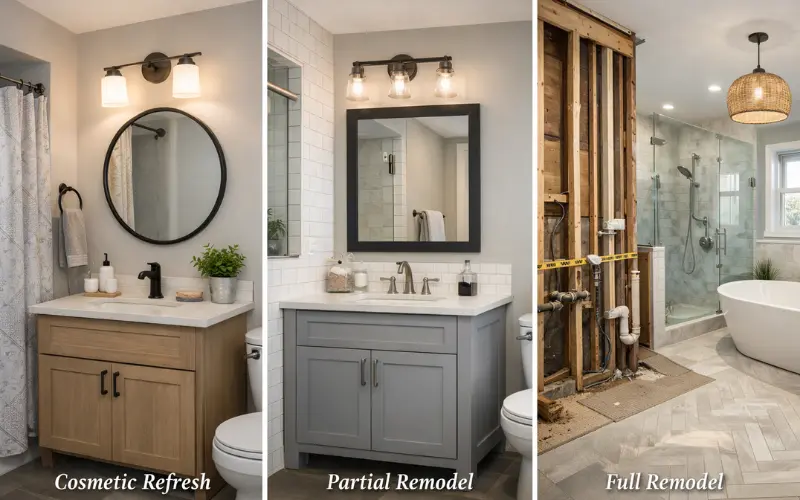
The foundation of any successful bathroom renovations on a budget project is deciding what tier of remodel you are actually doing before you browse a single tile sample. Contractors and design sites generally split bathroom work into three categories:
- Cosmetic refresh: paint, hardware, lighting, and accessories. Typical spend: $500 to $2,500.
- Partial remodel: new vanity, fixtures, and some tile, keeping the layout intact. Typical spend: $3,000 to $8,000.
- Full remodel: new layout, full tile work, and possibly moved plumbing. Typical spend: $10,000 and up.
Knowing your tier before you start prevents the scope creep that turns a planned refresh into an accidental full remodel. A useful rule for allocating funds is the 40-30-20-10 split: 40 percent to labor and installation, 30 percent to fixtures and vanity, 20 percent to tile and surfaces, and 10 percent held back as a contingency fund. That contingency line matters more than any other line item. Older homes especially tend to reveal hidden issues like water damage or outdated wiring once walls come open, and a reserve keeps a surprise from stalling the entire job.
Where to Spend and Where to Save
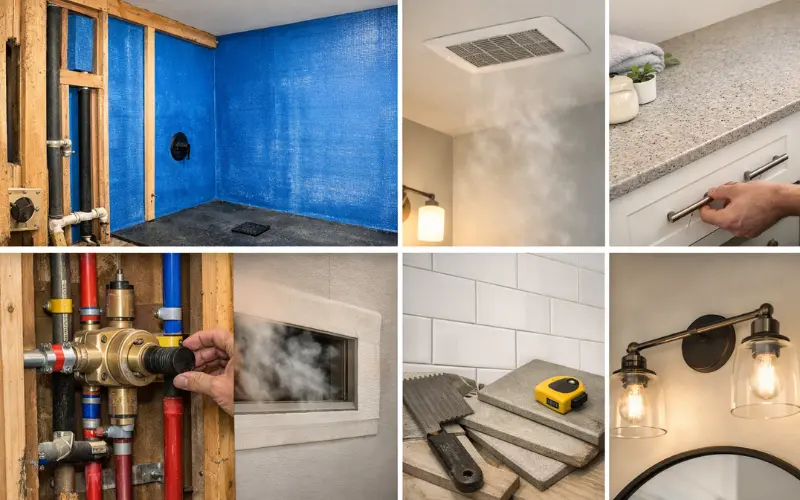
Not every dollar in bathroom renovations on a budget delivers the same visual impact. Here is where professionals typically recommend spending more, and where cutting corners rarely shows.
Worth the Investment
- Waterproofing and shower pan systems. This is invisible once tiled, but it is the difference between a bathroom that lasts 20 years and one that grows mold behind the wall in three.
- A quality shower valve. Cheap valves fail and require tearing out finished tile to replace, which erases any money saved upfront.
- Ventilation. An underpowered exhaust fan leads to peeling paint, mildew, and warped cabinetry within a year or two.
Safe Places to Save
- Countertops. Laminate and quality quartz alternatives look nearly identical to natural stone in photos and hold up fine in a secondary bathroom.
- Cabinet hardware. Buying knobs and pulls in multi-packs instead of individually can cut this line item by 30 percent or more.
- Tile size and layout. Large-format tile with straight edges installs faster and cheaper than intricate mosaic or herringbone patterns, which can add hundreds of dollars in labor alone.
- Lighting fixtures. Swapping just a shade or bulb style, rather than the entire fixture, refreshes the look for a fraction of the price.
Step-by-Step: How to Plan Bathroom Renovations on a Budget
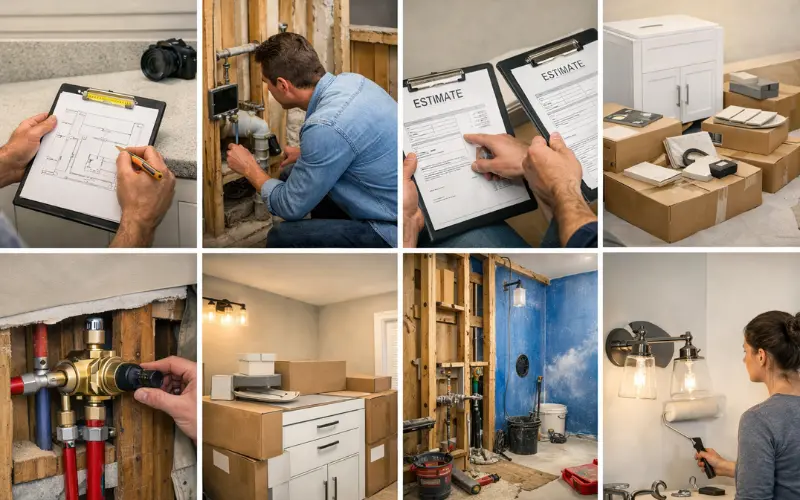
- Photograph and measure the existing space. Accurate measurements prevent costly reorders once materials arrive.
- Decide whether the layout stays or changes. Keeping plumbing in place is the fastest way to control cost.
- Get at least two contractor quotes, even if you plan to DIY most of the work, so you understand true market pricing for the parts you will not do yourself.
- Order materials early. Tile and vanities on backorder are one of the most common causes of project delays.
- Sequence the work correctly: demolition, rough plumbing and electrical, waterproofing, tile, then fixtures and finishes last.
- Do the finish work yourself where it is safe to do so, such as painting, hardware swaps, and accessory installation.
Smart Materials That Actually Save Money
A detail many bathroom articles skip is how flooring choice affects long-term cost, not just upfront price. Luxury vinyl plank, for example, costs less than porcelain tile per square foot, installs faster, and is completely waterproof, which matters in a room that floods a countertop with humidity daily. It is one of the most underrated choices for anyone tackling bathroom renovations on a budget.
Peel-and-stick tile has also improved significantly and now works well as a backsplash or accent wall treatment, cutting both material and labor costs compared to traditional tile. Reserve it for low-moisture zones like a vanity backsplash rather than a shower interior, where it will not hold up over time.
Refinishing an existing tub or vanity with a quality reglazing kit costs a fraction of full replacement and, when done correctly with proper surface prep, can look factory-new for years.
Common Mistakes That Blow the Budget
- Changing your mind mid-project. Every design change after materials are ordered adds cost and delay to bathroom renovations on a budget. Finalize decisions before demolition begins.
- Skipping permits when required. Unpermitted electrical or plumbing work can create problems when selling the home later, and inspectors can require costly rework.
- Underestimating disposal costs. Demolition debris removal is frequently left out of DIY budgets and can run several hundred dollars.
- Buying fixtures before confirming rough-in measurements. A toilet or vanity that does not match your existing plumbing rough-in means a return trip and installation delay.
- Forgetting resale value. A bold, highly personal color choice might not appeal to future buyers. Neutral tile and vanity finishes with colorful, easily replaced accessories keep the space flexible.
Do Bathroom Renovations on a Budget Still Add Home Value?
Yes, and often disproportionately well. National remodeling cost-versus-value data has consistently shown that midrange bathroom remodels recoup a strong share of their cost at resale, frequently outperforming larger, higher-budget renovations on a percentage basis. Buyers respond to clean, updated, functional small bathrooms more than to luxury finishes, which is good news for anyone focused on bathroom renovations on a budget rather than a showroom-level overhaul.
Frequently Asked Questions
How much should I budget for a small bathroom renovation?
A cosmetic refresh can run $500 to $2,500, while a partial remodel with a new vanity and updated fixtures typically falls between $3,000 and $8,000, depending on your region and material choices.
What is the cheapest way to update a bathroom?
Paint, new hardware, a refreshed light fixture, and a bold shower curtain deliver the biggest visual change for the smallest spend, often under $500 combined.
Can I do a bathroom renovation without hiring a contractor?
Many cosmetic and partial updates are DIY-friendly, including painting, hardware swaps, and accessory changes. Plumbing and electrical work, however, are best left to licensed professionals for safety and code compliance.
How long does a budget bathroom remodel take?
A cosmetic refresh can be completed in a weekend, while a partial remodel typically takes one to two weeks, and a full remodel with plumbing changes can take three to six weeks.
Does moving the toilet or sink really cost that much more?
Yes. Relocating fixtures means opening walls or floors to reroute plumbing, which can add $1,500 to $3,000 or more to a project, even a small one.
Is it worth refinishing a tub instead of replacing it?
In most cases, yes. A professional-grade reglazing kit costs a small fraction of a new tub and installation, and a well-prepped surface can last for many years.
What should I prioritize if my budget is tight?
Prioritize waterproofing, a reliable shower valve, and proper ventilation first, since failures in these areas cause expensive damage later. Save on countertops, hardware, and lighting fixtures.
Do bathroom renovations on a budget still increase home value?
Yes. Midrange bathroom updates consistently recoup a strong percentage of their cost at resale, often more efficiently than high-end, full-scale renovations.
Final Thoughts
A beautiful bathroom does not require a blank check. The homeowners who succeed with bathroom renovations on a budget are the ones who plan the scope first, protect the systems that are expensive to fix later, and save on the finishes that photograph just as well at a lower price point. Keep your plumbing in place, build in a contingency fund, sequence your work correctly, and choose materials that balance upfront cost against durability. Do that, and your bathroom can look like a five-figure remodel without the five-figure bill.

