
A frameless shower screen has become the go-to choice for homeowners renovating their bathrooms. It gives your space a clean, open look without the bulky metal frames of older shower doors. But choosing the right one involves more than picking a style you like in a photo.
This guide walks you through everything you need to know: glass types, thickness, hardware, cost, maintenance, and the mistakes to avoid. By the end, you’ll know exactly what to look for before you call a glazier.
What Is a Frameless Shower Screen?
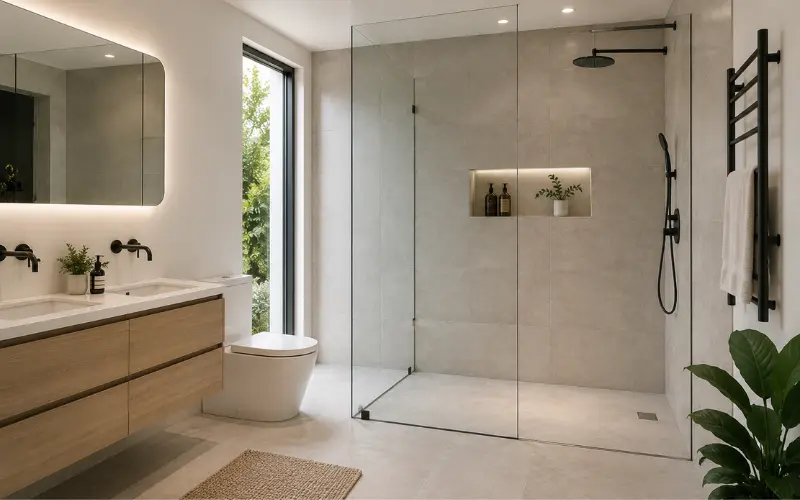
A frameless shower screen is a shower enclosure made from thick, tempered glass panels held in place with minimal hardware instead of a full metal frame. There’s no header bar running along the top and no frame tracking around the edges. Just clean glass, secured with small clips, hinges, or channels.
This design creates a seamless, modern look that suits almost any bathroom style, from a coastal beach house to a sleek city apartment. It also makes small bathrooms feel bigger because the glass doesn’t visually block the space the way a framed enclosure does.
Why Homeowners Choose a Frameless Shower Screen
There are practical reasons behind the popularity of this design, not just aesthetics.
- Visual space: Glass with no frame lets light travel through the whole bathroom, so the room feels larger.
- Easier cleaning: Fewer metal tracks and corners means less soap scum and mould buildup.
- Durability: A frameless shower screen uses thicker glass (usually 8mm, 10mm, or 12mm) than framed alternatives, which makes it sturdier.
- Timeless style: Frames go out of fashion. Clean glass doesn’t.
- Higher resale value: Bathrooms with a modern frameless shower screen often stand out in property listings.
Choosing the Right Glass Thickness
This is one detail most competitor articles skip entirely, and it matters more than people realise.
- 8mm glass works well for smaller fixed panels or budget-conscious renovations where the panel isn’t load-bearing.
- 10mm glass is the industry standard for most doors and panels. It balances strength, safety, and cost.
- 12mm glass is used for larger openings, wet rooms, or where the panel needs to stand without extra support. It’s heavier and pricier but offers the sturdiest feel.
Ask your glazier which thickness suits your opening size. A panel that’s too thin for its width can flex or feel unstable over time.
Popular Frameless Shower Screen Styles
Fixed Panel (No Door)
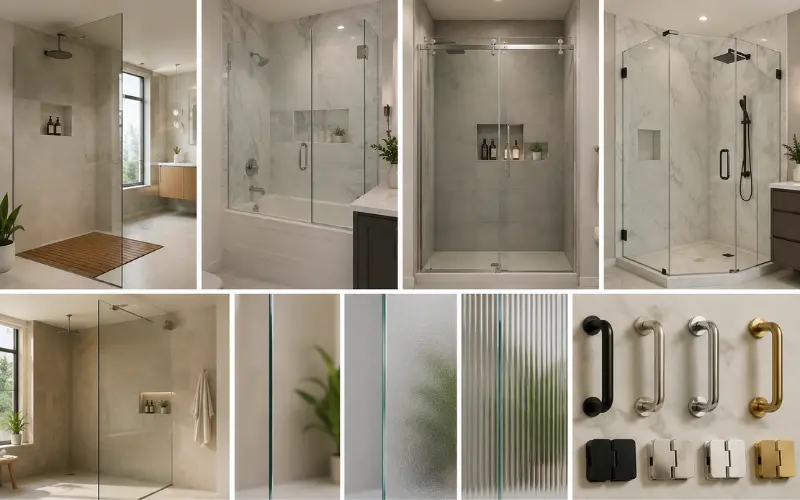
A single glass panel positioned beside the shower head, with the rest of the opening left free to walk through. It’s the most affordable frameless option and works best in larger bathrooms where water spray is easy to control.
Hinged Door with Fixed Panel
The most common layout for standard bathtub-width bathrooms. One glass door swings open next to a stationary panel. You can attach the stationary piece with clamps or a slim channel, depending on the look you want.
Sliding Frameless Doors
Ideal for tight spaces where a swinging door won’t fit. The doors glide along a track, so no clearance is needed in front of the shower. Keep in mind that sliding systems need a small guide rail at the bottom, so they’re not entirely gap-free.
Corner or Neo-Angle Enclosure
A three-panel setup that fits into a corner, saving floor space while still giving a full shower area. This works well in smaller bathrooms where a rectangular shower won’t fit comfortably.
Wet Room Glass Wall
A single tall panel or wall of glass that separates a walk-in shower zone from the rest of a fully tiled bathroom. This style has grown fast in popularity because it suits open, spa-like bathroom designs.
Frosted, Textured, or Clear: Which Glass Finish to Pick
- Clear glass shows off your tile work and keeps the room bright. Best for bathrooms where privacy isn’t a concern.
- Frosted glass obscures the view while still letting light through. A good middle ground for shared bathrooms.
- Textured or fluted glass adds visual interest and a bit of privacy without fully blocking light. It’s also more forgiving when it comes to hiding water spots.
Hardware Finishes That Complete the Look
Even a frameless shower screen needs some hardware: hinges, handles, and clamps. Popular finishes right now include matte black, brushed nickel, polished chrome, and brushed brass. Match your hardware to your tapware and cabinet handles for a cohesive bathroom design rather than treating it as an afterthought.
What Does a Frameless Shower Screen Cost?
Pricing depends on glass thickness, panel size, and hardware finish, but here’s a general range to help you budget:
- Fixed panel only: Often the most budget-friendly option, since there’s no door or hinge hardware involved.
- Hinged door and panel: Mid-range pricing, the most common choice for standard bathrooms.
- Sliding or corner enclosures: Higher cost due to extra glass, tracking, and installation time.
- Custom shapes or oversized openings: The most expensive option because of specialised cutting and thicker glass requirements.
Get at least two or three quotes from local glaziers, since labour costs and glass sourcing vary a lot by region.
How to Maintain a Frameless Shower Screen
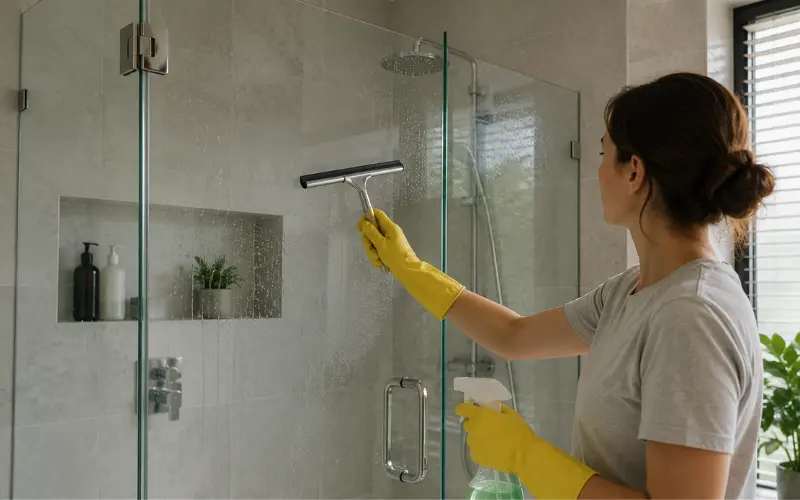
This is the part competitor articles brush past with a single line. Here’s a real routine that keeps glass looking new for years.
- Squeegee after every shower. This single habit prevents most water spots and soap scum buildup.
- Wipe weekly with a vinegar and water solution (equal parts) to dissolve mineral deposits before they harden.
- Avoid abrasive cleaners. Scouring pads and harsh chemicals can dull the glass surface over time.
- Check hardware every few months. Hinges and clamps can loosen slightly with regular use, so a quick tighten keeps the door aligned.
- Ask about a protective coating. Many glaziers offer a nano-coating treatment that makes water bead off the glass, cutting cleaning time significantly.
Common Mistakes to Avoid
- Skipping measurements before buying. A frameless shower screen is custom-cut, so accurate measurements matter far more than with a framed, adjustable unit.
- Choosing glass too thin for the opening. This leads to flexing, noise, and a shorter lifespan.
- Ignoring the swing space for hinged doors. Make sure nothing (toilet, vanity, cabinet) blocks the door from opening fully.
- Forgetting about slope and drainage. Water needs somewhere to go, especially with doorless designs.
- Choosing style before function. A stunning design that doesn’t suit your bathroom’s layout will cause daily frustration.
Frameless vs. Semi-Frameless vs. Framed: A Quick Comparison
| Feature | Frameless | Semi-Frameless | Framed |
|---|---|---|---|
| Look | Sleek, modern | Slightly more support visible | Traditional |
| Glass thickness | 8-12mm | 6-8mm | 4-6mm |
| Maintenance | Easiest | Moderate | Hardest (more tracks) |
| Cost | Higher | Mid-range | Lowest |
| Best for | Modern renovations | Budget-conscious upgrades | Rentals or quick fixes |
FAQs
Is a frameless shower screen worth the extra cost?
Yes, for most homeowners. It uses thicker, more durable glass, requires less maintenance, and tends to add more value to a home than a framed alternative.
How thick should the glass be for a frameless shower screen?
Most residential installations use 10mm glass. Larger openings or unsupported panels may need 12mm for extra strength.
Can I install a frameless shower screen myself?
It’s not recommended. The glass is heavy, cut to exact measurements, and needs precise leveling. A professional installation also protects your warranty.
Does a frameless shower screen leak more than a framed one?
Not significantly. There will be small gaps around hinges and edges, but proper installation and regular silicone maintenance keep leaks to a minimum.
How do I stop water spots on a frameless shower screen?
Squeegee the glass after every use and wipe it down weekly with a vinegar and water mix. A protective glass coating also helps a lot.
What is the standard height of a frameless shower door?
Most frameless shower doors are built to around 80 inches (6 feet 8 inches), matching a standard residential doorway height.
Can a frameless shower screen fit any bathroom size?
Yes, with the right style. Fixed panels and neo-angle designs work well in small bathrooms, while sliding and hinged doors suit larger spaces.
How long does a frameless shower screen installation take?
Once measured and fabricated, installation itself usually takes a few hours. The glass fabrication process can take one to three weeks depending on the supplier.
Final Thoughts
A frameless shower screen is one of the few bathroom upgrades that pays off in both everyday function and long-term style. It’s easier to clean, opens up small spaces, and holds its look far longer than framed alternatives. The key is getting the details right: the correct glass thickness, a layout that fits your bathroom’s flow, and hardware that matches the rest of your space. Take accurate measurements, compare a few quotes, and don’t skip the maintenance routine once it’s installed. Do that, and your frameless shower screen will look as good in ten years as it does on day one.

