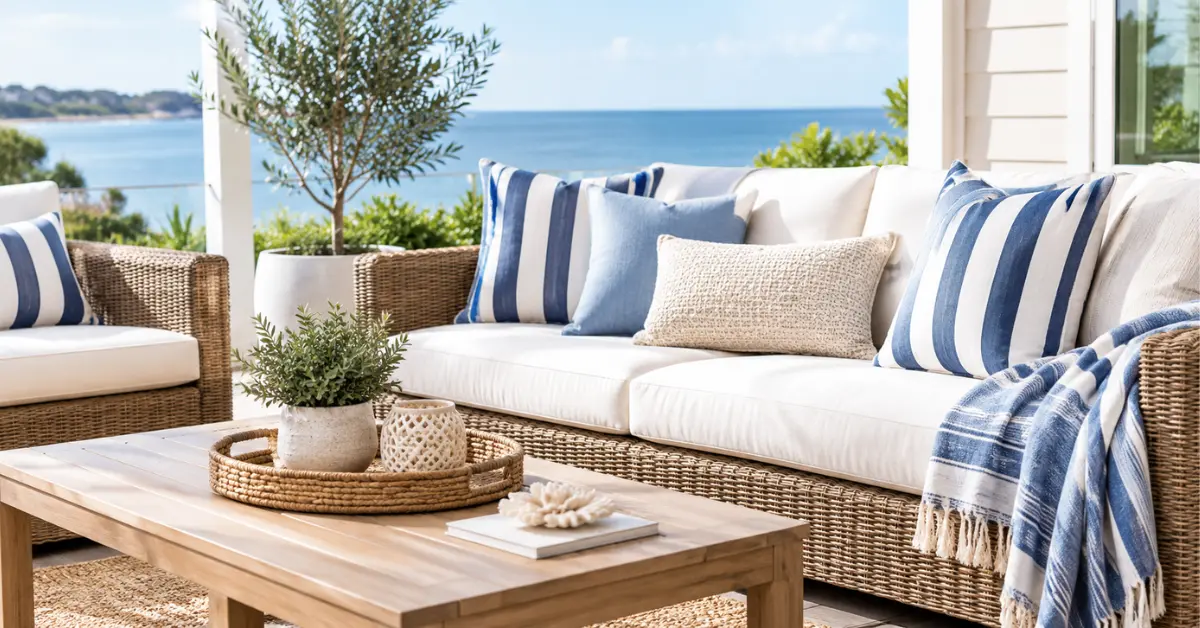
Yes, Hamptons outdoor cushions are worth the money when you pick genuine outdoor fabric and a quick-drying insert to match your climate and how exposed your seating actually is. The style itself adds nothing to weatherproofing. That comes entirely from the fibre, the fill, and the stitching underneath the pretty stripe pattern, and that’s the part most buyers never check before paying.
I’ve bought, returned, and re-bought Hamptons Outdoor Cushions for my own patio more times than I’d like to admit, and the lesson always lands the same way: the ones that survive an Aussie summer are never the ones that looked best on the shelf.
Why the Hamptons Look Keeps Winning Outdoors
Whites, soft blues, navy stripes and natural timber tones sit comfortably against Australian light in a way busier prints don’t. It’s a palette that doesn’t fight with a timber deck, a rendered wall, or a patch of native garden.
The bigger reason it works, though, is practical rather than aesthetic. A plain outdoor lounge or a set of dining chairs looks unfinished until cushions soften the hard lines. You don’t need to replace furniture to get the look. You need the right textiles layered over what you already own.
What Actually Separates a Good Cushion From a Bad One
Forget the pattern for a second. The fabric construction is where the real difference sits.
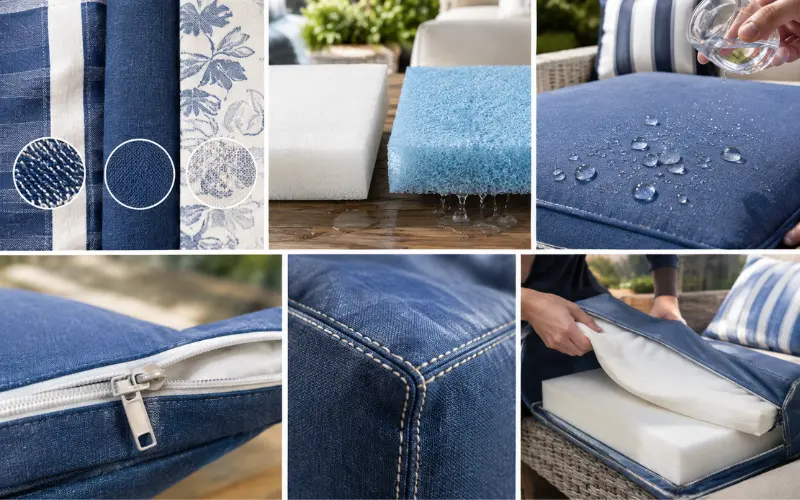
Solution-dyed fabric versus surface-printed fabric is the single biggest factor. Solution-dyed acrylic and solution-dyed Olefin have colour mixed into the liquid fibre before it’s spun into yarn, so the colour runs all the way through. Surface-printed polyester has the pattern stamped onto white fabric afterwards, which is why cheap navy cushions turn a chalky grey by the second summer.
The insert matters just as much as the cover. Standard indoor foam soaks up rainwater like a sponge and holds it there, which is exactly how mildew smell gets started. Reticulated foam, sometimes called quick-dry foam, has an open-cell structure that lets water pass straight through instead of pooling inside.
A test I use with clients before they buy: drip a small amount of water onto a fabric sample. If it beads and rolls off, the finish is genuinely water-resistant. If it soaks straight in and darkens the fabric, you’re looking at a decorative textile dressed up as an outdoor one, no matter what the tag says.
Zips and thread quality get overlooked constantly. Standard thread breaks down under UV within a season or two. Marine-grade thread and a corrosion-resistant nylon coil zip cost more to manufacture, which is usually reflected in the price difference between a $40 cushion and a $120 one.
From experience: I always ask retailers to show the insert separately from the cover before I buy. If nobody on the floor can tell you the foam type or the fabric’s fade rating, that’s usually a sign the cushion wasn’t built with any of that in mind.
Does Australian Climate Change What You Should Buy?
Considerably, and this is where a lot of generic buying guides fall short.
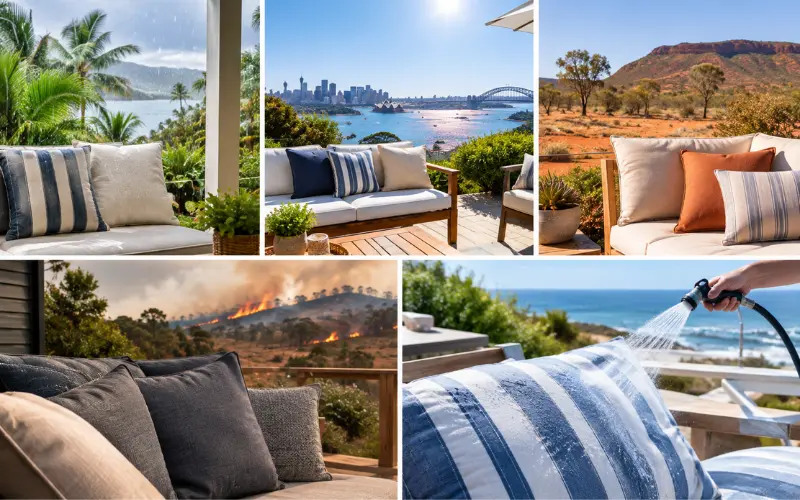
Tropical north (Cairns, Darwin, the Queensland coast): Humidity is the enemy here more than sun. Prioritise quick-dry inserts and antimicrobial fabric treatments over anything else, because standard foam simply won’t dry out fast enough between wet season downpours.
Temperate south-east (Sydney, Melbourne, Adelaide): UV exposure swings hard between seasons. Solution-dyed acrylic earns its price here, since it copes with both blazing January sun and months of dampness through winter.
Dry inland and Perth: Heat and UV are the main stress, with less moisture risk. This is one situation where a slightly cheaper solution-dyed Olefin can perform almost as well as premium acrylic, since drying speed matters less.
Bushfire-prone fringe suburbs: Synthetic solution-dyed fabrics are generally a safer choice near ember zones than natural linen or cotton blends, which are more flammable. It’s a detail almost nobody buying decorative cushions thinks to check, but it’s worth a quick look at local building guidance if your property borders bushland.
Coastal salt air, regardless of region, settles into fabric weave and metal fittings alike. Rinsing cushions with fresh water every few weeks does more for their lifespan than any single fabric upgrade.
Real Cost Over Time, Not Just at Checkout
A budget Hamptons Outdoor Cushions in Australia typically runs $30 to $50 and lasts one to two seasons in full sun before fading or flattening out. A properly built cushion in solution-dyed fabric with a reticulated insert sits between $80 and $180 and holds up for five to seven years with basic care.
| Budget cushion | Quality outdoor cushion | |
|---|---|---|
| Typical price | $30–$50 | $80–$180 |
| Expected lifespan (full sun) | 1–2 seasons | 5–7 years |
| Rough cost per season | $20–$25 | $15–$25 |
The maths often lands close to even, but that’s before you factor in the hassle of replacing cushions twice a year, the discomfort of sitting on compressed foam, or a musty smell you can’t wash out. One habit that saves money either way: buy the insert and the cover as separate items where the retailer allows it. You can replace or wash a worn cover without throwing out a perfectly good foam core.
Sizing and Layering That Actually Looks Considered
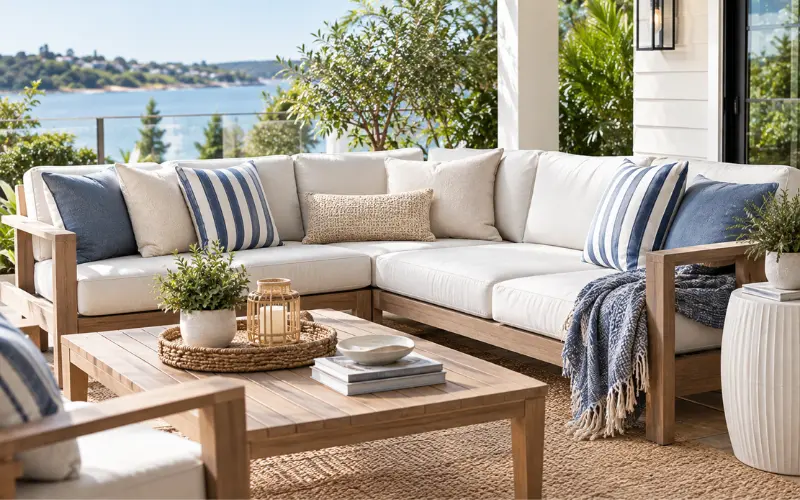
Too many Hamptons Outdoor Cushions from the same set, all identical, tends to look like a display rather than a lived-in space. A better formula:
- One plain base colour, such as white, oatmeal or soft grey
- One navy or blue stripe as the recognisable Hamptons element
- One smaller lumbar or textured cushion to break up the pattern
Measure your furniture before ordering rather than guessing from the advertised dimensions. Standard seat cushions run around 45 to 60 cm square, with lumbar cushions closer to 30 by 50 cm. A cushion that’s too small for a deep outdoor lounge looks like an afterthought no matter how nice the fabric is.
For modern alfresco ideas that pull the whole setting together, pairing cushions with the right side tables and lighting matters as much as the fabric choice itself.
Where They’re Worth It and Where They’re Not
They’re clearly worth the spend when your seating sits in full sun, near a pool, or close to the coast, and when you actually want the furniture usable for most of the year without constant cushion-swapping.
They’re harder to justify when the space is fully protected, such as a deep covered outdoor living space, or used only a handful of times each year. In that case, mid-range polyester in a Hamptons print is a perfectly sensible choice, and the premium fabric advantage barely gets used.
A Care Routine That Adds Real Years
- Brush off dust and pollen weekly before it works into the weave
- Rinse with fresh water every four to six weeks near the coast
- Stand cushions on edge after rain so water drains rather than pools
- Store them in a breathable bag, not sealed plastic, during long wet stretches. A dedicated linen cupboard or storage box keeps them dry between seasons
- Rotate cushions so one side isn’t taking all the UV exposure
None of this is complicated, but skipping it is the main reason a quality cushion ends up performing like a cheap one within a year.
Styling Beyond the Cushions Themselves
The Hamptons look holds together better when the cushions aren’t working alone. Pairing a fresh cushion set with Hamptons style coffee tables or carrying the same palette indoors through a Hamptons style entertainment unit gives the whole home a consistent design language rather than one styled corner. If your outdoor area needs screening as well as seating, a balcony privacy screen in a matching neutral tone keeps the space cohesive rather than busy. For anyone still deciding on textures and finishes more broadly, this guide to home decor fabrics is worth a look before you commit to a full set.
FAQ’s on Hamptons Outdoor Cushions
Can Hamptons Outdoor Cushions be left outside permanently?
They can handle regular outdoor conditions, but permanent exposure to rain and harsh sun will always shorten their life compared with occasional storage during bad weather or extended absence from home.
How do I know if a fabric is genuinely outdoor-rated?
Check for a stated UV or lightfastness rating from the manufacturer rather than a general “outdoor style” label, and try the water-drop test on a sample if one’s available in-store.
Is white a poor choice for Hamptons Outdoor Cushions in Australia?
White shows dirt and sunscreen marks faster than mid-tones, but ivory or oatmeal gives a similar coastal look with noticeably easier upkeep.
What foam density works best for outdoor seat cushions?
Somewhere between 28 and 35 kg/m³ gives solid support without bottoming out on timber or metal frames, while still allowing reticulated foam to drain properly.
Do I need marine-grade zips on outdoor cushions?
For anything near the coast, yes. Standard metal zips corrode quickly in salt air, while nylon coil zips resist it far better.
Can indoor cushions work on a covered patio?
Only in genuinely sheltered spots with no direct rain and limited afternoon sun. Even then, they’ll need to come inside during humid or wet stretches.
How often should I replace Hamptons Outdoor Cushions inserts?
When the foam stops springing back after sitting, or holds a musty smell after cleaning, it’s time to replace the insert rather than the whole cushion, provided the cover is still in good shape.
Are custom-sized cushions worth ordering over standard ones?
For furniture with unusual dimensions, yes, since a well-fitted cushion won’t shift or trap water in the gaps the way an ill-fitting standard size can.