
Open almost any home’s linen cupboard and you’ll find the same story: sheets stuffed in sideways, towels teetering on the edge of a shelf, and a spare pillowcase that hasn’t seen daylight in years. It’s one of the most-used storage spaces in the house, yet it’s usually the last one anyone thinks to organise properly.
This guide goes beyond the usual fold-and-stack advice. You’ll find practical steps for setting it up properly, plus a few things most articles on this topic never mention, like how humidity quietly ruins good linen and why the way you stack towels affects how long they last.
Why a Linen Cupboard Deserves More Thought Than It Gets
A linen cupboard holds some of the most expensive textiles in your home. Good sheets, towels and duvet covers aren’t cheap, and how you store them directly affects how long they stay soft, fresh and free of damage.
A well-planned linen cupboard also saves real time. Instead of digging through a jumbled pile for a clean towel, everything has its own spot. Households sharing one space between several bedrooms and bathrooms feel this benefit the most, since disorganisation multiplies confusion fast.
There’s a practical reason to get it right too: an overstuffed cupboard is harder to keep clean, and trapped moisture between tightly packed fabric is one of the most common causes of that musty smell nobody can quite place.
Step 1: Take Everything Out First
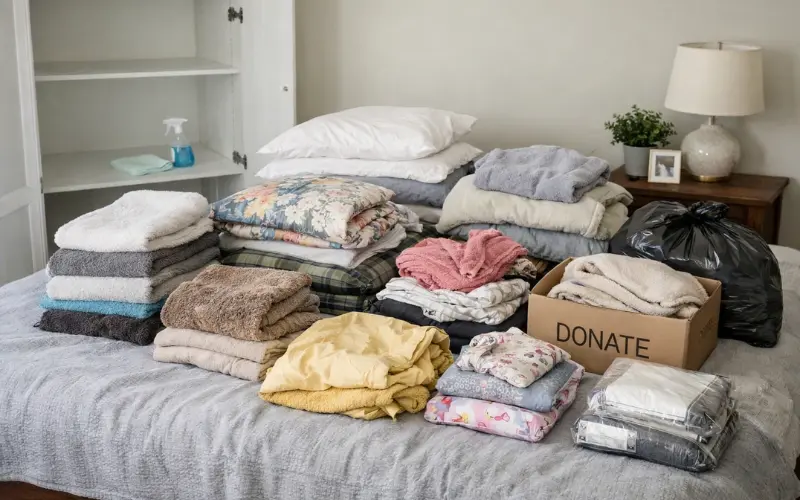
Before you organise a linen cupboard, you need to see exactly what’s inside it. Pull every item onto a bed or table so nothing hidden at the back gets missed.
While it’s empty, wipe down the shelves. Dust and fibres settle over months, and starting with a clean surface makes a real difference to how fresh everything smells once it goes back in.
As you sort, ask three quick questions about each item:
- Is it still in good condition? Bath towels typically last about two years of regular use before they turn thin and less absorbent.
- Do I actually use this? A bedding set bought on sale and never opened is wasting prime shelf space.
- Does it still match a bed or bathroom I own? Sheets for a mattress size you no longer have can be donated.
Anything worn, mismatched, or unused for over a year is a strong candidate for the donation pile.
Step 2: Solve the Real Enemy: Trapped Moisture
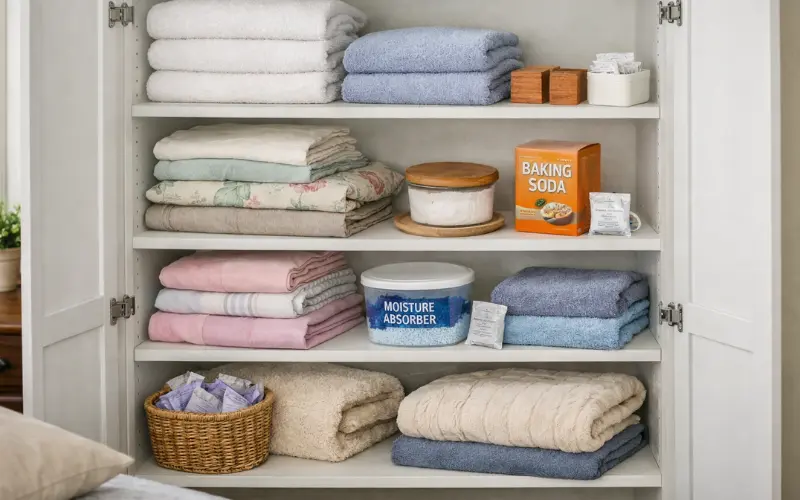
Here’s something most guides skip entirely: humidity is the biggest long-term threat to your linens, not clutter. Cupboards are enclosed spaces with limited airflow, and even slightly damp towels or sheets folded away too soon can trigger mildew, musty odours and fabric discolouration over time.
A few simple habits fix this:
- Let towels and sheets air out fully after the dryer before folding them away. Warm fabric holds moisture even when it looks dry.
- Avoid packing shelves edge to edge. Air needs to move between stacks, so leave a small gap rather than cramming every inch.
- Add a moisture absorber. A small silica gel pouch, a box of baking soda, or a few cedar blocks on each shelf will control dampness and keep the space smelling clean for months.
- Skip the bathroom for long-term linen storage. Bathrooms are humid by nature, and every toilet flush releases a fine spray of airborne particles that can settle on nearby fabric. A dedicated linen cupboard away from the bathroom is a healthier home for your towels.
Step 3: Zone the Space by Category and Frequency
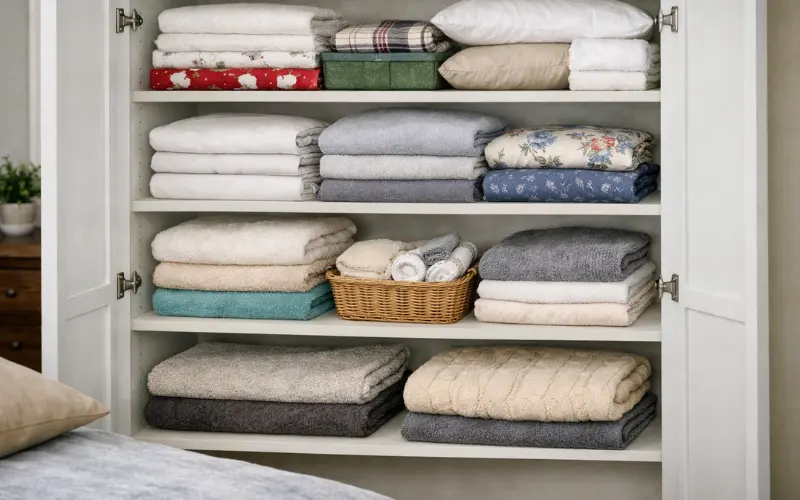
Once everything is clean and edited down, group items into clear categories rather than piling everything together:
- Bed linen: sheets, duvet covers, pillowcases
- Bath linen: towels, bath mats, face cloths
- Guest linen: kept separate so it’s easy to grab for visitors
- Seasonal items: holiday tablecloths, spare blankets
Assign each category its own shelf, and position them by how often you reach for them. Everyday towels and sheets belong at eye level or waist height. Guest and seasonal pieces can move to the top or bottom shelves, since they come out only a few times a year.
This kind of zoning turns a linen cupboard from a guessing game into a system anyone in the household can use without asking where things go.
Step 4: Match Storage Method to Fabric
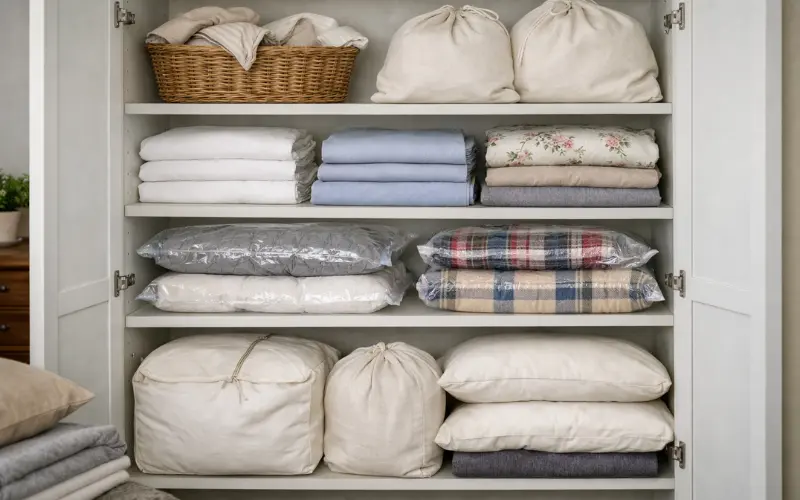
This is a detail most advice overlooks: cotton, linen and synthetic-blend fabrics don’t behave the same way in storage, and treating them identically shortens their lifespan.
- Pure linen fabric is a natural fibre and needs to breathe. Avoid sealed plastic bags, which trap moisture against the fibres and encourage yellowing. A cotton pillowcase or open basket works far better.
- Cotton sheets and towels hold up well folded flat but can develop permanent crease lines over time. Refold along a slightly different line every few months if they’re rarely used.
- Vacuum-sealed bags suit off-season blankets or duvets you won’t touch for months, but avoid them for anything used regularly, since constant compressing weakens natural fibres faster than open storage.
- Down and feather-filled items need airflow above almost everything else. Never compress a down duvet or pillow long-term; store it loosely in a breathable cotton bag instead.
Matching storage method to fabric is a small step that makes a genuine difference to how long your linens last.
Step 5: Fold, Roll, or Stack? Use the Right Method
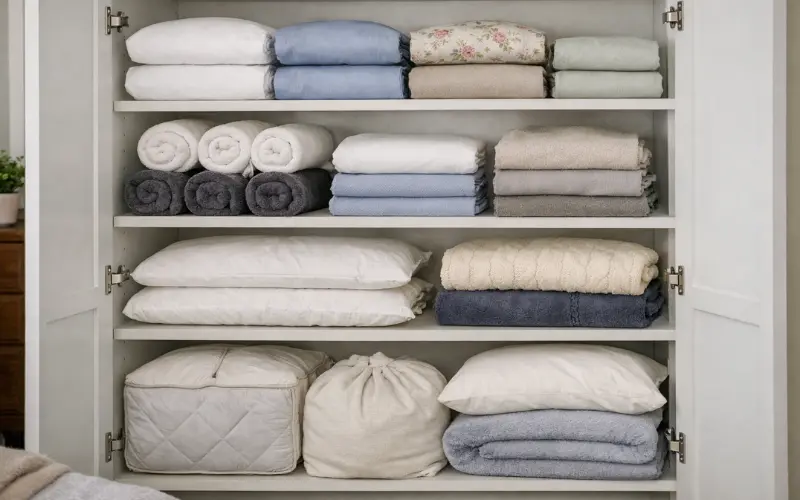
Not every item should be stored the same way.
- Flat sheets and pillowcases fold neatly into a matching set. A simple trick: tuck a folded sheet set inside its own pillowcase, so sets stay together and stop sliding apart on the shelf.
- Fitted sheets are the usual troublemaker. Fold the elasticated corners in on themselves first to create a rough rectangle, then fold flat like a normal sheet. It takes a little practice but stops the lumpy, wrinkled ball fitted sheets usually turn into.
- Bath towels can be folded in thirds and stacked, or rolled for a spa-style look that also saves shelf space, especially on narrow or deep shelves.
- Heavier items like duvets and blankets are best stored flat or gently rolled, never crushed under other items, which flattens the fill and reduces warmth over time.
Step 6: Set Up a Simple Rotation System

An often-overlooked step is rotating linens so every set gets even use. Without a system, one or two sheet sets end up in constant rotation while others sit untouched at the back, ageing unevenly until they all wear out around the same time, meaning an expensive replacement all at once.
A simple fix: always place freshly washed linen at the back or bottom of the stack, and pull from the front or top. This first-in, first-out approach spreads out wear naturally, so you’re never caught with only worn-out options on laundry day.
Step 7: Add a Few Small Extras
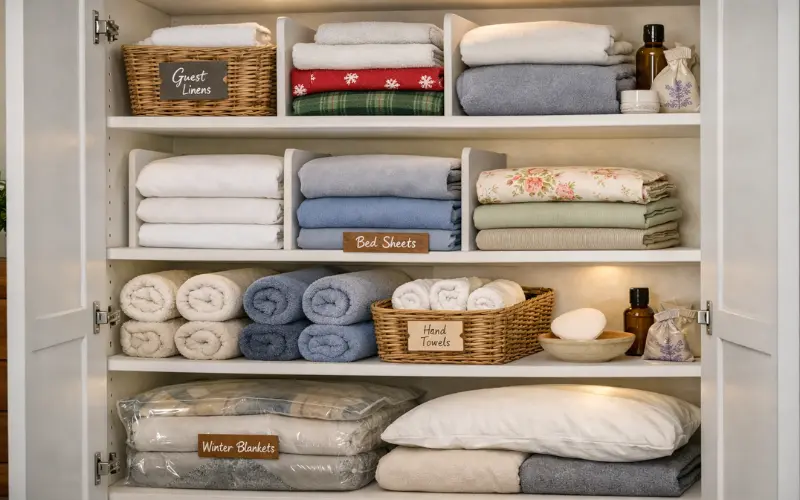
A handful of finishing touches turn a functional linen cupboard into one that’s genuinely pleasant to open:
- Shelf dividers stop tall stacks from leaning and toppling when you pull an item from the middle.
- Labels on baskets or shelves help every household member put things back where they belong.
- A scented sachet or a few drops of essential oil on a cotton pad keep the space smelling fresh between deep cleans, a gentler alternative to synthetic sprays that can transfer scent onto fabric.
- Better lighting, even a stick-on LED light, makes it far easier to find matching sets on a dim top shelf.
- A light-coloured shelf liner protects fabric from rough shelving and wipes down easily during cleaning.
How Often Should You Deep-Clean a Linen Cupboard
Most homes only think about this space when it’s overflowing, but a light seasonal check keeps clutter from building up. Aim for:
- A quick tidy every month, straightening stacks and re-folding anything that’s slipped.
- A full empty-and-wipe-down every three to four months, especially in humid climates.
- A proper edit twice a year, removing worn towels and outdated sets before they pile up.
Common Mistakes to Avoid
- Overstuffing shelves, forcing linens to be yanked out, which creates mess and speeds up wear.
- Storing damp or slightly warm items, the single biggest cause of musty smells.
- Mixing toiletries with linen, since spilled liquids and product residue can stain fabric.
- Ignoring the top shelf, letting it become a dumping ground instead of useful storage.
- Never rotating stock, so a handful of sets wear out years before the rest.
Frequently Asked Questions
How do I stop my linen cupboard from smelling musty?
Make sure linens are completely dry before folding them away, leave small gaps between stacks for airflow, and add a moisture absorber like silica gel, baking soda, or cedar blocks to each shelf.
What’s the best way to organise a small linen cupboard?
Focus on zoning rather than volume. Group items by category, keep only what you regularly use at eye level, and store seasonal linen in labelled bins on the top shelf.
Should I store towels in the bathroom instead?
It’s better not to. Bathrooms are humid, which encourages mildew, and airborne particles from flushing can settle on nearby fabric. A separate linen cupboard away from the bathroom keeps towels fresher for longer.
How often should I replace bath towels?
Most towels last around two years with regular use and weekly washing. Once they feel stiff, thin, or stop absorbing water well, it’s time to replace them.
Is it okay to vacuum-seal my linens for storage?
Vacuum bags are fine for off-season duvets or blankets you won’t touch for months, but avoid them for linens you use regularly, since repeated compression weakens natural fibres over time.
What’s the easiest way to fold a fitted sheet?
Fold the elasticated corners into each other first to create a rough rectangle, then fold it flat like a normal sheet. It takes practice but keeps fitted sheets from turning into a wrinkled ball.
How do I keep guest linen separate from everyday linen?
Dedicate a specific shelf or labelled basket just for guest sets, ideally near eye level so they’re easy to find when visitors arrive.
What should go on the top shelf of a linen cupboard?
Reserve it for items you rarely need, such as holiday tablecloths, spare blankets, or seasonal bedding, rather than letting it become a catch-all storage spot.
The Takeaway
A well-organised linen cupboard isn’t about perfect folding or matching baskets. It’s about airflow, sensible zoning, and storage methods that suit the fabric you’re keeping. Get those fundamentals right, and it will stay tidy with far less effort, while your sheets and towels last noticeably longer too.

