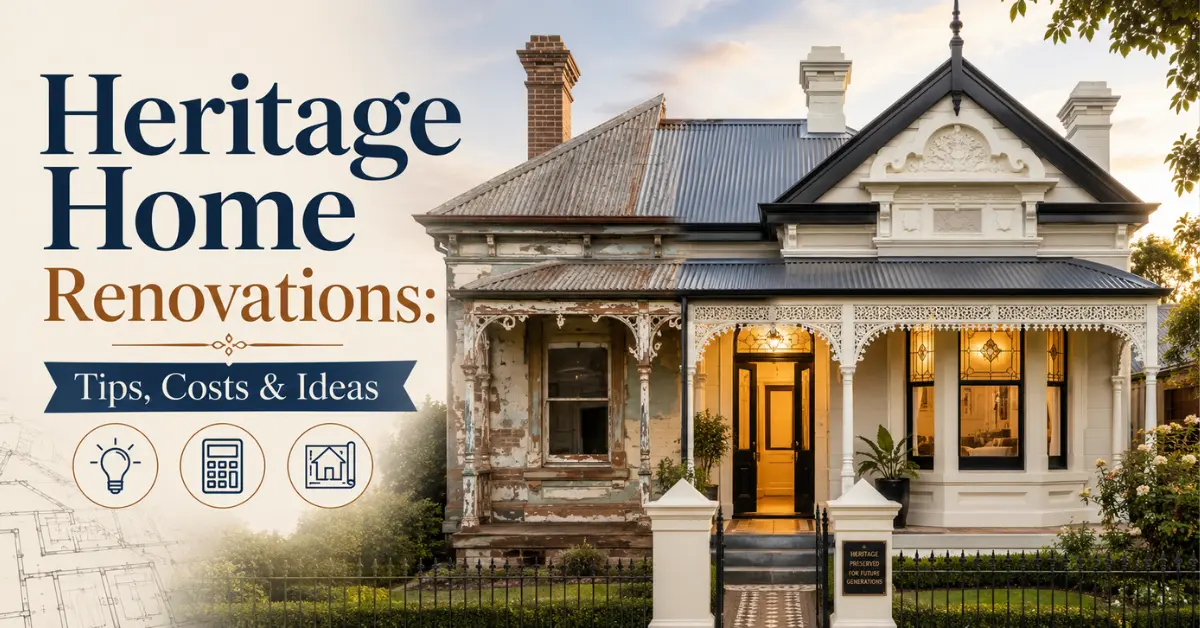
Owning a heritage home is a privilege. The pressed metal ceilings, the wide timber verandahs, the original sash windows — these features tell a story no new build can replicate. But the moment you start planning heritage home renovations, you quickly realise the rules are different here.
Unlike standard home improvements, heritage renovations come with heritage overlays, council restrictions, and conservation guidelines that govern what you can and can’t change. Getting this wrong doesn’t just cost money — it can result in fines, forced reinstatement, and a significant drop in property value.
This guide covers everything you need to know: planning approvals, costs, style decisions, room-by-room ideas, and the mistakes that catch most homeowners off guard.
Step 1: Know Your Heritage Overlay Before You Do Anything
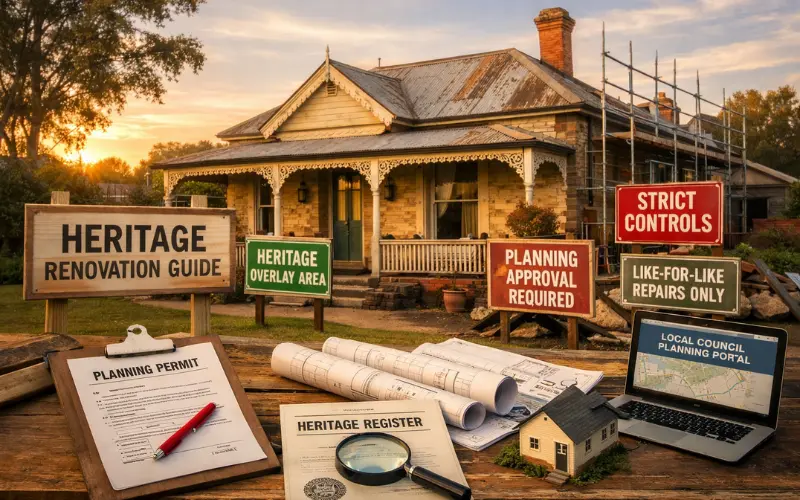
The single most important step before beginning any heritage home renovations is to check whether your property sits under a heritage overlay or is individually listed on a heritage register.
What this means practically:
- Properties in heritage overlays require a planning permit for most external changes — including painting, replacing windows, adding a deck, or changing the roof material
- Individually heritage-listed properties face even stricter controls that often extend to interiors
- Some states and councils allow exempt works — minor repairs using like-for-like materials that don’t require a permit
In Australia, you can check this through your local council’s planning portal or the State Heritage Register. In the US, the National Register of Historic Places is the starting point.
One thing many homeowners don’t realise: verbal approval from a council officer means nothing. Get all approvals in writing before any work begins.
Step 2: Bring in the Right Professionals Early
Heritage home renovations are not the place to cut corners on your builder. A general contractor experienced in modern construction may not know how to source matching period materials, replicate original joinery profiles, or work within heritage planning requirements.
The team you typically need:
- A heritage architect or heritage consultant — essential for navigating approvals and producing documentation councils require
- A builder with demonstrated heritage experience — ask for completed heritage project references specifically
- A quantity surveyor — to produce a detailed cost estimate before you commit
- A structural engineer — older homes often have unexpected issues behind walls: substandard footings, decayed stumps, asbestos, lead paint
Skipping the heritage architect to save money upfront is the most common and costly mistake in this space. Heritage councils rarely accept applications put together without professional input, which means delays, resubmissions, and more fees.
Step 3: Understand Heritage Renovation Costs Honestly
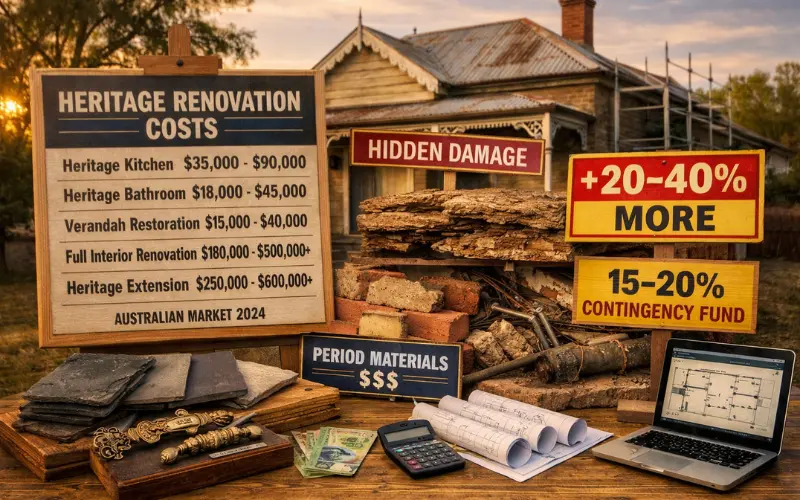
Heritage home renovations consistently run 20–40% more than equivalent work on a standard home. Here’s why:
- Period materials (original-profile timber, heritage brick, slate roofing) cost significantly more than modern substitutes
- Skilled tradespeople with heritage experience charge a premium
- Existing fabric often conceals damage — rot, termite activity, old wiring, crumbling mortar — that only becomes visible once walls open up
- Planning and approval processes add time, and time adds cost
Rough cost ranges (Australian market, 2024):
| Scope | Estimated Cost Range |
|---|---|
| Heritage kitchen renovation | $35,000 – $90,000 |
| Heritage bathroom renovation | $18,000 – $45,000 |
| Verandah restoration | $15,000 – $40,000 |
| Full interior heritage renovation | $180,000 – $500,000+ |
| Heritage extension (contemporary) | $250,000 – $600,000+ |
Always build a contingency of at least 15–20% into your budget. On heritage homes, unexpected discoveries are the rule, not the exception.
What to Preserve vs. What You Can Update
This is where heritage home renovations get interesting — and where the best results come from. The goal isn’t to freeze a home in time. It’s to honour what makes it special while making it genuinely liveable.
Always aim to preserve:
- Original facades, roof forms, and verandah structures
- Decorative features: ceiling roses, cornices, fretwork, fireplaces, original doors
- Timber floorboards (even if they need sanding and refinishing)
- Original windows where restorable (draught-proofing and double-glazing films can dramatically improve performance without replacing the window)
- Original tiles — particularly encaustic floor tiles and Victorian wall tiles in bathrooms
Where you can modernise without guilt:
- Kitchens and bathrooms (as long as external changes don’t require approvals)
- Electrical and plumbing systems — upgrading these is expected and encouraged
- Insulation and thermal performance — bulk insulation in roofs and underfloor is generally permitted and makes a significant difference
- Internal layouts in non-listed properties — many homeowners open up rear living areas while keeping the front rooms intact
Room-by-Room Heritage Renovation Ideas
Heritage Kitchen Renovations
The kitchen is where most heritage homeowners struggle to balance authenticity with function. A fully period-accurate kitchen is impractical. The best heritage kitchens borrow from the past without being enslaved to it.
What works well:
- Shaker-style cabinetry in heritage colours (deep navy, forest green, warm white) references the period without copying it directly
- Butcher block or marble benchtops over engineered stone
- Exposed timber shelving instead of upper cabinets
- Integrated appliances to keep the visual clean
- Victorian-style tapware in brushed brass or matte black
- Original timber floors carried through (or matched) from adjoining rooms
Heritage Bathroom Renovations
Original heritage bathrooms were often small, dark, and cold. Modern heritage home renovations in bathrooms are really about creating something that feels period-appropriate while functioning as a contemporary bathroom.
Key elements:
- Freestanding clawfoot baths remain the centrepiece of heritage bathroom design
- Hexagonal or penny mosaic floor tiles in white or black-and-white
- High cistern toilets for a period look
- Exposed plumbing in brushed nickel or chrome
- Dado rails and beadboard wall panelling
- Heritage colours: soft sage, chalky white, dusty rose
Verandahs and Facades
The verandah is the face of a heritage home and the feature most tightly controlled by heritage overlays. On homes where the verandah has been previously enclosed or removed, reinstating it is often one of the highest-value heritage home renovations you can undertake — both aesthetically and financially.
- Decorative timber fretwork and brackets should be matched to the period style (Federation vs. Victorian vs. Edwardian profiles differ significantly)
- Pressed metal ceilings on verandahs are a period-authentic detail that’s often overlooked
- Verandah decking in spotted gum or tallowwood ages beautifully and is appropriate for Australian heritage homes
Heritage Colour Palettes: Getting the Period Right
Paint colour is one of the most impactful and affordable decisions in heritage home renovations. The wrong colour scheme can undermine a beautifully restored home; the right one elevates it.
By period:
- Victorian (1840–1890): Deep, rich colours — burgundy, forest green, deep blue, mustard. Multiple colours on a single facade were common.
- Federation (1890–1915): Earthy ochres, terracotta, warm creams. Red brick with cream trim is the classic Federation combination.
- Edwardian (1901–1914): Lighter, airier palette. Soft whites, pale greens, light grey.
- Californian Bungalow (1910–1940): Warm naturals — olive, tan, brown. Stained timber prominent.
Paint manufacturers including Dulux, Taubmans, and Haymes all offer heritage colour ranges curated to Australian period homes.
The Contemporary Extension Question
One of the most debated decisions in heritage home renovations is whether to extend, and if so, how. Heritage councils in most jurisdictions now accept — and in some cases encourage — contemporary extensions that are visually distinct from the original building.
The principle: new work should be readable as new. This means a glass and steel rear extension on a Victorian terrace is often more heritage-appropriate than a poorly matched imitation of the original.
What makes a heritage extension work:
- Clear visual separation (a link corridor, a change in roofline, or a setback)
- Material contrast: polished concrete, steel, glass against the original brick or weatherboard
- Maintaining the scale and height of the original building at the street
- Keeping all contemporary additions to the rear where they’re not visible from the street
Common Mistakes in Heritage Home Renovations
After all the planning guides and inspiration boards, these are the things that actually go wrong:
- Starting work without approvals — the most expensive mistake. Stop-work orders are common and reinstatement costs can be enormous.
- Using the wrong materials — replacing original double-hung sash windows with aluminium sliders, or original slate with concrete tiles, can breach heritage conditions and kill the character of the home in one decision.
- Overcapitalising — not all heritage homes are in suburbs where renovation spend is recoverable. Get a property appraisal before committing to a large budget.
- Ignoring the roof — heritage homes with failing roofs need that addressed before any interior work begins. Water ingress damages original fabric that can be irreplaceable.
- DIYing heritage plasterwork — original lime plaster walls and ornate plaster ceilings require specialist restoration. Standard gyprock repairs look wrong and can cause long-term moisture issues.
FAQs: Heritage Home Renovations
Do I need council approval for interior renovations on a heritage home?
For individually listed heritage properties, yes — internal changes often require approval. For homes under a heritage overlay only, internal works are generally exempt unless they affect significant fabric.
Can I remove internal walls in a heritage home?
In most heritage overlay properties, internal wall removal is permitted unless the wall is identified as significant. For listed properties, check with your heritage consultant first.
How do I find a builder experienced in heritage renovations?
Contact your state’s Master Builders Association or the Australian Institute of Architects for referrals. Always ask for completed heritage projects and speak to past clients.
Are heritage home renovations tax deductible?
In Australia, if the property is heritage listed, some restoration works may be eligible for deductions under the Cultural Heritage Tax Incentive Scheme. Speak with a tax professional.
What’s the difference between restoration, renovation, and conservation?
Restoration returns the home to a specific historical period. Renovation updates the home while retaining heritage character. Conservation preserves and protects existing fabric with minimal intervention.
Can I add solar panels to a heritage home?
Generally yes, if they’re not visible from the street. Many councils are now supportive of solar on heritage homes given sustainability goals, provided panels are discreetly located.
How long do heritage home renovations take?
Planning approvals alone can take 3–6 months. Full renovations typically run 12–24 months depending on scope.
What is a heritage impact statement?
A document prepared by a heritage professional that assesses how proposed works will affect the heritage significance of a property. Usually required with a planning permit application.
Final Thoughts
Heritage home renovations demand more planning, more patience, and more budget than most homeowners initially expect. But done well, they produce homes that are genuinely irreplaceable — in character, in history, and in value.
The homeowners who get the best results share one habit: they invest in the right advice before they pick up a single tool. A heritage architect, an experienced builder, and a clear understanding of your obligations will take you further than any amount of Pinterest research.