
A cluttered desk in the corner of a spare room used to pass for a home office. That standard is gone. Today, a well-planned workspace is treated the same way a living room or kitchen is: a space worth designing with intention.
But here’s what most guides on this topic miss. They show you pretty photos of sleek desks and neutral walls, then stop. They rarely explain why certain layouts work better for concentration, how lighting temperature affects your energy by 3 p.m., or how to build a contemporary home office on a real budget instead of an interior designer’s budget.
This guide fills those gaps. You’ll get the design principles, the practical details, and the mistakes to avoid so your workspace looks good and actually helps you get things done.
What Makes a Home Office “Contemporary”?
People often confuse contemporary with modern or minimalist, and while they overlap, they aren’t the same thing.
- Modern design refers to a specific historical style from the early-to-mid 20th century, think clean lines, teak wood, and Bauhaus influence.
- Minimalist design is about stripping a space down to only what’s essential.
- Contemporary design reflects what’s current right now. It evolves with the times, borrowing from multiple styles, materials, and trends as they emerge.
A contemporary home office today typically features:
- Clean, uncluttered lines without feeling sterile
- A neutral base palette with one or two bold accent choices
- A mix of natural materials (wood, stone, linen) with sleek metal or glass
- Smart integration of technology, so cables and devices don’t dominate the visual space
- Flexible layouts that can adapt as work habits change
Understanding this distinction matters because it shapes every choice you make next, from furniture to finishes.
The Five Elements Every Contemporary Home Office Needs
1. A Layout Built Around How You Actually Work
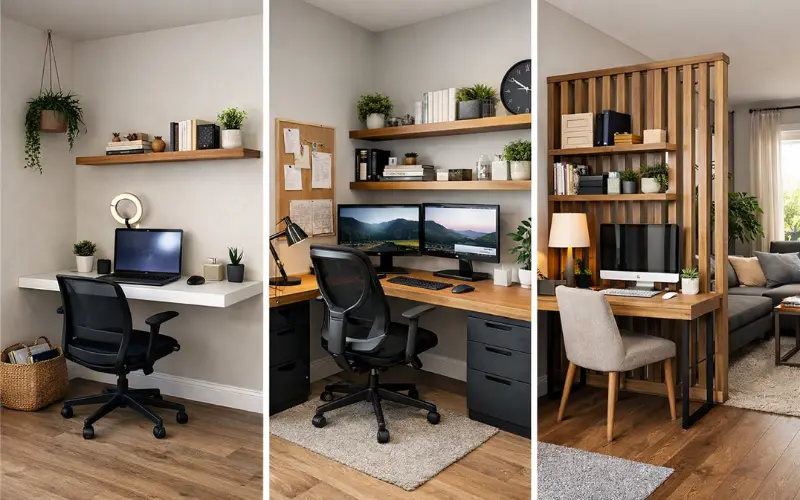
Before choosing a single paint color, map out your workflow. Do you take video calls daily? Your desk should face a wall or a curated background, not a window that turns you into a silhouette. Do you need deep focus time? Position your desk away from household foot traffic.
A genuinely functional workspace starts with layout, not decoration. Common layouts include:
- The floating wall desk: A slim, wall-mounted desk that frees up floor space, ideal for small rooms
- The corner command station: Maximizes two walls for a wraparound work surface
- The room divider setup: Uses a bookshelf, slatted screen, or curtain to separate work from living space in an open-plan home
2. Lighting That Supports Your Body Clock
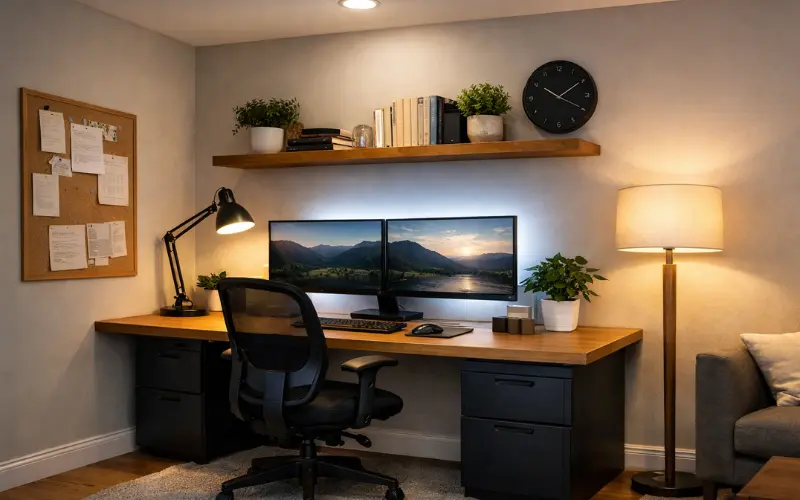
This is the single most overlooked factor in home office design, and almost none of the guides floating around online cover it properly.
Lighting isn’t just about brightness. It’s measured in color temperature, expressed in Kelvin (K):
- 2700K to 3000K produces a warm, amber glow, good for evenings but drowsy for daytime focus
- 4000K to 5000K mimics natural daylight and is ideal for a contemporary home office used during working hours, since it supports alertness and reduces eye strain
- 5000K and above feels closer to clinical or hospital lighting and can feel harsh for long stretches
Aim to layer three light sources: an overhead fixture, a task lamp positioned to reduce screen glare, and ambient lighting such as a floor lamp or LED strip behind a monitor. This layering reduces the contrast between your bright screen and a dim room, which is a leading cause of digital eye strain.
3. Ergonomics: The Part Beauty-Focused Guides Skip
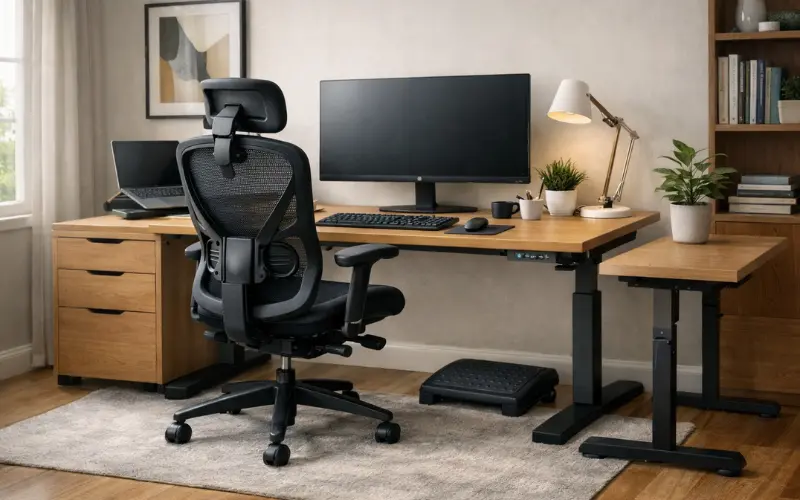
A gorgeous contemporary home office that hurts your back after two hours isn’t a good design, it’s a good photograph. Ergonomics deserves equal weight to aesthetics.
Quick reference for a healthier setup:
- Monitor height: Top of the screen should sit at or slightly below eye level
- Chair depth: Feet flat on the floor with a two-to-three finger gap behind the knees
- Elbow angle: Roughly 90 to 110 degrees when typing
- Desk height: Standard desks sit around 28 to 30 inches; adjustable standing desks let you switch positions through the day
If your budget only stretches to one splurge item, make it the chair. A stylish chair that causes discomfort will get replaced within a year, which costs more in the long run than buying a supportive one upfront.
4. Materials and Color Palettes That Age Well
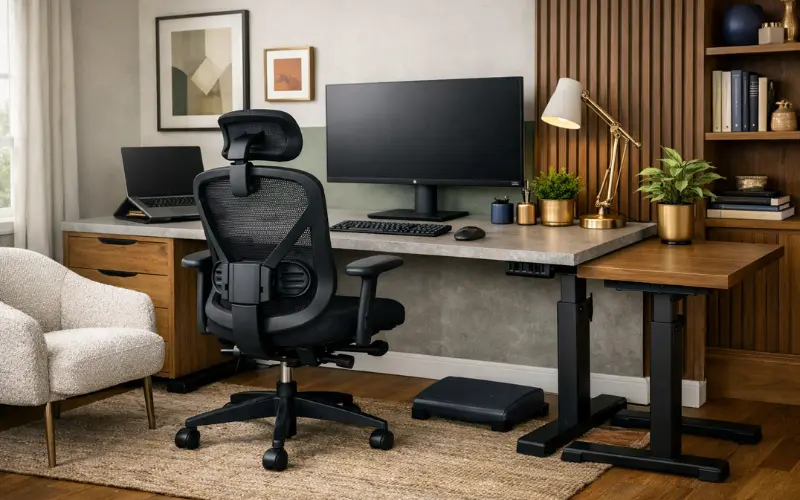
Trends shift, but a well-chosen material palette keeps your workspace looking current for years rather than months.
Reliable material pairings include:
- Warm oak or walnut wood with matte black or brushed brass hardware
- Textured linen or bouclé on a reading chair to soften a room full of hard surfaces
- Honed stone or concrete-look laminate for a grounded, tactile desk surface
- Woven or slatted wood panels as a wall feature, which also help absorb sound
For color, a popular and effective approach for a contemporary home office is the 60-30-10 rule: 60 percent a neutral base (soft white, greige, or warm gray), 30 percent a secondary tone (sage green, deep navy, or clay), and 10 percent an accent color through accessories or artwork.
5. Smart, Hidden Technology
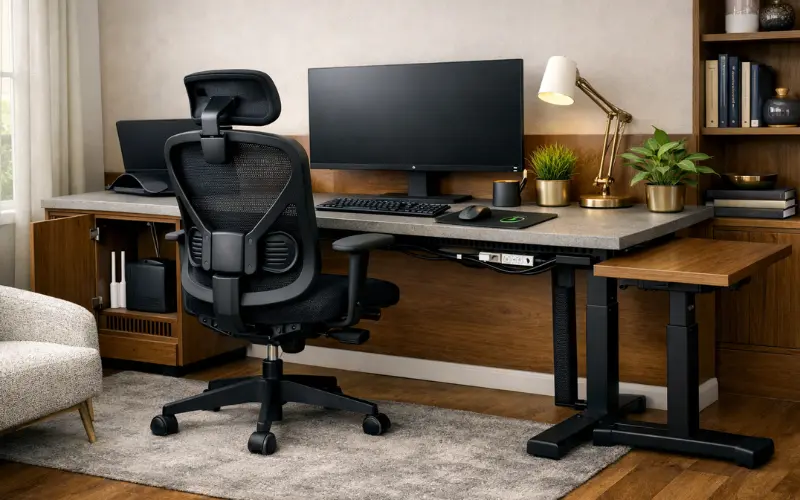
Cables are the fastest way to make an otherwise polished contemporary home office look unfinished. A few fixes that competitors’ articles rarely mention in detail:
- Route cables through desk grommets or under-desk cable trays
- Use a single power strip with a cable sleeve rather than several visible chargers
- Choose a wireless charging pad built into or under the desk surface
- Store your router and modem in a ventilated cabinet, not on open display
Small-Space Contemporary Home Office Ideas
Not everyone has a spare room to dedicate to work, and that’s fine. Some of the most functional setups fit into surprisingly tight footprints.
- The cloffice: Convert a closet into a compact desk nook with doors that close at the end of the day, keeping work fully out of sight
- Understair workstations: Awkward, sloped spaces under a staircase can hold a fitted desk and shelving
- Bedroom corner setups: A slim desk paired with floating shelves works well when a dedicated room isn’t an option
- Fold-away or Murphy desks: These collapse flat against the wall, useful in studio apartments
Budgeting for a Contemporary Home Office
Most articles skip cost entirely, but budget shapes almost every decision you’ll make. Here’s a realistic breakdown:
| Budget Level | What You Get |
|---|---|
| Under $500 | Refreshed paint, a new task lamp, cable management, and a secondhand or flat-pack desk |
| $500 to $2,000 | A quality ergonomic chair, a solid wood or laminate desk, layered lighting, and updated storage |
| $2,000 and up | Custom or fitted cabinetry, a standing desk, designer lighting, and acoustic treatments |
You don’t need the top tier to get a genuinely functional and attractive setup. Prioritize ergonomics and lighting first, then layer in aesthetic upgrades as your budget allows.
Sustainability Considerations Worth Knowing
Sustainable choices are becoming a real part of contemporary design, not just a marketing label. When shopping for furniture, look for:
- FSC-certified wood, which confirms responsible forestry practices
- Low-VOC paints and finishes, which improve indoor air quality in a space you’ll spend hours in daily
- Refurbished or secondhand furniture pieces, which reduce waste and often have better build quality than new budget options
Common Mistakes to Avoid
- Ignoring natural light direction: A desk facing direct afternoon sun creates screen glare and overheating
- Overcrowding the desk surface: A cluttered desktop undermines the clean look a contemporary home office is meant to have
- Choosing style over support: A beautiful chair that isn’t adjustable will cause discomfort within weeks
- Skipping acoustic planning: Hard floors and bare walls create echo during video calls; a rug and soft textiles fix this quickly
Frequently Asked Questions
1. What colors work best in a contemporary home office?
Neutral bases like warm white, greige, or soft gray pair well with one bold accent such as sage green, navy, or terracotta. This keeps the space feeling current without becoming overwhelming.
2. How much natural light does a home office need?
Position your desk perpendicular to a window rather than directly facing or backing it. This reduces glare on your screen while still allowing daylight into the room.
3. What is the ideal desk height for a home office?
Standard fixed desks typically sit between 28 and 30 inches high. If you’re taller or shorter than average, or you switch between sitting and standing, an adjustable desk is a better long-term investment.
4. Can a contemporary home office work in a small apartment?
Yes. Cloffices, fold-away desks, and slim wall-mounted setups let you create a functional workspace even in studio apartments or shared rooms.
5. Do I need a separate room for a home office?
No. Many effective home offices use a dedicated corner of a bedroom or living area, separated visually with a room divider, bookshelf, or slatted screen.
6. What is the biggest mistake people make when designing a home office?
Prioritizing appearance over ergonomics. A visually striking setup that causes back or eye strain will get abandoned within months.
7. How can I reduce echo during video calls in my home office?
Add soft materials such as a rug, curtains, or upholstered furniture. Hard floors and bare walls are the main causes of echo in small rooms.
8. Is it worth investing in a standing desk?
For most people who work long hours, yes. Alternating between sitting and standing throughout the day reduces stiffness and can improve focus during long tasks.
Final Thoughts
Designing a modern workspace isn’t about chasing the latest trend on a design blog. It’s about combining current aesthetics with genuine function: the right light for your eyes, the right chair for your back, and a layout that matches how you actually work. Get those fundamentals right, and the style will follow naturally.

